Lenovo OneKey Recovery Free Download for Windows 10 64 Bit/32 Bit
Where can I download OneKey Recovery Windows 10 version
To create a system image of your Windows 10 on Lenovo Yoga 710 without the OneKey Recovery driver, you can use the built-in Windows tool called System Image Backup. To do this, go to Control Panel > System and Security > Backup and Restore (Windows Backup), then click on "Create a system image." This will allow you to create a backup of your current Windows 10 installation, including all installed drivers, which should include the necessary files for OneKey Recovery. Note that you'll need an external hard drive with enough space to store the image. Additionally, you can also use third-party backup software like Qiling to create a system image. However, using the built-in Windows tool is recommended for its simplicity and reliability.
Lenovo OneKey Recovery (OKR)
OneKey Recovery, a feature on Lenovo laptops and desktops, allows users to back up and restore their computer without reinstalling the system, by utilizing a hidden recovery partition.
Lenovo OneKey Recovery, a software that allows users to easily reinstall their operating system, is not preinstalled or enabled on all Lenovo-branded computers. In some cases, the recovery partition may have been removed, OneKey Recovery may have been accidentally uninstalled from Windows 10, or the hard disk containing the recovery partition may have become corrupted due to bad sectors. As a result, users may need to download Lenovo OneKey Recovery again on their Windows 10 PC.
This is where you can download Lenovo OneKey Recovery software
Unfortunately, it seems that there is no official OneKey Recovery download available for Windows 10, with only versions for Windows 8 and Lenovo available.
Feeling desperate? Don't worry, there's an alternative solution to Lenovo's OneKey Recovery. Qiling Backup offers a system backup and recovery feature, allowing you to create a system recovery image not only at the factory delivery status but also at any point you choose. This is a more flexible solution than OneKey Recovery, and you can even store the system image on an external flash drive, network drive, or cloud, giving you peace of mind and ensuring you're not left without a recovery option.
How to Make Your Own OneKey Recovery for System Restore
Download and install Qiling on your Windows 10 computer, making sure it's compatible with your 64-bit or 32-bit system. Prepare an external storage drive if you want to keep the system image outside of your local hard disk.
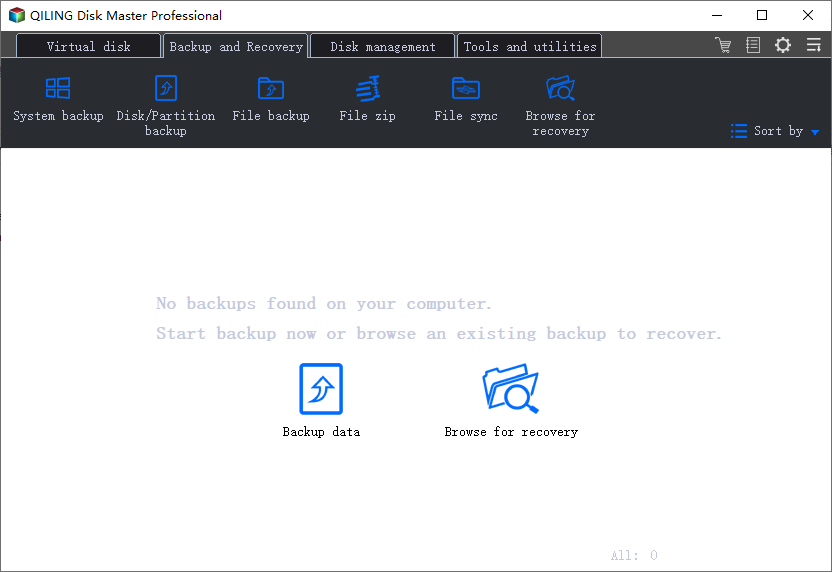
Step 1. Launch Qiling Backup on your computer, and click System Backup on the home screen.
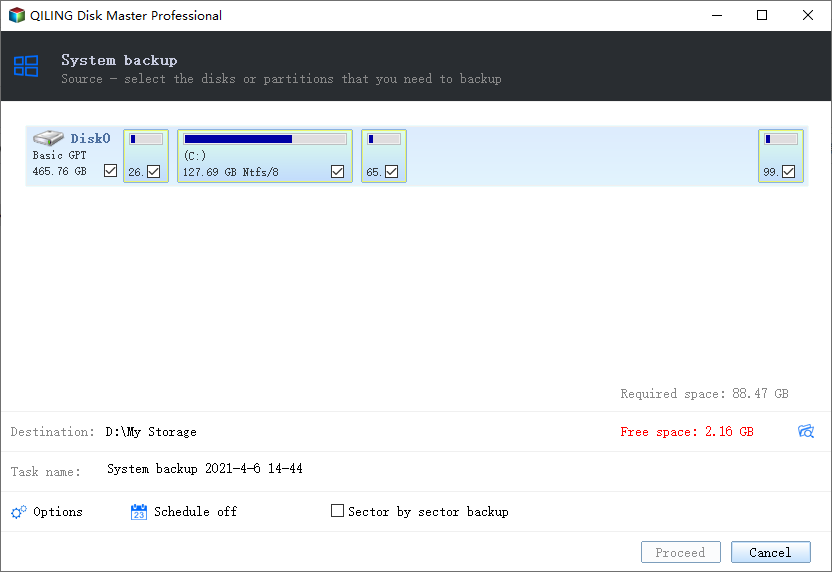
Step 2. Your Windows operating system information and all system-related files and partitions will be automatically selected, eliminating the need for manual selection at this step. Next, you'll need to choose a location to save the system image backup by clicking on the illustrated area.
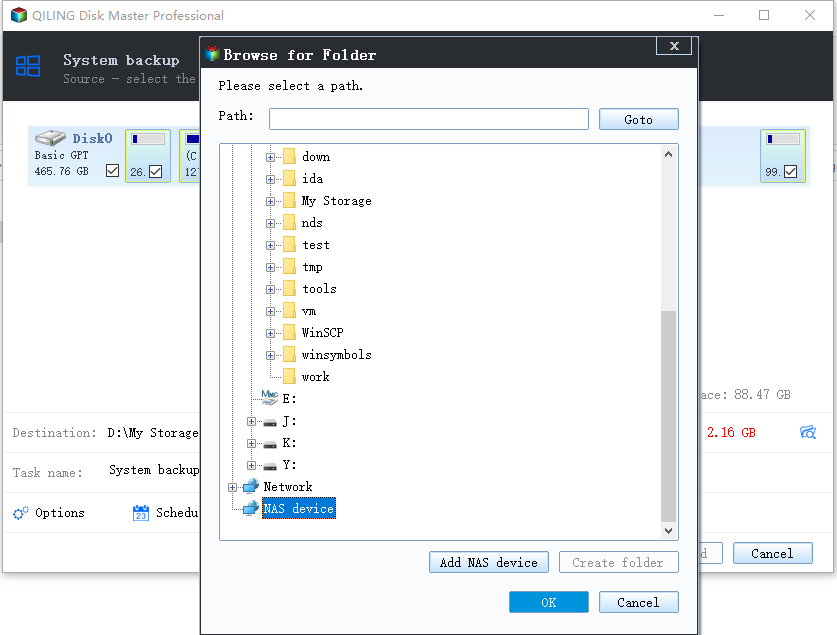
Step 3. The backup location can be another local drive, an external hard drive, network, cloud, or NAS. We recommend using an external physical drive or cloud to preserve system backup files, providing an additional layer of security and protection.
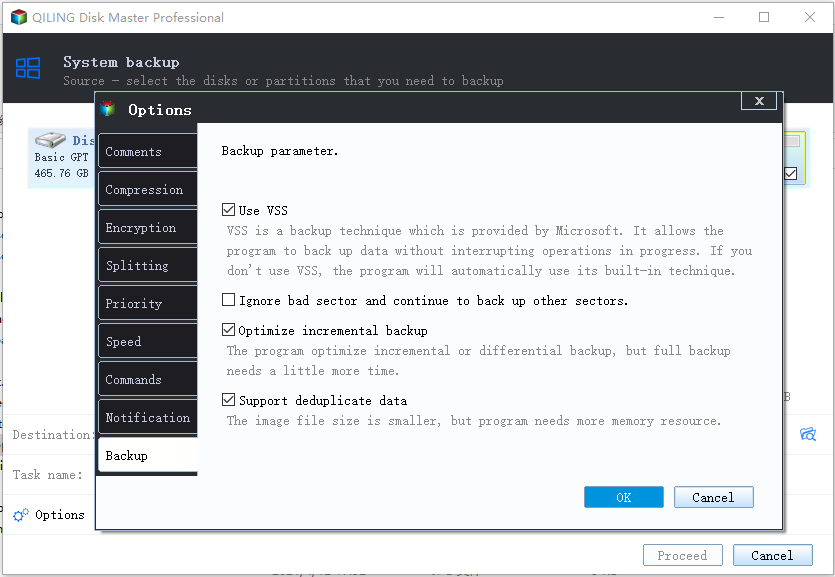
Step 4. Customization settings, such as scheduling automatic backups daily, weekly, monthly, or upon an event, are available in the Options button. You can also choose to make a differential and incremental backup. Once you've made your selections, click "Proceed" to begin the Windows system backup process. The completed task will then be displayed on the left side in a card style.
- Tip
- If your computer can't boot into the system due to serious problems, create a system backup first, then make an emergency disk with Qiling Backup. This will allow you to boot from the emergency disk and restore your system.
Related Articles
- Windows 11 File History: Create File Backups and System Backup Image
- Restore Files from Backup Windows 10 [Backup and Restore Available]
- How Long Does It Take Google Drive to Process a Video
- Top 10 Free Features in Qiling Backup
- [Solved] Windows Server Backup Schedule Not Running Error
Windows Server 2012, 2016, 2019, 2022 backup schedule not running as expected? Read this article patiently to get the possible reasons and solutions, including an easy alternative. - Full Guide: Windows Server In-Place Upgrade vs Clean Install
Compare Windows Server in-place upgrade vs clean install. In-place upgrade preserves settings and data, while clean install starts fresh. Learn the pros, cons, and how to back up your server before upgrading to avoid data loss.
Products
Articles & Tutorials
- Data Recovery
- Data Backup
- File Recovery
- File Backup
- System Backup and Restore
- Disk and Partition Clone
- Technical articles
- Mobile articles
- Disk Master Help
- Windows Data Recovery Tutorials
- Windows Secure Delete Tutorials
- Windows Partition Management Tutorials
- Windows File Backup and Restore Tutorials
- Windows System Backup and Restore Tutorials
- Windows Disk Backup and Restore Tutorials
- Windows Clone Tutorials