Stop OneDrive Backup in Windows 11
| Workable Solutions | Step-by-step Troubleshooting |
|---|---|
| Stop the OneDrive Backup in Windows 11 |
|
Microsoft's OneDrive is a cloud-based service that comes pre-installed with Windows 11, allowing users to back up, sync, and access their files across all connected devices.
OneDrive cloud or Windows 11 OneDrive storage allows you to access and store essential documents across devices, replacing the Backup & Restore and File History features in Windows 11 Settings, which are now accessible through the Settings Menu. Microsoft has replaced the backup function with OneDrive syncing. (Note: This rewritten paragraph is a bit shorter and more concise, while still conveying the main idea.)
There is no difference in features between OneDrive for Windows 10 and OneDrive for Windows 11. The only difference is that Windows 11 has a OneDrive entry in Settings.
Best Free Windows Backup Software - Qiling Backup
- Covers all types of backup content: disk/partition, system, files
- Flexible personalized backup options: incremental, differential, scheduled...
- This tool instantly restores backup files and keeps track of all file paths for future management.
How to Stop the OneDrive Backup in Windows 11
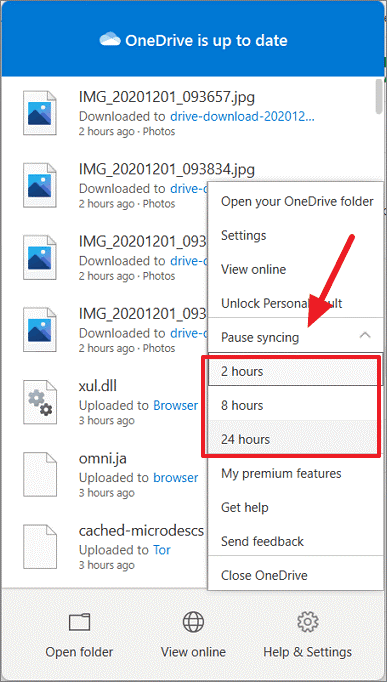
You can pause OneDrive's syncing process for 2, 8, or 24 hours, allowing you to temporarily halt background synchronization, including uploading and downloading, without permanently removing OneDrive.
1. Stop OneDrive from the Navigation Bar
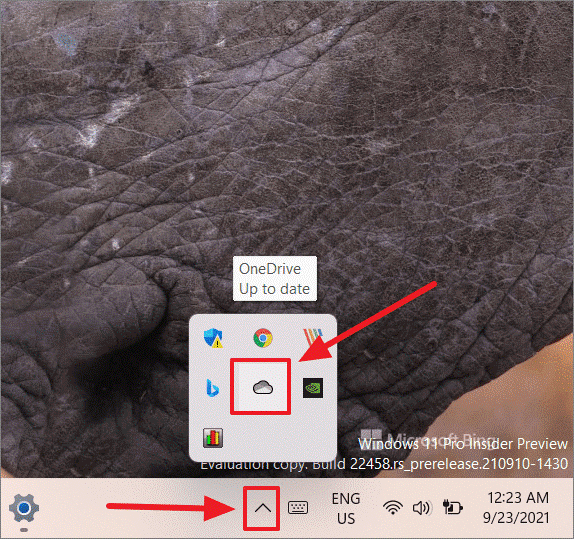
Step 1. To access OneDrive, select the navigation bar corner overflow icon (also known as System Tray), and then click on the OneDrive button (cloud button) within that Notification/Overflow section.
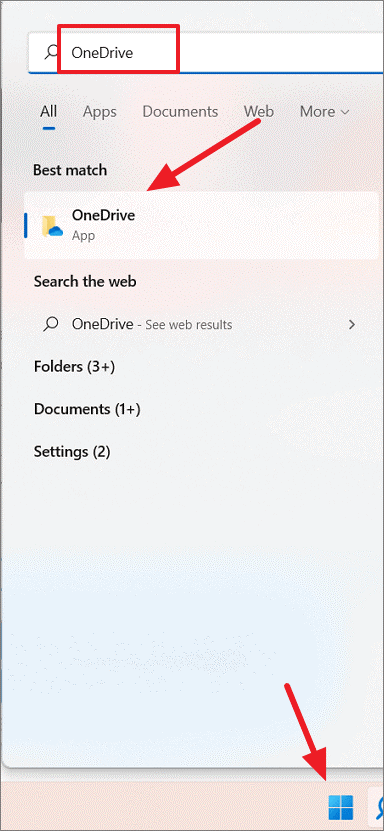
If the OneDrive symbol doesn't appear in the taskbar, you can search for it by opening the Start menu, typing 'OneDrive' in the search bar, and clicking on the OneDrive result.
Step 2. You will be taken to the OneDrive directory, which you can then close. Next, navigate to the corner of the navigation bar and click on the overflow area.
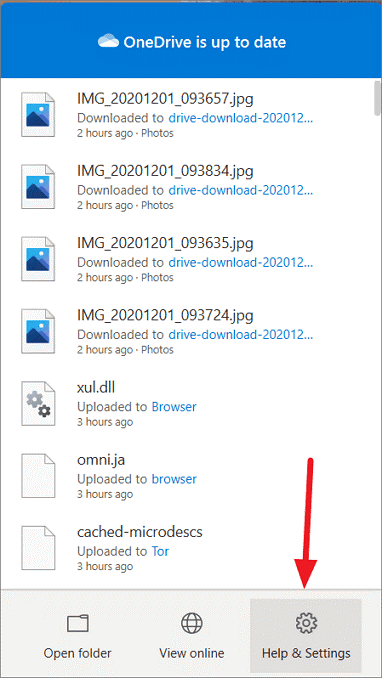
Step 3. To access the OneDrive settings, click on the Microsoft OneDrive icon, then on the OneDrive window, select 'Help & Settings'.
Step 4. Select a time window for which you wish to disable sync by clicking the 'Pause syncing' menu.
The `time.sleep()` function in Python will pause the execution of the program for a specified amount of time, allowing it to resume automatically once the time has passed.
2. Stop OneDrive from Initiating Automatically
You can disable OneDrive from launching automatically when you start your Windows 11 computer by using the OneDrive setting, Startup Apps, and Task Manager. Once you log in to Windows 11, OneDrive will still be accessible, but it won't start running automatically at startup.
To stop OneDrive from automatically starting,
Step 1. To access OneDrive, go to the Overflow dialog boxes, click on the concealed icons, and select the 'OneDrive' icon.
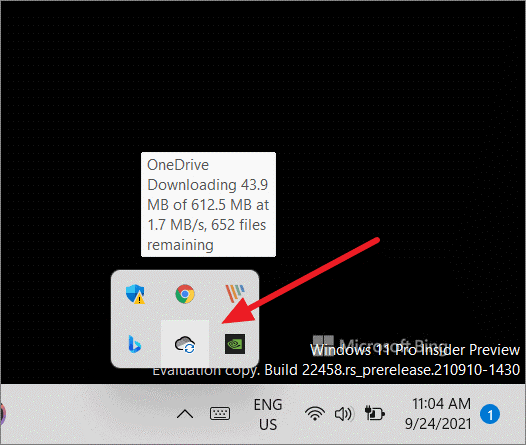
Step 2. From the option that displays, choose 'Settings' from the 'Help & Settings' option.
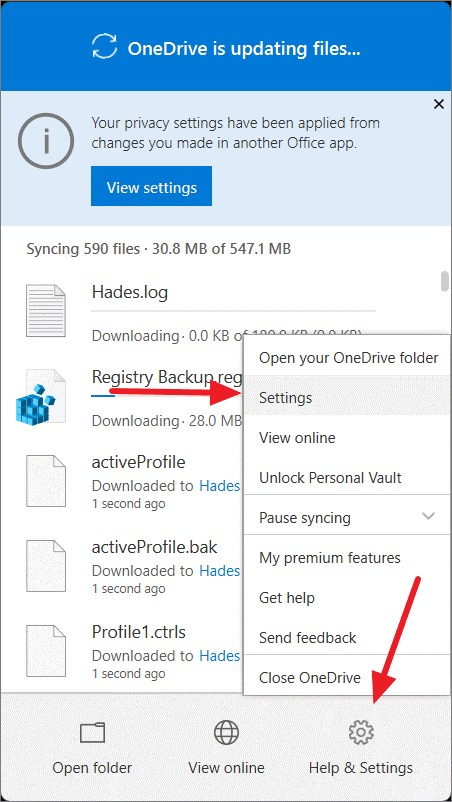
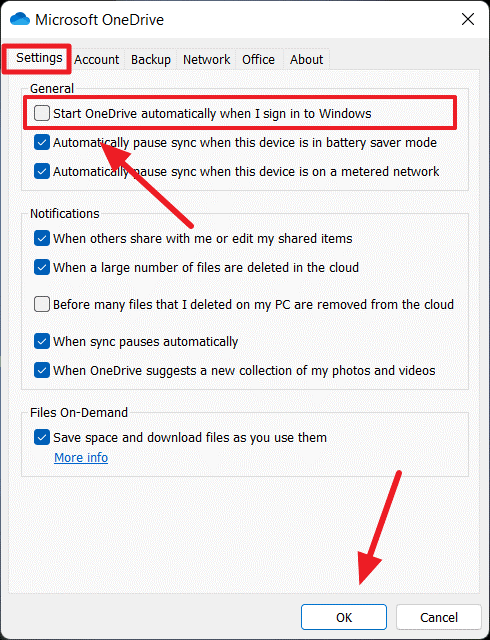
Step 3. To disable OneDrive from starting automatically, go to the OneDrive window, navigate to the 'Settings' page, and uncheck the option that says 'Start OneDrive automatically when I sign in to Windows'.
Step 4. Then press the 'OK' button.
3. Using Windows Settings to Stop OneDrive
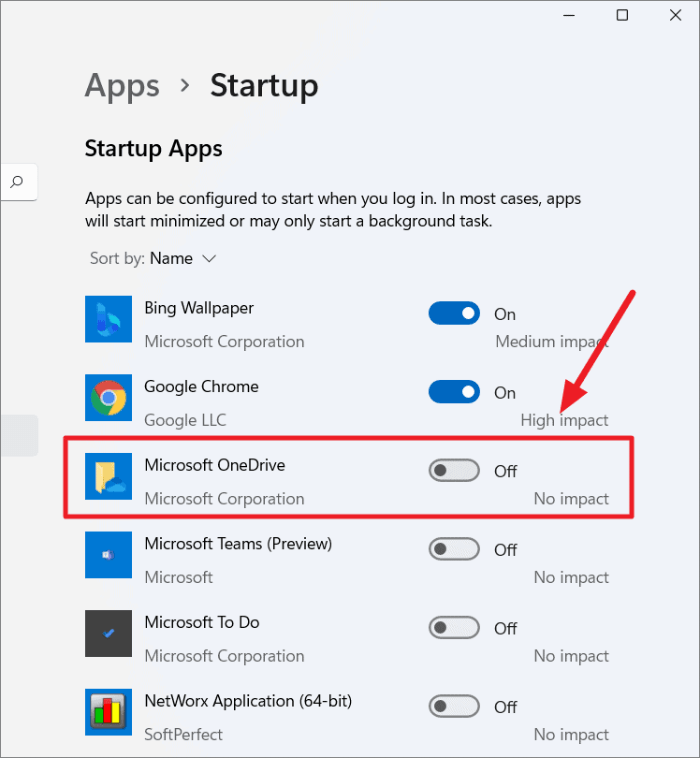
You can prevent OneDrive from automatically launching during Windows 11 startup by deactivating it from the list of launch programs in the Windows 11 settings. This will disable the automatic initiation of OneDrive during Windows 11 launch.
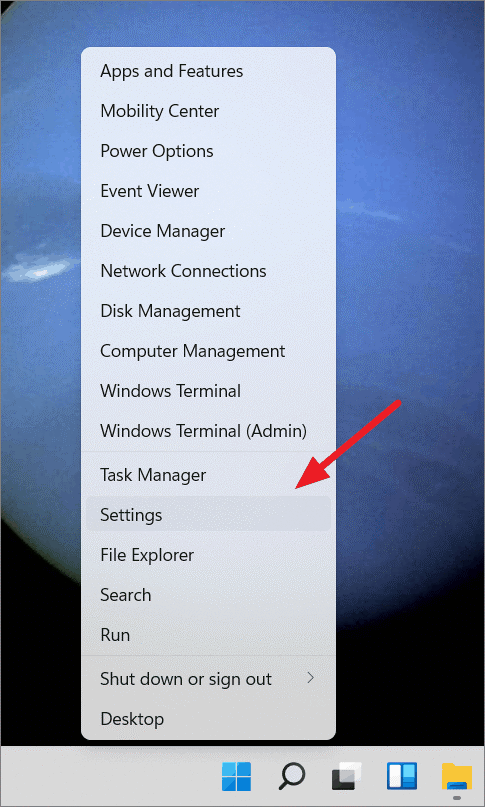
Step 1. To access the settings on your Windows computer, right-click on the Windows icon and select 'Settings,' or use the shortcut command Windows+I.
Step 2. To select the 'Startup' options, first choose the 'Apps' option in the left panel, then select the 'Startup' options on the right side.
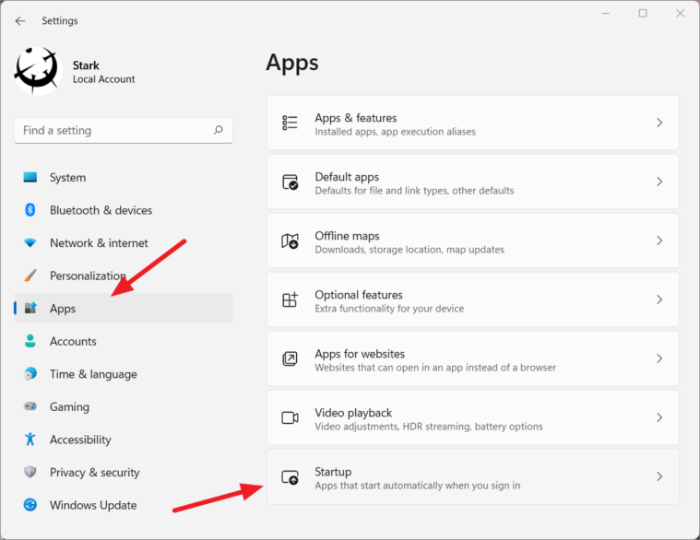
Step 3. To disable Microsoft OneDrive, turn off the slider next to the 'Microsoft OneDrive' option under the startup programs column.
4. Using Task Manager to Stop OneDrive
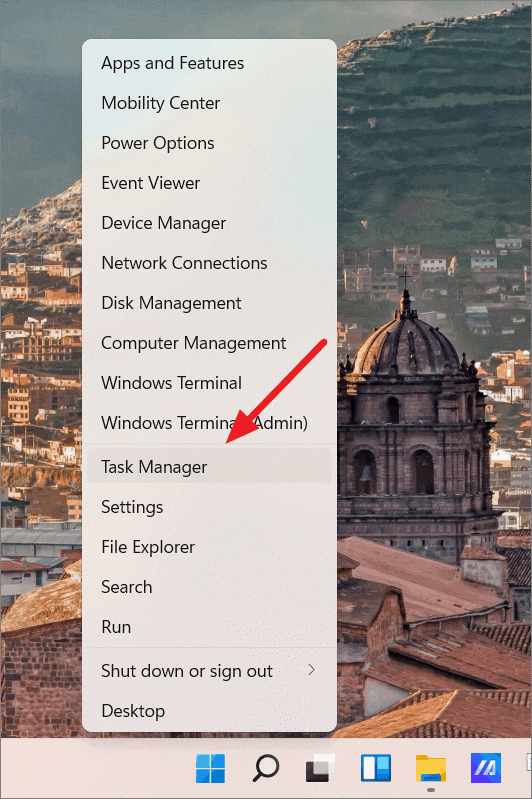
To remove OneDrive from the launch programs list using the Task Manager, you can launch the Task Manager by typing 'Task Manger' into the Windows search box, holding down Ctrl+Shift+Esc, or right-clicking the Start button and selecting 'Task Manager.' Once the Task Manager is open, click on the 'Startup' tab, scroll down to find OneDrive, and click on it to select it. Then, click the 'Disable' button to remove it from the launch programs list. This will prevent OneDrive from automatically launching when you start your Windows device.
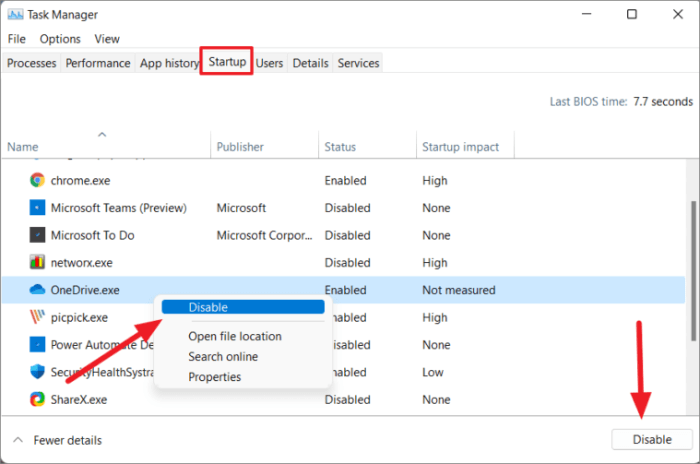
Step 1. Then select the 'Startup' option in the Task Manager interface.
Step 2. To prevent Microsoft OneDrive from launching on system startup, right-click on the 'Microsoft OneDrive' icon and select 'Disable' or choose the 'Microsoft OneDrive' plugin.
Step 3. Select the 'Disable' toggle just at the lower right corner of the screen.
When you turn on your device again, OneDrive will no longer be present. After that, OneDrive will only launch if you explicitly start it.
Online Backup vs. Offline Backup
Offline Backup
Offline backup refers to a data retention method that is stored locally and does not require an internet connection, using mediums such as discs, external drives, or USB memory sticks.
Advantages
Backup and restore in a flash: Offline data storage allows for quicker upload and restore speeds compared to online storage, which is heavily dependent on the quality of your internet service, making it a more efficient option for downloading or retrieving large amounts of data, such as 200 GB.
Easy to find: To back up your files, simply connect your external drive or USB stick to your computer and your files will begin syncing immediately, making it easy to keep a copy of your offline backup available at home or work.
Mobility: Offline backup devices are small and portable, making them easy to take with you on the go for added security.
Improved security: Your offline backups are safe from cyberattacks as long as they're not connected to drives with an internet connection.
Disadvantages
Easily destructible: Offline data backup media like CDs and external drives are not reliable due to their physical vulnerability. Even a significant event or a minor accident can cause irreparable damage to them, making them unusable. Therefore, it's not wise to solely rely on these physical mediums for data backup.
Susceptible to stealing: Offline backups, although not worth thousands of dollars, can be easily resold on platforms like eBay or even found at thrift shops for a reasonable sum, making them an attractive target for petty thieves. Furthermore, many offline backups lack encryption and authentication, leaving personal information vulnerable to unauthorized access by a thief.
Online Backup
Online storage backup services have gained popularity, offering individuals and organizations various cloud services and packages. Each cloud provider has its unique advantages and disadvantages, but some general pros and cons apply to online storage.
Advantages
Encryption Any reputable online backup service encrypts clients' data during transfer with high-level encryption like 256-bit AES or 448-bit Blowfish, the same used by corporations and government institutions.
Easily accessible from any location: You can access your data from anywhere with a Wi-Fi network, thanks to mobile apps and Wi-Fi availability in many public places. This makes it easy and fast to view files on the go, replacing the need to carry external drives.
Protected from physical stealing and natural catastrophes: Your private details are safely stored on the Cloud, so even if your house is hit by a tornado or you fall victim to theft, your information will remain secure.
Disadvantages
There is no direct control: When transmitting data to the cloud, you're putting your faith in the provider, which can be unsettling, especially on a smaller scale where you have less ownership over your data compared to an external drive. On a broader scale, it also means that if the provider's systems fail due to a calamity, your data could be lost.
Dependent on your Internet connection: This product is a significant flop because it doesn't allow for backup or retrieval of files if the Internet is down, making it unreliable.
Conclusion
Windows 11 has replaced File History and Backup & Restore with OneDrive in the Settings, allowing users to sync local files to online backup and vice versa. While online backup is a popular trend, it's still recommended to have both online and offline backups. For those who prefer offline backups, Qiling Backup is a user-friendly option that's easy to use, clean, safe, and powerful.
Related Articles
- Solutions: Windows 7 Backup on Windows 10 Not Working
- Windows 11 Backup Options: Does it Serve your Purpose?
- Ultimate Guide on Windows 10 Restore from Backup
- Quick Solutions | Windows Defender Missing Windows 11
- 2 Simple Ways to Backup Gmail to Google Drive
There are many reasons to back up Gmail to Google Drive. So if you are looking for a reliable way to complete the task, you have come to the right place. On this page, we will explain the detailed procedures to help you save Gmail to Google Drive with no hassle. - [3 Simple Ways] How to Back Up Thunderbird Profile
Backing up your Thunderbird profile is crucial to prevent losing emails and settings in case of a system crash. Fortunately, there are three ways to back up your Thunderbird profile, which will be outlined in this post.
Products
Articles & Tutorials
- Data Recovery
- Data Backup
- File Recovery
- File Backup
- System Backup and Restore
- Disk and Partition Clone
- Technical articles
- Mobile articles
- Disk Master Help
- Windows Data Recovery Tutorials
- Windows Secure Delete Tutorials
- Windows Partition Management Tutorials
- Windows File Backup and Restore Tutorials
- Windows System Backup and Restore Tutorials
- Windows Disk Backup and Restore Tutorials
- Windows Clone Tutorials