SyncToy Windows 10/11: How to Use SyncToy for Backup
Page Content
What Is Microsoft SyncToy Windows 10/11?
How to Use SyncToy?
Attention! SyncToy Not Working Issues
Is There a SyncToy Alternative? See Replacement to SyncToy
People Also Asked: SyncToy Windows 10/11
What Is Microsoft SyncToy Windows 10/11?
Microsoft SyncToy is a file synchronization utility that allows users to sync files and folders between two locations, such as a local machine and a network share.
SyncToy is a tool that allows users to create backups, synchronize files between multiple computers, or keep two folders in sync, supporting one-way and two-way synchronization and compatible with various storage devices.
SyncToy is a free utility included with Windows Vista and later versions, and also available for download from Microsoft's website.
SyncToy Download
Note: SyncToy downloading was discontinued in January 2021.
The official SyncToy download page no longer exists, resulting in a 404 error, and the latest available version is SyncToy 2.1, which is the final version offered by Microsoft.
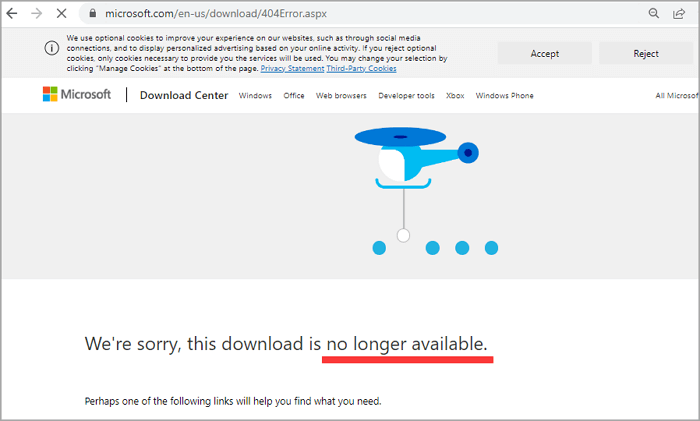
Fortunately, it is available to download from CNET.
Click the green button and install SyncToy.
Confirm the following prompts:
- Read Microsoft Sync Framework 2.0 Core Components agreement and select the "Accept" button.
- I have read and understand the warning above, which states that the system may not work as expected if I click "I agree" without actually reading and understanding the warning. I understand that this warning is a requirement and that I must acknowledge it in order to proceed.
- To install, browse to choose the installation location, then start to download and install.
SyncToy is a free utility from Microsoft that helps you to synchronize two folders. It allows you to set up multiple folder pairs, and then automatically synchronize the files between them.
How to Use SyncToy?
To use SyncToy, first choose the source and destination directories, then select the desired synchronization option from the menu, and finally click the "Synchronize" button to start the process.
Detailed guide:
#1. Check SyncToy's Panel
#2. How to Create a Folder Pair
#1. Check SyncToy's Panel
When you open the SyncToy app, it presents a simple interface containing three main concepts: the folder pair, the synchronization rule, and the action to be performed.
- Left Folder - the folder you want to back up.
- Right Folder To set up a backup location, specify a destination where you want to store files, such as a USB flash drive or an external hard drive. This will be the place where your files will be saved in case of a system failure or other data loss event.
- Create New Folder Pair The "What-Where" backup rule makes backup progress between the left and right folders. This rule ensures that backups are made from the left folder to the right folder, and vice versa, to maintain a consistent and synchronized backup process.
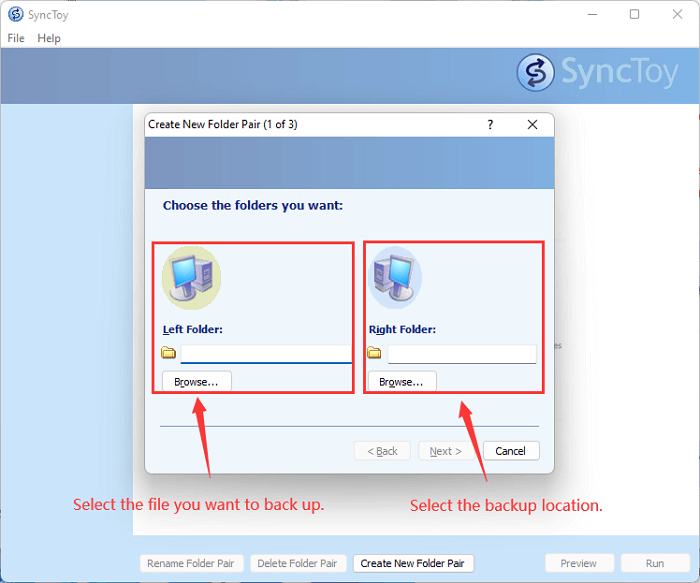
#2. How to Create a Folder Pair
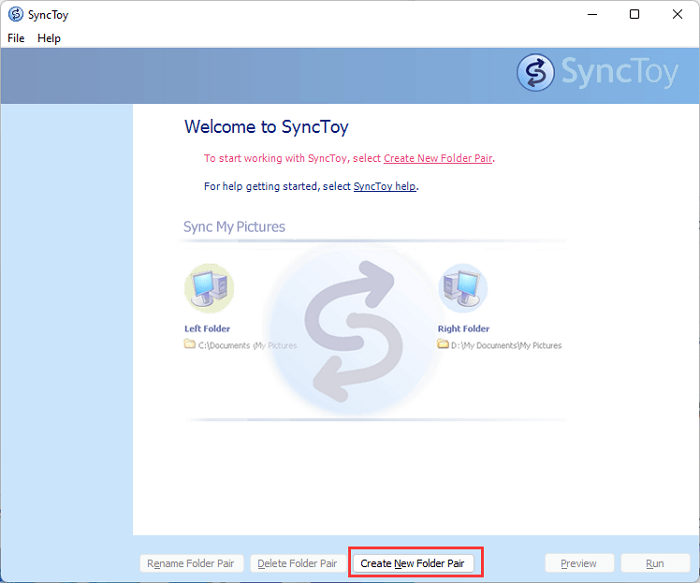
Step 1. Click the "Create New Folder Pair" button.
Step 2. To initiate a backup, click the "Browse..." button and select the folder you wish to back up.
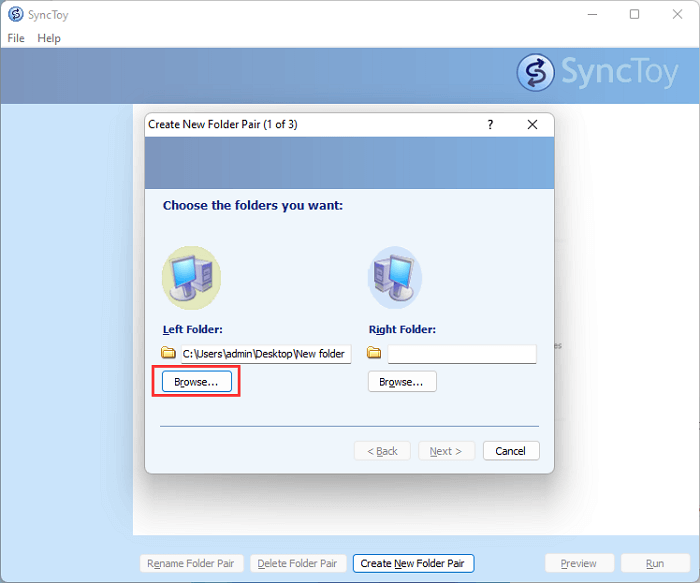
Step 3. To continue, select the location where you want to save the file. This can be a folder on your computer, an external drive, or a cloud storage service. Click "Next" after choosing the desired location.
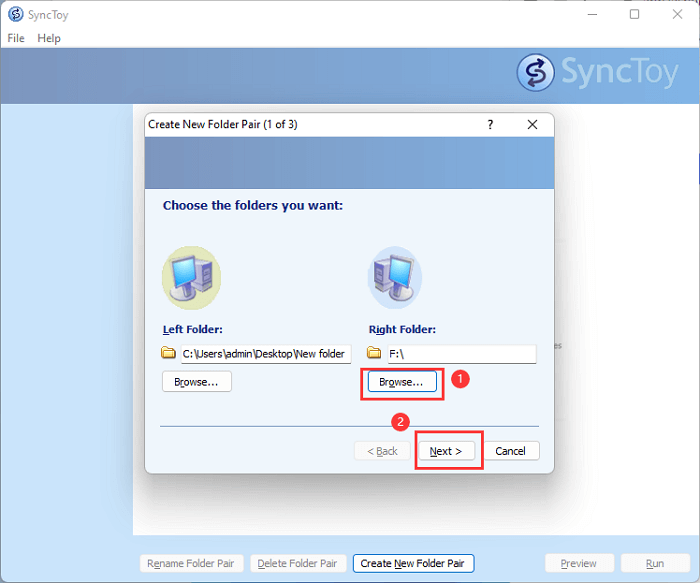
Step 4. Select one of the SyncToy actions in the next panel and click "Next".
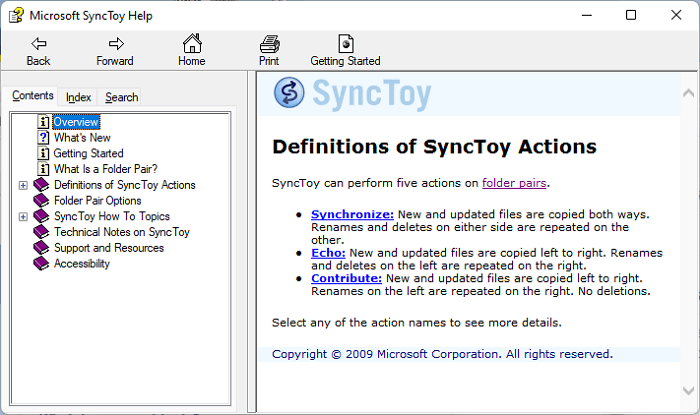
- Synchronize In synchronized mode, files are copied in both directions, ensuring that any changes or additions in either location are reflected in the other location.
- Echo In echo mode, files are copied from the left folder to the right folder, updating the right folder if changes are made in the left folder. But changes made in the right folder are not reflected in the left folder.
- Contribute In contribute mode, files are copied from the left folder to the right folder without any deletions.
💡Which mode should I check?
- Do one-Backing up data from a local computer to an external device, such as Echo, is a crucial step in ensuring data safety and security. This process involves transferring all important files and information from the local computer to the external device, creating a duplicate copy that can be used in case of data loss or system failure.
- Sync data file between two computers - Synchronize.
- Back up data file except for deleted files - Contribute.
Step 5. Name your folder pair and click "Finish".
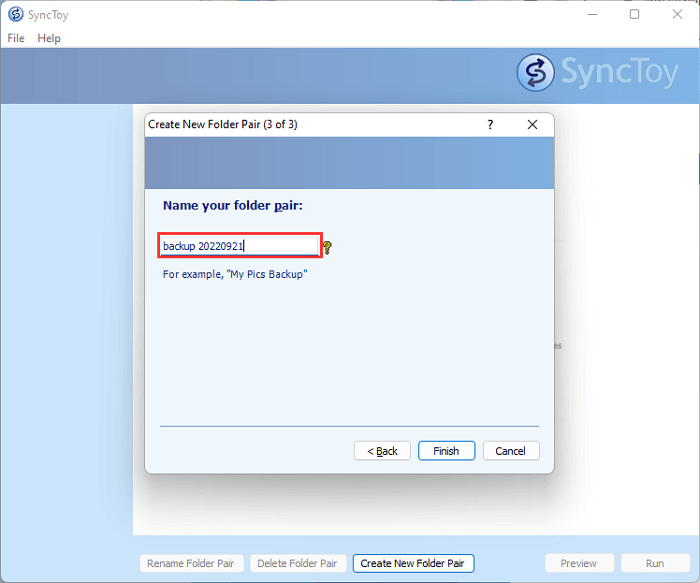
Step 6. The next panel will display the specifics of the backup, including the folder name, the source and destination locations, and the SyncToy action.
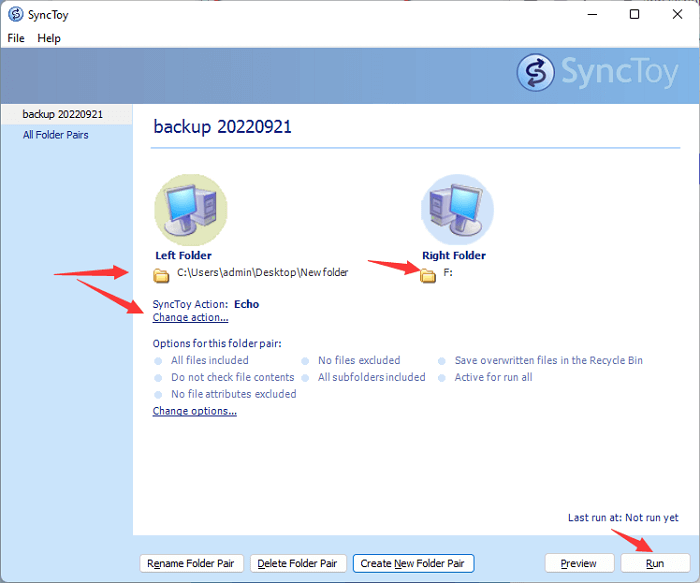
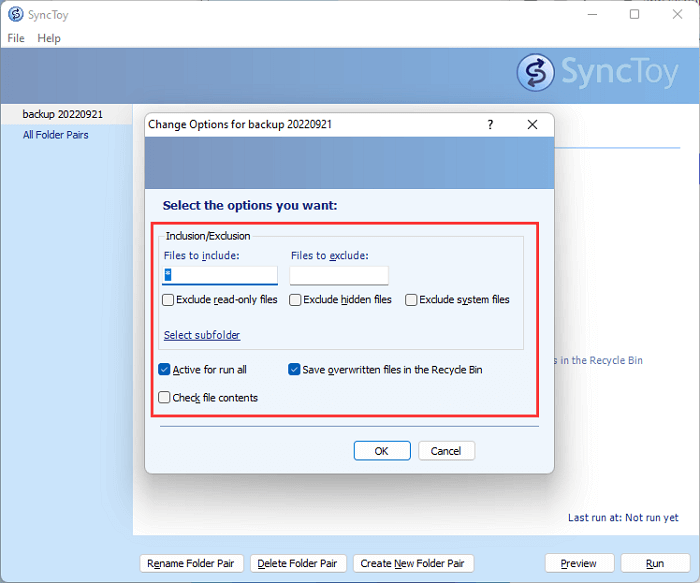
You can click "Change options" to customize file inclusion and exclusion settings.
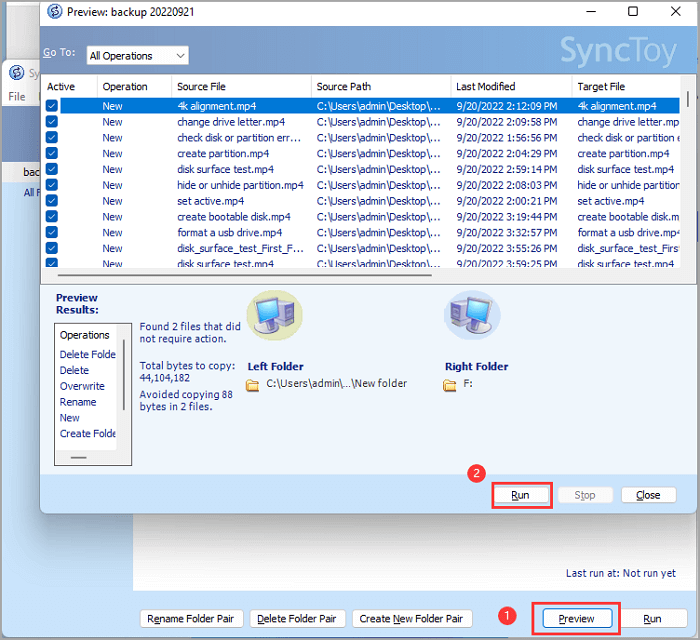
Step 7. Final Step, click the "Preview" and then "Run" button.
Video Tutorial - How Does SyncToy Work
This YouTuber demonstrates the primary usage of SyncToy, a free Microsoft software, and shows how to sync folders using it.
02:24 - Basic information.
04:12 - Start to create a new pair.
Attention! SyncToy Not Working Issues
#1. SyncToy Not Copying All Files
A common issue with SyncToy is that it may not be copying all files from one location to another, potentially leading to incomplete backups or syncs. This can be frustrating for users who rely on the tool for data management.
- Reason 1 - The folders you are trying to synchronize are not set up correctly. This could be due to a variety of reasons, such as mismatched folder names, incorrect folder paths, or missing folders.
SyncToy can only sync two folders on the same drive and requires both folders to be accessible when running, limiting its ability to sync across drives or with network drives that are not currently connected.
- Reason 2 - Some files in the folder are being excluded by SyncToy, which is causing issues with the synchronization process.
The SyncToy default excludes specific files, such as system and temporary files, but custom exclusions can also be added. If files are being skipped, check the SyncToy log file to see which ones are being excluded.
#2. SyncToy Not Syncing When Run As a Scheduled Task
SyncToy can be integrated with Task Scheduler to automate backups at scheduled intervals. This allows users to set up regular backups without having to manually run the program each time.
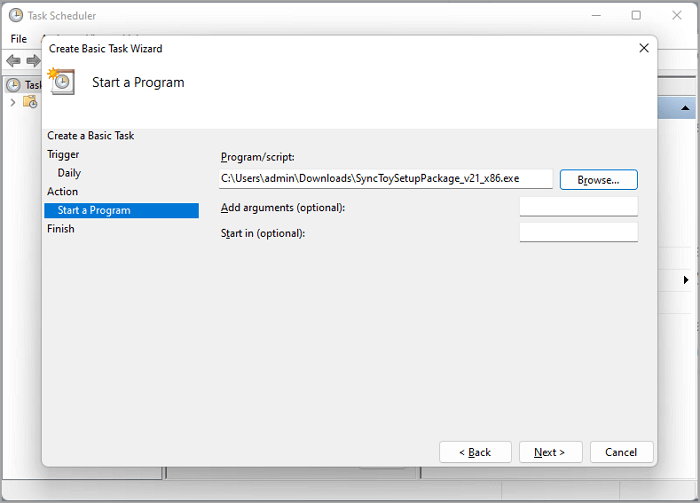
If SyncToy Task Scheduler is not working, check your setup options one more time.
You might be disappointed with these two issues. Why not explore a SyncToy alternative and start an essential and automatic backup instead?

Best Free SyncToy Alternative Software for Windows 10/8/7
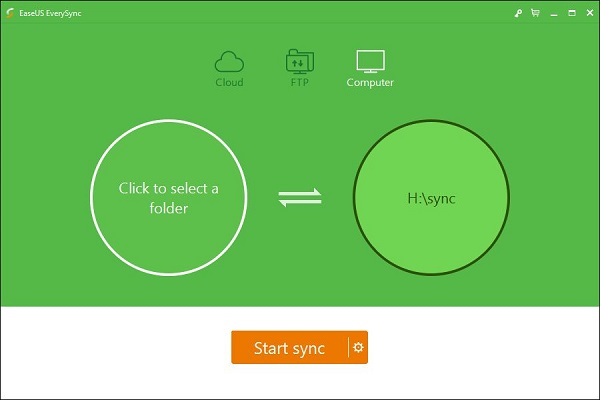
If SyncToy is not working or failing to sync files on your Windows PC, there is a free alternative called Qiling EverySync that can assist you.
Is There a SyncToy Alternative? See Replacement to SyncToy
Qiling Backup is a free and user-friendly software that can back up systems, files, disks, and partitions in all Windows versions, ensuring data security with password-protected backup technology.
Qiling Backup offers flexible backup options, allowing users to schedule data copies to address issues with SyncToy not syncing with scheduled tasks.
Free Download Qiling backup software:
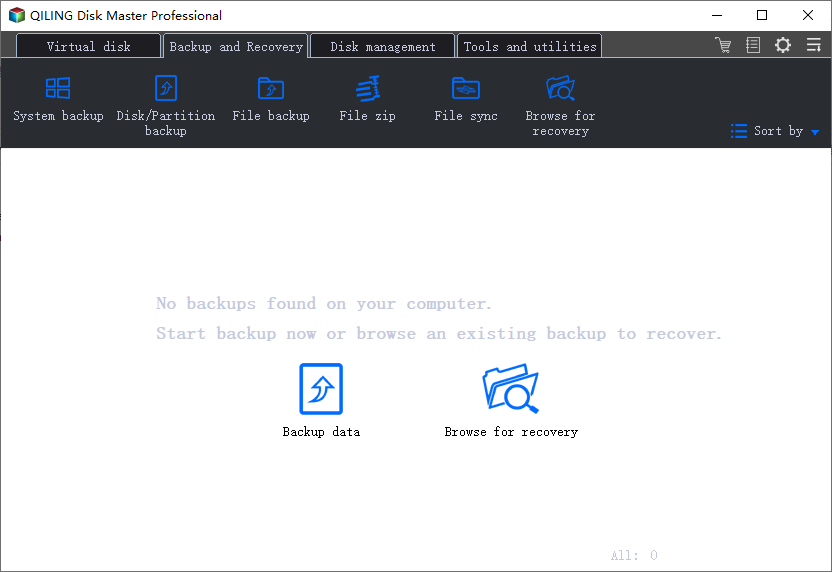
Step 1. To initiate a backup, click the File backup button.
Step 3. On the left, both local and network files will be shown, allowing you to browse and select the desired backup files from the directory.
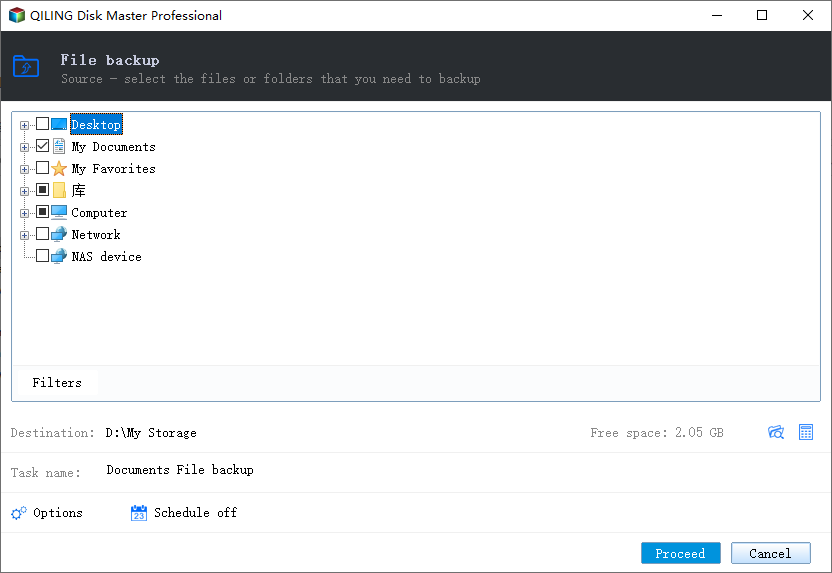
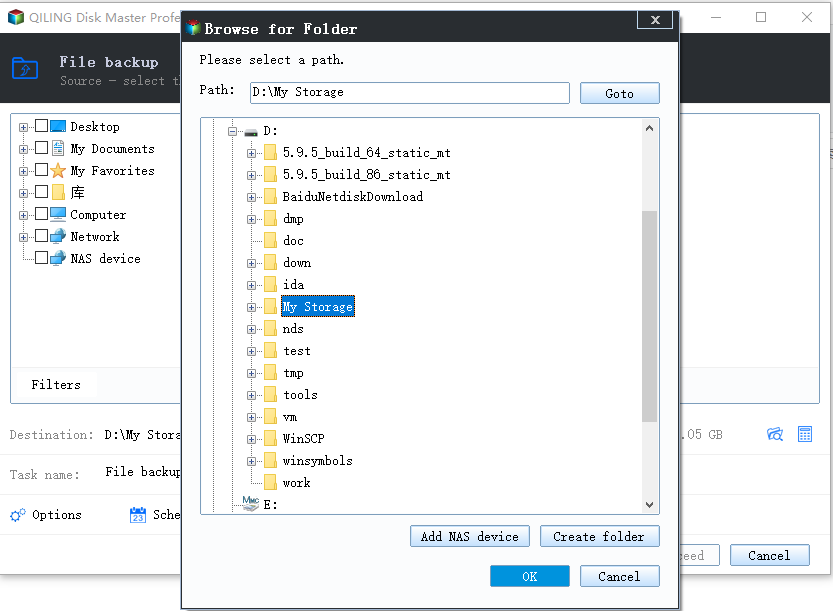
Step 4. Follow the on-screen instructions to choose a location to store the backup.
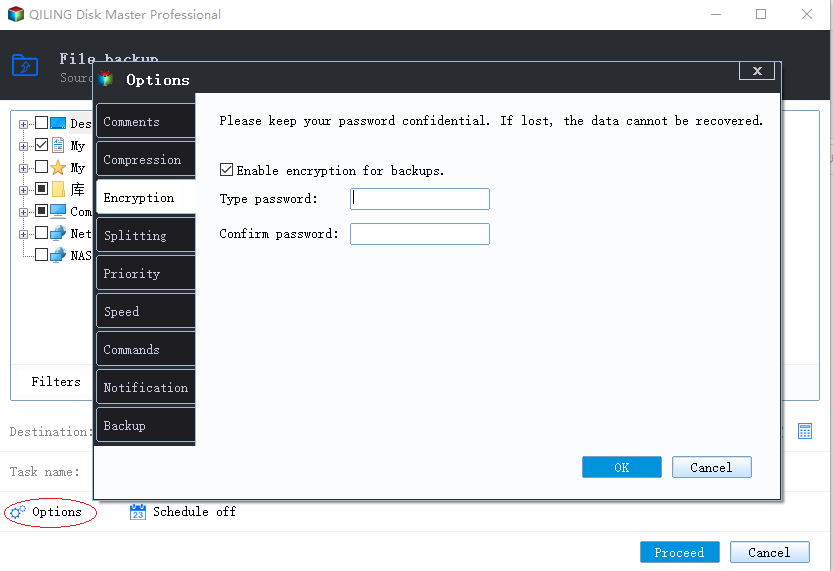
Step 4. To encrypt the backup with a password, click on the "Options" button in the "Backup Options" section. This will allow you to set a password for the backup, providing an additional layer of security. Additionally, you can explore other customization options available in the "Backup Options" section to tailor the backup process to your specific needs.
Click Backup Scheme to specify the backup schedule and start the backup at a certain event, such as daily, weekly, or monthly.
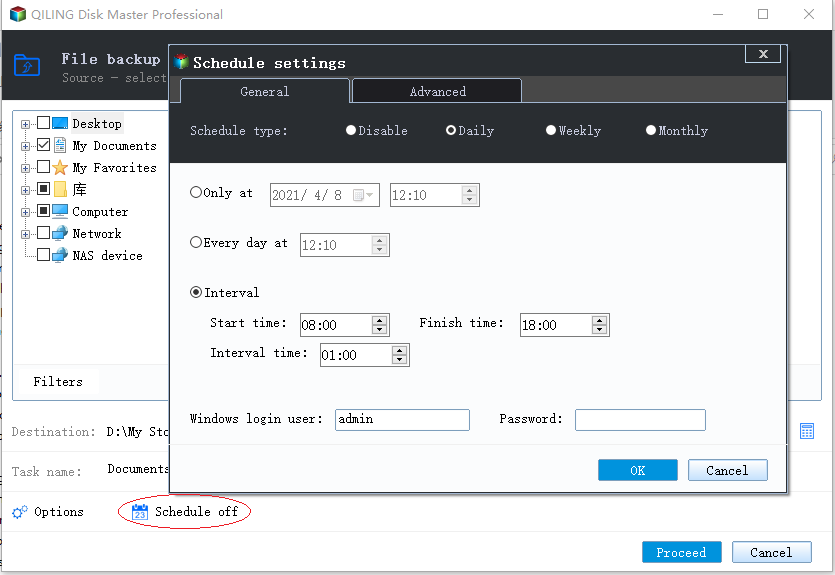
Step 5. The backup can be stored on a local disk, Qiling's online service, or a Network-Attached Storage (NAS) device.
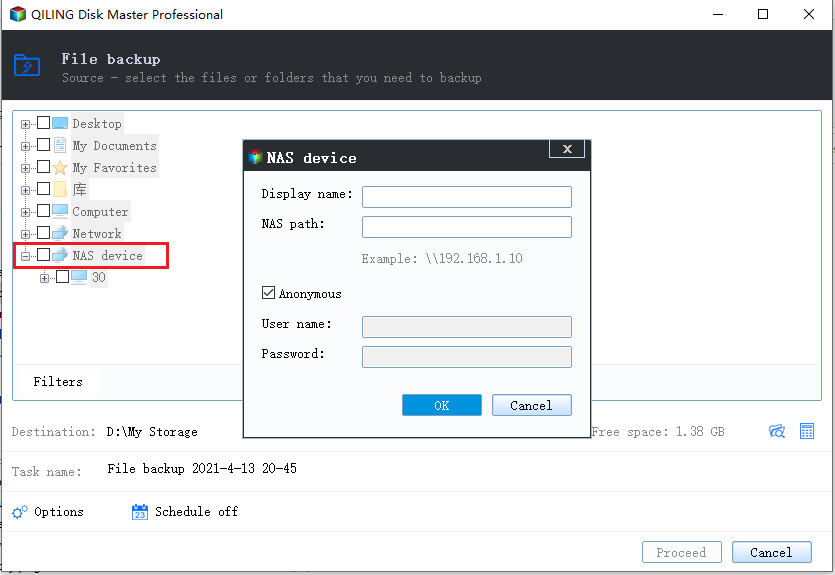
Step 6. Qiling Backup allows customers to back up their data to both a third-party cloud drive and the company's own cloud drive.
To back up data to a cloud drive provided by a third party, select Local Drive, scroll down to add Cloud Device, and then add and log in to your account.
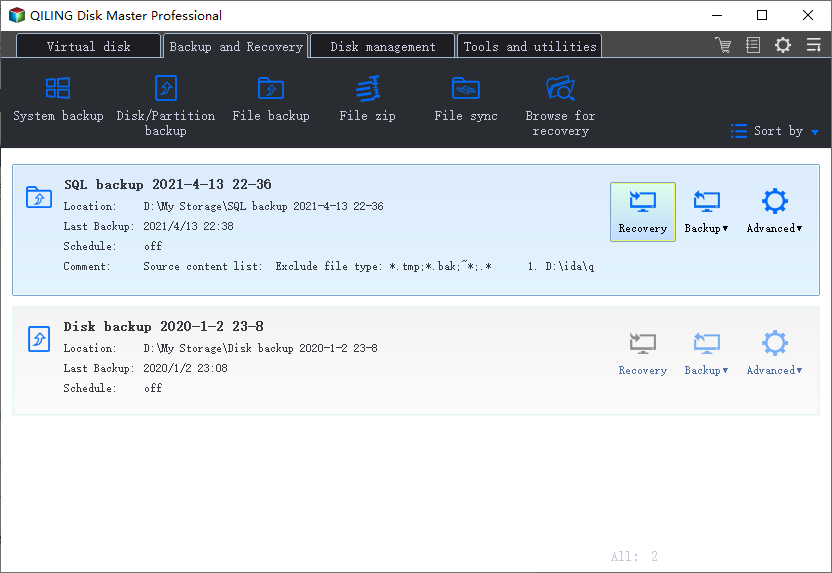
Step 7. To initiate the backup process, click "Proceed" on the panel. Once completed, the backup job will be displayed as a card on the list view of the panel. You can further manage the backup job by right-clicking on it.
People Also Asked: SyncToy Windows 10/11
1. Can I still use SyncToy with Windows 10?
Yes, you can. SyncToy is still compatible with Windows 10.
2. Has SyncToy been discontinued?
The last major update of SyncToy was released in 2021, which may be outdated for some users, and it is no longer available for download from the Microsoft website.
3. What has replaced SyncToy?
Several applications, both free and paid, can perform file synchronization tasks. For example, FreeFileSync is a free tool that allows users to synchronize files between two locations, while paid programs like GoodSync and ChronoSync offer more features and customization options.
If your main goal is to copy only updated files, follow How to Copy Only New or Changed Files in Windows 10 to compare Robocopy with a folder-sync workflow.
Related Articles
- Samsung M.2 SSD Migration Software for Windows[2022 Choice & Guide]
- 3 Fixes to Completely Remove 0x0 0x0 Error for Windows 11/10/7
- 9 Ways to Fix Google Drive Upload Stuck Problem
- How to Back Up Windows 10/11 to OneDrive
- How to Create Clonezilla Bootable USB in Windows [Quick & Easy]🔥
If you're looking to create a bootable USB drive for Clonezilla in Windows, you have two options. While Clonezilla provides an ISO file, many users are curious about how to create a bootable drive using USB for Windows. - How to Create Clonezilla USB with Rufus (2023 Easy Guide)👍
Let's learn how to create Clonezilla USB with Rufus. This post will provide step-by-step instructions that will help you streamline the process of securing and managing your data.
Products
Articles & Tutorials
- Data Recovery
- Data Backup
- File Recovery
- File Backup
- System Backup and Restore
- Disk and Partition Clone
- Technical articles
- Mobile articles
- Disk Master Help
- Windows Data Recovery Tutorials
- Windows Secure Delete Tutorials
- Windows Partition Management Tutorials
- Windows File Backup and Restore Tutorials
- Windows System Backup and Restore Tutorials
- Windows Disk Backup and Restore Tutorials
- Windows Clone Tutorials