USB External Hard Drive Not Showing Up in Windows 11 (99% Users Rated Useful)
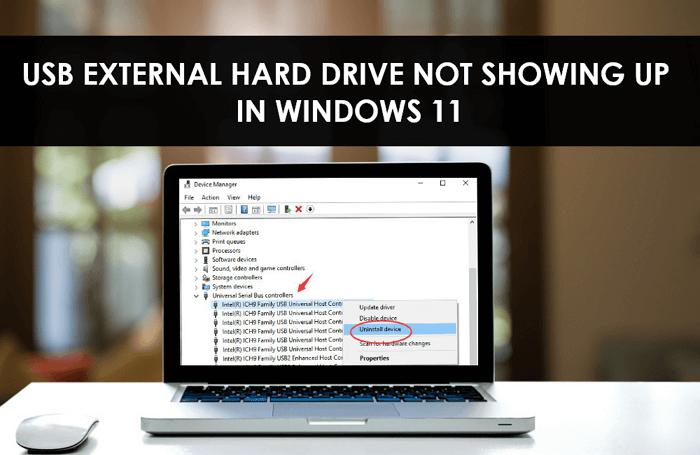
It's frustrating when an external USB hard drive doesn't show up in Windows 11, especially after plugging it in. If you've confirmed a connection but can't find or fix driver issues, don't worry - there are many solutions available online that can help resolve the problem quickly.
Qiling is a free backup software that allows you to create an intelligent copy of important data on your hard drive, USB flash drive, or other storage devices, helping you to prevent data loss in case of hardware failure.
Quick Navigation to All Professional Fixing Methods:
| Workable Solutions | Step-by-step Troubleshooting |
|---|---|
| Fix not showing in File Explorer |
Fix 1. Try other available USB ports...Full steps |
| Fix not showing in Disk Management | Fix 7. Update drivers for USB Root Hub and Generic USB Hub controller...Full steps Fix 8. Reinstall drivers for the not recognized USB drivers...Full steps |
| Fix files & folders not showing up | Fix 9. Show hidden files and folders...Full steps |
| Fix Raw drive not showing up | Fix 10. Convert Raw to NTFS/FAT32/exFAT...Full steps |
Windows 11 Not Detecting My USB External Hard Drive
Some users have reported that Windows 11 does not recognize their USB devices, including external hard drives, after an update, and this issue persists even after upgrading from Windows 10.
If an external hard drive doesn't show up, users should check that it's properly configured and look for any physical damage, and also consider that it might be due to other reasons.
Why is USB External Hard Drive Not Showing Up in Windows 11?
Your Windows 11 system may not detect your external USB storage drive due to various reasons, including issues with the drive itself, the USB port or cable, or the drive's file system being incompatible with Windows 11. Additionally, the drive might not be properly formatted or configured, or there could be problems with the drive's firmware or the Windows 11 operating system's ability to recognize it. Other possible causes include outdated drivers, conflicts with other devices, or hardware malfunctions.
- The device is hidden in Windows 11
- USB port is not working
- Incompatible/outdated drivers
- Incompatible file systems with Windows 11
- Insufficient power supply
- Hard drive corruption
How to Fix USB External Hard Drive Not Showing in Windows 11 File Explorer
Here are the best ways to fix a USB external hard drive not showing in Windows 11 File Explorer:
Fix 1. Try other available USB ports
If your external USB hard drive isn't turning on, check if it's properly plugged into a USB port. You can also try using a different USB port or cable to rule out any issues with the connection. If it still doesn't turn on, try turning it off and then on again to see if it's just a glitch. If none of these steps work, it's possible that the hard drive is faulty and may need to be replaced.
If the hard drive still won't turn on, try swapping the USB cord with a new one, and if it still doesn't work, it's likely that the hard drive itself is damaged.
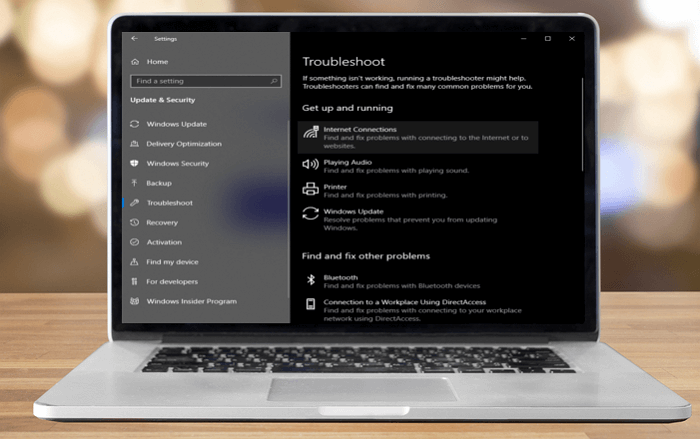
Fix 2. Run Windows 11 Troubleshooter
Windows 11 has a built-in tool called the Hardware and Device Troubleshooter that can help fix issues with external hard drives and flash drives.
To access and run the troubleshooter,execute the following steps:
- Open the Windows 11 Settings panel (Windows + I).
- First, select the "Update and Security" option from the Windows Settings panel.
- Click on the Troubleshoot tab and choose Hardware and Devices from the right pane.
- Click on the Run the Troubleshooter button.
- The troubleshooter will scan your system and display a list of issues found, allowing you to identify and address any problems that may be affecting your computer's performance.
- From this list, choose the one you want to fix.
- Click Next to complete the process.
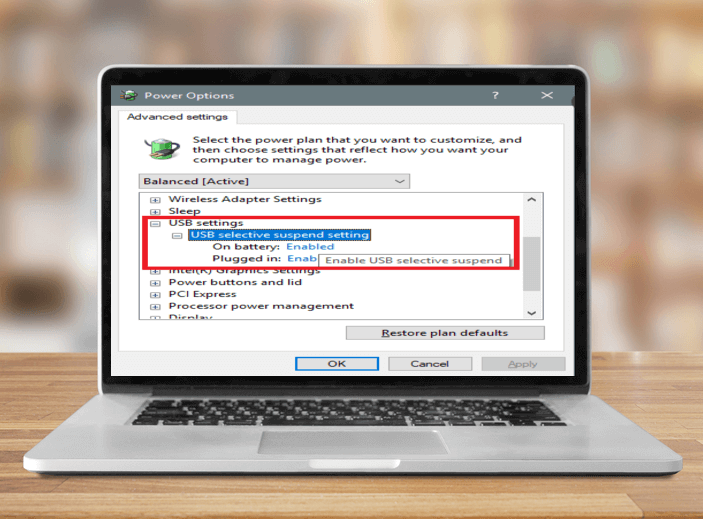
Fix 3. Enable USB selective suspend setting
- Open the Run window and type "devmgmt.exe," and press OK
- The device manager window will open, listing all the devices on your computer.
- Locate Universal Serial Bus controllers and expand the category
- To locate devices with "Hub" in their name, select the Generic USB Hub, right-click on it, and choose Properties.
- Select the Power Management tab from the window which opens
- Allow the computer to turn off this device to save power
- Finally, press OK to enable the USB selective suspend setting
Fix 4. Disallow Windows 11 to turn off this device to save power
- Go to the Power Options from Control Panel.
- To change the plan settings and prevent the computer from putting itself to sleep, go to the settings menu and select the option to never put the computer to sleep.
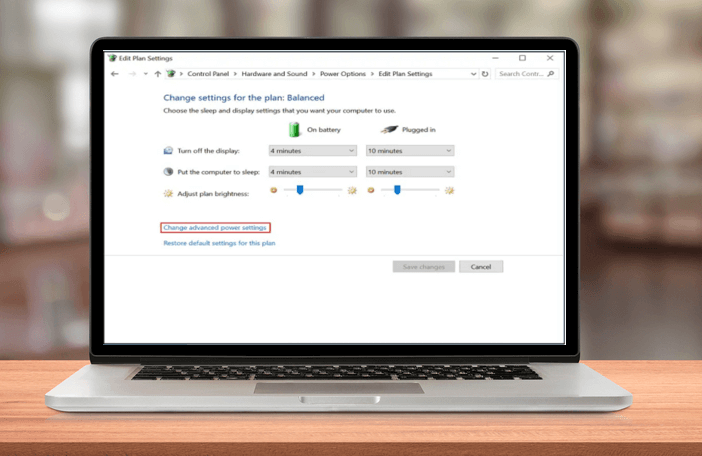
- To access the Power Options, go to your Start menu, then to Control Panel, and select Hardware and Sound, then Power Options, then Change plan settings, then Change advanced power settings, and finally expand Hard Disk and Sleep.
- You want to disable the option to turn off, hibernate, and sleep the computer after a certain period of time. You want these features to be disabled and not available.
- Now, click Apply and click Save Changes. Disable USB selective suspend settings or related USB settings if they are enabled.
- To turn off the display after a certain period of time, go to the Control Panel, click on the Device Manager, and set the "Turn off display after" option to "Never".
- Open Network adapters and select Properties from the Network card.
- Now, enter the Power Management tab and ensure that the box for "Allow the computer to turn off this device to save power" is unchecked.
- Now, press OK to finish the process.
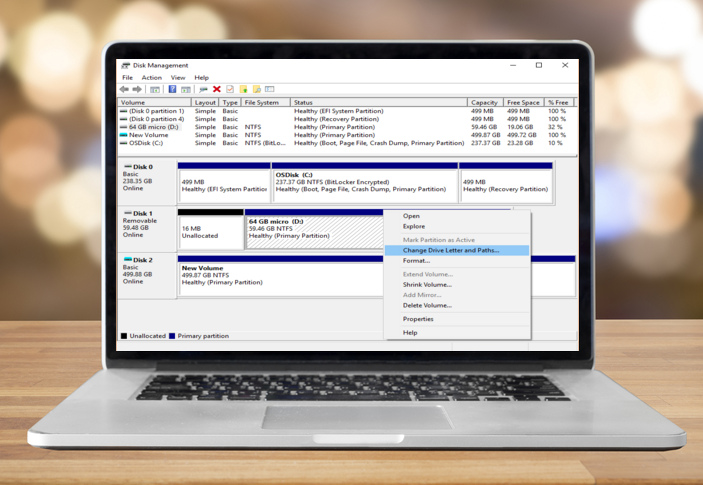
5. Assign a new drive letter to the USB drive
To change the drive letter and paths, open Disk Management, go to Change Drive Letter and Paths, and press OK to finish the setup.
Fix 6. Format the external USB drive with NTFS or exFAT format
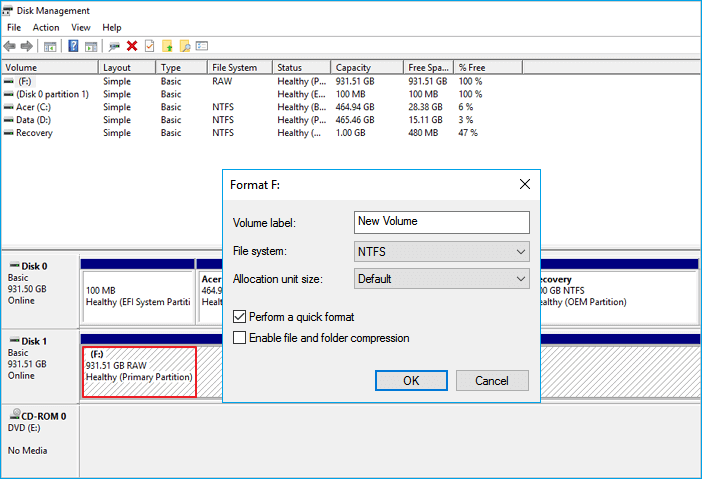
Within the disk management, you'll find the option to format the external USB drive. To proceed, follow the steps outlined in the article on how to format an external USB hard drive, which includes a detailed process guide with accompanying images.
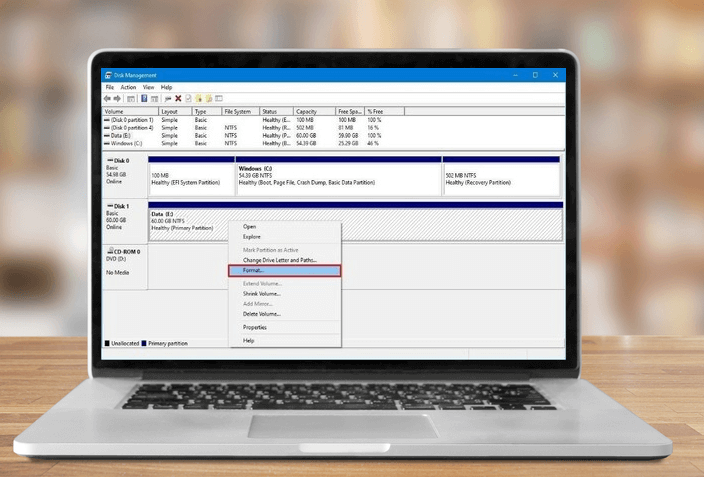
However, formatting the device will delete your data, but you can use Qiling Backup Free to back up the hard drive for free if necessary.
Qiling Backup Free
- Supports full disk/partition backup of files, programs and operating system
- To safeguard data from a failing hard drive, a comprehensive backup strategy is essential. This involves creating a significant backup of all critical files and data to a separate storage device, such as an external hard drive, cloud storage, or a network-attached storage (NAS) system.
- Makes a bootable rescue media to access a none-bootable
How to Fix USB External Hard Drive Not Showing in Windows 11 Disk Management
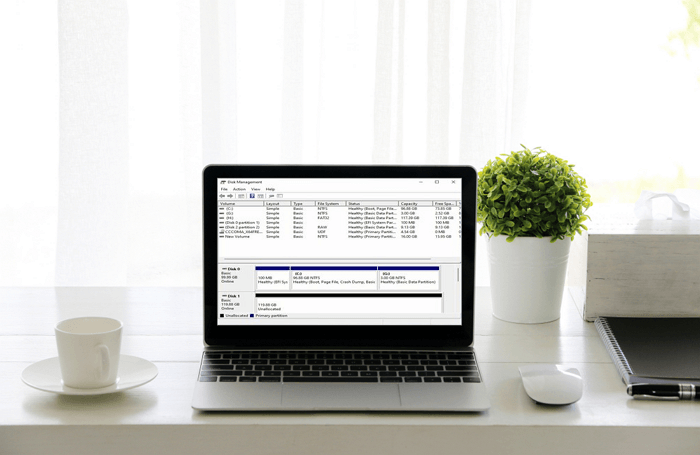
If your USB external hard drive is not showing in Windows 11 Disk Management, there are two methods to fix the issue. You can try using the built-in Disk Management tool to initialize the disk and make it visible, or you can use the Command Prompt to assign a drive letter to the external hard drive and make it accessible.
Fix 7. Update drivers for USB Root Hub and Generic USB Hub controller
To resolve the issue, go to Device Manager, update the drivers for the USB Root Hub and Generic USB Hub controller, as shown in the image above.
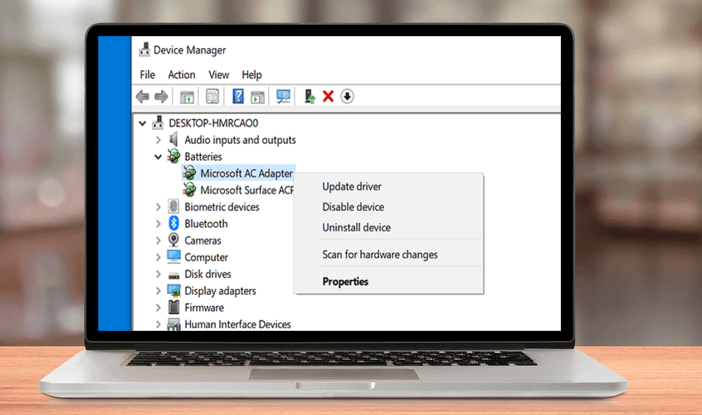
Fix 8. Reinstall drivers for the not recognized USB drivers
To resolve the issue of a USB device not being recognized, you can try reinstalling the drivers for the device. This can be done by going to the Device Manager, where you can locate the USB device and right-click on it to select the option to uninstall and then reinstall the drivers. This should allow the device to be recognized by your computer again.
More Troubleshooting Tips for Windows 11 Not Recognizing an External USB Drive
If you're having trouble recognizing an external USB drive, try simple troubleshooting steps such as unplugging and replugging it, checking the drive's power source, and verifying that it's properly formatted. If the issue persists, try using a different USB port or a different computer to rule out any issues with the drive or the original computer. If the drive still doesn't show up, it's possible that the drive is faulty or the computer is experiencing a hardware issue.
Fix 9. Files & Folders Not Showing up in External Hard Drive in Windows 11
To show hidden files, folders, and drives in Windows 11 File Explorer, follow these steps: Go to File Explorer, click on the three dots at the top right corner, and select "Settings." In the Settings window, click on the "View" tab. In the View tab, toggle the switch next to "Hidden items" to the "On" position.
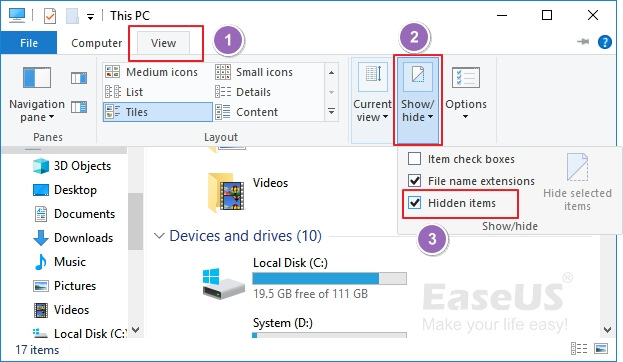
Fix 10. RAW USB hard drive that is not detecting in Windows 11
A raw USB hard drive won't show up normally until you format the Raw file system with a recognized NTFS, FAT32 or exFAT file format, which can be done using the same procedure as Fix 6.
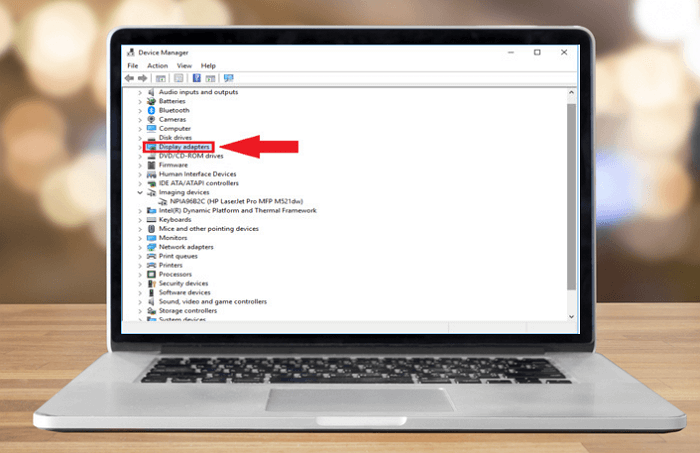
You can fix the issue of a RAW USB hard drive not being detected in Windows 11 by updating the USB driver, which can be done by following the steps shown in the image above.
How to Fix External USB Hard Drive Not Showing Problem Without Losing Data
To enable your external USB storage on Windows 11, you can try the methods mentioned earlier. If your external hard drive is not recognized, using third-party software like Qiling Backup can be a helpful alternative. This software is user-friendly and can be used by anyone, making it a good option to consider. Ultimately, backing up your data is the most reliable way to protect it, especially if your external hard drive is not being recognized by your computer.
Qiling Backup Free
- Supports full disk/partition backup of files, programs and operating system
- To safeguard against data loss from a failing hard drive, a comprehensive backup plan can be implemented. This involves creating a significant backup of all essential files and data, either locally on an external drive or remotely through cloud storage services.
- Makes a bootable rescue media to access a none-bootable
FAQ on USB External Hard Drive Not Showing Up in Windows 11
How do I get Windows 11 to read my external hard drive?
To get Windows 11 to read your external hard drive, connect it to your computer using a USB cable, access it by going to My Computer or This PC, and double-clicking on the drive. If needed, try a different USB cable or port, or reformat the drive using Windows 11's Disk Management tool.
Why is my USB external hard drive not showing up?
There are a few possible reasons why your USB external hard drive is not showing up. It could be that the drive is not properly connected to the computer, or the drive is not formatted to be recognized by the computer. Additionally, the drive's power source may be faulty, or the drive itself may be damaged.
- The device is hidden in Windows 11
- USB port is not working
- Incompatible/outdated drivers
- Incompatible file systems with Windows 11
- Insufficient power supply
- Hard drive corruption
Related Articles
- Solutions: Windows 7 Backup on Windows 10 Not Working
- How to Get Windows Activation Key and Start Windows 11
- System Image Recovery vs. System Restore in Windows 11/10/8/7
- Qiling Backup Free vs Home: Am I Giving Too Much Away?
- 3 Ways to Migrate Installed Games from C Drive to Another Disk in Windows 11
Migrating your games from the C-drive to other drives is a good idea to avoid potential risks of data or settings loss. The C-drive is a central hub for operating system files, making it a high-traffic area. - 2 Safe Ways to Migrate QuickBooks to New Server
Migrating QuickBooks to a new server can be done using two safe and efficient methods, which are outlined in this post to help you complete data migration successfully.
Products
Articles & Tutorials
- Data Recovery
- Data Backup
- File Recovery
- File Backup
- System Backup and Restore
- Disk and Partition Clone
- Technical articles
- Mobile articles
- Disk Master Help
- Windows Data Recovery Tutorials
- Windows Secure Delete Tutorials
- Windows Partition Management Tutorials
- Windows File Backup and Restore Tutorials
- Windows System Backup and Restore Tutorials
- Windows Disk Backup and Restore Tutorials
- Windows Clone Tutorials