Recover Lost Data from USB Flash Drive on Mac OS X/macOS
Mac USB Flash Drive Overview
A pen drive is a portable USB flash memory device used to store various types of files, such as photos, documents, and music tracks. Despite its convenience, losing data on a pen drive can be a significant issue. To recover lost data from a pen drive on a Mac, it's essential to understand the causes of data loss, which can include accidental deletion, formatting, or physical damage. Understanding these causes can help users take preventive measures to avoid data loss and know how to recover lost data if it does occur.

Factors May Cause Data Loss on Pen Drive
Here are some common reasons for pen drive data loss:
- Virus attack
- Hardware malfunction
- Improper shutdown
- Human wrong operations
- Software corruption
If you're looking to avoid losing data from your USB flash drive, there are steps you can take to prevent accidents. However, if you do end up losing data, there is a way to recover it. If you've lost data from a USB flash drive on a Mac, you can use a reliable solution to get your data back. This solution can also be used to recover lost data from a pen drive on a Mac, providing a straightforward and secure way to retrieve your lost files.
Best USB Flash Drive Recovery Software for Mac
If you're experiencing trouble due to data loss on your pen drive, you can use Deep Data Recovery for Mac to effectively retrieve your lost data. This all-in-one data recovery software can easily handle various data loss occasions, providing a convenient solution to your problem.
- This software helps to recover over 200+ file types, including deleted Excel, Word, and PPT files, as well as photos, videos, music, and other files from your Mac's internal or external hard drive.
- This software enables the recovery of data from various storage devices, including Mac hard drives, USB pen drives, digital cameras, and external storage devices.
- This software can be easily installed on all Mac systems, from Mac OS X 10.9 to macOS 10.14 (Mojave).
| Tech Specification | Details |
|---|---|
| Supported System | Latest macOS 10.15 and OS X above 10.9 |
| Software Size | 37MB |
| Data Recovery Process | 3 Step Recovery: Select Location - Scan - Preview & Recover |
| Price | $89.95 (30-Day Refund Policy) |
How to Recover Data from USB Pen Drive on Mac OS X/macOS
To recover deleted files from a Mac USB drive, stop using the device as soon as you realize you'll need to perform data recovery. This prevents the operating system from overwriting the files, making it easier to recover them. Follow the simple steps to recover your deleted files.
Step 1. Launch Deep Data Recovery, select the file types you want to recover and click "USB/SD Scan" to initiate the recovery process.
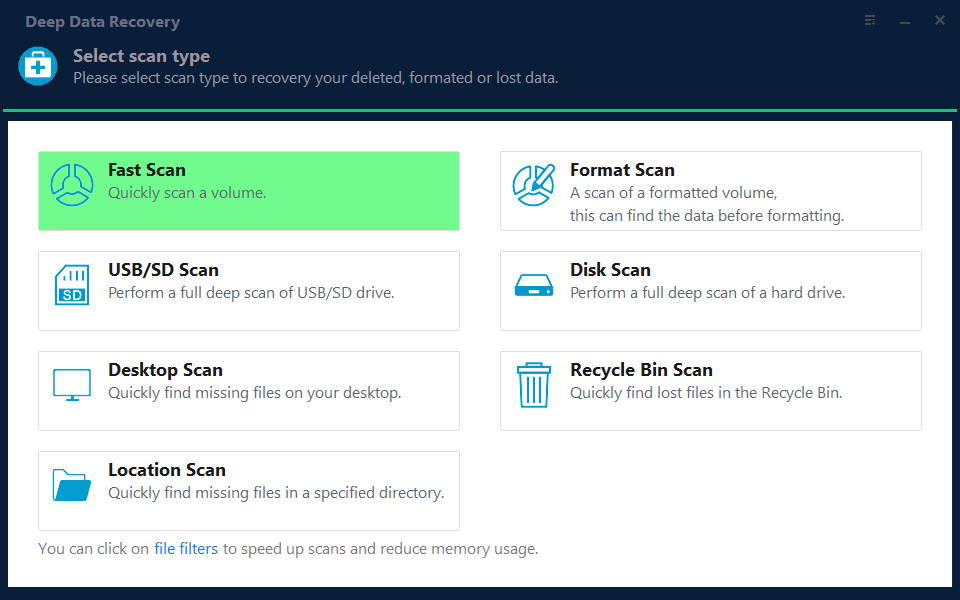
Note: You can choose different search modes based on where and why the data was lost.
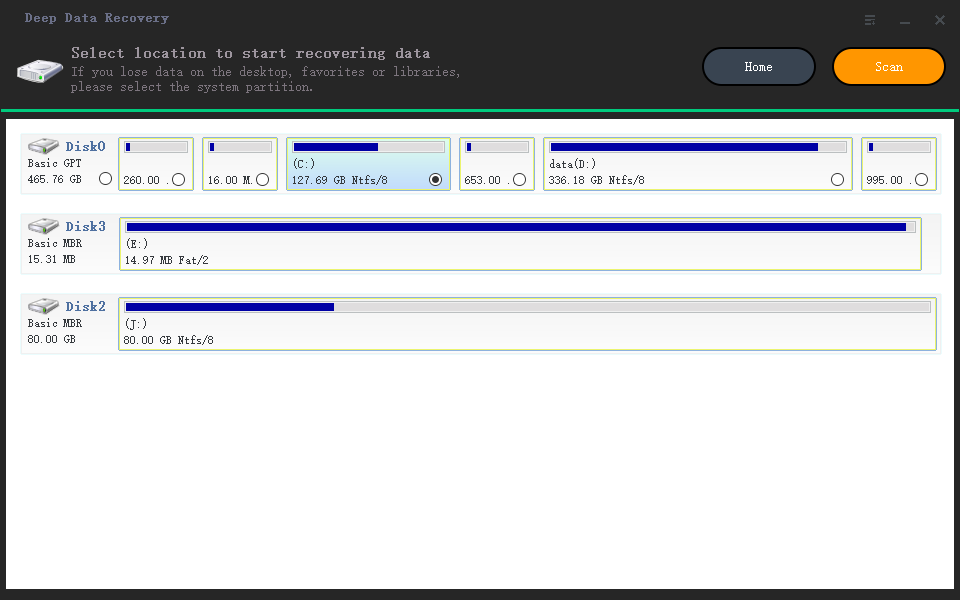
Step 2. Connect your USB flash drive to your Mac, then launch Deep Data Recovery for Mac. Select the flash drive and click "Scan" to start the software's search for lost files on the drive.
Step 3. After scanning, all files will be displayed in the left panel in the scan results, following a quick scan and a deep scan.
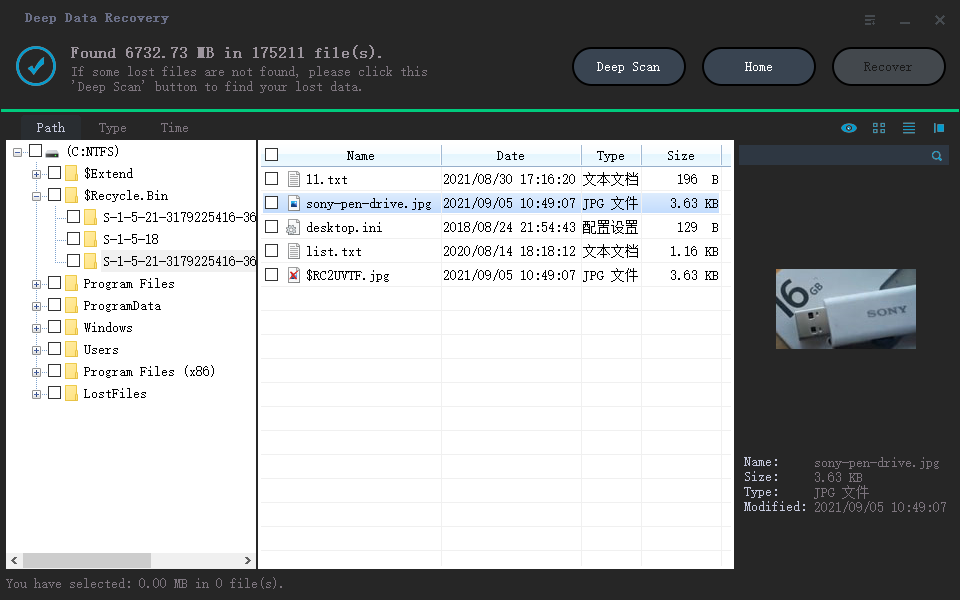
Step 4. Select the files you want to recover and click the "Recover" button. Avoid saving the recoverable files to the same drive or device to prevent data overwriting.
Tips to Prevent Data Loss on USB Drive
This easy tutorial on how to recover deleted files from a USB Flash drive on Mac can be helpful. In addition to recovering deleted files, learning how to protect your USB flash drive or pen drive is also essential to keep them safe.
Make Backups regularly
Back up your data on a USB drive regularly to prevent losing it in case of corruption or damage. Don't wait until it's too late, take some time to create backups of your important files and data.
Steps to turn on data protection:
Step 1. Click the lock icon on the right side of the partition. This will lock the partition and prevent it from being accessed until the password is entered.
Step 2. Turn on "Simple Protect" or "Complete Protect" based on your requirements.
Tip 3. Remove Pen Drive Carefully
Safely remove your USB drive after you are done using it. To do this safely, remove the USB on Mac:
Step 1. To hold the "Control" key on a Mac, press the key located on the bottom left of the keyboard with the mouse pad on your Mac, not on the keyboard, but rather on the trackpad. This is a common point of confusion.
Step 2. Select "Eject" from the menu.
Then, you can eject your USB flash drive safely.
Conclusion
USB drives and pen drives are widely used for sharing files and adding extra storage capacity, but can be a source of frustration when data is lost. Fortunately, Qiling Mac data recovery software can help, allowing you to recover deleted data, including photos, documents, and other file types, from your USB flash drive or internal and external hard drive on Mac, in just a few clicks.
Flash Drive Recovery Related Questions
Some Mac users may experience issues beyond pen drive data recovery, such as corrupted files, lost data, or unreadable storage.
How to restore deleted files from a USB flash drive on Mac?
To recover deleted files from a USB drive on Mac:
Step 1. To recover data from a USB flash drive on your Mac, correctly connect the USB flash drive to your computer, then launch Deep Data Recovery for Mac.
Step 2. Select the flash drive and click Scan to let the software search for lost files on it.
Step 3. To recover your files, select the ones you want to recover and then click the "Recover Now" button.
Can you retrieve deleted files on Mac?
If you've deleted files on your Mac, you can often restore them quickly from the Trash. If you've emptied the Trash, you may still be able to recover deleted files using Time Machine backup files, undo options, or terminal commands.
Is there a Trash Bin on my flash drive?
The Mac operating system creates a hidden trash folder on each drive, called .Trashes, which can be accessed by enabling the view of hidden folders, allowing recovery of recently deleted files directly from a flash drive.
How to fix a corrupted flash drive without losing data?
To fix a corrupted USB:
Step 1. To use your USB flash drive or pen drive, first, you need to plug it into your computer's USB port. This is typically located on the front or side of the computer.
Step 2. To access the Command Prompt, go to the Start menu, type "cmd" in the search bar, hit enter, and you will see the "cmd.exe" program listed.
Step 3. To repair a USB drive, start by right-clicking on the cmd.exe file, selecting "Run as Administrator," and then typing the command "chkdsk /f X:" (where X is the letter of the USB drive). This will scan the drive for errors and attempt to fix them. If the drive is severely damaged, you may need to use a data recovery software to recover your files before attempting to repair the drive. It's also a good idea to back up your important files to an external hard drive or cloud storage before attempting to repair the drive, as the process may result in data loss. Additionally, if the drive is still under warranty, you may be able to get it replaced or repaired by the manufacturer.
Related Articles
- How to Recover Unsaved/Deleted Quicktime Recordings
- (Easy!) How to Delete Apps on Mac
- Folllow 4 Ways to Fix External Hard Drive Files Not Showing on Mac
- Best Data Recovery Solutions for Mac with T2 Chip in 2022
- How to Recover Missing/Disappeared Files in Windows 10 Easily
This guide offers several simple and free methods to recover missing files in Windows 10 after a Windows update or reinstall. - How to Recover Permanently Deleted Excel File from Desktop?
Recovering a permanently deleted Excel file from your desktop can be achieved through various methods, as outlined in this article. The steps to recover the file are provided to help users restore their Excel file.
Products
Articles & Tutorials
- Data Recovery
- Data Backup
- File Recovery
- File Backup
- System Backup and Restore
- Disk and Partition Clone
- Technical articles
- Mobile articles
- Disk Master Help
- Windows Data Recovery Tutorials
- Windows Secure Delete Tutorials
- Windows Partition Management Tutorials
- Windows File Backup and Restore Tutorials
- Windows System Backup and Restore Tutorials
- Windows Disk Backup and Restore Tutorials
- Windows Clone Tutorials