How to Recover Data from A Fusion Disk
Everything About Mac Fusion Drive
A Fusion Drive is a hybrid drive that combines a hard disk drive (HDD) and a solid-state drive (SSD) to create a single storage unit. Unlike traditional SSDs or HDDs, Fusion Drive doesn't store files separately on each drive, but rather uses macOS to interleave data across both drives, creating a seamless storage experience. This hybrid approach offers advantages, including improved performance and capacity, making it a popular choice for users who want the best of both worlds in a single drive.
- The SSD and the hard drive are logically merged into a single block device, allowing the operating system to access them as a single entity.
- A portion of SSD space is used as a write-back buffer to absorb incoming write traffic, making write performance faster and hiding perceivable latencies.
- The more frequently used data is stored on the SSD, while the less frequently accessed data is stored on the HDD.
- When data is frequently accessed on a Fusion Drive, it's typically moved to the SSD (solid-state drive) by the program controlling the drive, assuming the data was previously stored on the HDD (hard disk drive).
To get a Fusion Drive, you can check if your Mac model supports it, as not all Macs have this option. The Fusion Drive is typically available on most iMacs, but not on MacBook or Mac Pro models. You can also check your Mac's specifications manually to confirm if it has a Fusion Drive.
To determine if your Mac has a Fusion Drive, go to "About This Mac" and select "Storage". If it displays "Hard Drive + Flash Storage" or "Fusion Drive", it indicates the presence of a Fusion Drive.
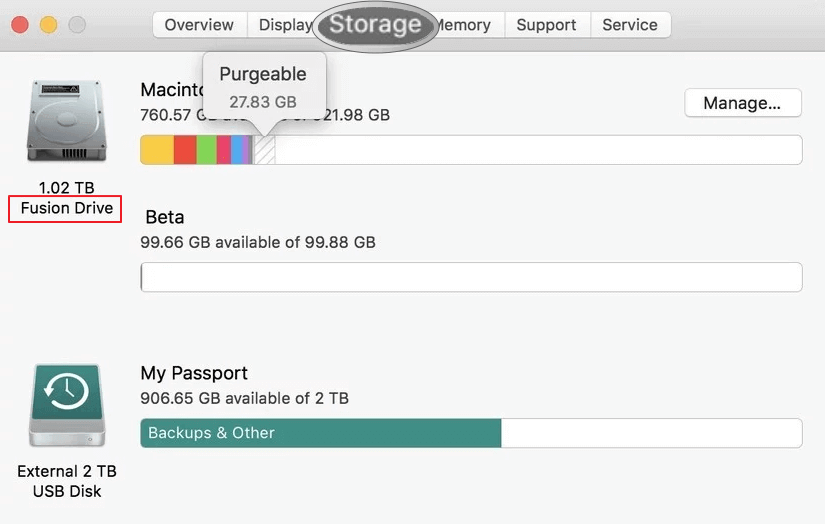
Why Do You Lose Data on Fusion Drive
Fusion Drive may experience issues and data loss, just like any other storage device, due to various reasons such as hardware failure, software glitches, or user errors.
- Accidentally deleted files or formatted disk/partition
- Virus attack or hardware failure
- Fusion Drive becomes unbootable
- The storage is presented as two drives instead of one, with the user being able to choose which drive to use for certain operations.
How to Recover Data from A Fusion Disk
If you've lost data from your Fusion Disk, there are three possible ways to recover it. You can use data recovery software, which can help retrieve deleted or lost files. Alternatively, if you had a backup of your data, you can restore it from the backup.
1 - Use Mac Data Recovery Software
If you've lost data on your Mac Fusion Drive and don't have a backup, don't worry - Qiling Mac data recovery software can help! This DIY solution can recover all major file types, including documents, photos, videos, and audio files. With Deep Data Recovery for Mac, you can even recover lost data from your Fusion Drive. Simply download the software and you'll be able to retrieve your lost files.
Step 1. Launch Deep Data Recovery, select the desired file types, and click "Fast Scan" to initiate the recovery process.
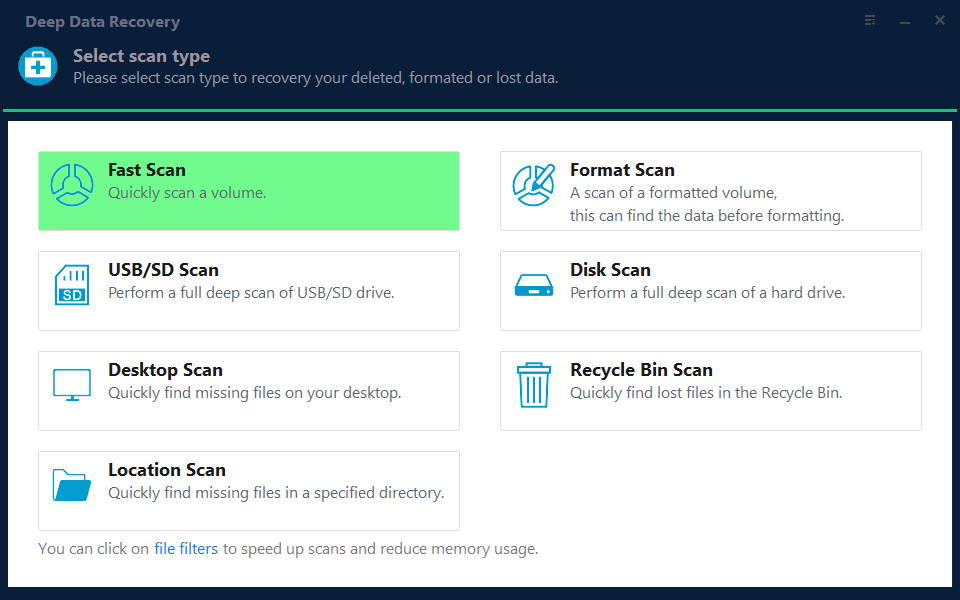
Note: You can choose different search modes based on where and why the data was lost.
Step 2. Select the Fusion Drive partition where you lost data and files, then click the "Scan" button. If unsure, click the "click here" link to check the partition name.

Step 3. Deep Data Recovery for Mac will immediately scan your Fusion disk partition and display the scanning results on the left pane.

Step 4. To recover deleted files, select the desired file(s) from the scan results and click the "Recover" button to retrieve them.
2 - Use a Backup
If you have a backup of your Fusion Drive, you can recover data from the backup drive, which is a proactive way to prevent data loss in case of a disaster.
Also Read: How to Backup Mac without Time Machine
3 - Use Data Recovery Service
This solution would cost a lot. If you're using data recovery service, you'd need to send both storage media that comprise a Fusion Drive to the service provider.
How to Fix a Split Fusion Drive (Extra Tips)
If the Fusion Drive appears as two separate drives in the Finder, you can either continue using them independently or follow a series of steps to resolve the split Fusion Drive issue.
1 - Check whether there is a drive labeled as Fusion Drive.
- If there is, and you do not need to do anything
- When you have two drives with different storage capacities, you need to combine them into a single logical volume to utilize the available space effectively. This allows you to store data on both drives, making the most of the total storage capacity. (Note: I've rewritten it in one paragraph as requested)
2 - Create a Fusion Drive again.
Make sure that you have a backup before you start the steps below. Here we take macOS Mojave as an example.
Step 1: To start up from macOS Recovery on your Mac, turn it on and press and hold the "Command-R" keys simultaneously. Release them when you see the Apple logo.
Step 2: Choose "Utilities > Terminal" from the menu bar.
Type diskutil resetFusion in the Terminal window, then press "Return".
Step 3: Type "Yes", then press "Return".
Once Terminal indicates that the operation was successful, close Terminal to return to the macOS utility window, then select "Reinstall macOS" and follow the on-screen instructions to reinstall the Mac operating system.
The Mac has created a Fusion Drive with reinstalled macOS and boots from the drive.
Related Articles
- Mac USB Recovery: Recover Deleted Files from USB Flash Drive
- Screenshots Management - How to Crop a Screenshot on Mac
- How to Find External Hard Drive on Mac In Case It's Working but Not Showing Up
- How to Recover Files on Mac after Shutdown in 4 Ways
- 12 Best Free Partition Recovery Software in 2023: Recover Deleted/Lost Partition
If you're looking for the best free partition recovery software, you're in luck as there are 12 free tools available for both Windows and Mac that can help you recover lost partitions. - Top 6 iPod Recovery Software for 2023
Looking for the best iPod data recovery software? We've got you covered! The top 6 iPod recovery software can help you recover lost data on your iPod easily and effectively, making it a reliable solution for your data recovery needs.
Products
Articles & Tutorials
- Data Recovery
- Data Backup
- File Recovery
- File Backup
- System Backup and Restore
- Disk and Partition Clone
- Technical articles
- Mobile articles
- Disk Master Help
- Windows Data Recovery Tutorials
- Windows Secure Delete Tutorials
- Windows Partition Management Tutorials
- Windows File Backup and Restore Tutorials
- Windows System Backup and Restore Tutorials
- Windows Disk Backup and Restore Tutorials
- Windows Clone Tutorials