Time Machine Restore Button Greyed Out, How to Fix?
If you're experiencing a Time Machine greyed out issue on your Mac, there are two parts to help you resolve it. Follow the steps to fix it now.
| Workable Solutions | Step-by-step Troubleshooting |
|---|---|
| Part 1. Time Machine Greyed Out | Solution 1. Open Finder > Click "Enter Time Machine"; To reboot your Mac, press the power button until it turns off, then press it again to turn it back on. If the issue persists, try pressing Command + R repeatedly until the Apple logo appears, which can help reset the system. This process can resolve various problems, including a frozen or unresponsive Mac. If you're still experiencing issues, you may want to consider resetting the System Management Controller (SMC) or the Power Management Unit (PMU), or even performing a full system restore.Full steps |
| Part 2. Recover Lost Data | When Time Machine greyed out, run Qiling recovery software > Scan device > Restore lost data...Full steps |
Overview of Time Machine Greyed Out
Since the Restore button is greyed out, it seems that Time Machine is not recognizing the backup as a valid restore point. This could be due to a corrupted backup or a software issue. To recover your lost files, you can try using a third-party data recovery software, such as Disk Drill or Data Rescue, to scan your MacBook Pro for deleted files. These tools can often recover files even if the Restore button is greyed out. Alternatively, you can try running a System Report in Terminal to see if there are any issues with your Time Machine setup. If none of these methods work, you may want to consider consulting a professional data recovery service.
Time Machine, the built-The Time Machine backup feature on your Mac automatically backs up all your files, including apps, music, photos, email, documents, and system files. However, if you experience data loss, you may encounter issues when trying to restore from your backup, such as the Time Machine restore button being greyed out, which can be caused by various problems.
- Time Machine backup HDD was formatted.
- Time Machine backup was incomplete.
- Time Machine backup was corrupted.
Fixes for Time Machine Restore Greyed Out
The Time Machine backup may appear greyed out due to incorrect usage of the "Enter Time Machine" feature or a hard disk error. To resolve the issue, try the suggested solutions.
The right ways to Enter Time Machine:
The solution is: First, open the Finder window, then click "Enter Time Machine".
To fix the issue, simply reboot your Mac and, as it boots up, press and hold the Command (⌘) + R keys until you see the Apple logo. Release the buttons and enter the macOS Utilities environment. From there, select "Restore From Time Machine Backup" and the option should no longer be greyed out, allowing you to proceed with the restore process.
If there's a backup hard disk error, such as formatting or corruption, the only viable option is to use professional Mac data recovery software to recover lost files.
How to Recover Data on Mac When the Time Machine Restore Greyed Out
If you're unable to restore data from a Time Machine backup, don't get frustrated. Instead, you can use Deep Data Recovery for Mac, an all-in-one Mac drive recovery software that helps recover lost files on Mac without Time Machine. This reliable tool supports data recovery from various sources, including the Mac trash bin, hard drive, memory card, flash drive, digital camera, and camcorder, and can recover lost or deleted files, photos, audio, music, emails due to various reasons such as deletion, formatting, lost partition, virus attack, system crash, and more.
Step 1. Launch Deep Data Recovery, select the file types you want to recover, and click "Fast Scan" to initiate the recovery process.
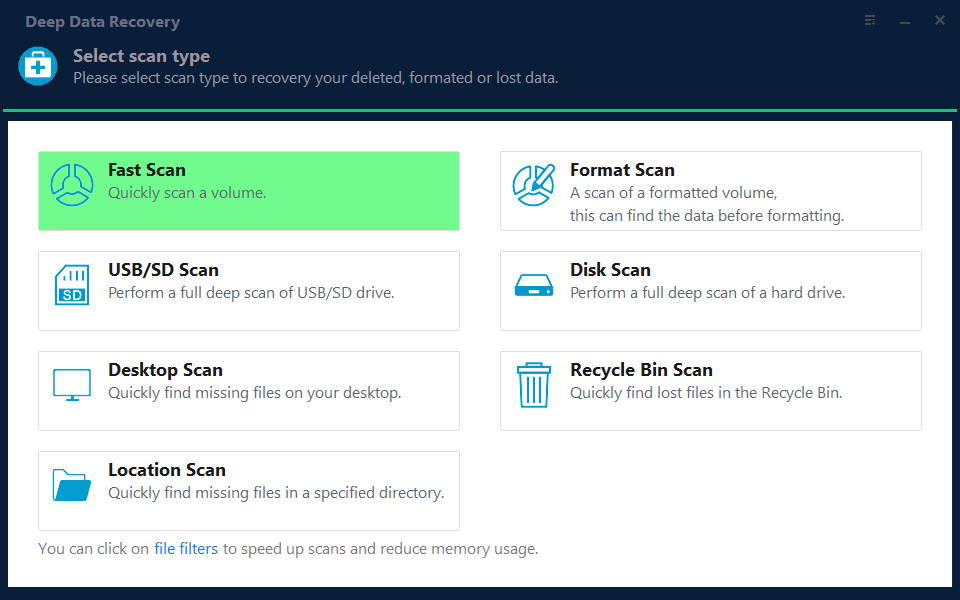
Note: You can choose different search modes based on where and why the data was lost.
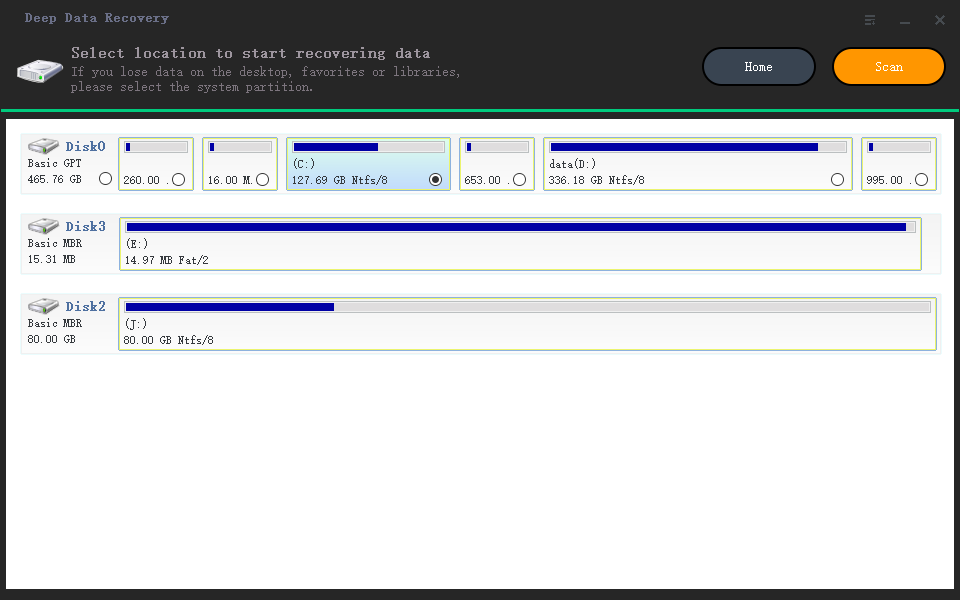
Step 2. Select the disk location where you lost data and click the "Scan" button.
Step 3. Deep Data Recovery for Mac scans your selected disk volume and displays the scanning results on the left pane, allowing you to quickly locate and recover lost data.
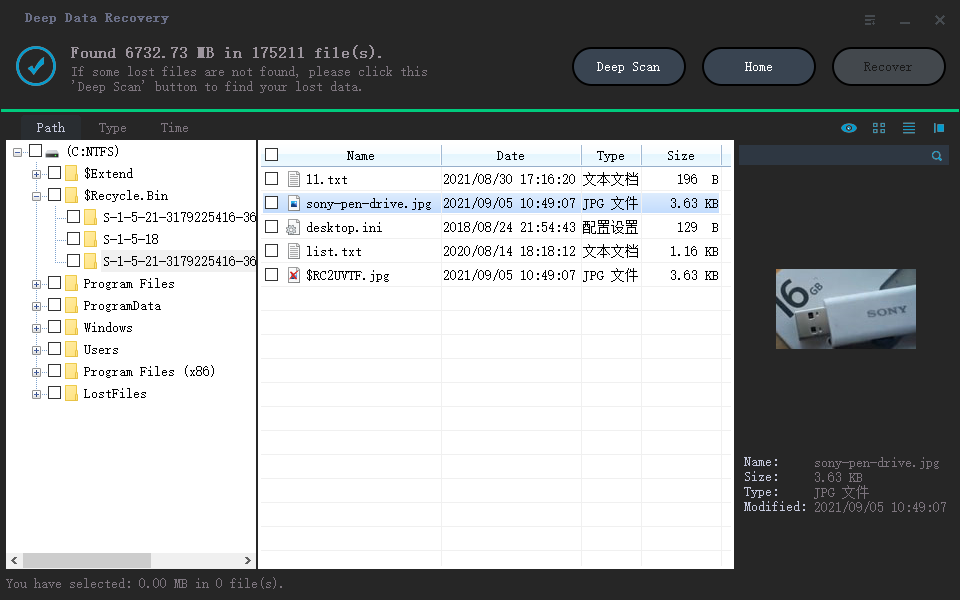
Step 4. Select the desired files from the scan results and click the "Recover" button to restore them.
Related Articles
- 2022 Fix: ExFAT USB Not Showing Up on Mac Without Losing Data
- 100% Working Qiling Data Recovery Key and License Code for Mac
- Upgrade to Mac OS X El Capitan 10.11.6, No Data Loss [2022 Tutorial]
- Repair Corrupt Excel File on Windows 10/11 [Top 4️⃣Methods]
In this guide, you'll learn multiple ways to fix a corrupt Excel file on Windows PCs. The best and easiest solution is to apply Qiling Fixo Document Repair to repair the damaged Excel files. - External Hard Drive Not Recognized After Unplugging [Solved]
Unplugging an external USB hard drive without safely ejecting it can cause serious problems, such as the drive not being recognized or becoming inaccessible. - How to Fix External Hard Drive Takes Long Time to Open and Read
If your external hard drive is taking a long time to open and read data.
Products
Articles & Tutorials
- Data Recovery
- Data Backup
- File Recovery
- File Backup
- System Backup and Restore
- Disk and Partition Clone
- Technical articles
- Mobile articles
- Disk Master Help
- Windows Data Recovery Tutorials
- Windows Secure Delete Tutorials
- Windows Partition Management Tutorials
- Windows File Backup and Restore Tutorials
- Windows System Backup and Restore Tutorials
- Windows Disk Backup and Restore Tutorials
- Windows Clone Tutorials