How to Delete Files on iPhone/iPad in 3 Ways
Quick Navigation:
- Part 1. How to Delete Files on iPhone/iPad in the Files App
- Part 2. How to Delete Files on iPhone/iPad Using an iOS Content Manager
- Part 3. How to Remove Files on iPhone/iPad via Settings
- The Bottom Line
Whether you want to delete files like Word documents, Excel, and PPT files, or other content like photos, videos, contacts, apps, and books on your iPhone or iPad, you can easily do so by following the steps outlined in this guide.
To free up space on your iPhone/iPad and ensure better performance, you'll need to delete unwanted files from your device occasionally, even though newer models have a maximum storage capacity of 512GB and 1TB for the iPad Pro.
There are generally three types of files you may want to delete: permanent, temporary, and cache files. Permanent files are those that you intentionally created and want to keep, such as documents, photos, and videos.
- Documents: Word, Excel, and PPT Files...
- Media Files: Photos, Videos, Audio Files, Contacts, Books, and More
- Others: Applications and the Documents & Data Produced by Apps
Regardless of the type of files you want to delete, you'll find the solution in the following paragraphs.
Part 1. How to Delete Files on iPhone/iPad in the Files App
Applies To: Documents (Word, Excel, and PPT Files...)
"How do I delete downloaded files on my iPhone?"
"How do I delete a folder on my iPhone?"
If you have the same question as the one shown above, the most direct solution for you is to use the Files app built-in iOS 11 and later.
To delete the files stored in your iPhone/iPad internal storage:
Step 1. Go to the "Files" app and click "On My iPhone/iPad".
Step 2. Find the file or folder you want to delete.
Step 3. Press and hold the item and tap "Delete"
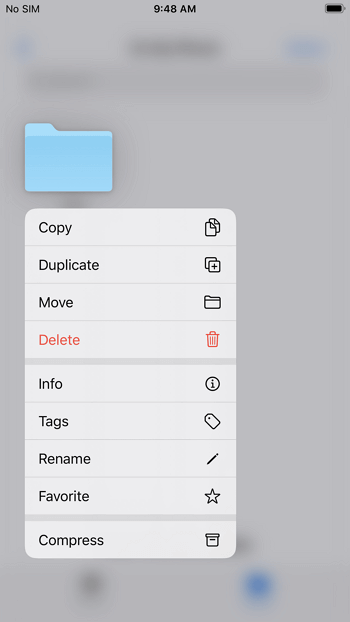
If files or folders are saved in iCloud but not in the internal storage, you need to delete them from iCloud Drive, which will remove them from all devices using the same Apple ID.
To remove the files stored in iCloud Drive:
Step 1. Open the "Files" app and click "iCloud Drive".
Step 2. Find the file or folder you want to remove.
Step 3. Press and hold the item and tap "Delete".
When deleting files or folders in Files, be cautious as there is no confirmation step, and clicking "Delete" will result in permanent deletion from your iPhone or iPad.
Part 2. How to Delete Files on iPhone/iPad Using an iOS Content Manager
Applies To: Photos, Videos, Audio Files, Contacts, Messages, Books...
If you want to delete file types like documents, videos, music, and more from your iDevice, you can do so directly. However, for a more convenient solution to manage your device's files, you may also consider using an iOS content manager and an iPhone data transfer tool like Qiling MobiMover.
Qiling MobiMover can transfer files to and from iPhone/iPad and delete unwanted items from the device on a computer.
To delete files on iPhone or iPad with Qiling MobiMover:
Step 1.Connect your iPhone or iPad to your computer, either a Mac or PC, and launch Qiling MobiMover. Then, navigate to the "Content Management" section and select "Contacts" to manage your contacts.
Step 2.To delete all contacts from your iPhone or iPad, select all the contacts by clicking "Select All", then click "Delete" to remove them all at once.
Step 3.To delete the selected items, click on the "Delete" button in the context menu or press the "Delete" key on your keyboard. A new window will then appear asking if you want to delete the selected items. Click "Yes" in the window to confirm the deletion.
In addition to its data management features, Qiling MobiMover also provides assistance in various other areas, including.
- Transfer files between an iPhone/iPad/iPod touch and a Mac/PC
- Transfer data from one iPhone to another
- Back up and restore an iPhone/iPad/iPad touch
- Transfer WhatsApp Messages
To free up device space on your iPhone or iPad without deleting files, you can transfer files to a computer, then remove them from your device. Later, you can transfer them back to your iPhone or iPad from the computer. This way, you can keep your files safe while also freeing up device space.
Part 3. How to Remove Files on iPhone/iPad via Settings
Applies To: Apps, Documents & Data
If your iPhone or iPad storage is running out, you can easily free up space by removing app data and files in the Settings app. This will help you regain storage space on your device.
To delete files from iPhone via Settings.
Step 1. Open the "Settings" app.
Step 2. Go to "General" >"iPhone(or iPad) Storage".
Step 3. To delete an app or remove data from it, find and click the app you want to delete or remove data from. This will take you to the app's page where you can proceed with the deletion or data removal process.
Step 4. To delete an app, go to the app store, select the app you want to delete, and click "Delete App" in the prompt to confirm the deletion.
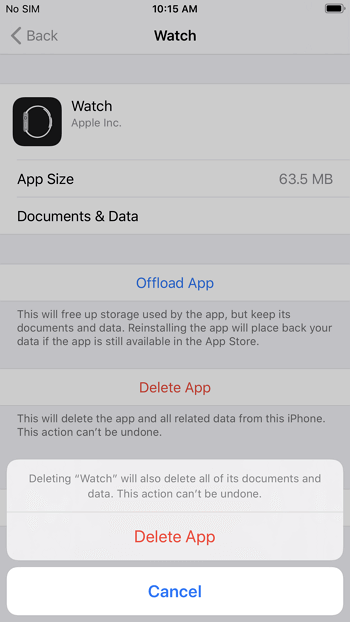
To delete an app, go to the app store, select the app you want to delete, and click "Delete App" in the prompt to confirm the deletion.
The Bottom Line
Depending on the file type you want to remove, you will need to use different methods. The process for deleting files varies based on the file type, so you will need to choose the appropriate method to ensure the file is removed correctly.
To save space on your iOS device, use the Files app for documents, the corresponding app for media files like photos, and the Settings app for apps and data.
To quickly delete unwanted items from your device, apply the appropriate method that suits your needs. This will enable you to get rid of unwanted items in a matter of seconds.
Related Articles
- How to Transfer Ringtone from iPhone 6/6s/7/8/X/XR/11/12 to Computer or iTunes
- How to Connect iPad to PC/Mac/Laptop
- How to Transfer Music from iPhone to Computer for Free
- The Directory Name Is Invalid in Windows 7/8/10 – Fixed
In this article, you are going to learn what "the directory name is invalid" error is and how to fix it accordingly. Details are below.
Products
Articles & Tutorials
- Data Recovery
- Data Backup
- File Recovery
- File Backup
- System Backup and Restore
- Disk and Partition Clone
- Technical articles
- Mobile articles
- Disk Master Help
- Windows Data Recovery Tutorials
- Windows Secure Delete Tutorials
- Windows Partition Management Tutorials
- Windows File Backup and Restore Tutorials
- Windows System Backup and Restore Tutorials
- Windows Disk Backup and Restore Tutorials
- Windows Clone Tutorials