3 Solutions to File Record Segment is Unreadable
When the system says a "file record segment is unreadable", it means that the system can't recognize or access a specific part of the file, essentially treating it like a digital passport that's been lost or damaged.
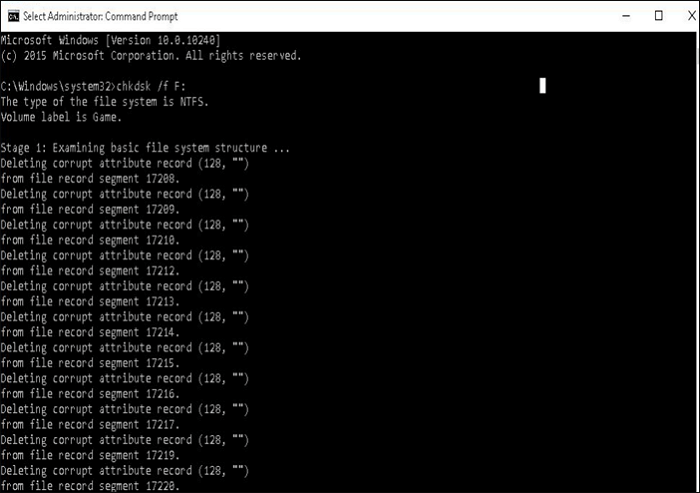
If you're experiencing the same frustration of encountering this error, don't worry. Qiling offers 3 straightforward solutions to simplify resolving it. Let's dive in and understand the error, providing practical fixes to get things back on track.
Fix: File Record Segment is Unreadable
Dealing with the complexities of an error like "File Record Segment is Unreadable" requires a practical approach. This guide provides a step-by-step solution to address this issue, ensuring that you can effectively resolve the problem and get back to work.
Way 1: Clone the Corrupted Drive
When dealing with a corrupted drive, the risk of data loss is high due to the potential for further damage from any operation on the affected drive. This makes it crucial to approach the situation with caution and consider the best course of action to minimize the risk of losing vital data.
To minimize data loss, it's recommended to use a reliable disk management tool to clone the data from the corrupted drive first, creating a duplicate copy and preserving the original data. This initial step helps prevent further loss by isolating the problematic drive and allowing for a safe and controlled recovery process.
Qiling Disk Master Professional simplifies the cloning process, making it accessible to users with limited technical expertise, through its user-friendly interface and powerful Disk Clone feature.
Step 1. Select the source disk.
- Clone your disk by clicking the "Clone" button in the left menu, then select "Clone OS Disk" or "Clone Data Disk" and click "Next".
- Choose the source disk and click "Next".
Step 2. Select the target disk.
- Select the desired hard drive or solid state drive (HDD/SSD) as the destination and proceed by clicking "Next".
- Read Warning message and confirm "Yes" button.
Step 3. To view the disk layout and edit the target disk partition size, you can use the `fdisk` command in the terminal. This command allows you to manage and edit the disk partitions, including changing the size of the target disk partition. Simply open the terminal, type `fdisk /dev/sdX` (where X is the letter of the target disk), and follow the on-screen instructions to view the disk layout and edit the partition size as needed.
To prepare the target disk for the installation process, you'll need to wipe it clean. This means deleting all data on the disk, so make sure to back up any valuable files before proceeding. When you're ready, click "Continue" to confirm that you're aware of the data loss that will occur. Be cautious, as this step will permanently erase everything on the target disk.
To customize your disk layout, select one of the options: "Autofit the disk", "Clone as the source", or "Edit disk layout". If you want to leave more space for your C drive, choose the third option.
Step 4. Click "Start" to start the disk cloning process.
If you're considering cloning a damaged hard drive, there are a few things to keep in mind. First, the cloning process itself is generally safe and won't cause any further damage to the drive.
Can I Clone a Damaged Hard Drive [Detailed Guide]
You can clone a damaged hard drive, but the process may be more complicated and require a specialized tool. A detailed guide is available online that provides step-by-step instructions on how to clone a damaged hard drive using a powerful cloning tool.
Way 2: Run CHKDSK Command Line
To resolve the issue with an unreadable file record segment on a Windows system, users can run the command "chkdsk /f /r /x" to scan and fix errors on the disk. This process involves running the command in the Command Prompt, which will initiate the Check Disk utility to scan the disk for errors, fix any issues it finds, and then recover any readable information from the unreadable file record segment. By following these steps, users can effectively resolve the issue and restore their drive's functionality.
Step 1. To open the Command Prompt as an administrator, right-click on the Start menu and select "Command Prompt" from the list of options. From there, select "Run as administrator" to open the Command Prompt with elevated privileges.
Step 2. Type the drive letter and press "Enter."
Step 3. Input the command: chkdsk /f /r /x and hit "Enter."
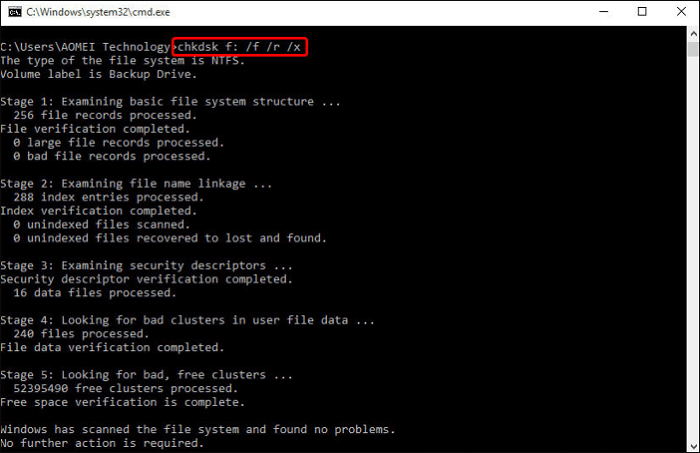
- /f fixes errors found.
- /r locates bad sectors and recovers readable information.
- /x forces the drive to dismount before the process starts.
Step 4. To confirm scheduling CHKDSK at the next system restart, press "Y".
Step 5. Close all applications and restart your computer to initiate CHKDSK.
Way 3: Connect the Corrupted Drive to Another Computer
If you're experiencing the "File Record Segment is Unreadable" error, you can try an alternative approach. If you have access to another computer, you can connect the corrupted drive to it and see if you can recover your files. This method allows you to explore the drive's contents on a different machine, potentially leading to a successful recovery.
Step 1. Ensure the second computer is powered off before connecting the corrupted drive.
Step 2. To connect a corrupted drive to a second computer, you can use an external drive enclosure, a USB-to-SATA/IDE adapter, or a compatible docking station. This will allow you to access the drive's contents from the second computer.
Step 3. Turn on the second computer and wait for it to detect the newly connected drive.
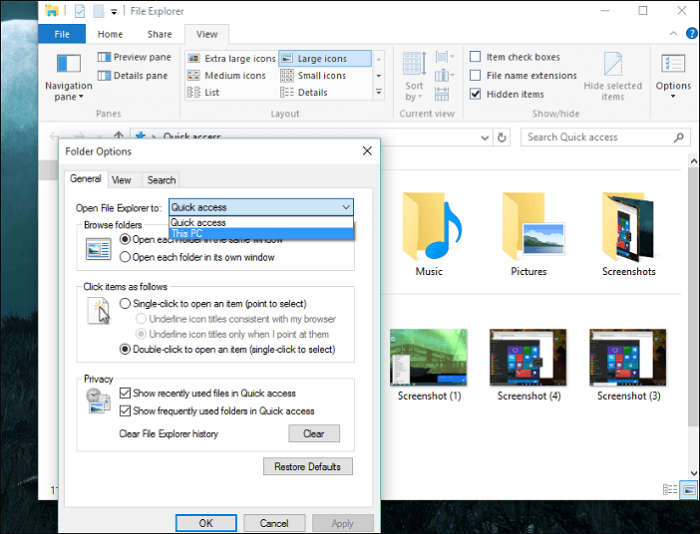
Step 4. To check if the corrupted drive is accessible on the second computer, open File Explorer on that computer. This will allow you to see if the drive is still visible and accessible, even if it's not functioning properly on the first computer.
Step 5. If the drive is corrupted and you can't access it, try copying the essential data to another computer. This can be done by connecting the corrupted drive to a second computer and using software like Qiling Backup to recover the data.
Step 6. Run the command "chkdsk /f" in the Command Prompt as Administrator on the second computer, targeting the corrupted drive to scan and fix any issues.
Step 7. Safely disconnect the corrupted drive from the second computer.
Transitioning from the previous steps, implementing this method to address the file record segment error involves considering potential outcomes and various factors. The approach may lead to improved error handling and reduced file corruption, but it also requires careful analysis of system resources and potential performance impacts.
If you've found the methods in this article helpful in resolving your "file record segment is unreadable" error, consider sharing this article with others who may be struggling with the same issue. Sharing knowledge can empower others facing similar challenges and contribute to a collective understanding of effective solutions.
Possible Reasons for File Record Segment is Unreadable
The "File Record Segment is Unreadable" error is often caused by a corrupted or damaged system file, a problem with the registry, or a conflict with a third-party program. This can be due to a variety of factors, including a virus or malware infection, a faulty hard drive, or a software update that has gone awry. To resolve the issue, it's essential to run a virus scan, check for any system file corruption, and ensure that the registry is clean and free from errors.
- Power Outages or Surges: Abrupt power interruptions or electrical surges can cause file record segment errors on a hard drive, potentially damaging the data stored on it.
- Bad Sectors on the Hard DriveThe presence of bad sectors on your hard drive can cause file record segments to malfunction, resulting in unreadable errors.
- MFT (Master File Table) or FAT (File Allocation Table) Damage: Damage to the Master File Table (MFT) or File Allocation Table (FAT) can make file record segments unreadable.
- Improper Deletion of the Hard Drive: If a hard drive is deleted improperly, it can cause file structure inconsistencies, leading to errors in file record segments, making files unreadable.
- Virus or Malware Attacks: Viruses or malware can target the integrity of file structures, including file record segments, making them unreadable.
- Corruption in Partition Table: Damage to the partition table can cause file record segments to become unreadable, making it necessary to fix the invalid partition table to maintain drive accessibility.
If you're experiencing issues with a external hard drive and suspect bad sectors are the cause, you can refer to the article for guidance on how to repair the error.
To repair bad sectors on an external hard drive, start by downloading and installing a disk imaging software like Qiling Backup, which can create a full backup of your external hard drive. Next, use a built-in Windows utility called Check Disk (chkdsk) to scan the external hard drive for bad sectors and identify the problematic areas.
Learn how to repair bad sectors on an external hard drive with our comprehensive guide, which provides three fixes to get your drive up and running smoothly again. See how to repair bad sectors on an external hard drive.
Conclusion
Navigating the complexities of the "File Record Segment is Unreadable" error requires understanding, practical solutions, and awareness of potential causes. This digital roadblock may seem daunting, but with our comprehensive guide, you've gained insights into three intricate yet accessible methods to reclaim control over your digital domain.
With the help of Qiling Disk Master Professional, we've cloned the corrupted drive, and also utilized the CHKDSK command line and connected the drive to another computer, providing the necessary tools to tackle this complex issue. Furthermore, exploring the possible causes of the error can also help identify preventive measures to avoid such problems in the future.
FAQs on File Record Segment is Unreadable
The "File Record Segment is Unreadable" error occurs when the file record segment is damaged or corrupted, making it unreadable. This can happen due to various reasons such as disk errors, file system corruption, or software issues. To resolve this issue, you can try running a disk check, scanning for disk errors, or using a file recovery software to repair or recover the damaged file.
1. How to Repair SSD with CHKDSK?
To repair an SSD with CHKDSK, open Command Prompt as Administrator, type the appropriate CHKDSK command (e.g., chkdsk /f /r /x), and follow the on-screen instructions, restarting your system to initiate the process, which scans for and fixes errors on the SSD, addressing issues like the unreadable file record segment.
2. How Large is a File Record Segment?
In the NTFS file system, a file record segment usually ranges from 1 KB to 4 KB, but can be influenced by factors like disk utilization and the specific file being stored.
3. What is the Meaning of File Unreadable?
When your system says a "file record segment is unreadable", it means there's a problem with a part of your data that the computer can't access. This could be due to things like bad spots on the drive, damage to the part of the drive that keeps track of files, or issues with the partition table that helps the computer know where files are.
Related Articles
- Top 7 Best Drive Eraser Software For Your PC & Mac
- How to Unlock Computer Without Password | 2024 Top Ways💡
- How to Fix DPC Watchdog Violation Error in Windows 10
- Clone Larger HDD to Smaller SSD (Windows 11 Support)
- How to Install and Format SD Card for Steam Deck [Step-by-Step Guide]
To install the SD card on Steam Deck, you need to do some preparations first to make it boot properly. This article provides detailed steps to help you successfully install and format the SD card for Steam Deck. - How to Install Windows 10 on New PC Without Operating System
Are you in possession of a new PC and eager to set up Windows 10? Learn how to install Windows 10 on a new PC without an operating system in this guide.
Products
Articles & Tutorials
- Data Recovery
- Data Backup
- File Recovery
- File Backup
- System Backup and Restore
- Disk and Partition Clone
- Technical articles
- Mobile articles
- Disk Master Help
- Windows Data Recovery Tutorials
- Windows Secure Delete Tutorials
- Windows Partition Management Tutorials
- Windows File Backup and Restore Tutorials
- Windows System Backup and Restore Tutorials
- Windows Disk Backup and Restore Tutorials
- Windows Clone Tutorials