Forgot BitLocker Password: How to Recover?
it can be difficult when people forget their BitLocker password, making it difficult to access their secure data. However, the recovery key or password can be used to unlock it. I've experienced this myself and you might have too if you're reading this.
Losing your BitLocker password can be frustrating, but Qiling is here to help. If you've misplaced your password, there are alternative solutions to regain access to your drive. Stay calm and explore the options available to you.
How to Fix When You Forgot Bitlocker Password
Are you all set to put on some sleeves? Let's explore each method's step-by-step instructions to help you solve this BitLocker challenge.
Way 1. Try Accessing with Your Usual Passwords
If you've misplaced your Bitlocker password, start by trying the password you normally use. If that doesn't work, check if it's linked to your Google or Microsoft account passwords. If you're still unable to access your account, try recovering the password from your Windows computer.
Way 2. Format Bitlocker Encrypted Hard Drive for Free
When a hard drive is formatted, all of its data is removed, making room for new files. However, if the drive is BitLocker-encrypted, formatting alone won't be enough to remove the encryption, as the encryption key remains on the drive. To remove the encryption, you'll need to use the BitLocker recovery key, which can be obtained from the Microsoft account associated with the drive. Once you have the recovery key, you can use it to decrypt the drive, and then you can format it normally.
Qiling Disk Master Free can assist with formatting a BitLocker drive, even if the recovery key is lost or the password is forgotten, making it a helpful tool for beginner computer users with its user-friendly interface.
Step 1. Launch Qiling Disk Master, right-click the partition you intend to format and select "Format".
Step 2. In the new window, enter the partition label, select the desired file system (FAT32/EXT2/EXT3/EXT4), and set the cluster size based on your requirements.
Step 3. The user should click the "Proceed" button to initiate the formatting process for the partition, selecting the desired file system type, such as FAT32, EXT2, EXT3, or EXT4.
Step 4. Then you will see a warning window, click "Yes" in it to continue.
For more comprehensive information, you can read this post:

How to Format BitLocker Encrypted Drive
This tutorial provides various methods for formatting Bitlocker-encrypted hard drives with or without a password. The methods include using the command line, the Windows built-in tool, and a third-party software.
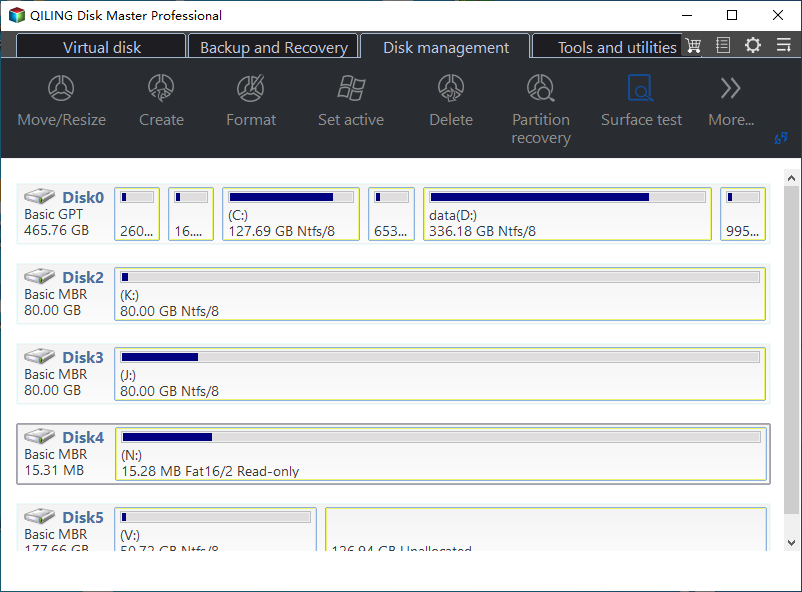
What else Qiling Disk Master can do?
- Partition BitLocker drive on Windows 10
- Unlock Bitlocker Without Recovery Key and Password
- Fix BitLocker Password & Recovery Key Not Working
- Resize BitLocker Partition on Windows 11/10 Without Decryption
Way 3. Perform a Force Recovery via CMD
To recover your BitLocker PIN via the force recovery process using Command Prompt, follow these steps:
Note* This method is suitable for experienced Windows users, as it involves complex CMD commands.
Force recovery steps for a local computer:
Step 1: Hit "Windows Key" and type "CMD."
Step 2: Tap the first result and right-click on it.
Step 3: To access the Command Prompt utility, select the option to "Run as administrator".
When prompted, choose "Yes" to confirm and access the administrator privilege.
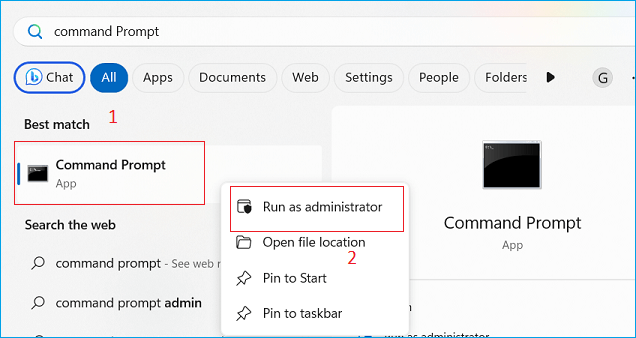
Step 4: To execute the command in the Command Prompt utility, type the command and press the "Enter" key.
- manage-bde -forcerecovery X
Note* Replace X with the letter of your encrypted drive.
Forced recovery on a remote computer (for domain administrators):
To recover the BitLocker password for a remote computer as a domain administrator, follow these steps:
Step 1: Open the CMD window as described earlier.
Step 2: Type/paste the following command and hit the Enter key.
- manage-bde -computerName -forcerecovery X
Note* Replace X with your drive's letter.
This method is designed to help regain access to encrypted drives using BitLocker, whether the computer is nearby or located remotely.
Way 4. Find the BitLocker Recovery Key on the USB
If you can't remember your password, check your Microsoft account for the password you saved when you initially installed BitLocker. If you didn't save it there, look for a spare USB drive where you may have saved it.
Additionally, it can be lurking on your PC! To look for it:
Step 1: To access File Explorer, use the "Windows key + E."
Step 2: Type *.bek into the upper search field and hit Enter.
Step 3: Let it operate independently. It may discover that cunning recovery key!
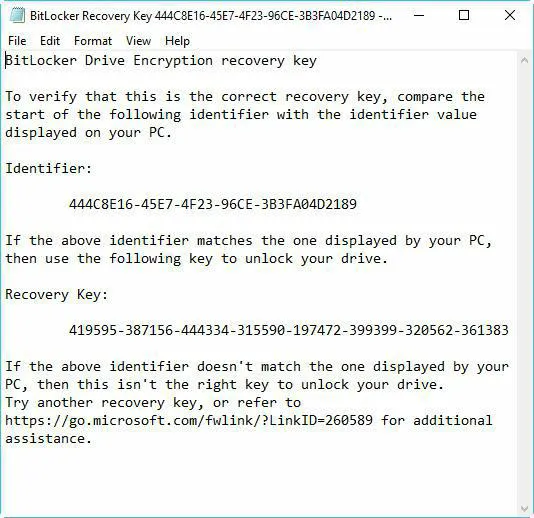
In addition to the methods mentioned, you can also use reliable BitLocker password cracking tools such as BitCracke, Passware Kit, and Thegrideon Software to bypass or reset your BitLocker password.
Conclusion
Forgetting your BitLocker password can be frustrating, but don't worry, your sensitive information is still secure. Qiling Disk Master is a recommended solution if you're looking for a user-friendly way to recover your drive, especially if you're not comfortable with complex commands. Its user-friendly design, robust functionality, and focus on security make it a great tool for managing encrypted devices, even if you've lost your password.
FAQs About Forgot BitLocker Password
The Forgot BitLocker Password issue is a common problem faced by users who have forgotten their BitLocker password. This can happen when a user forgets their password or it gets lost or deleted. The issue can be resolved by using the BitLocker Recovery Key, which can be found on a USB drive or printed copy, or by using the Microsoft BitLocker Recovery Tool.
1. How do I remove my BitLocker password?
Here are two ways to remove a BitLocker password:
- Via Windows: To turn off BitLocker on Windows, go to the Windows Search bar, type "Manage BitLocker," select the option to choose the encrypted drive, and then click "Turn off BitLocker." You may be prompted to enter your current password or recovery key.
- With a recovery key: If you have the recovery key for your BitLocker, you can directly unlock the encrypted drive and bypass BitLocker security.
2. How can I retrieve the BitLocker recovery key?
You may try the following ways to retrieve your key:
Microsoft Account: If you've saved the key to your Microsoft account, you can go online to sign in and view your profile.
USB drive: Look through any USB drives you might have kept the key on.
System Administrator: If your machine is connected to a network, your system administrator might own the key.
3. How do I partition a BitLocker encrypted hard drive?
To create a partition on a BitLocker encrypted drive, you must first decrypt it, then follow these steps to remove the BitLocker password, allowing you to create a new partition without the encryption.
Step 1: If you have successfully decrypted the drive, press the Windows key and start typing "Create and format hard disk partitions" to open the Disk Management tool, where you can format the drive.
Step 2: Open the Utility to create a partition.
Step 3: Right-click the decrypted drive and select "Shrink Volume."
Step 4: Select the partition's name, size, and file system (typically NTFS for Windows).
If you're still facing the issue, please see the previous parts of this guide for troubleshooting tips. The answers above should guide you to further questions about removing BitLocker passwords or retrieving recovery keys. If you're still facing the issue, please see the previous parts of this guide for troubleshooting tips.
Related Articles
- How to Install Windows 11 From ISO Files - 2 Easy Tips
- How to Run PS5 SSD Speed Test [100% Working Solutions]
- How to Change Boot Drive Windows 11 [Beginner's Guide]
There are many situations when you need to change the boot order, such as reinstalling the Windows OS, setting dual boot, or repairing errors. If you don't know how to operate it, This article shows you instructions to change boot drive Windows 11. - How Do I Shred Files for Free in Windows with Pictures
If you're looking for a free tool to shred files on Windows, this guide can help. It provides a list of the best free file shredder software available, making it easy to find the right tool for your needs. - How to Low Level Format SD Card on Windows 11/10
Formatting an SD card at a low level will completely erase all data on the card. This tutorial will guide you through a simple and quick process using a professional low-level format tool to achieve this. - How to Low Level Format SSD on Windows
Learn how to low-To optimize your level format SSD on Windows, use Qiling Disk Master, a powerful tool for effective formatting and thorough disk management. This allows you to unleash the full potential of your SSD.
Products
Articles & Tutorials
- Data Recovery
- Data Backup
- File Recovery
- File Backup
- System Backup and Restore
- Disk and Partition Clone
- Technical articles
- Mobile articles
- Disk Master Help
- Windows Data Recovery Tutorials
- Windows Secure Delete Tutorials
- Windows Partition Management Tutorials
- Windows File Backup and Restore Tutorials
- Windows System Backup and Restore Tutorials
- Windows Disk Backup and Restore Tutorials
- Windows Clone Tutorials