ASUS Laptop Slow in Windows 11/10? 7 Effective Fixes!
If your ASUS laptop is running slow on Windows 10, - there are solutions to help you boost its performance. You can try clearing temporary files and system files, disabling startup programs, updating drivers and Windows, running a disk cleanup and check, and using the built-in disk cleanup tool. Additionally, you can also consider upgrading your RAM, using the Windows Performance Troubleshooter, and resetting Windows 10 to its default settings.
| Workable Solutions | Step-by-step Troubleshooting |
|---|---|
| Fix 1. Remove the virus or malware | When a Windows computer is attacked by malicious viruses or programs, it will act up and slow...Full steps |
| Fix 2. Optimize startup | If your ASUS laptop or PC takes 60+ seconds to log in the screen, you'd better optimize it and speed...Full steps |
| Fix 3. Free up disk space | You can clean your computer and increase C drive space to fix ASUS laptop running slow issue...Full steps |
| Fix 4. Clean dirty fan or heat sink | When your ASUS laptop heats up very often, it may freeze up and be unresponsive. Check the fan...Full steps |
| Fix 5. More useful solutions | Fix Windows System issues, switch to SSD, and add extra RAM if lack of memory...Full steps |
ASUS Laptop Runs Very Slow Windows 11/10
You've had your ASUS laptop for about 2 weeks, during which it's been working fine with various games and antivirus installed. However, when playing Football Manager, the laptop freezes for about a minute before seemingly recovering normally, with no recent changes or extensive browsing. Can you tell me more about this issue?"
Now it seems to run slow and unresponsive intermittently. The laptop is almost unusable. How can I solve ASUS laptop slows problem in Windows 10? Thanks in advance."
Why Is ASUS Laptop Running Slow in Windows 11/10
If your ASUS laptop is running slow or unresponsive on Windows 11/10, it's not uncommon. Laptops, including ASUS models, can slow down over time due to various factors. This slowness can be especially frustrating when browsing the internet or working on projects. To address this issue, you may need to update your operating system, clear cache and temp files, or consider upgrading your RAM or storage.
If your ASUS laptop is experiencing frequent hangs, slow performance, or running much slower than usual, it's likely that something is amiss. To get back to normal, it's essential to identify the root cause of the issue. Potential reasons for the slow performance include outdated software, a cluttered hard drive, overheating, malware or virus infections, and resource-intensive programs running in the background. By addressing these potential causes, you may be able to resolve the problem and get your laptop running smoothly again.
- Virus or malware attack? Remove virus
- Slow on Startup? Speed it up
- Does laptop run out of disk space? Free it up
- Dirty fan or heat sink? Clean it
- Windows system issue? Fix it
- Hard drive issue? Optimize or switch to SSD
- Is virtual memory not enough? Add extra RAM
Solutions to ASUS Laptop Running Slow and Make It Faster
When a Windows computer is attacked by malicious viruses or programs, it can become slow and unresponsive. To resolve this issue, running an antivirus scan using software like Windows Defender or reputable third-party options such as Bitdefender, Avast, AVG, Avira, Norton, or Kaspersky can help identify and remove any threats.
Solution 1. Remove the Virus or Malware
When a Windows computer is infected with viruses or malware, it can become slow and unresponsive. To resolve this issue, running an antivirus scan is a good first step, as it can detect and remove any malicious programs or files that may be causing the problem.
Solution 2. Optimize the Startup
If your ASUS laptop or PC takes 60+ seconds to log in the screen, you'd better optimize it.
For Windows 7, Vista, or XP user:
Use this utility called MSConfig to tune up Windows startup.
For Windows 8.1 or Windows 10 users:
Right-click on the taskbar, then select "Task Manager" > "Startup".
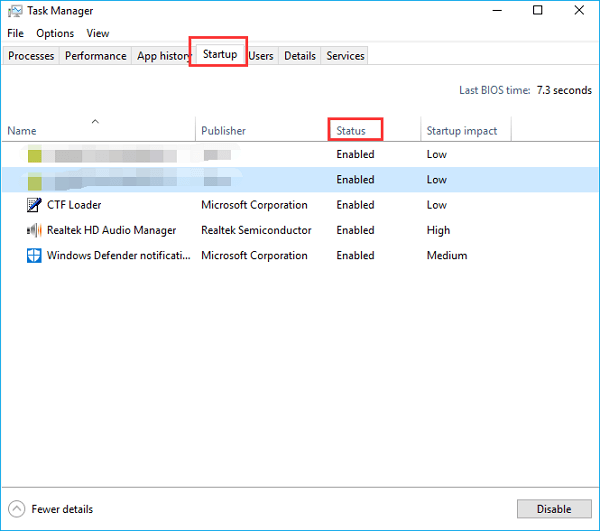
If a program shows as Enabled, it will run automatically when your ASUS laptop starts up. To speed up your laptop's boot time, disable or uninstall any unnecessary programs, as having fewer Enabled items will result in a faster boot-up process.
Solution 3. Free Up Space and Increase C Drive to Speed Up ASUS Laptop
The CPU is considered the brain of a computer, and the hard drive serves as the blood that connects all parts. If the hard drive, particularly the system drive, is nearly full, the entire computer may experience lag. To address this issue, cleaning the computer and increasing C drive space can be effective solutions. This can help resolve the slow ASUS laptop issue.
Solution 4. Clean Dirty Fan or Heat Sink
If your ASUS laptop frequently overheats, it may freeze and become unresponsive. To resolve this issue, check the fan and heat sink to see if they're clogged with dust. Use a screwdriver to carefully open your laptop, then use a vacuum cleaner or compressed air to blow out the dust from the vents.
Solution 5. Fix Windows System Issue to Solve ASUS laptop Slow
ASUS laptop running slow issues in Windows 10 can be caused by a variety of problems, including malware attacks, registry errors, invalid system disk errors, computer lagging issues, and other potential issues.
If your ASUS laptop is running slowly without a clear reason, you can try diagnosing the issue, checking for file system errors, and repairing bad sectors on the hard drive. Additionally, running disk optimization and defragmenting partitions using Qiling partition manager software can help improve performance. Furthermore, using CCleaner can resolve Windows registry errors and other system issues.
Solution 6. Upgrade HDD to SSD
If your hard drive is failing or your ASUS is relatively old, you may consider replacing it with a solid-state drive (SSD), especially if the HDD is the system drive, as SSDs have faster read-and-write speeds. To migrate the OS from the HDD to the SSD, you can use Qiling Partition Master Professional, following a step-by-step guide.
Steps to migrate OS to HDD/SSD:
- Run Qiling Partition Master, select Migrate OS from the top menu.
- Select the SSD or HDD as the destination disk and click Next.
- Be aware that the process will erase data and partitions on the target disk, so make sure to back up any important data before proceeding. If you haven't already, do it now to avoid losing valuable information.
- Then click Continue.
- Preview the layout of your target disk, then click Proceed to start migrating your OS to a new disk.
Note: If you're migrating your operating system to a new SSD or HDD, be aware that the process will erase all existing partitions and data on the target disk if there isn't enough unallocated space available. This means you should back up any important files or data on the target disk to an external hard drive before proceeding.
Solution 7. Increase the Capacity of RAM
If your ASUS laptop has too little RAM, it may struggle to run multiple applications smoothly and will likely run slowly. Installing a new RAM chip can be an effective way to improve performance, especially for gaming or video/photo editing users who can benefit from increased memory capacity.
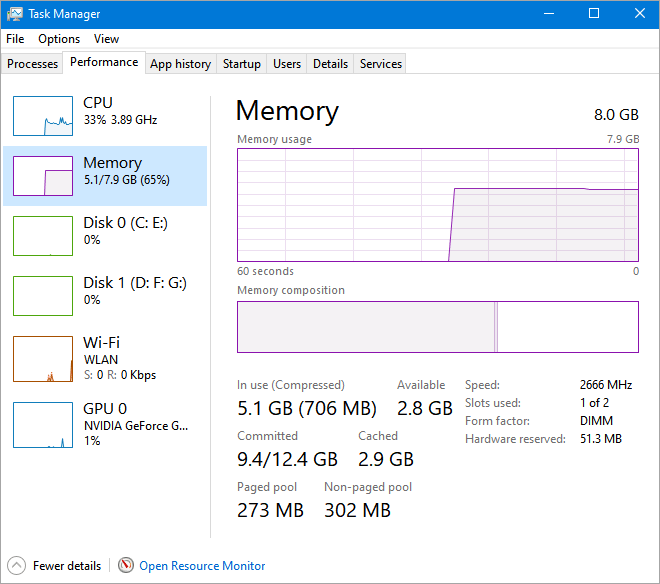
To check the condition of your RAM, go to Task Manager, click on "Performance" and then "Memory" to see the current state of your RAM.
Final Verdict
To fix an ASUS laptop running slow on Windows 11/10, try the following targeted methods: first, check and address the reason behind the slowdown; second, disable startup programs that consume excessive resources; third, enable the Windows Search service; fourth, update your operating system and drivers; fifth, clear temporary files and system logs; sixth, use the built-in Disk Cleanup tool; and seventh, consider reinstalling Windows if all else fails. Each method addresses a specific issue, and by tackling the root cause, you can effectively speed up your ASUS laptop.
To keep your ASUS laptop running smoothly, we suggest using Qiling Partition Master, a professional partition manager that allows you to resize/move partitions, wipe data, clone, merge, create, format, and delete a partition, with additional features for converting disk/partition types.
Asus Laptop Slow FAQs
1. How can I make my Asus laptop run faster?
If your ASUS laptop is running slow on Windows 10, it's likely due to a hardware issue or virus. To troubleshoot, start by optimizing your computer by deleting junk and corrupted files, and then restart your laptop.
2. Why is my laptop suddenly very slow?
A common reason for a laptop's sudden slowness is often due to programs running in the background. To resolve this, try closing any TSRs and startup programs that automatically start each time the computer boots. You can check which programs are running in the background and their resource usage by opening Task Manager, clicking on the "Performance" and "Memory" tabs.
3. Why is my gaming laptop running slow?
Gaming laptops often run slow due to several reasons, including overheating, programs running in the background, and a graphics card that's not operating at the required speed (usually in MHz) for the game being played. To identify if the graphics card is the culprit, check the game's system requirements on the original packaging to see if your laptop's card meets the minimum specs.
4. What should I do if my laptop is running slow?
To speed up your Asus laptop running Windows 10, try these 7 useful methods: they can help resolve your laptop's slow performance issue.
- Remove virus or malware
- Optimize laptop's startup programs
- Clean up disk space or increase C drive
- Clean dirty fan or heat sink
- Fix Windows system issues
- Switch to SSD to fix hard drive is failing problem
- Add extra RAM if lack of memory
Related Articles
- 3 Most Effective Ways to Upgrade My PC | Easy PC Upgrade Guide
- Featured Partition Magic for Windows Server Free Download 2022
- Learn to Merge Adjacent and Non-Adjacent Partitions in Windows Server 2016/2012 (NTFS and FAT32 Partition Available)
- 5 Ways to Hide Drives in Windows 10 | Check Your In-depth Tutorial
- Diskpart: Fix RAW Partition in Windows 10/8/7
This page focuses on how RAW drive comes and how to use Diskpart to fix RAW partition. If you want to fix RAW partition without formatting, please try Qiling Disk Master Standard. - Diskpart Has Encountered an Error: The Media Is Write Protected
When you meet the Diskpart clean error: Diskpart has encountered an error the media is write protected during cleaning your disk using Diskpart, here you can find the reason and the corresponding solution.
Products
Articles & Tutorials
- Data Recovery
- Data Backup
- File Recovery
- File Backup
- System Backup and Restore
- Disk and Partition Clone
- Technical articles
- Mobile articles
- Disk Master Help
- Windows Data Recovery Tutorials
- Windows Secure Delete Tutorials
- Windows Partition Management Tutorials
- Windows File Backup and Restore Tutorials
- Windows System Backup and Restore Tutorials
- Windows Disk Backup and Restore Tutorials
- Windows Clone Tutorials