SD Card Not Detected Windows 11/10 | How to Fix SD Card Not Showing Up on Windows 11/10
This post covers 9 approaches to solve the issue of an SD card not being detected or showing up on Windows 11/10. Start from the top of the list and work your way down until you find the method that works for you.
| Workable Solutions | Step-by-step Troubleshooting |
|---|---|
| Fix 1. Try SD Card on Another Computer | You can connect your SD card to another computer, or alternatively, try another SD card...Full steps |
| Fix 2. Clean SD Card Reader | A dirty SD card or a dusty card reader will cause poor contact and make SD card not reading...Full steps |
| Fix 3. Change Drive Letter | If your SD card doesn't show up in Windows 10 File Explorer, check whether there is a drive letter...Full steps |
| Fix 4. Update SD Card Driver | Incorrect or outdated card reader driver can make the SD card unrecognized on your Windows 10...Full steps |
| Fix 5. Reinstall the Universal Serial Bus Controllers Driver | Uninstall and reinstall the Universal Serial Bus controllers driver can be an effective fix ...Full steps |
| More Tips to fix SD card not detected | Run hardware and devices troubleshooter, disable & enable SD card reader, repair corrupted SD card...Full steps |
SD card reader not working Windows 11/10To view an SD card on your computer, insert the SD card into a card reader, which is usually connected to your computer via a USB port. If your computer doesn't have a built-in card reader, you can purchase an external one. Once the SD card is inserted, your computer should recognize it and display it in the file explorer or finder, where you can view its contents.
"Trying to import some pictures from a Nikon camera's SD card to my computer, to my surprise, the computer won't read SD card and the SD card not detected Windows 11/10 "Try using the built-in Windows 10 feature, 'This PC', to access the SD card. If that doesn't work, try using a third-party SD card reader or a different USB port. If you're still having issues, you can try checking the SD card for errors or formatting it in Windows. If none of these solutions work, you may need to contact the manufacturer or a professional for further assistance."
Why SD Card Not Detected Windows 11/10
Windows 11/10 users often encounter issues where their computer won't read an SD card, preventing them from accessing its contents. This can be caused by various factors, including issues with the SD card reader, corrupted SD card drivers, or problems with the SD card itself. To resolve this issue, users can try troubleshooting steps such as checking the SD card reader, updating drivers, and formatting the SD card, or using a card reader to connect the SD card to their computer.
- SD card reader not working Windows 11/10
- SD card corrupted, broken, or damaged
- Hard driver issues, bad sectors
- SD card driver missing
- Virus infection
To resolve the issue of a 3TB drive only showing 2TB, you can try formatting the drive in a different file system, such as exFAT, which supports larger drive sizes. Alternatively, you can use a tool like Qiling Partition Master to resize the partition and make the full 3TB available. Additionally, if you're using a Mac, you can try using the built-in Disk Utility to reformat the drive and make the full capacity available.
How to Fix SD Card Not Detected or SD Card Not Showing Up Windows 11/10
If an SD card is not detected or showing up as a removable disk on Windows 11, 10, 8, or 7, solutions can be found to resolve the issue and make the computer recognize the memory card properly.
If your SD card reader is not working on Windows 11/10 or Windows 11/10 won't read your SD card, try these fixes: update your drivers, enable SD card reader in Device Manager, check for disk errors, run the built-in troubleshooter, reset Windows 11/10, disable and re-enable the SD card reader, and check for BIOS updates. Try each solution one by one until you find the one that works for you.
Fix 1. Try SD Card on Another Computer
If your SD card isn't showing up on Windows 10, it's often not a problem with the card itself, but rather with the computer interface. To troubleshoot, try connecting your SD card to another computer or using a different SD card to see if it's recognized, which can help you determine if the issue is with the card or the interface.
Fix 2. SD Card Reader Not Working Windows 11/10? Clean SD Card and Reader
A dirty or dusty SD card or SD card reader can cause poor contact, leading to Windows 11/10 not reading the SD card.
If your SD card is not reading on Windows 11/10, try cleaning the card and the reader, then test it again. If that doesn't work, try using the card on another PC to see if it's the issue with the current computer. If it still doesn't work, you can move on to other troubleshooting methods.
Fix 3. Check SD Card and Change Drive Letter in Disk Management
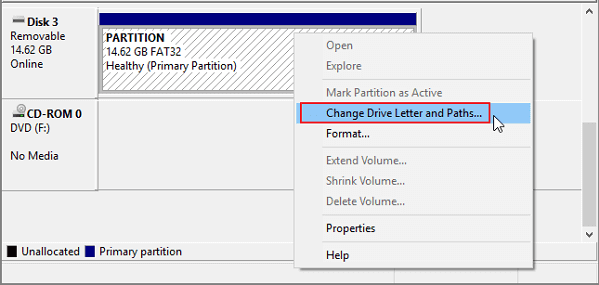
If your SD card not showing up in Windows 11/10 file system, you can check whether there is a drive letter for the SD card. If not, follow the steps below to add a drive letter:
Step 1. Right-click the Start button and select "Disk Management".
Step 2. In Disk Management, your SD card will appear as a removable disk. Check if it has a drive letter like D or E.
Step 3. In the "Change Drive Letter and Paths" window, click on the "Add" button and select the desired drive letter from the drop-down menu. Then, click "OK" to apply the changes. This will assign the new drive letter to the SD card.
Step 4. To access your SD card, click "Add" in the Disk Management window, select a drive letter, and then click "OK". This will make your SD card visible in the File Explorer alongside your local disks.
Fix 4. Update SD Card Driver Windows 11/10 in Device Manager
A faulty, incorrect, or outdated card reader driver is the main reason for the SD card not being detected on Windows 10, so it's worth checking if the drivers are in good health.
Step 1. To access the Control Panel in Windows 10, simply type "Control Panel" in the search box next to the Windows menu, and then click on the "Control Panel" result that appears to open it.
Step 2. Navigate to "Device Manager" and open it.
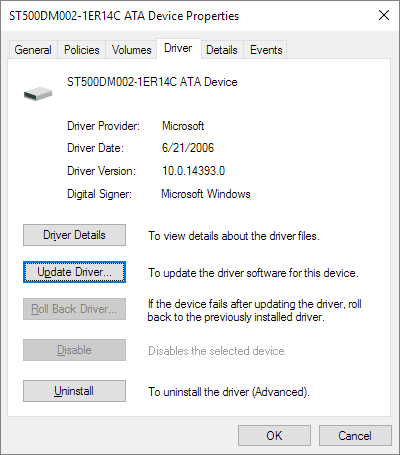
Step 3. Right-click on the SD card and select "Properties", then click on the "Driver" tab and select "Update driver", and proceed with "Search automatically for updated driver software".
Fix 5. Reinstall the Universal Serial Bus Controllers Driver
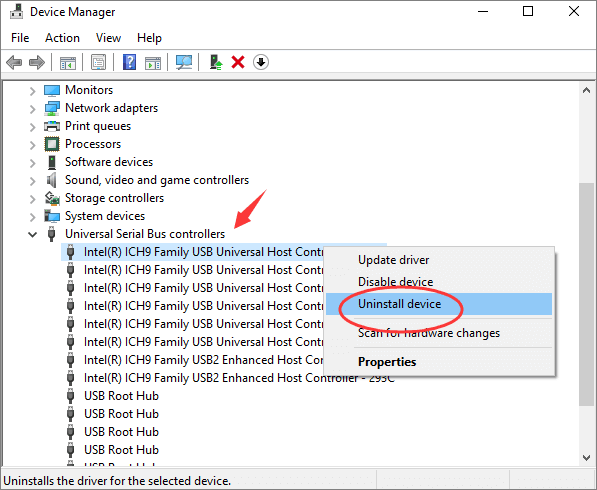
If the issue persists, then follow the below method. To uninstall the Universal Serial Bus controllers driver, go to Device Manager, find the Universal Serial Bus controllers, right-click on it, and select Uninstall device. Then, restart your computer and Windows will automatically reinstall the driver.
Step 1.To access the Device Manager, press the Windows + R keys on your keyboard, and then type "devmgmt.msc" in the "Open" text box.
Step 2. Expand "Universal Serial Bus controllers" from Device Manager.
Step 3.To uninstall the drivers, right-click on them and select "Uninstall". Then, click on OK to confirm the device uninstallation.
Step 4.Restart the computer, and the drivers will get automatically installed on your Windows 11/10.
Fix 6. Diagnose SD Card Issues and Troubleshooting
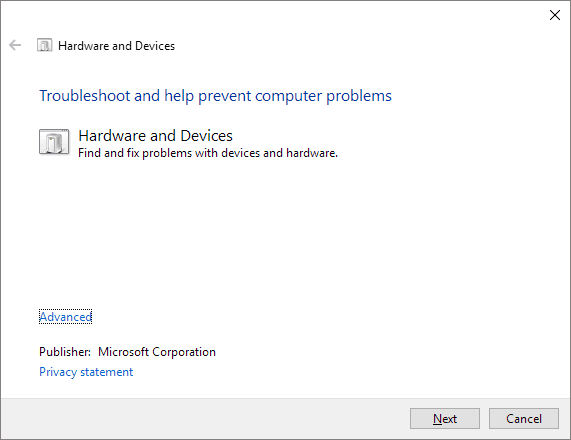
Step 1. Open the Control Panel and select Troubleshooting.
Step 2. Select "Hardware and Sound", and next "Hardware and Devices".
Step 3. Follow the on-screen instruction and wait until the problem solved.
Fix 7. Disable and Enable SD Card Reader
If your SD card is still not showing up on your PC and you still don't know how to open SD card on Windows 11/10, try using the Disk Management tool. To do this, go to Start > type "Disk Management" and select it from the search results.
Step 1. Open Disk Manager on your computer.
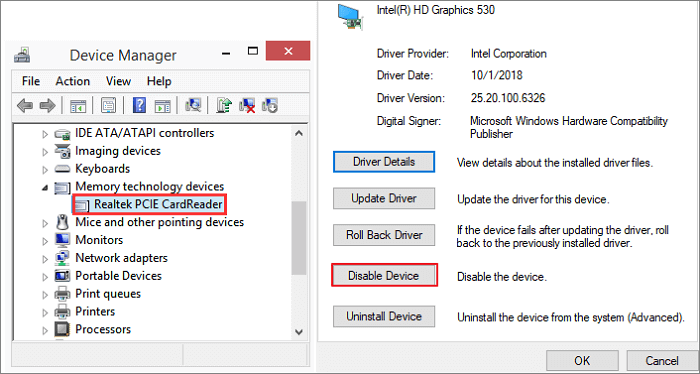
Step 2.To expand the category "Memory Technology Devices", double-click the card reader to open its associated driver, such as the Realtek Card Reader Driver.
Step 3. On the pop-up windows, click "Driver" and then click "Disable Device".
Step 4. When prompted to disable the device, click "Yes".
Step 5. The card reader needs to be re-enabled after a driver update by double-clicking the card reader icon in the system tray, then clicking "Enable Device" in the Properties window.
Fix 8. Repair Corrupted SD Card
If all the above methods fail, the SD card may have developed bad sectors, leading to corruption.
There is a piece of easy-A powerful tool to fix damaged SD cards is Qiling Partition Master. This corrupted SD card repair tool allows users to take advantage of its check partition feature, which can repair a corrupted SD card and make it readable again by the computer.
To fix a corrupted SD card that won't open on Windows 11/10, download a reliable partition manager and use it to repair the card. With just a few clicks, you can restore the SD card to its original state and access its contents on your Windows device.
Qiling Partition Master offers a range of disk partition features beyond checking file systems and repairing SD cards, including resizing/moving partitions to address low disk space, cloning disks, merging partitions, creating/deleting/formatting partitions, wiping data, and converting disk/partition types (e.g., converting FAT32 to NTFS).
Fix 9. Recover Data and Format SD Card
When you format an SD card on your phone, it's likely that something will go wrong and the formatting will fail. As a result, the file system of the SD card becomes corrupted, preventing it from being detected and displayed on your computer.
If your SD card is still not reading or showing up after fixing using the above method, we recommend using Qiling data recovery software to recover files on the SD card first, then format the SD card for reuse.
1. Recover data from SD card
Step 1. Click "USB/SD Scan" to initiate the recovery process.
- Download and install Deep Data Recovery on your Windows PC.
- To properly connect your SanDisk/Lexar/Transcend SD card to your computer, you need to use an SD card reader. Simply insert the SD card into the reader, then plug the reader into your computer's USB port. This will allow your computer to recognize the SD card and access its contents.
- Open Qiling SD card recovery software, select file types, and click "USB/SD Scan" to initiate the recovery process.
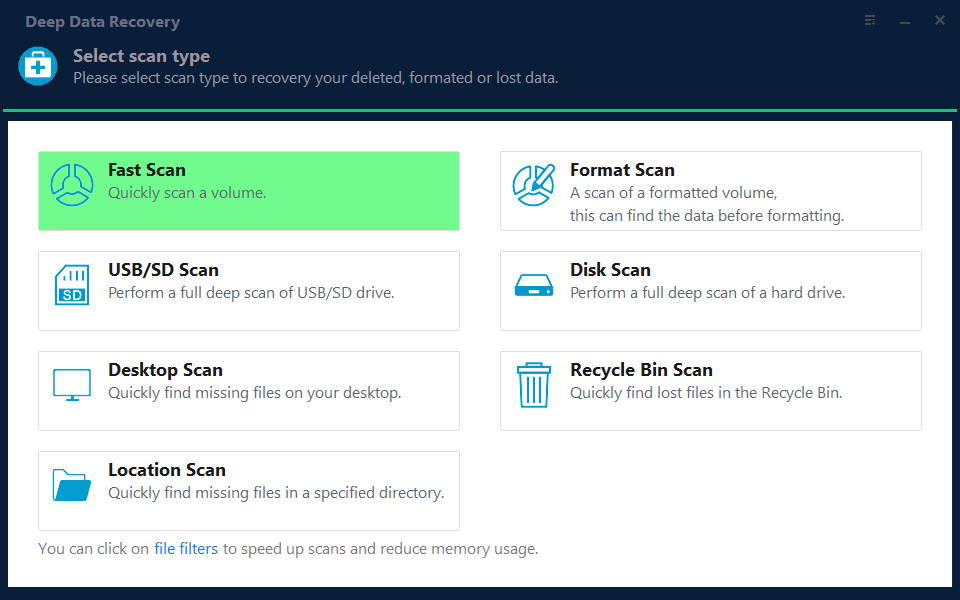
Note: You can choose different search modes based on where and why the data was lost.
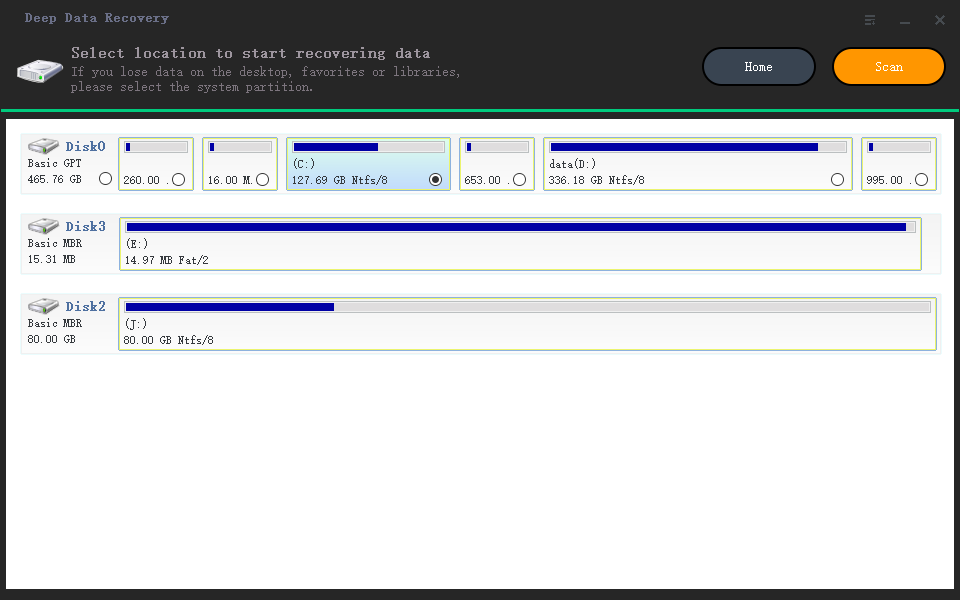
Step 2. Select the SD card to scan
- Select the SD card you want to scan and click on "Scan" to proceed with the process.
Step 3. Check for scan results
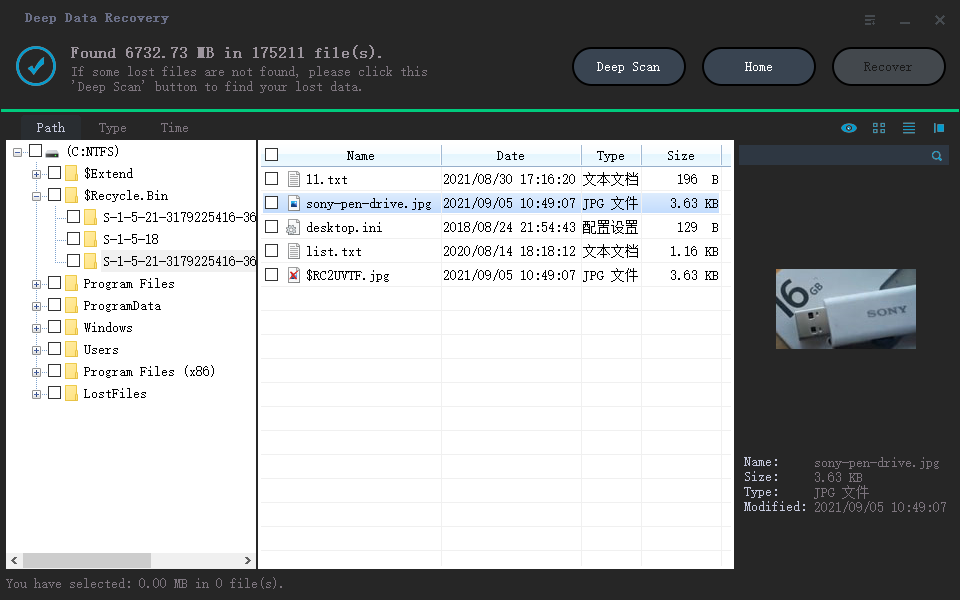
- Wait for the scanning process to complete.
- To narrow down the search results, click on the "Filter" button and select one or more file types to display, such as Pictures, Word documents, Excel files, PDFs, Videos, and other specific file types.
- Click "Preview" to check if they are the wanted files.
Step 4. Recover SD card data
- Choose desired files and click "Recover".
- To prevent overwriting the original data, save the recovered files to a different location, such as a computer or an external hard drive, rather than the original SD card. This ensures that the recovered files are safe and can be accessed without risking the original data.
2. Format the SD card
You can continue using Qiling partition management software to format your SD card with ease, requiring just a few clicks.
Step 1. To format your SD card, locate it and right-click on the partition you want to format, then select "Format" from the options.
Step 2. Set a new partition label, file system, and cluster size to the selected partition, then click "Proceed".
Step 3. To start formatting your SD card, click "OK" on the pop-up window that appears after selecting the format option.
Or you can use format the SD card with Disk Management.
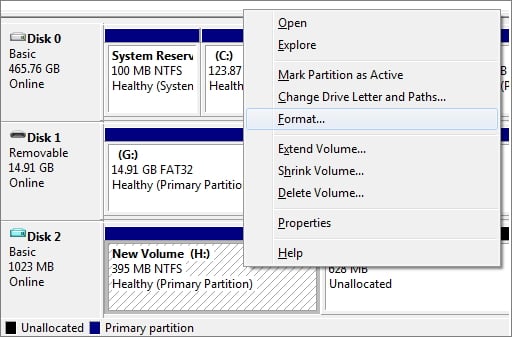
Step 1. Right-click the Start button and then click Disk Management.
Step 2. Right-click on the SD card partition and select "Format".
Step 3.On the format window, check the box for "Perform a quick format" and select a file system and allocation unit size.
Step 4. Click "OK".
Final Verdict
If your computer or SD card is infected with a virus, you might not be able to find and access the SD card on Windows 11/10. To resolve this, run antivirus software to remove the virus or malware, and keep your antivirus software up to date.
If your SD card is not detected in Windows 11/10, try updating the SD card reader driver, checking the SD card for physical damage, and using the built-in Disk Management tool to initialize the SD card. If these solutions don't work, you can try using a different SD card reader or contacting the manufacturer's technical support team for further assistance.
SD Card Not Detected Windows 11/10 FAQs
Here are three questions related to the SD card not detected Windows 11/10. If you also have any of these problems, you can find the methods here.
Why is my SD card not showing up on my PC?
- The SD card is not being recognized by the computer due to a faulty connection between the card and the computer, likely caused by a damaged USB port, adapter, or card reader.
- SD card is locked and write-protected
- Improper operation, such as removing the SD card from the device while it's running, can cause the device to malfunction or become unresponsive. This is because the device relies on the SD card for proper functioning, and sudden removal can disrupt the system's integrity.
- SD card drive letter is lost
- SD card is corrupted/damaged
How do I get Windows 10 to recognize my SD card?
To open an SD card on Windows 10, you can update the SD card driver by following these steps: Right-click on "This PC" or "Computer" and select "Properties." Click on "Device Manager" and look for the SD card reader under "Disk drives.
Step 1. Right-click "This PC" > choose "Manage" > open "Device Manager".
Step 2. To update the driver for your SD card, right-click on the SD card in your computer's file system and select "Properties". Then, navigate to the "Driver" tab and click on "Update driver".
Step 3. Click "Search automatically for updated driver software" and do as required to finish the process.
How can I fix my micro SD card not detected?
Here are the tips to fix the SD card not detected or SD card not showing up issue:
- Try SD card on another device
- Check SD card in Disk Management
- Remove SD card write protection
- Reinstall/update SD card driver
- Enable SD card reader
- Run hardware and device troubleshooter
- Repair corrupted SD card
SD card reader not working Windows 10, how to fix?
The SD card reader may not work due to a poor connection between the SD card and the reader, outdated SD card driver, or a virus infecting the SD card, leading to the issue.
- Check the hardware issues, including the SD card reader, USB cable, SD card, and USB port, to see if they are functioning properly and are not the cause of the problem.
- Run Windows hardware devices troubleshooter
- Change SD card drive letter
- Update SD card reader driver
- Clean up virus or malware
How do I install SD card drivers?
How to install an SD card driver on Windows 10:
If you're having trouble getting your computer to recognize your SD card, try installing the SD card reader software from the installation CD or by downloading it from the manufacturer's website. Open the file, follow the installation wizard, and restart your computer. If the SD card is still not recognized, proceed with the next steps.
Step 1.To install the SD card reader, start the "Add Hardware Wizard" by clicking "Start" > "Control Panel" > "Add Hardware Wizard" > "Next". Windows will then scan your computer for new or improperly installed hardware devices, and if the SD card reader is found, select it and follow the on-screen instructions to complete the installation.
Step 2.If the SD card reader is not automatically recognized, choose "Yes, I have already connected the hardware" and click "Next."
Step 3.To add a new hardware device to the "Installed Hardware" list, select "Add a New Hardware Device" and then choose "Install the hardware that I manually select from a list (Advanced)" from the list. Click "Next" to proceed.
Step 4. Choose "PCMCIA and Flash memory devices" or "USB Mass Storage Device" depending on the type of SD card reader you are using.
Step 5.To install the SD card reader driver, select the correct driver from the list or click "Browse" to navigate to the installation wizard. Then, follow the on-screen instructions to complete the installation process.
Related Articles
- How to Fix USB Shows Read Only Windows 11? [Solved]
- HDD Regenerator Free Alternative on Windows 10/8/7
- PC Won't Turn on, But Motherboard Light Is on/It's Plugged In
- How to Allocate a Hard Drive to Add Space to Another Partition in Windows 11/10/8/7
- How to Run SFC and DISM in Windows 11 [2023 Guide]
If you're experiencing issues with your Windows 11, you can try running the DISM and SFC tools to resolve them. To do this, open Command Prompt as administrator and run the command “DISM /Online /Cleanup-Image /RestoreHealth” followed by “sfc /scannow”. - How to Fix Second Hard Drive Not Showing Up (Updated)
You are going to learn at least four ways if the second hard drive not showing up in Windows 10. Among them, the first solution can satisfy your needs best. Qiling Partition Master can make your second hard drive show up with simple steps.
Products
Articles & Tutorials
- Data Recovery
- Data Backup
- File Recovery
- File Backup
- System Backup and Restore
- Disk and Partition Clone
- Technical articles
- Mobile articles
- Disk Master Help
- Windows Data Recovery Tutorials
- Windows Secure Delete Tutorials
- Windows Partition Management Tutorials
- Windows File Backup and Restore Tutorials
- Windows System Backup and Restore Tutorials
- Windows Disk Backup and Restore Tutorials
- Windows Clone Tutorials