How to Fix Second Hard Drive Not Showing Up (Updated)
When a computer doesn't recognize a secondary hard drive, it's usually due to a hardware or software issue. The secondary hard drive may not be properly connected, or the computer may not be able to detect it. To resolve this, try checking the connections, updating the BIOS, or reinstalling the drivers.
4 Ways to Fix Second Hard Drive Not Showing Up in Windows 10/8/7
There are four types of second hard drive not showing up issues in Windows, including the drive not showing up in File Explorer, Disk Management, or Device Manager, and the drive not being recognized by Windows. Users can try checking the drive's power and data cables, updating the drivers, or running a disk check to resolve the issue. Additionally, users can try to enable the drive in the BIOS settings or check for any conflicts with other devices. If none of these solutions work, users can try to reinstall the drivers or perform a system restore to a previous point when the drive was working.
| Workable Solutions | Step-by-step Troubleshooting |
|---|---|
| Second HDD Not in This PC | Launch Qiling Partition Master. On the main window, right-click on the unallocated space...Full steps |
| HDD Not in Disk Management | Select the "Start" button, type Device Manager, and select it from the list of results...Full steps |
| Second HDD Not in Device Manager | Navigate to "Control Panel" and click on "Troubleshooting". On the right pane, find "Hardware and Sound"...Full steps |
| Second HDD Not in BIOS | Restart PC. Hold and press "F2" to enter the BIOS environment. In the Setup section...Full steps |
If you're experiencing issues with your second or third HDD or SSD not being recognized, this guide can help. This page provides detailed troubleshooting steps to help resolve each problem, ensuring you can utilize your additional storage devices without any recognition issues.
Fix 1. Second Hard Drive Not Showing Up in This PC or My Computer
Over half of users didn't see their external hard drive appearing in the This PC/My Computer section, but it can be found in Disk Management, where it's listed as a disk with "Unallocated" status.
Tip:If your second hard drive is brand new, you need to initialize it. This is because an uninitialized hard drive will be recognized as unallocated space, making it invisible on This PC. In this case, you should initialize the HDD or SSD to make it visible.
Download a third-Qiling Partition Master is a free partition manager that can quickly troubleshoot partition problems by assigning a drive letter.
Step 1. Launch Qiling Partition Master, click on the unallocated space, and select "Create" to create a new partition.
Step 2. Adjust the partition size, file system (choose a suitable one based on your needs), label, and other settings for the new partition, then click "Proceed" to proceed with the process.
Watch the following video tutotial and learn how to create a partition in NTFS, FAT, or EXT file system.
After the job is complete, the program will automatically close. You can then return to This PC or My Computer, where your hard drive should be recognized by Windows and displayed with the assigned drive letter.
Fix 2. Second Hard Drive Not Showing Up in Disk Management
You should move further to the Device Manager and it's time to update hard drive drivers.
Step 1.To access the Device Manager, start by clicking on the "Start" button on your computer, then type "Device Manager" into the search bar, and select it from the list of search results that appears.
Step 2. To update the driver for your device, first expand one of the categories to find the name of your device. Then, right-click (or tap and hold) it, and select "Update Driver".
Step 3. Select "Search automatically for updated driver software".
- If Windows can't find a new driver, you can try looking for one on the device manufacturer's website and follow their instructions.
- To resolve the issue, open the Device Manager, right-click on the device name, select "Uninstall", restart your PC, and Windows will attempt to reinstall the driver.
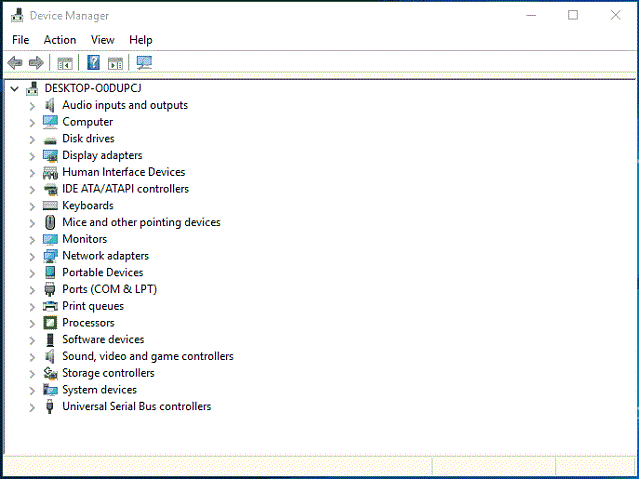
Notice: If you can't find a wanted device driver, try downloading the correct one from the official website of the hard disk manufacturer, then install it and see if the hard drive appears after that.
Fix 3. The Second HDD not Showing Up in Device Manager
If your hard drive is not detected in Windows Device Manager, it's likely corrupted and has bad sectors. You can try using Qiling Partition Master to repair the disk or run the Windows Hardware and Devices Troubleshooter.
Step 1. Navigate to "Control Panel" and click on "Troubleshooting".
Step 2. On the right pane, find "Hardware and Sound" and select "Configure a device" under it.
Step 3. Run as administrator is asked. Click "Next" to run Troubleshooter.
Step 4. If any issues are found, you will be prompted to confirm "Apply this fix", which may occur multiple times depending on the number of errors found.
Fix 4. Second Hard Drive Not Showing Up in BIOS
If your second hard drive doesn't show up, even after checking all possible paths and the BIOS, it's likely a tricky problem that requires professional help. The main causes are either the drive not being enabled in the BIOS or a faulty hard drive itself.
To enable the hard drive in BIOS and make the second hard drive show up in Windows 10 correctly, do as follows.
Step 1. To restart your PC and enter the BIOS environment, simply shut down your computer, then turn it back on. As soon as the PC starts booting up, hold down the "F2" key on your keyboard while it's still booting. This will allow you to access the BIOS settings, where you can make changes to your computer's configuration.
Step 2. In the Setup section, ensure the second hard drive is turned on in the system setup. If it's off, turn it on.
Step 3. Reboot PC again. See if the second hard drive showing up normally this time.
To make sure the connection is normal.
- Check whether the hard disk is connected correctly.
- Check whether the hard disk indicator is flashing normally.
Bonus Tip - Recover Data from Damaged Windows Hard Drive
After fixing the issue with the 2nd hard drive not showing up, you may encounter another problem - your data on the second hard drive is missing. Don't panic, as you can recover permanently deleted files with Qiling data recovery software, which is a cross-platform tool with all the features you need.
Download Deep Data Recovery and recover hard drive data:
- Recover deleted, formatted, and inaccessible data with ease. Whether you've accidentally deleted files, had your storage device formatted, or are dealing with inaccessible data due to various reasons, there are solutions available to help you retrieve your lost information.
- Recover photos, audio, music, and emails from any storage with ease, safety, and thoroughness.
- To recover data from various devices, you can use a data recovery software that supports the specific device type. For example, to recover data from a memory card, you can use a memory card recovery software.
Step 1. Select the file types and click "Fast Scan".
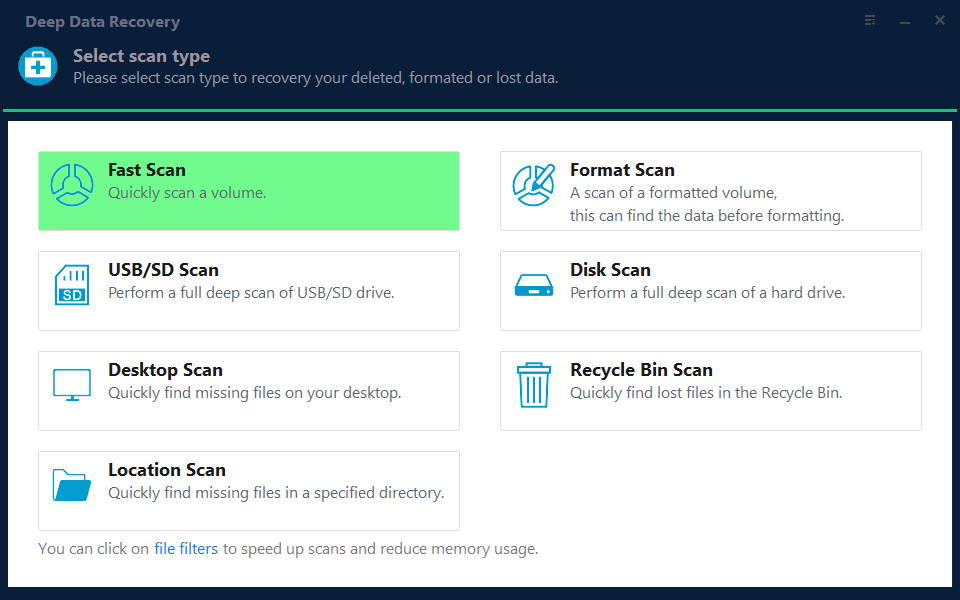
Note: You can choose different search modes based on where and why the data was lost.
Step 2. To recover lost data, select the drive where the data was lost and click "Scan" to initiate the scanning process.
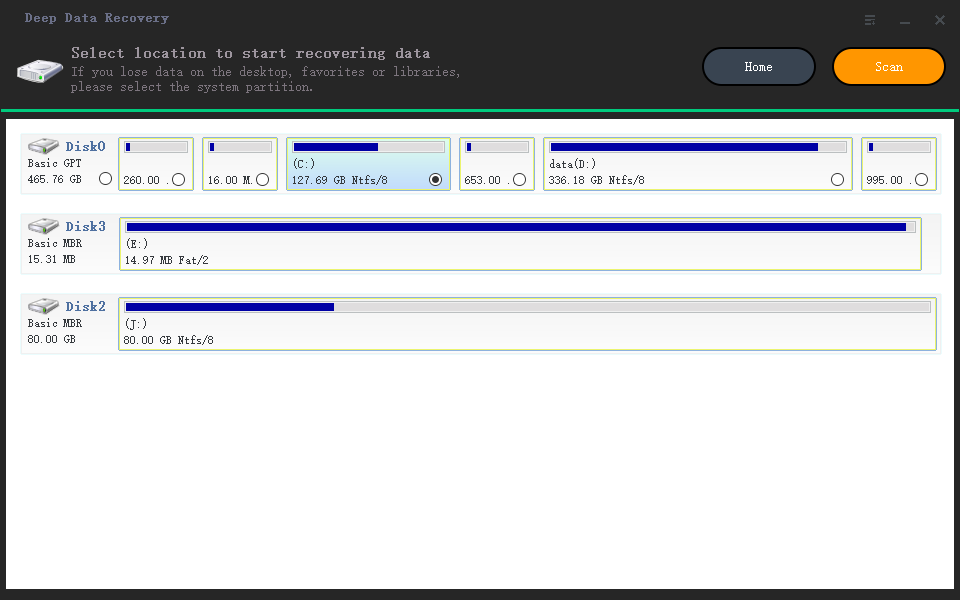
Step 3. When the scan is complete, you can use the "Filter" or "Search" function to locate the lost files. This feature allows you to quickly find specific files or folders that have been affected by the scan, making it easier to recover the ones you need.
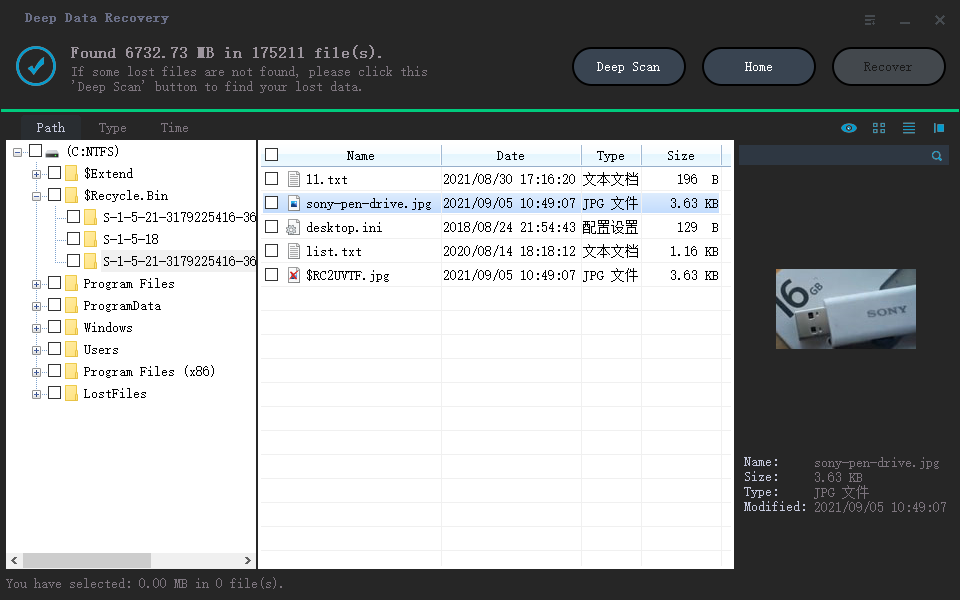
Step 4. Select all the files you want and click "Recover". Then, browse another secure location to save them.
Conclusion
Dealing with the issue of a second hard drive not showing up in Windows 10/8/8.1/7 is not a challenge, and there are many effective methods to resolve it. Additionally, Qiling Partition Master can also help solve other similar disk issues, such as BIOS detecting the hard drive but Windows not, a USB flash drive showing 0 bytes, or HDD formatting taking forever.
Second Hard Drive Not Showing Up FAQs
If you're experiencing issues with an unrecognized secondary hard drive, it's not uncommon. The article above has covered various troubleshooting steps to address this problem. If you're still having issues, you can refer to the following frequently asked questions for further assistance.
Why should I use a secondary hard drive?
Secondary hard drives are beneficial as they allow faster drives to be used for resource-intensive tasks, while slower drives can be used for storing personal data, maximizing storage capacity and minimizing the need for frequent upgrades.
Why is my second hard drive not showing?
Many reasons can lead to a missing hard drive.
- Uninitialized drive
- unallocated space
- Out-of-date device driver
- Connection problems and more
How many hard drives can I have connected to my PC at a time?
Each hard drive requires one drive letter per partition, and there are 24 drive letters available, allowing for up to 24 hard drives.
Related Articles
- How to Increase/Extend C Drive Space in Windows 11(Fixed)
- Can't Skip Disk Check on Startup Windows 11 | What Should I Do?
- How to Convert Basic Disk to Dynamic Disk in Windows Server 2012/2016/2008
- [2022 Tips] How to Remove Ubuntu from Dual Boot
- [Fixed] Seagate External Hard Drive Slow on Windows 11/10
The article offers nine solutions to address Seagate external hard drive slow error, including using professional tools to test speed, deleting unnecessary files, defragmenting, and fixing bad sectors, among other methods, to resolve issues with slow read/write or transfer speeds. - How to Fix Seagate External Hard Drive Write Protected
Learn to fix the frustrating issue of 'Seagate external hard drive write protected' on Windows systems. Five effective solutions can help you access your Seagate external hard drive.
Products
Articles & Tutorials
- Data Recovery
- Data Backup
- File Recovery
- File Backup
- System Backup and Restore
- Disk and Partition Clone
- Technical articles
- Mobile articles
- Disk Master Help
- Windows Data Recovery Tutorials
- Windows Secure Delete Tutorials
- Windows Partition Management Tutorials
- Windows File Backup and Restore Tutorials
- Windows System Backup and Restore Tutorials
- Windows Disk Backup and Restore Tutorials
- Windows Clone Tutorials