How to Delete Unallocated Space in Windows 10
Unallocated space is the unused area on a computer's hard drive that does not belong to any partition, making it unavailable for storing programs, files, or data. This space cannot be automatically allocated to other partitions by the computer, and its purpose is simply to occupy a portion of the total disk space.
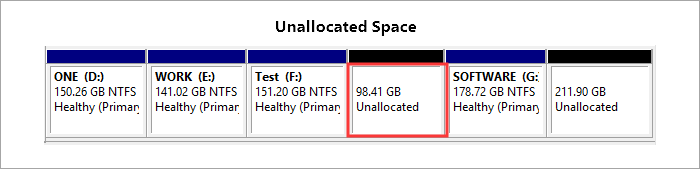
Many people may want to delete unallocated space to better utilize their disk. However, deleting unallocated space is not possible as it is simply a label indicating that a portion of the disk is not currently being used. Instead, you can use the unallocated space to create a new partition or format it for use. This guide will provide detailed instructions on how to manage unallocated space.
Can I Delete Unallocated Space
You can't delete unallocated space directly, but there are two ways to remove it:
1. Create a new partition on the unallocated space
2. Extend the unallocated space into an existing partition
If the unallocated space belongs to a partition, you can easily delete it if necessary, making full use of the space. To delete unallocated space, follow these steps: follow the steps below.
How to Delete Unallocated Space [Three Efficient Ways]
To delete unallocated space on Windows 10, you can use Disk Management, the command line, or third-party software. Disk Management is a built-in tool that allows you to delete unallocated space by shrinking or deleting a disk partition. The command line option, using the diskpart command, provides more advanced options for managing disk partitions. Third-party software, such as DiskGenius or Qiling Partition Master, offers additional features and a user-friendly interface for deleting unallocated space.
| Comparison | |||
|---|---|---|---|
| Complexity | Easy, just a few steps | Medium | Difficult, it requires commands |
| Interface | Easy to understand | A little clear | Clutter without guidelines |
| Suitable users | For every stage, including beginners | For experienced users | For advanced users |
Qiling Partition Master is a more suitable option for users who are not skilled in computers, as it offers a simpler and more user-friendly interface compared to Disk management and Diskpart. With its professional features, you can easily delete unallocated space without needing extensive computer knowledge.
To delete unallocated space, you can use one of three methods: creating a new partition, extending the existing partition, or using a third-party tool. We'll cover each method separately, starting with creating a new partition and extending the unallocated space to the existing partition. This will involve step-by-step instructions for each approach.
Guide 1. Create a New Partition on Unallocated Space
Creating a new partition on unallocated space is a good way to remove it. This can be done using the simplest method, which is to start by creating a new partition on the unallocated space.
Method 1. Create a New Partition with Qiling Partition Master
Qiling Partition Master is a disk management tool that supports Windows 11/10/8.1/8/7 and XP, allowing users to create partitions and extend unallocated space, even if it's not adjacent, and can be downloaded for free to delete unallocated partitions in Windows 10.
Step 1. Launch Qiling Partition Master. On the main window, right-click on the unallocated space on your hard drive or external storage device and select "Create".
Step 2. Adjust the partition size, file system, label, etc. for the new partition, choosing the file system based on your specific needs.
Step 3. Click on the "Proceed" button to create a new partition.
Watch the video tutorial to learn how to create a partition in various file systems, including NTFS, FAT, and EXT.
Method 2. Create a New Partition with Disk Management
To delete unallocated space using Disk Management, open the tool and select the disk containing the unallocated space. Right-click the unallocated space and select "Delete Volume" to remove it. Alternatively, you can right-click the disk and select "Shrink Volume" to shrink the disk and then delete the unallocated space.
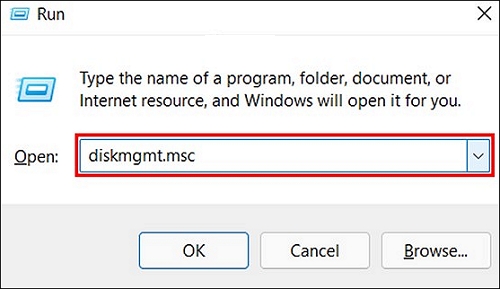
Step 1. Hold "Windows+R" and type "diskmgmt.msc" to open Disk Management.
Step 2. Select the unallocated space. And right-click on it.
Step 3. Follow the "New Simple Volume" option and complete the wizard to set the drive number, file system, and other settings.
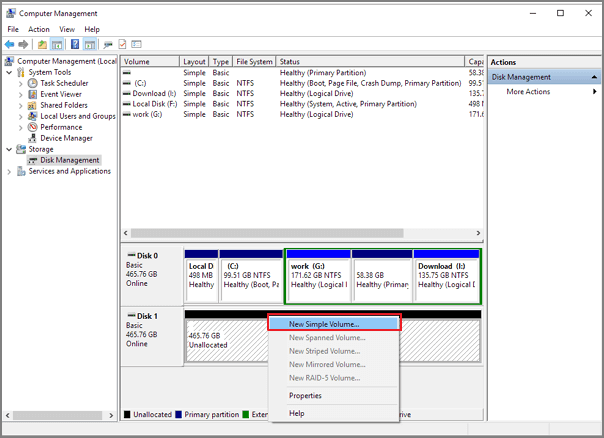
Step 4. The partition will be created on the unallocated space once the "Finish" button is clicked.
- Notice:
- The new simple volume is grayed out if you create a partition on a 3TB MBR disk, as MBR only supports up to 2TB hard disks and only four primary partitions can be created on it, requiring a conversion to GPT using Qiling Partition Master.
Method 3. Create a New Partition with Diskpart
To delete unallocated space using Diskpart, you'll need to create it first, and then use the command line interface to finish the creation and deletion process. When using Diskpart, it's essential to check the commands carefully to avoid errors. Specifically, you'll need to create unallocated space before deleting it, following the steps outlined for using Diskpart.
Step 1. To open a command line window, go to the Run window, type "cmd", and press Enter. Then, type "diskpart" and press Enter again. This will open the Diskpart utility, a command-line interface for managing and manipulating disk partitions.
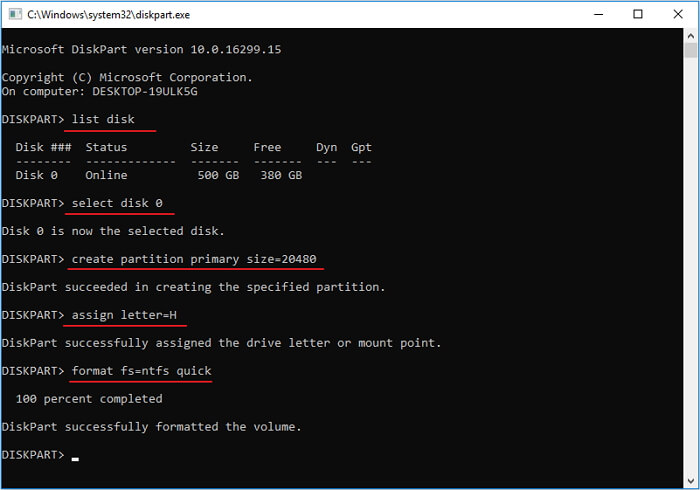
Step 2. Input the following commands and press "Enter" when each command is completed.
list disk (you can see all the disks)
select disk 0 (0 refers to your disk number)
create partition primary size=x (x refers to the partition size)
assign letter=H (H is the partition letter)
format fs=ntfs quick (ntfs can be replaced with other file formats)
Guide 2. Extend Unallocated Space into Existing Partition
The three tools can also extend unallocated space into an existing partition. They work by deleting unallocated space, which then becomes part of the existing partition. This process effectively merges the unallocated space with the existing partition, making it available for use.
Method 1. Use Qiling Partition Master to Extend Unallocated Partition
Follow the steps below to use Qiling Partition Master to extend unallocated space:
Step 1. Locate the Target Partition.
To resize a partition, go to Partition Manager, locate the target partition, and select "Resize/Move".
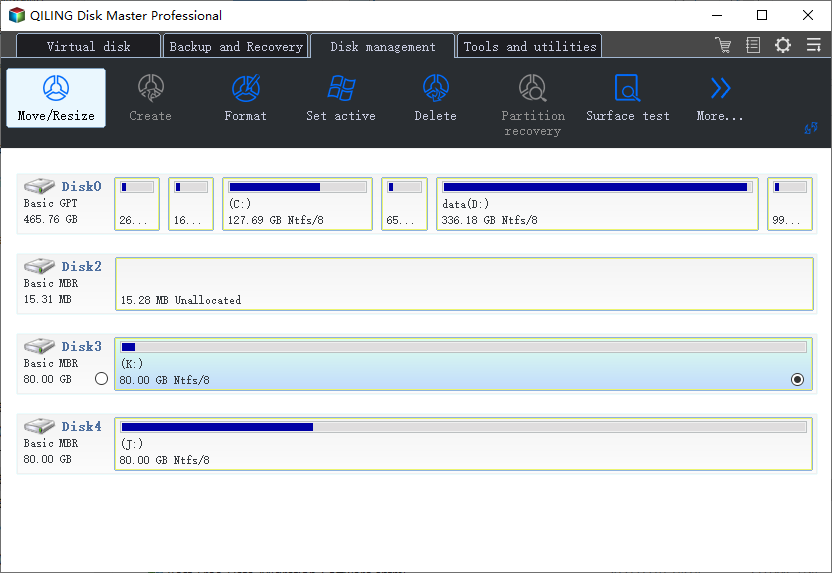
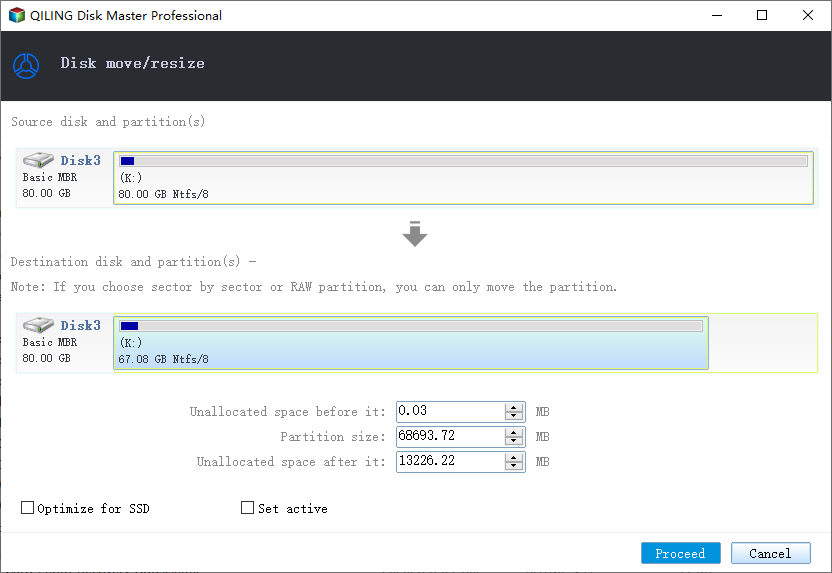
Step 2. Extend the Target Partition.
Drag the partition panel rightward or leftward to add unallocated space to your current partition, then click "OK" to confirm.
Extra Option: Get Space from Another Drive
If there's not enough unallocated space on your disk, right-click on a large partition with sufficient free space, select "Resize/Move".
To extend the target partition, select the partition you want to extend from the list of available partitions, and then click on the "Allocate space to" column to allocate additional space to that partition. This will allow you to increase the size of the partition and potentially resolve any issues related to insufficient space.
Step 3. Execute Operations to Extend Partition.
To resolve the issue, drag the dots of the target partition into the unallocated space. This will allow the target partition to expand and fill the unallocated space, resolving the issue.
Then Click the "Proceed" to keep all the changes.
You May Also Like:
Qiling Partition Master can create and extend unallocated space on unallocated space, and also supports other operations on unallocated space.
Method 2. Use Disk Management to Extend Unallocated Partition
Step 1. Open Disk Management and right-click the unallocated space.
Step 2. To extend the volume, click on "Extend Volume" and follow the instructions to allocate the unallocated space into an existing partition. This will allow you to make use of the newly freed space and increase the size of your current partition.
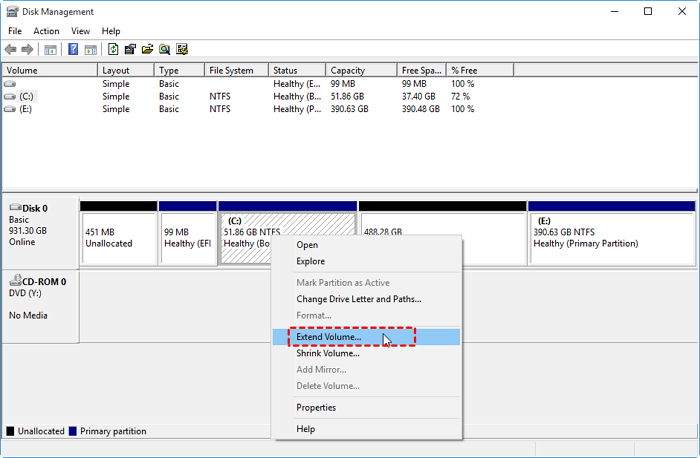
- Notice:
- Unallocated space can only be merged into adjacent partitions, otherwise, the extended volume will be grayed out, and Qiling Partition Master can be used to resolve this situation.
Method 3. Use Diskpart to Extend Unallocated Partition
Follow the steps below to extend the unallocated partition into existing partitions using CMD:
Step 1. To open the Run window, press the Windows key + R. Type "cmd" and press Enter to open the command window.
Step 2. To extend the partition, type the following command and press Enter in sequence: `fdisk /dev/sdb` `p` `d` `1` `1` `n` `p` `1` `+50M` `w`
diskpart
list disk
select disk 0
list partition
select partition 2
extend size =number
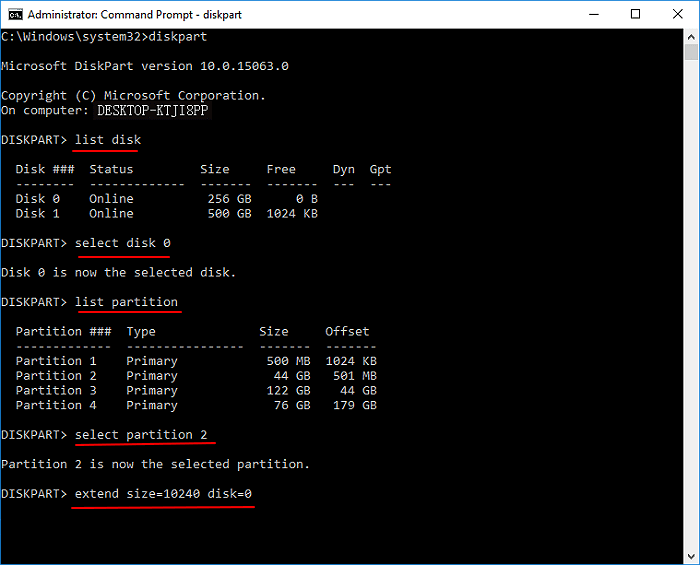
To delete partitions using Diskpart, first, open Command Prompt as an administrator. Then, type 'Diskpart' and press Enter to open the Diskpart utility.

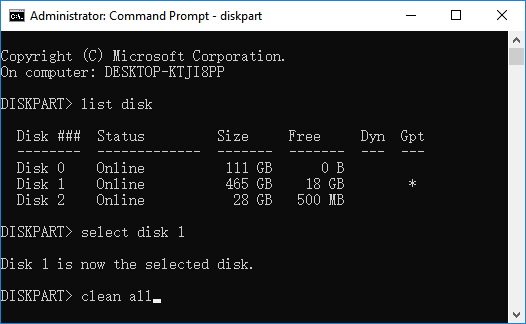
To delete all partitions in Windows using DiskPart, start by opening Command Prompt as an administrator, then type "diskpart" and press Enter. Next, type "list disk" and press Enter to see a list of all disks on your system. Select the disk you want to delete partitions from by typing "select disk X", where X is the number of the disk you want to delete partitions from.
This guide will show you how to clean up a drive for free using DiskPart, a utility that allows you to delete volumes, as well as create, extend, and format volumes using various command lines.
Conclusion
To delete unallocated space, you need to create a partition for it or extend it to an existing partition, as it currently doesn't belong to any partition. This means you can't simply delete it, but rather you have to utilize it by assigning it to a partition.
Qiling Partition Master is a powerful and user-friendly tool that can resolve issues with Windows' Disk Management and Diskpart.
FAQs About Delete Unallocated Space
If you still have questions about unallocated space, please continue with the following questions.
1. Why I can't delete unallocated space?
Unallocated space is unused and can't be deleted, but it can be used to create a new partition or extend an existing one.
2. What happens if you delete unallocated space?
You can't delete unallocated space because it's not taking up any space on your hard drive, so deleting it wouldn't affect anything. It's like trying to delete air - there's nothing to delete.
3. Why do I have so much unallocated space?
Unallocated space can occur due to various situations, including but not limited to, file system corruption, disk formatting issues, or when a file is deleted but its space is not immediately reclaimed by the operating system. In some cases, unallocated space can also result from a file being moved to a different location, but its original space remains unused.
- Initializing a disk
- Deleting a partition
- Misuse or virus attack
Unallocated space on a disk can be utilized by recreating the partition or extending it to other partitions, thereby improving disk utilization.
Related Articles
- How to Format SSD to FAT32 in Windows 10/8/7? Your Quick Guide Is Here
- How to Repair Invalid Dynamic Disk With Ease
- Format to FAT32 for USB or External Hard Drive in Windows 10 [Four Solutions]
- All You Should Know About Erase | How to Securely Erase Your SSD Information
- How to Copy Hidden Partition to Another Drive/USB with Success
This guide will provide information on hidden partitions and guide you through the process of cloning them to another drive or USB, including recommendations for the best software to assist with the task. - How to Copy NTFS Partition [2024 Detailed Guide]
Copying an NTFS partition is necessary when you need to transfer data from one hard drive to another, or when you're upgrading your computer and want to keep your files. To copy an NTFS partition, you can use the built-in Disk Management tool in Windows.
Products
Articles & Tutorials
- Data Recovery
- Data Backup
- File Recovery
- File Backup
- System Backup and Restore
- Disk and Partition Clone
- Technical articles
- Mobile articles
- Disk Master Help
- Windows Data Recovery Tutorials
- Windows Secure Delete Tutorials
- Windows Partition Management Tutorials
- Windows File Backup and Restore Tutorials
- Windows System Backup and Restore Tutorials
- Windows Disk Backup and Restore Tutorials
- Windows Clone Tutorials