Disk Partition: How to Partition A Hard Drive You Must Know in 2022
In this article, you'll learn:
- I. What Is A Partition? (Define Partition)
- II. How To Partition A Hard Drive Windows 11/10/8.1/7
- III. How To Partition A Hard Drive Mac
- IV. How To Partition A Hard Drive Linux
- V. Partition Hard Drive with Free Disk Partition Manager
- How to Repair or Fix A Hard Disk Partition Error
Overview: What Disk Partition Meant for You?
Some disks come with a single partition by default, while others have unallocated space without a partition. To use an unpartitioned drive, such as an internal hard drive, external hard drive, or removable device (USB drive, flash drive, memory card, etc.), it needs to be partitioned. This article provides a guide for those who want to partition their drive but lack basic information, covering topics such as what disk partitioning is, how to partition a hard drive, and more.
I. What Is A Partition? (Define Partition)
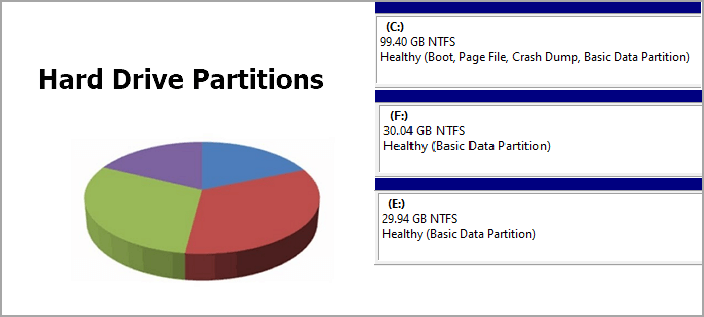
A hard disk partition is a separate section of a hard drive or storage device that helps keep programs and data organized by storing different types of information in separate places.
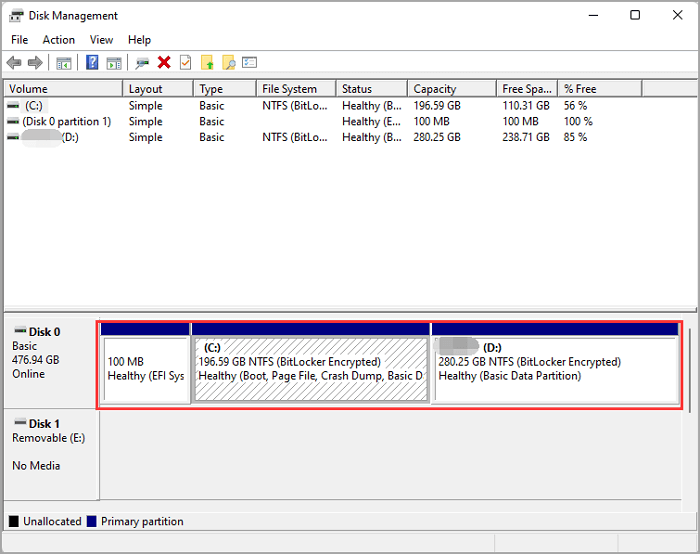
In the Disk Management tool, partitions appear as small boxes behind the disk number (e.g. disk 0 or 1), representing a section of the disk that has been divided into a separate, organized storage area.
Disk Partition Types - Primary Partition, Logical Partition and Extended Partition
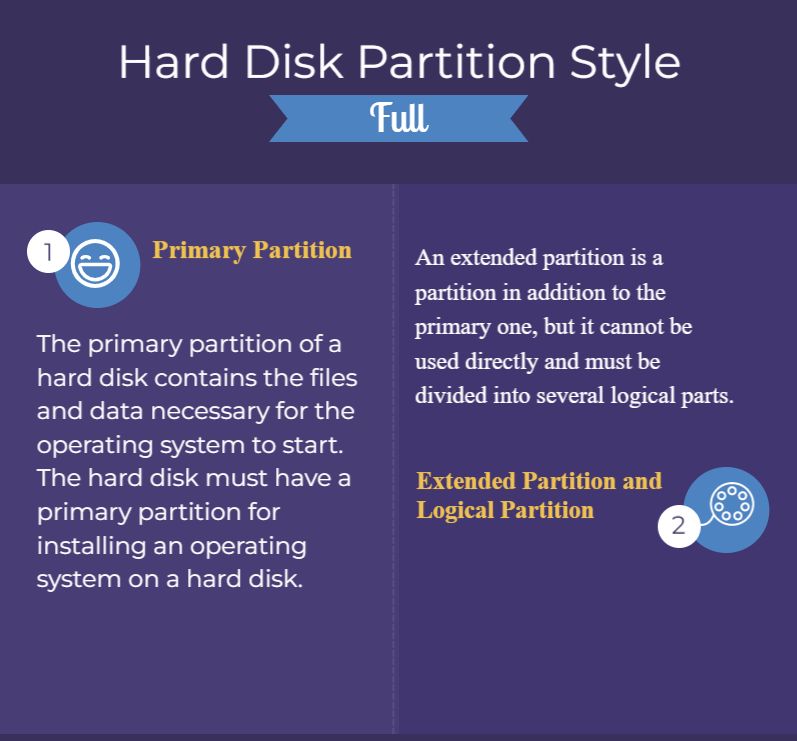
A hard disk can have up to 4 partitions, including 1-3 primary partitions, 1 extended partition, and multiple logical partitions within the extended partition.
Hard Disk Partitions and File System
After partitioning a hard drive, you need to format the partition with a file system and store data.
- Windows drives - NTFS file system.
- Removable devices - exFAT, FAT32 file system.
- Linux Partition - ext2/3/4 file system.
- Mac drives - APFS, HFS, HFS+ file system
Is Disk Partition Needed?
At least one partition is needed! You cannot store files or programs on a blank, unpartitioned drive.
Controlling a drive, also known as disk management, involves organizing your disk space and improving disk performance. This is done by partitioning the disk, which divides it into separate sections, each with its own purpose. By doing so, you can optimize your disk usage and achieve better performance.
See the Advantages of Partitioning A Hard Drive:
i. Separating OS and Personal File
ii. Good for Disk Performance
iii. Easy for Data Migration
Partitioning can be used to improve disk performance and organization by dividing a physical disk into multiple logical disks, each with its own file system, allowing for better organization and management of data, and can also be used to create a separate partition for the operating system, programs, and data, helping to prevent data loss in case of a system failure.
To install a dual system, you can put a Linux system on a separate partition, allowing you to run both operating systems on your computer.
- Notice - Do You Need Multiple Partitions on All Hard Drive?
- Users who use removable devices should keep their USB drives simple with just one partition, as multiple partitions can cause clutter on the desktop when connected to a PC. In contrast, having multiple partitions on internal storage is acceptable and can even help protect the computer from corruption by creating more than 2 partitions on the hard disk.
II. How To Partition A Hard Drive Windows 11/10/8.1/7
Disk partitions are usually created during the operating system installation, but can also be modified using disk management tools provided by most operating systems. To modify a partition, follow the instructions to develop a partition in Windows 10/11 first, then keep the formatting.
How to Partition A New Hard Drive
Step 1. Initialize a new disk.
- Right-To access Disk Management in Windows, click the Windows icon and select Disk Management from the list.
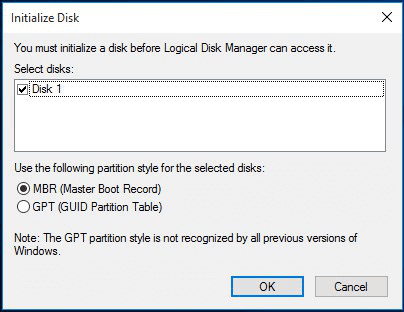
- Once open it, right-click disk and choose "Initialize Disk". You can see a notice like "you must initialize a disk before logical disk manager can access it".
- Choose partition style MBR or GPT (Choose MBR if disk drive is smaller than 2TB. Otherwise, choose GPT.)
- Click OK.
[Further Reading] Open Disk Management in Windows 11
Step 2. Create and Format A Hard Disk Partition
- Right-click the unallocated space and select "New Simple Volume".
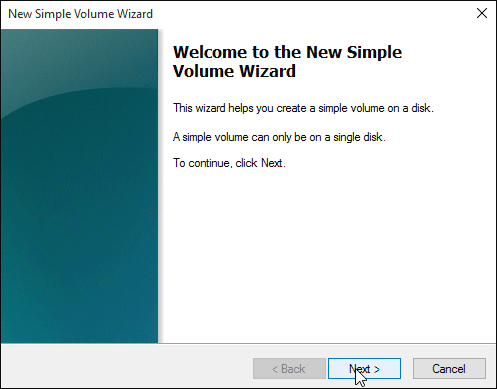
- To start the New Simple Volume Wizard, click "Next". Then, enter the volume size and select "Next".
- Select drive letter and select "Next".
- Go to the Format Partition dialog box, check the default format settings, and select "Next".
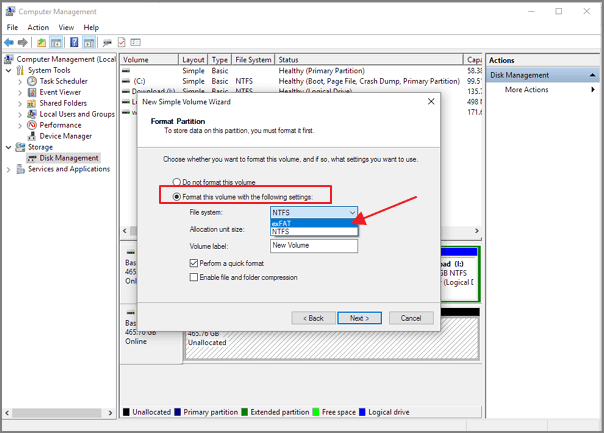
- Select "Finish".
LEARN MORE
Check an in-depth tutorial to partition hard drive in Windows.
Other Tutorials to Partition An Existing (External) Hard Drive:
Extend C Drive Windows 10
Merge partition Windows 10
Resize partition Windows 10
Delete all partition Windows 10
Show hidden partition Windows 10
III. How to Partition A Hard Drive Mac
To add a hard drive partition on mac:
- To partition a drive using Disk Utility, select the targeted drive, click the "Partition" button from the toolbar, and then click the "+" icon to create a new partition. Name the partition and set its size, then click "Apply" to apply the changes.
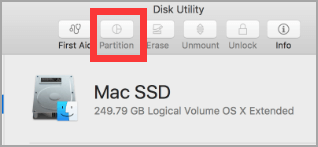
For older macOS versions with an HFS+ file system, you'll need to partition the hard drive. However, for newer versions with an APFS file system, Apple recommends creating a flexible volume on a single partition.
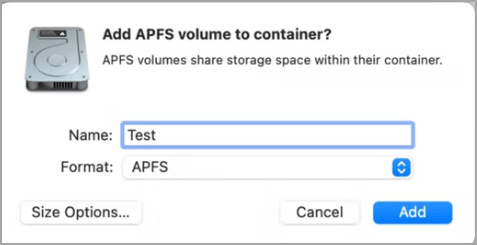
- To create a volume, open Disk Utility, select the hard drive, click the + icon, name the volume, and set the format to APFS, then click Add.
IV. How to Partition A Hard Drive Linux
Use fdisk Command to Create and Format a Disk:
Step 1. Type sudo fdisk -1 to list existing partitions.
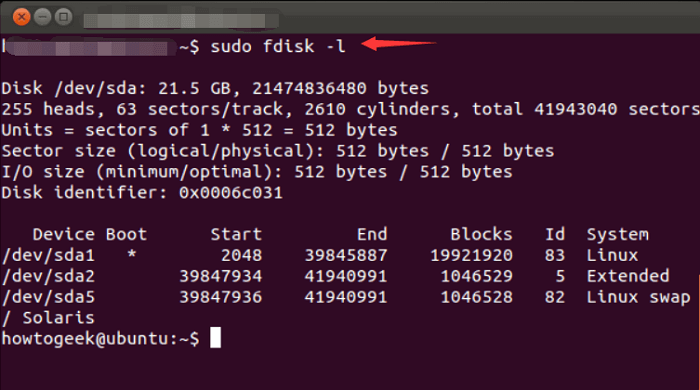
Step 2. Type sudo fdisk /dev/sdb to select disk.
Step 3. Enter command to create a new partition:
- n
- 2
- 3622912
- +2GB
- w
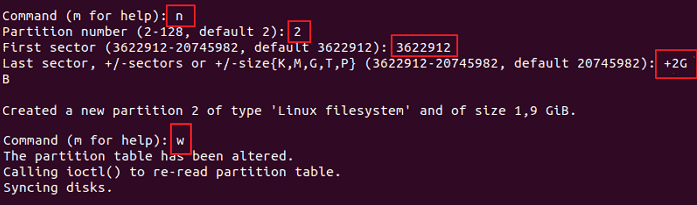
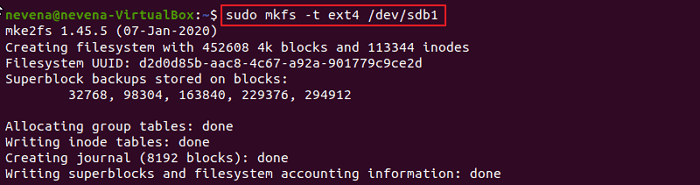
Step 4. Type Command to format partition.
sudo mkfs -t ext4 /dev/sdb1
V. Partition Hard Drive with Free Disk Partition Manager
Disk Management can quickly partition a drive without third-party software, but it has limitations in making further adjustments. If you need more advanced features, consider using a disk partitioning tool that allows for simple steps to change partitions on your hard drive.
Qiling Partition Master Free is a disk partitioning tool that allows users to create, resize, format, and delete partitions on their hard drives, and also provides support for dynamic disks and RAID arrays, as well as features to improve disk performance.
How to Partition A Hard Drive with Qiling Partition Master
The best free disk partition tool for Windows is Qiling Partition Master. It offers a user-friendly interface and allows users to resize, move, merge, and split partitions without losing data.
1. Qiling Partition Master
2. Paragon Partition Manager
3. Acronis Disk Director
4. Gparted
5. PartitionMagic
6. Disk Management
7. DiskPart
LEARN MORE
To learn how to partition your disk, get the complete instructions on the top 7 best disk partitioning tools, which include Qiling Partition Master, and GParted, among others.
How to Repair or Fix A Hard Disk Partition Error
1. "We couldn't create a new partition" Error
If you're trying to install a second OS on a bootable device, you might encounter an error. To resolve this, try disconnecting any peripherals from the computer, formatting your hard drive, or setting your partition as active. This should help resolve the issue and allow you to proceed with the installation.
To fix: We couldn't create a new partition
2. "Windows can't be install to disk partition" Error
Have you seen these two errors?
- XThe error message indicates that Windows cannot be installed on the selected disk because it uses the GPT (GUID Partition Table) partition style, which is not compatible with the Windows installation process. To resolve this issue, you can try the following: 1) Reboot the computer and enter the BIOS settings (or UEFI settings, depending on your system). 2) Change the boot order to prioritize the USB drive or CD/DVD drive containing the Windows installation media.
- XThe error message indicates that Windows cannot be installed on the selected disk because it has a Master Boot Record (MBR) partition style, which is an older style of partitioning that is not compatible with the current version of Windows. To resolve this issue, you can try converting the disk to a GUID Partition Table (GPT) partition style, which is the newer and more compatible style. Alternatively, you can also try installing Windows on a different disk that has a GPT partition style.
Windows can't be installed to disk partition is an error that usually occurs when installing Windows, often due to a mismatch between the hard drive partition style and the BIOS version.
Read two depth tutorials to solve the problem:
Hard Disk Partition FAQs
1. How many active partitions can a hard disk hold?
An active partition is a designated partition where a computer boots up, and typically, only one partition is set as active.
2. How many disk partitions should I have?
You can keep at least two partitions - one for the Windows operating system and the other one for personal data.
3. Which device file below represents the first primary partition on the second PATA hard disk drive?
Four choices:
- /dev/hdb1
- /dev/hdc2
- /dev/hdc1
- /dev/hda1
The /dev/hdb1 is the right option.
4. How to Fix "the startup disk cannot be partitioned or restored to a single partition"?
Apple recommends having at least 64GB of free space on your startup disk. If you're running low on space, you can refer to the article "free up storage space on Mac" for guidance.
Related Articles
- Ultimate Guide: What Is GPT Disk, How to Use GPT in Windows
- What Is SSD and How Do I Set Up and Make Use of SSD [Beginners' Guide]
- Computer Won't Boot? Causes & Fixes for PC Not Turning On [Full Guide]
- File System Comparison: NTFS, FAT32, exFAT, and EXT, Which File System Should I Use
- How to Format Maxtor External Hard Drive [2024 Guide]
If you're experiencing issues with formatting your Maxtor External Hard Drive, - this guide can help. To resolve the problem, follow the steps outlined in the detailed guide, which provides a comprehensive solution to get your Maxtor External Hard Drive up and running smoothly. - How to Format Micro SD Card? [Windows/Mac/Android]
Formatting a micro SD card before use is a simple process. This article provides methods to format micro SD cards to FAT32 or other file systems on Windows, Mac, and Android, offering a solution for users who need to get their cards up and running.
Products
Articles & Tutorials
- Data Recovery
- Data Backup
- File Recovery
- File Backup
- System Backup and Restore
- Disk and Partition Clone
- Technical articles
- Mobile articles
- Disk Master Help
- Windows Data Recovery Tutorials
- Windows Secure Delete Tutorials
- Windows Partition Management Tutorials
- Windows File Backup and Restore Tutorials
- Windows System Backup and Restore Tutorials
- Windows Disk Backup and Restore Tutorials
- Windows Clone Tutorials