Extend or Expand SSD C Drive Across Disks Like An Expert in 2022
- Applies to: Expand SSD C drive across disks, extend SSD C drive to another disk; no data loss, no boot issue.
- Complex Level: Easy
- Supported OS: Windows 11/10/8.1/8/7, Vista/XP, and Windows Server systems.
In this article, you'll learn:
- When to Extend C Drive from Another Disk
- #1. Prepare or Add a Second Drive to PC
- Download a reliable disk partition manager to extend the SSD C drive across multiple disks, allowing for a larger capacity and improved performance.
- #3. How to Expand SSD C Drive Across Disks
- Tips to Optimize SSD and Computer Performances After Extending C
"Can I expand SSD C drive across disks in Windows 11/10?"
To expand the system C drive to another disk, you can clone the existing system drive to the second hard drive, then remove the original system drive and replace it with the cloned drive. This process will allow you to expand your system C drive to the second disk without losing any data.
If you're looking to extend your C drive from another disk, this guide can help. It provides a step-by-step procedure to expand your SSD system drive to another drive without losing any data or experiencing booting issues.
Let's get started here.
When to Extend C Drive from Another Disk
In some of Qiling's previous articles, we mainly discussed how to fix the listed issues here with free or unallocated space on the same disk:
- Extend C drive without formatting
- Extend C drive in Windows Server 2019/2016
- C drive is out of space
- Merge C drive with D drive
- Merge disk 0 to disk 1, etc.
To resolve the issue, you can extend the C drive by adding unallocated or free space from the same disk, or increase the system drive size. If there's no available space on the target disk, you can convert the two disks to dynamic disks and merge them into one, effectively resolving the problem.
To expand the SSD C drive across disks, you'll need to use a third-party software or a built-in utility provided by your operating system. Some popular options include Qiling Disk Copy, and the built-in Disk Management tool in Windows.
- SSD has only one system partition.
- The system SSD disk has run out of free space, and there is no unallocated space left. This means that the disk is completely full and there is no room for new files or data.
- The SSD C drive is running out of space.
- Your computer's SSD C drive has become read-only, or you're receiving a low disk space warning. This can be caused by a variety of issues, such as a corrupted system file, a virus, or a failing drive.
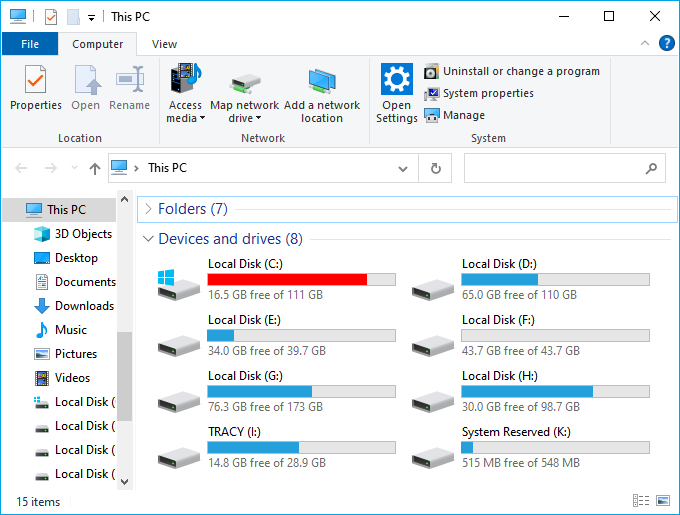
So how to expand C drive from another HDD or SSD? Follow the full guide below, and you'll successfully get rid of the SSD C drive full issue with ease.
#1. Prepare or Add a Second Drive to PC
You can skip the first part of the instructions if your system has a second disk configured. You can proceed directly to the second part of the instructions to continue.
Here are the steps to add and set up a second hard drive or SSD:
Step 1. Purchase a new hard drive or SSD.
The second hard drive or SSD should have at least the same storage capacity as the system SSD drive, if not more.
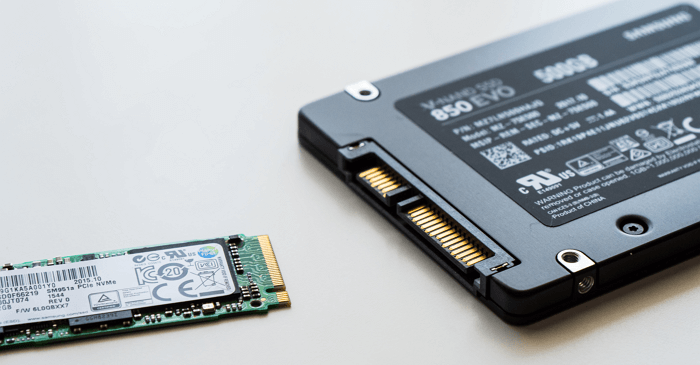
Step 2. To upgrade your PC's storage, install and configure a new Hard Disk Drive (HDD) or Solid-State Drive (SSD) by following these steps: Install the new HDD or SSD into your PC's available drive bay, ensuring it is securely fastened. Connect the drive to a free SATA port on your motherboard, and secure any cables.
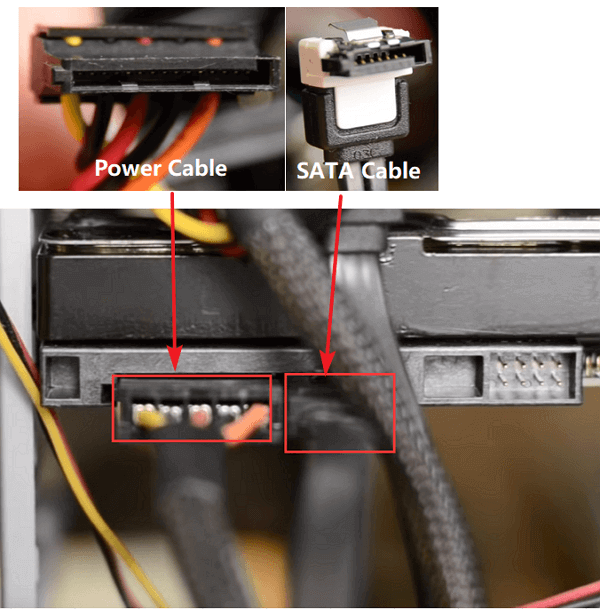
- Move the computer case, insert the new disk to the PC via the SATA and power cables. Connect the power cable to the disk and secure it to the case.
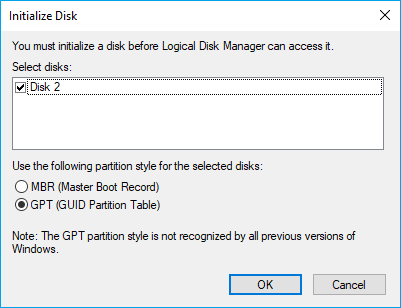
- To initialize a new disk, first close the computer case, then enter the Disk Management utility, right-click on the new disk, and select the option to "Initialize Disk".
- Configure the disk type as the same as the source system, either SSD - MBR or GPT.
#2. Download Reliable Disk Partition Manager to Extend SSD C Drive Across Disks
After configuring the second drive, you can turn to reliable disk manager software like Qiling Partition Master for help, which now features the newly released "Expand C Drive" function.
With this feature, you can expand your SSD C drive across multiple disks, moving essential Windows programs and files to a second HDD or SSD, freeing up space on the OS drive, and securely generating a new partition on the second disk to configure programs and system files to work as they would have in the original location.
You can extend the system C drive across disks by downloading and installing this software on both Windows and Windows Server computers.
#3. How to Expand SSD C Drive Across Disks
Now, you are good to go and change the location of System programs and files to the second disk so you can expand your SSD C drive on your PC.
Here are the steps that you can follow:
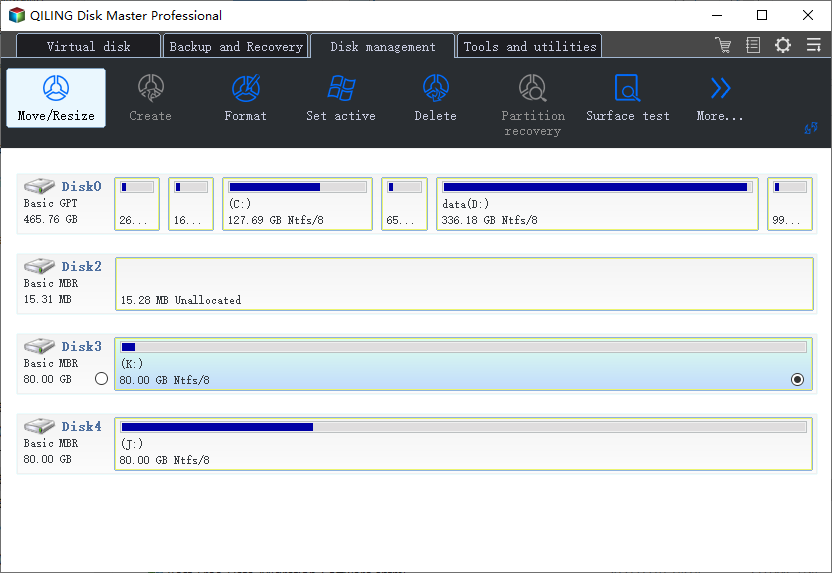
Step 1. Click partition C, select Disk management, and click Resize/Move
Step2: To expand the C: partition, drag its end into the unallocated space, effectively merging the two, and then click "Proceed" to initiate the process.
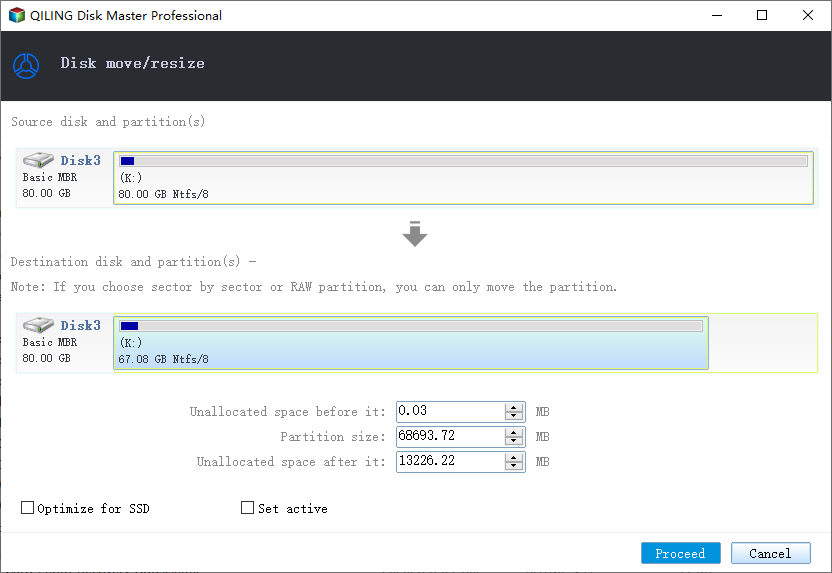
After the process completes, restart your computer to keep all the changes. Once the computer boots up, you can open Windows File Explorer and find an Expanded C drive has been created, and the SSD C drive now has more free space left, as visible in Disk Management.
Tips to Optimize SSD and Computer Performances After Extending C
After expanding the C drive with the second disk, your computer should work faster to read and write data, but it's still important to take good care of your SSD and the computer.
To optimize SSD and computer performances, consider updating your operating system and drivers, disabling unnecessary startup programs, and closing unused applications. Additionally, consider upgrading your RAM, cleaning up temporary files, and uninstalling unused software.
#1. 4K Alignment SSD
To maximize your SSD's performance, you can use Qiling Partition Master to align the partition on a 4K SSD, ensuring it runs at its peak reading and writing speed.
Here is how to do so:
Step 1.To align an SSD disk, select it, right-click, and choose "Resize/Move".
Step 2.4K alignment is a process that ensures the sectors on a solid-state drive (SSD) are properly aligned, which can improve performance and reduce wear on the drive. By using a tool or software to align the partitions on the SSD, you can ensure that all sectors are properly aligned, which can help to prevent issues such as slow performance or data corruption. This is especially important for SSDs, as they have a limited number of write cycles and proper alignment can help to extend the life of the drive.
#2. Take Good Care of the Expanded C Drive
When you see the expanded C drive, be cautious and avoid deleting or removing any files inside, as it contains system files and program files that are crucial to your computer's functioning.
You should be very careful every time you need to make changes in the folder, as even a small mistake can have significant consequences.
I will not touch the new volume. I will keep using the old one.
#3. Clean-Up System Junk Files Regularly
The Windows system tends to generate unnecessary junk files or large temporary files while you're browsing online or working on it.
If your system's C drive is full of unnecessary large junk files, it's recommended to regularly clean up these files. A reliable Windows clean tool, such as Qiling CleanGenius, can be a useful solution to try.
Step 1. Download and install Qiling Partition Master Suite on your PC, and then click to download PC Cleaner from the panel.
Step 2. To start using Qiling CleanGenius, first install it on your PC. Then, navigate to the "Cleanup" section and click on "Scan" to initiate the cleaning process.
Step 3.Qiling CleanGenius will immediately scan your PC to identify and select all useless files, system junk files, and invalid entries, and then clean them with a single click.
Step 4.Once completed, you can see clearly how many MBs or GBs of data are cleaned. Click "Done" to finish the process.
Conclusion: You Can Extend SSD C Drive to Another Disk Like an Expert with A Powerful Tool
In Windows 11/10/8/7, you may need to expand the C drive across disks when it runs out of space. To do this, you'll first add a second disk, configure it, and then use a reliable disk partition manager tool to extend the C drive.
Qiling Partition Master, with its Expand C Drive feature, allows users to expand the C drive across multiple disks, making it a useful tool for managing disk space and ensuring a smooth operation of the system.
Aside from this, you can also use Qiling Partition Master to manage hard drive partitions, which is another useful feature. convert MBR to GPT You can clone, resize, merge, or even migrate your OS to a new drive, all without reinstalling Windows. This includes cloning an image to a new drive, resizing partitions to make more space, merging disks or partitions to combine free space, and migrating your OS to a faster drive like an SSD, all without having to reinstall Windows.
Related Articles
- How to Format 64GB SD Card/USB Flash Drive to FAT32
- How to Format a Bootable USB Drive in Windows 10
- How to Partition Hard Drive (including C drive) in Windows 11/10 Without Formatting
- How to Download Partition Assistant for Server with License Key to Manage Disks [2022 New]
- Top 4 Best Partition Magic Alternatives Recommend
If you're searching for a Partition Magic alternative, you're in luck! This article provides a comprehensive overview of the top 4 best Partition Magic alternatives, offering you a reliable and efficient solution for managing your disk partitions. - Download and Use Partition Magic for Windows Server 2016 [Step-by-Step Guide]
For Windows Server 2016 owners, this page highlights the top partition magic server software to effectively apply and manage disk partitions on Server computers.
Products
Articles & Tutorials
- Data Recovery
- Data Backup
- File Recovery
- File Backup
- System Backup and Restore
- Disk and Partition Clone
- Technical articles
- Mobile articles
- Disk Master Help
- Windows Data Recovery Tutorials
- Windows Secure Delete Tutorials
- Windows Partition Management Tutorials
- Windows File Backup and Restore Tutorials
- Windows System Backup and Restore Tutorials
- Windows Disk Backup and Restore Tutorials
- Windows Clone Tutorials