There Is No Disk in the Drive. Please Insert a Disk into Drive
Quick Navigation to No Disk in the Drive Error Fixes
To fix the issue of a drive or device not being recognized by a PC, try unplugging and replugging it, checking for loose connections, and ensuring the device is properly powered on. If the issue persists, try updating the device drivers, running a disk check, and checking for firmware updates. If the problem is with a drive, try using a different USB port or cable, and if it's a device, try using a different power source.
| Workable Solutions | Step-by-step Troubleshooting |
|---|---|
| Fix 1. Replug in a Drive | Shut down the computer. Unplug removable disk, USB or SD, etc. devices...Full steps |
| Fix 2. Change Drive Letter | Press "Win + X" and click "Disk Management". Right-click on the removable device...Full steps |
| Fix 3. Disable the Drive | Press Win + R to open the Run dialog. Type devmgmt.msc and click "OK"...Full steps |
| Fix 4. Update Device Driver | Go to "This PC > Manage > Device Manager". Find and right-click your drive...Full steps |
| Fix 5. Format the Drive | Run Qiling Partition Master, right-click the hard drive partition you intend to format...Full steps |
| Fix 6. Edit Registry | Connect your device to the PC. Open Registry by clicking "Start" > Type regedit in the Run dialog...Full steps |
| Fix 7. Check Disk Error | Open Qiling Partition Master, locate the disk, right-click the partition you want to check...Full steps |
Error Overview - There Is No Disk in the Drive
The error message "There is no disk in the drive. Please insert a disk into drive\device\harddisk\Dr1" typically indicates that the operating system is unable to recognize a disk or drive, often due to a software or configuration issue. This can be caused by a faulty driver, corrupted system files, or incorrect drive configuration. To resolve this issue, users can try running a disk check, updating their drivers, or reconfiguring their drive settings. Additionally, checking for malware or viruses and running a system file checker can also help resolve the issue.
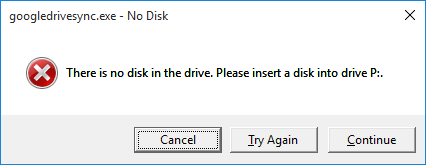
No Disk in Drive Error Symptoms
When you get the error, you receive these messages:
- It seems like your computer is unable to read the disk in drive D:. Please try inserting a disk into drive D: and see if that resolves the issue. If not, you may want to check the disk itself for any issues or errors.
- CiceroUIWndFrame,WINWORD.EXE\NoDisk\Device\Harddisk1\DR1
Here are common symptoms: The computer won't turn on, the keyboard and mouse aren't responding, the monitor is black, or there's an error message on the screen when trying to print or open a document.
Windows 10/8/7 No Disk in Drive Error Causes
The "No disk in drive" error is caused by two main reasons: a faulty or incorrectly configured disk drive, which can be due to a hardware issue or a software problem, or a mismatch between the drive's file system and the operating system's expectations, often resulting from a corrupted or improperly formatted drive.
- 1. No removable disk in the removable disk drive.
- 2. A removable drive such as a Lomega Zip drive is not typically configured as drive letter C, but rather as a separate drive letter, usually E or F, depending on the system configuration. This allows users to easily distinguish between the removable drive and the fixed drives, such as C, D, and E, which are usually reserved for the operating system, program files, and data storage.
To resolve the issue, use one of the following methods.
Fix 1. Move and Replug in a Removable Drive, USB or SD Card
To resolve the issue of a removable disk not being recognized after a computer shutdown, you can simply restart the computer and reinsert the removable disk into the removable drive. This should allow the computer to recognize the disk again. If the issue persists, you can try checking the disk's connections and cables for any damage or loose connections.
Step 1. Shut down the computer.
Step 2. Unplug removable disk, USB or SD, etc. devices.
Step 3. Reconnect and insert the removable drive into a PC.
Step 4. To make the new external hard drive show up on your PC, you need to restart your PC. Once your PC is back on, the new external hard drive should be visible and you can use it to store new data.
Fix 2. Change Drive Letter to Fix No Disk in the Drive Error
If the drive letter C is assigned to another removable disk, you may encounter the issue of there being no disk in the drive. This error can be solved by changing the drive letter.
Step 1. Press "Win + X" and click "Disk Management".
Step 2. Right-click on the removable device or partition and select "Change Drive Letter or Paths".
Step 3. To change the drive letter, go to "This PC" or "Computer" and right-click on the drive you want to change. Select "Properties" and then click on the "Change" button next to the drive letter.
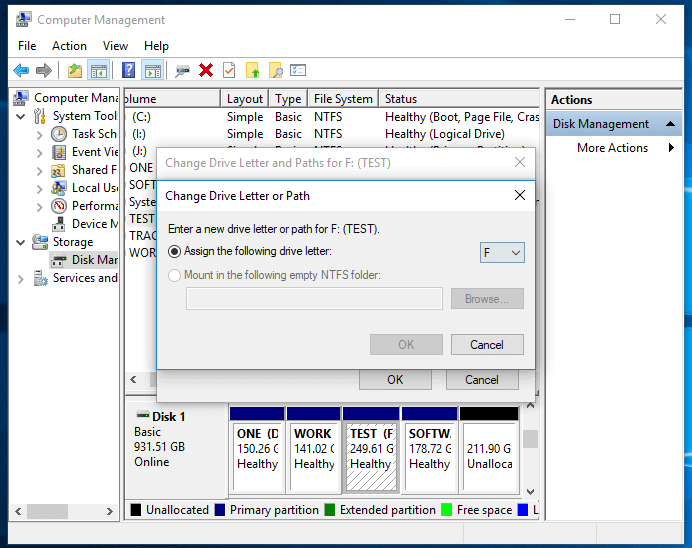
To fix the "no disk in the drive" error, you can try booting your PC in safe mode, then uninstalling any recently installed drivers or software. If that doesn't work, try disabling any unnecessary startup programs or services.
Fix 3. Disable the Drive in Device Manager
To fix the "there is no disk in the drive" error, you can try disabling the drive, which can sometimes resolve the issue.
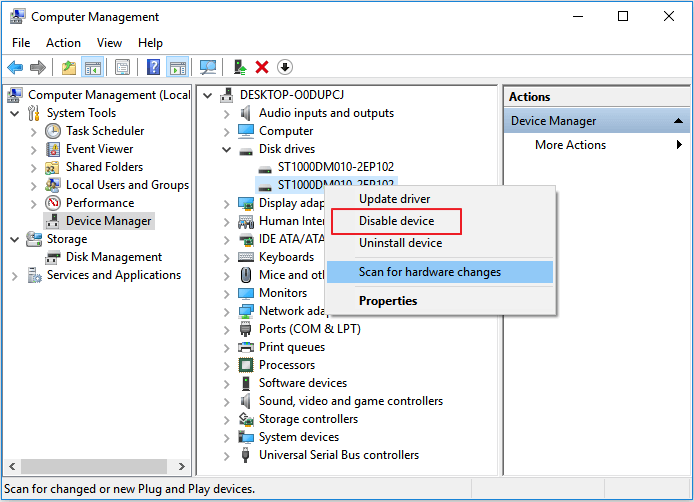
Step 1. To open the Device Manager, press the Windows key + R to open the Run dialog, then type "devmgmt.msc" and click "OK".
Step 2. To disable a removable drive, go to Disk Drives, find the removable drive (such as an external hard drive, USB drive, or SD card), right-click on it, and select Disable.
Step 3. Reboot PC, and then you can check out whether this issue is solved or not.
Fix 4. Update Device Driver
When encountering a "no disk in drive" error, the issue might be with the application mentioned in the pop-up window, but some users have reported that updating the device driver to the latest version can resolve the issue.
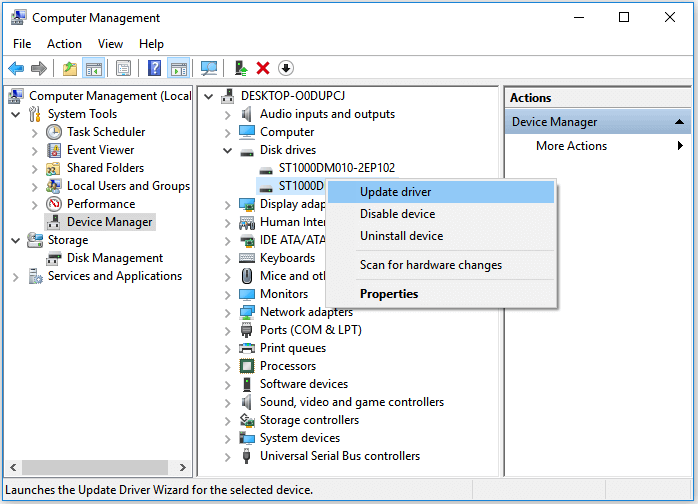
Step 1. Go to "This PC > Manage > Device Manager".
Step 2. Find and right-click your drive, then choose "Update".
Step 3. Check whether your disk works properly again.
Fix 5. Format the Drive to Fix the Error
When your disk becomes inaccessible, corrupted, or damaged, formatting is a good option to fix the problem, but it will result in data loss. Before taking action, it's essential to back up your data to avoid losing it. To format your hard drive easily, you can use a free HDD formatter, and I recommend Qiling free partition software, which allows you to create, resize, clone, move, merge partitions, and format hard drives with ease.
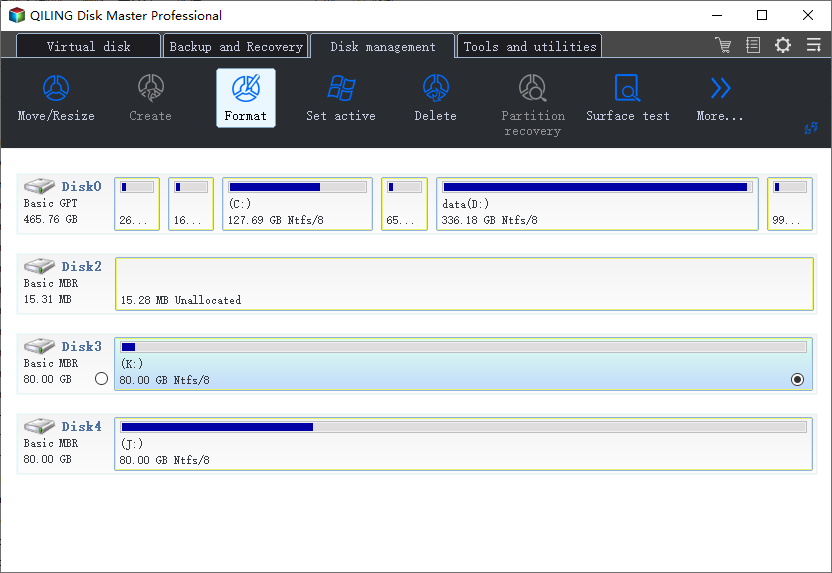
Step 1. Run Qiling Partition Master, right-click the hard drive partition you intend to format and choose "Format".
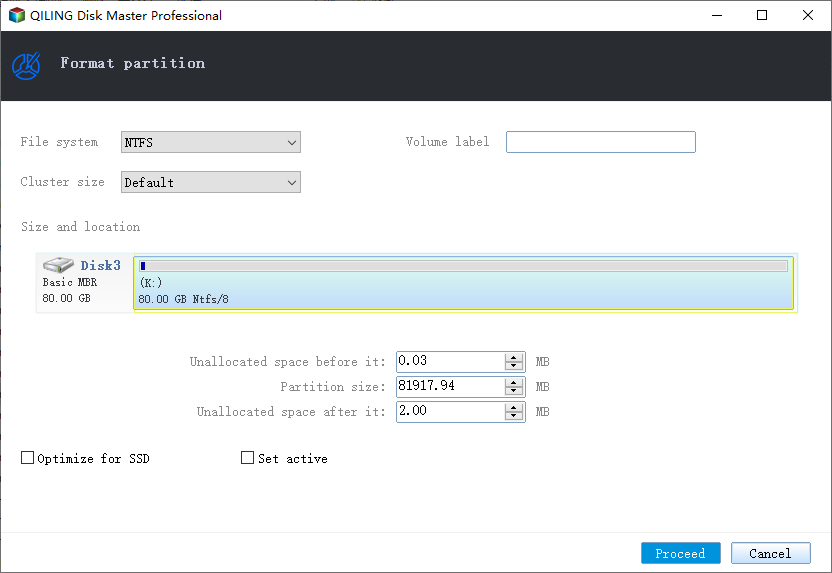
Step 2. Set the Partition label, File system (NTFS/FAT32/EXT2/EXT3/EXT4/exFAT), and Cluster size for the partition to be formatted, then click "Proceed" in the new window.
Step 3. The process of formatting a partition on a hard drive typically involves several steps, including backing up any important data, selecting the partition to be formatted, choosing a file system, and confirming the format. The specific steps may vary depending on the operating system and the device being used.
Fix 6. Edit Registry to Fix No Disk in Drive Error
Using the Windows Registry to resolve a "no disk in drive" error for USB, SD, or internal/external hard drives is an effective method. However, if issues arise after making changes to the Registry, the fix can be reversed.
Step 1. Connect your write-protected removable device to the PC. Open the Registry by clicking "Start" and typing "regedit" in the Run dialog, then click "OK".
Step 2. Click on HKEY_LOCAL_MACHINE > Expand "System".
Step 3. To access the current control set in Windows, follow these steps: Click on "System" in the list, then select "Control" from the options. This will open the Control Panel, where you can view and manage various system settings.
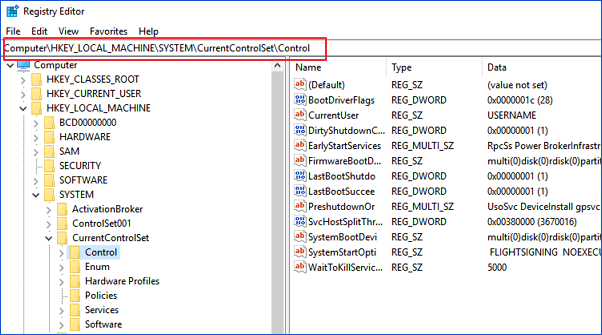
Step 4. To resolve the issue, you need to modify the Windows Error Mode. In the Registry Editor, navigate to "HKEY_LOCAL_MACHINE\SYSTEM\CurrentControlSet\Control\Session Manager\Memory Management" and locate the "ErrorMode" DWORD. Change its value data to "2" and then change the base from "Hexadecimal" to "Decimal". This should resolve the problem.
Then, click "OK". Exit Registry and reboot PC.
Fix 7. Check and Fix Disk Error
Disk errors can also cause the "there is no disk in the drive" error, especially if there are bad sectors or corrupted system files on the removable disk. To resolve this issue, you can use a disk repair tool to reset the disk and make it show up in the drive again.
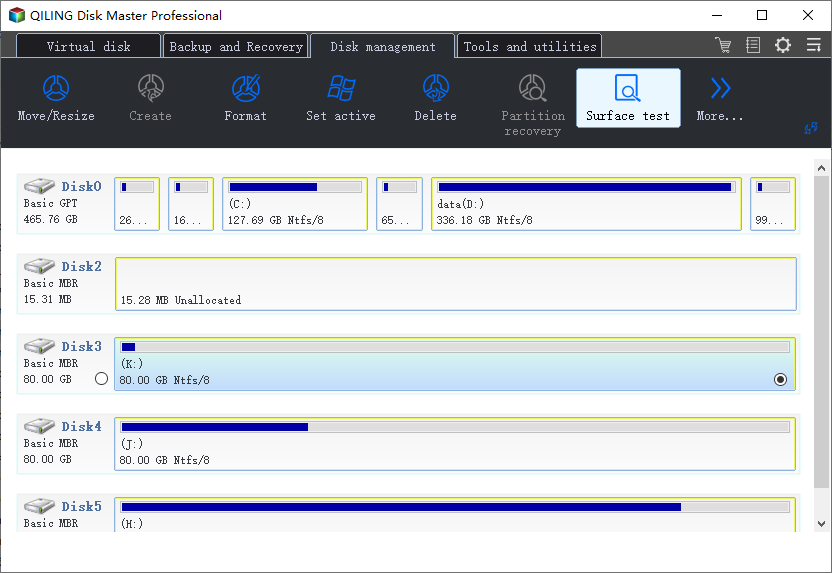
Step 1. Open Qiling Partition Master on your computer, locate the disk, click the partition you want to check, and then choose "Surface test" to check the partition.
Step 2. In the Check File System window, click "Proceed".
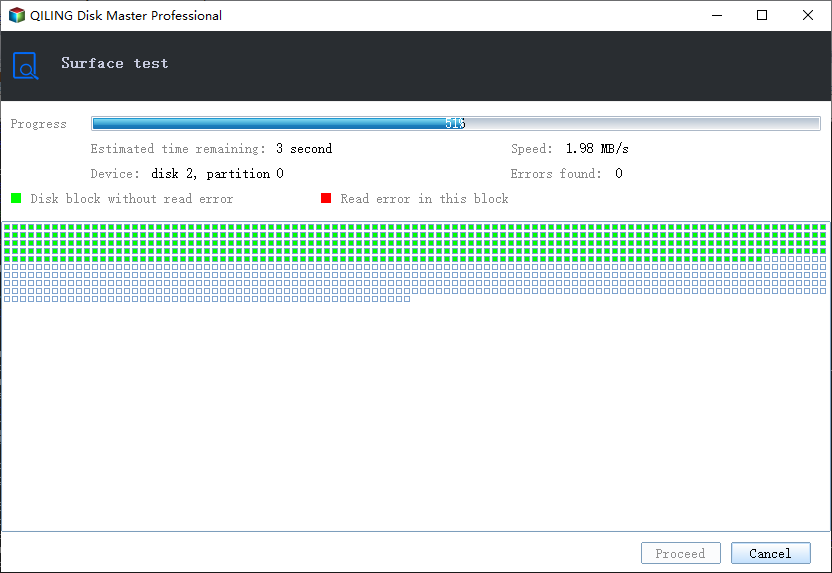
Step 3. The software will start scanning your partition file system on your disk.
Conclusion
The fixes can resolve the "there is no disk in the drive, please insert a disk into drive" error. If issues persist, further assistance can be sought.
There Is No Disk in the Drive FAQs
Here are some hot topics about no disk in the drive error, you can read on to get additional help. The "No disk in the drive" error is a common issue that can occur when a user tries to access a CD, DVD, or Blu-ray disc in their computer.
How do you fix there is no disk in the drive?
To fix no disk in the drive:
- Move and Replug in a Removable Drive
- Change Drive Letter
- Disable the Drive in Device Manager
- Format the Drive
- Edit Registry
- Check and Fix Disk Error
Why does my computer say no drive?
Reasons:
- 1. No removable disk in the removable disk drive.
- 2. A removable drive, such as a Lomega Zip drive, is not configured as drive letter C. Typically, the primary drive, usually the hard drive, is assigned the drive letter C.
How to fix syswin exe not ready error in Windows?
- Check your drive
- Disable the drive in BIOS
What is WinSeven EXE?
The WinSeven.exe file lacks information about its developer, and is not a core Windows file. It starts automatically upon Windows startup and has no visible window, but can monitor applications.
Related Articles
- What to Do If PC Keeps Freezing | How to Fix PC Keeps Freezing
- [2022 Tips] How to Remove Ubuntu from Dual Boot
- How to Change File Type in Windows 10
- How to Permanently Delete Files from Computer Without Recovery Windows 11/10/8/7
- C Drive Full, D Drive Empty-What Should You Do?
If your C drive is full D drive is empty, you can delete D drive and extend C drive. If your C drive is full but D is nearly empty, you can transfer the free space from D drive to C drive or move apps from C drive to D drive. This post offers the complete details. - The Solution to Cannot Extend Volume to Unallocated Space in Disk Management
Here you can find out why you cannot extend volume to unallocated space in Disk Management in Windows 11, 10, 8, 7 and how to fix it.
Products
Articles & Tutorials
- Data Recovery
- Data Backup
- File Recovery
- File Backup
- System Backup and Restore
- Disk and Partition Clone
- Technical articles
- Mobile articles
- Disk Master Help
- Windows Data Recovery Tutorials
- Windows Secure Delete Tutorials
- Windows Partition Management Tutorials
- Windows File Backup and Restore Tutorials
- Windows System Backup and Restore Tutorials
- Windows Disk Backup and Restore Tutorials
- Windows Clone Tutorials