Format SanDisk SD Card|How to Format SanDisk SD Card on Windows 10 and Mac
Why Do You Need to Format Sandisk SD Card
- You want to delete everything on the SD card
- SD card is damaged or corrupted and needs to be formatted.
- The issue arises when SD cards are improperly used, specifically when they are hot swapped, leading to the need to format the card.
- SanDisk SD card gets infected with a virus.
Formatting a SanDisk SD card for use with cameras or mobile devices is a straightforward process. This guide provides a full walkthrough on how to format a SanDisk SD card on Windows 10, Mac, or directly within the camera, making it easy to get started.
- Tip
- 1. SanDisk SD cards can be formatted, but this will delete all data on the card. If the card is corrupted or shows errors, it's recommended to recover files first using data recovery software before formatting.
- 2. SanDisk SD card formatting doesn't completely delete the files but only removes the reference to the files. You can recover data from an SD card using professional data recovery software, but if you want to permanently delete files and prevent recovery, you should wipe the SD card instead.
How to Format SanDisk SD Card on Windows 10 in 4 Simple Ways
Here are the ways to format a SanDisk SD card on Windows 10:
- 1. Use SD card format tool - Qiling Partition Master
- 2. Use Windows File Explorer
- 3. Use Disk Management
- 4. Use Command Prompt
1. How to Format SanDisk SD Card to FAT32 with Qiling SD Card Format Tool
Qiling Partition Master offers comprehensive disk partition solutions for both novice and experienced users. Its features include creating, resizing/moving, merging, wiping, and formatting partitions, catering to both basic and advanced hard drive management needs.
- Clone a disk to replicate the exact layout and data of one disk to another, including cloning a larger hard drive to a smaller solid-state drive, ensuring no data loss.
- A disk/partition converter is a tool that can convert a logical partition to a primary partition or vice versa, convert a FAT partition to an NTFS partition, and convert a disk from MBR (Master Boot Record) to GPT (GUID Partition Table) or vice versa. This tool allows for changes to the partition table and file system type without requiring a full disk reinstallation.
- Transfer your OS from a hard disk drive (HDD) to a solid state drive (SSD) without reinstalling Windows.
To format a SanDisk SD card, download a partition management program, and follow the step-by-step guides to format the card with a simple click.
Step 1. To format an SD card, locate the card and right-click on the partition you want to format, then select the "Format" option.
Step 2. Set a new partition label, file system (NTFS/FAT32/EXT2/EXT3/EXT4/exFAT), and cluster size to the selected partition, then click "Proceed".
Step 3. Click "OK" on the pop-up window to start formatting your SD card.
2. Use Windows File Explorer to Format SanDisk SD Card
Step 1. To access the contents of your SanDisk SD card, start by connecting it to your computer using a compatible SD card reader. This will allow your computer to recognize the SD card and enable you to transfer files to and from it.
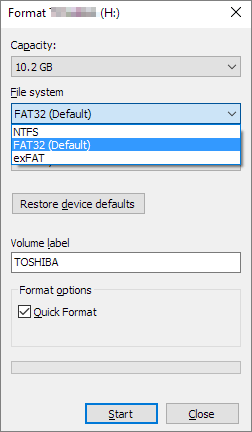
Step 2. To format your SD card, go to "This PC" and open Windows Explorer, right-click your SD card, and then choose "Format" from the menu.
Step 3. To format your SD card, you'll need to specify the file system and assign a new label to it. This process involves selecting the desired file system, such as FAT32 or exFAT, and giving the SD card a new label. Once you've made these selections, confirm the formatting by clicking "Start" and then "OK".
Note: FAT32 is used for SD cards with a capacity of 64GB or less, while exFAT is used for SD cards with a capacity of over 64GB.
Related reading: Fix SanDisk SD Card Unable to Format
3. Use Disk Management to Format SanDisk Micro SD Card
Step 1. To transfer files from your SanDisk SD card to your computer, insert the card into a card reader and connect it to your computer. This will allow you to access the files on the SD card and transfer them to your computer's storage.
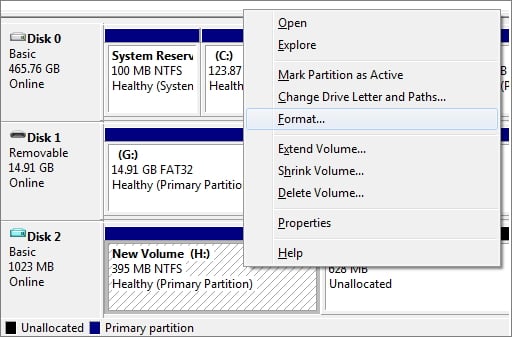
Step 2. Right-click "This PC", choose "Manage", enter "Disk Management".
Step 3. Locate and right-click on your SanDisk SD card, choose "Format".
Step 4. To continue, set a new label and file system (exFAT or FAT32) to the card, then click "OK" to format your SanDisk SD card.
4. Use Diskpart in CMD to Format SanDisk SD Card
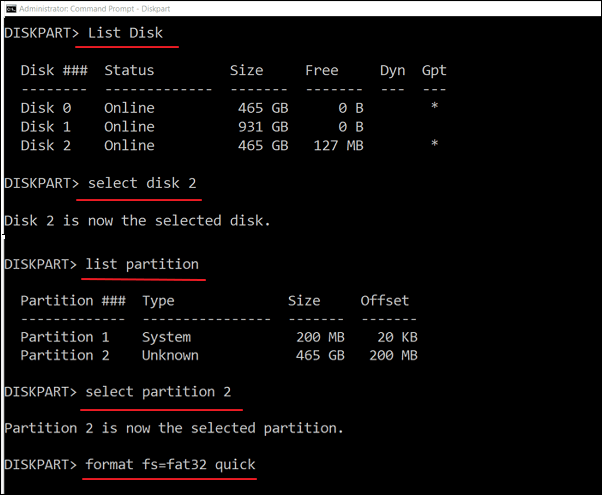
Step 1. To run the Command Prompt as an administrator in Windows 10, simply type "cmd" in the search box, right-click on the result, and select "Run as administrator".
Step 2. In the command prompt, type diskpart and press "Enter".
Step 3. To list all the available drives, type the command "list disk" and press "Enter" on your keyboard. This will display a list of all the drives connected to your system, including internal and external drives.
Step 4. Select the SanDisk SD card you want to format by typing "select disk [disk number]" (e.g.
Step 5. Type list partition and press "Enter".
Step 6. Select the partition where you want to install the operating system and press Enter. For example, if you want to install it on the second partition, you would type "select partition 2" and press Enter.
Step 7. To format the drive, type the command `format fs=fat32` (or `format fs=exfat`) and press Enter. This will format the drive with the specified file system.
Related reading: How to remove SanDisk write protection
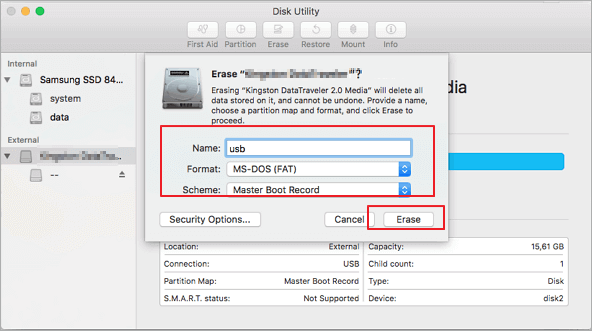
How to Format SanDisk SD card on Mac with Disk Utility
Mac has an inbuilt-in tool to help you format SanDisk Micro SD card. Here are the detailed steps.
Step 1. Connect your SanDisk SD card to your Mac using a card reader.
Step 2. Open "Disk Utility".
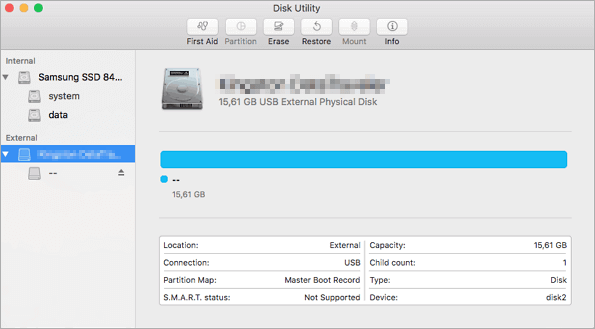
Step 3. Select your SanDisk SD card. Choose "Erase" and select "Format".
Step 4. To format a SanDisk SD card, enter the card's name (if desired), select a file system format, and follow the on-screen instructions. For cards 64GB or larger, choose the exFAT format, while smaller cards (up to 32GB) should use FAT32.
Step 5. Confirm the erase operation by clicking "Erase" in the confirmation message.
How to Format SanDisk SD Card on Camera
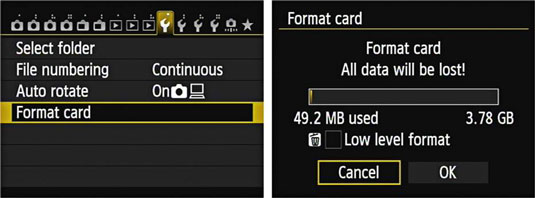
To format a SanDisk SD card on a camera, start by inserting the card and turning on the camera. Then, navigate to the camera's settings menu and select the option to format the SD card. Confirm your choice on the screen and wait for the formatting process to complete.
Step 1. To turn off the camera, locate the power button, usually found on the top or side of the device. Press and hold the power button until the camera shuts down.
Step 2. Turn on the camera. Press the camera Menu button.
Step 3. Select the Setup menu and choose Format, Format Memory Card, or a similar option.
Step 4. Select "OK" to start the format.
To Sum Up
We have shown you how to format a SanDisk Micro SD card in various ways, including formatting it to FAT32 or exFAT on Windows 10 using four different methods: the Qiling SD card format tool, File Explorer, Windows Disk Management, and the Diskpart command line.
To format and erase the SanDisk SD card on a Mac, you can use the Disk Utility tool. This process can also be done directly on the camera, but using Disk Utility on a Mac provides a more comprehensive and safe approach. The steps to follow on a Mac include launching Disk Utility, selecting the SanDisk SD card from the list of available drives, clicking on the "Erase" button, and confirming the action. This will completely erase the card, removing all data and formatting it for reuse.
Related Articles
- What is Disk Defragmenter Windows 10
- Top 7 Best Partition Recovery Software for Windows 11/10/8/7 in 2022
- Full Guide: Convert/Change File System to NTFS, FAT32, EXT2, or EXT3 Without Losing Data
- Free Download HDD Regenerator Crack + Serial Key (Safe Alternative)
- Diskpart: Fix RAW Partition in Windows 10/8/7
This page focuses on how RAW drive comes and how to use Diskpart to fix RAW partition. If you want to fix RAW partition without formatting, please try Qiling Disk Master Standard. - Diskpart Has Encountered an Error: The Media Is Write Protected
When you meet the Diskpart clean error: Diskpart has encountered an error the media is write protected during cleaning your disk using Diskpart, here you can find the reason and the corresponding solution.
Products
Articles & Tutorials
- Data Recovery
- Data Backup
- File Recovery
- File Backup
- System Backup and Restore
- Disk and Partition Clone
- Technical articles
- Mobile articles
- Disk Master Help
- Windows Data Recovery Tutorials
- Windows Secure Delete Tutorials
- Windows Partition Management Tutorials
- Windows File Backup and Restore Tutorials
- Windows System Backup and Restore Tutorials
- Windows Disk Backup and Restore Tutorials
- Windows Clone Tutorials