How to Tell If Windows Is GPT or MBR [Your Guide Is Here]
When upgrading or replacing a Windows drive, it's essential to keep the new disk type the same as the original drive to avoid compatibility issues and ensure a smooth transition. This means using a new HDD or SSD that matches the type of the old drive.
In this article, you'll learn:
- Checking which disk partition table your disk is using can have several benefits. It allows you to determine whether your disk is using the Master Boot Record (MBR) or GUID Partition Table (GPT) partitioning scheme, which can impact how your disk is managed and maintained.
- Method 1. 1-Click to View Disk Partition Type with Partition Manager Software
- To check if a Windows disk is GPT or MBR using Disk Management, follow these steps: Open the Disk Management tool by searching for it in the Start menu. In the Disk Management window, right-click on the disk you want to check and select "Properties." In the Properties window, look for the "Partition style" or "Partition type" field.
- Method 3. Check Disk Partition Type Using Diskpart
To determine whether your Windows 10 or Windows 7 is GPT or MBR, you can follow these steps: Open the Command Prompt as an administrator, type "wmic diskdrive get status" and press Enter. This will display the disk type, which will be either MBR (Master Boot Record) or GPT (GUID Partition Table). If it's MBR, it will show a value of 0, and if it's GPT, it will show a value of 1. Alternatively, you can also use the built-in Disk Management tool in Windows.
Benefits of Checking Which Disk Partition Table Your Disk Is Using
Knowing which disk partition table your source disk is using can save you time and effort when using a disk drive on your computer.
Telling which disk partition table your drive uses on Windows 11/10/8/7 is important because it provides several benefits. By knowing whether your drive uses MBR or GPT, you can take advantage of the unique features and capabilities of each partition table.
- When migrating Windows to a new HDD/SSD, it's helpful to configure the target disk to match the source disk's settings to ensure a smooth transition.
- The software prevents Windows boot issues after migrating Windows or switching the OS disk, ensuring a smooth transition and minimizing downtime.
- Learning the disk partition table will help you quickly partition disks.
Knowing the disk partition table, you'll learn how many partitions you can create on the target drive: MBR allows 3 primary + 1 logical, while GPT has unlimited partitions.
To determine if a drive is GPT format or MBR format, there are three simple ways to check on your Windows computer. You can use the built-in Disk Management tool, which can identify whether a disk is MBR or GPT by right-clicking on the disk and selecting "Properties". Alternatively, you can use the command line with the "wmic" command to check the disk format, or use a third-party disk management tool like Qiling Partition Master to scan the disk and display its format.
Method 1. 1-Click to View Disk Partition Type with Partition Manager Software
To quickly view the disk partition type, you can use a reliable disk partition manager software like Qiling Partition Master for assistance.
Step 1. Launch Qiling Partition Master.
Step 2. To find the target disk and view its disk partition type, navigate to the Type section in the disk information, which will display the partition type of the target disk.
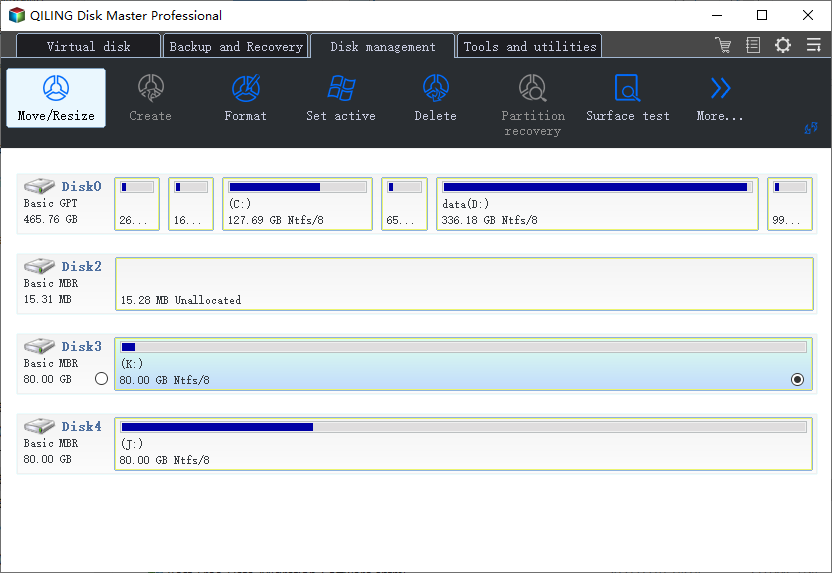
Your disks will be listed as:
- Basic, MBR
- Basic, GPT
Qiling Partition Master can help manage and optimize disk performance on Windows computers, including Windows 11/10/8/7 and Windows Server systems, aside from viewing disk types.
- Convert MBR to GPT or GPT to MBR without losing any data.
- Migrate OS to HDD/SSD.
- Clone Windows to a bigger or smaller HDD/SSD.
- Initialize disk to MBR/GPT.
- Quick partition new disk in 1 click.
Method 2. Check If Windows Disk Is GPT or MBR Using Disk Management
Disk Management is a Windows built-in utility that allows you to manage disk partitions with basic features. It enables you to view disk properties and display the disk partition table of your current Windows disk or data drive.
Here are the steps:
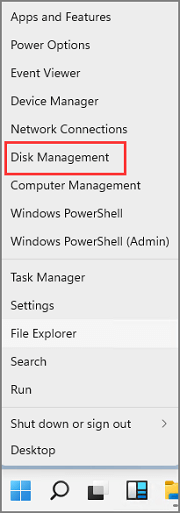
Step 1. Right-click the Windows icon and select "Disk Management".
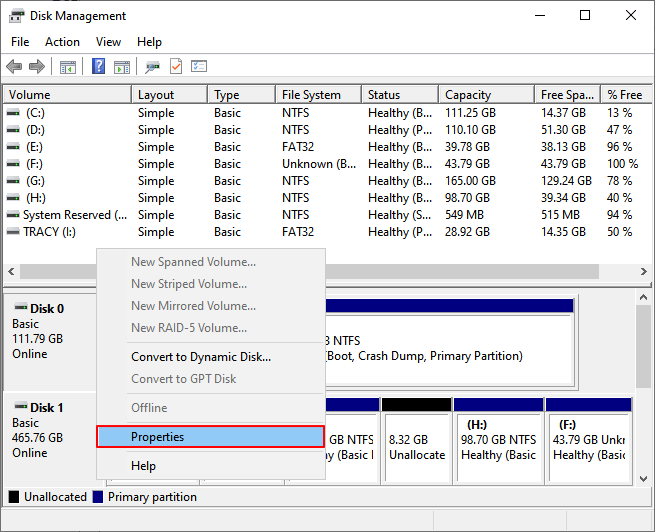
Step 2. To check the partition table of a target drive, locate the drive and right-click on it. From the context menu, select "Properties".
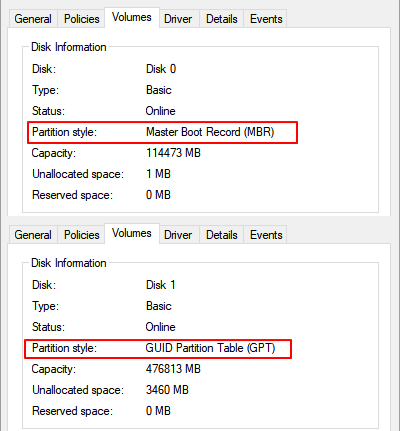
Step 3. To view the disk partition table, go to the Volumes table and look next to the Partition style section.
- Master Boot Record (MBR)
- GUID Partition Table (GPT)
Method 3. Check Disk Partition Type Using Diskpart
Follow these steps to run commands in Diskpart and view the disk type:
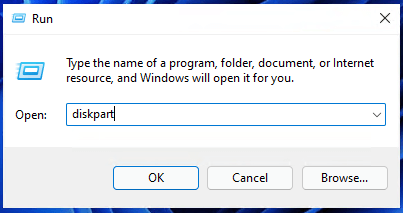
Step 1. To open Diskpart, press the Windows key + R, type "diskpart" and click "OK".
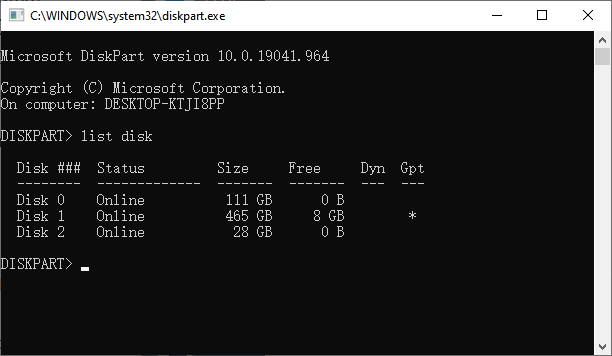
Step 2. Type list disk and hit Enter.
If you see a table listing your connected disks, the GPT disk will be marked as * under the Gpt column, indicating the disk type.
MBR disks will be listed without any marks below the Gpt column. This is because MBR disks do not have a GPT partition table, and therefore do not have a GPT mark.
Telling The Disk Partition Type Is Easy
Knowing the type of your Windows disk is beneficial, and we've listed the advantages of doing so. To check the disk type, you can follow three effective methods: follow the steps below.
Once you know the type of your existing drives, you can easily convert your target drive to MBR or GPT or set the correct disk type, such as MBR for SSD.
Related Articles
- Set Up the Boot Mode in MBR for BIOS, Legacy or UEFI - Qiling
- File Copy Stuck at 5 Seconds Remaining [Fixed]
- Can Windows 11 Run MBR? Your Guide to Install Windows 11 on MBR in 2022
- How to Partition, Format or Wipe Hard Drive Without OS
- [2022 New Fix] Use SD Card as Internal Storage in Windows 11/10 | See Full Guide
Is it possible to use SD card as internal storage in Windows 11/10? In this article, we will show you two useful methods of using SD card as internal storage in a laptop. You will get effective fixes to mount SD card as permanent storage or local drive. - How to Move Desktop Folder to Another Drive on Windows and Mac in Simple Ways
Want to move your desktop folder to another drive on your Windows or Mac PC? Discover the easy ways to do so in this article, and make the process hassle-free and quick!
Products
Articles & Tutorials
- Data Recovery
- Data Backup
- File Recovery
- File Backup
- System Backup and Restore
- Disk and Partition Clone
- Technical articles
- Mobile articles
- Disk Master Help
- Windows Data Recovery Tutorials
- Windows Secure Delete Tutorials
- Windows Partition Management Tutorials
- Windows File Backup and Restore Tutorials
- Windows System Backup and Restore Tutorials
- Windows Disk Backup and Restore Tutorials
- Windows Clone Tutorials