Internal Drive vs External Hard Drive. Which is better?
When buying a hard disk, consider whether you need an internal or external one, taking into account your device type (PC or laptop) and storage needs, such as storing games or movies.
Internal drives are a reliable and convenient option, ideal for building a PC and keeping the hard drive inside the cabinet. They offer high reliability and speed, making them a great choice when you don't need to move the drive between computers. In contrast, external hard drives are portable and user-friendly, but may require more maintenance and are more prone to physical damage.
When choosing between external and internal hard drives, there are several pros and cons to consider. On the one hand, external hard drives offer greater flexibility and convenience, as they can be easily connected to a computer via USB and taken on the go.
Internal Hard Drive vs. External Hard Drive
While both hard drives offer similar functionality, there are key differences between them, including speed, portability, connection methods, and price.
Internal storage refers to a storage device connected directly to the motherboard, while external storage is connected via an external cable.
Internal drives, particularly NVMe drives, excel in terms of speed due to their proximity to the motherboard and CPU, enabling faster data transfer. In contrast, external hard drives are generally slower and more susceptible to damage. However, a well-chosen external drive with a sturdy casing can minimize these drawbacks.
Internal drives aren't always cheaper than external drives. External drives can be more affordable, especially when considering speed and size. In contrast, internal drives can be pricey, with SSDs being more expensive than HDDs, and nVMEs being the costliest of all.
Advantages and disadvantage of Internal Hard Drive
The pros and cons of an Internal Hard Drive depend on the type selected for a PC, but generally, they offer a balance of capacity, speed, and affordability, making them a popular choice for storing data and programs. However, they may be limited by their physical size and the need for a power connection, and can be prone to mechanical failure and data loss if not properly maintained. On the other hand, they can provide faster data access and transfer rates compared to external drives, and are often more energy-efficient.
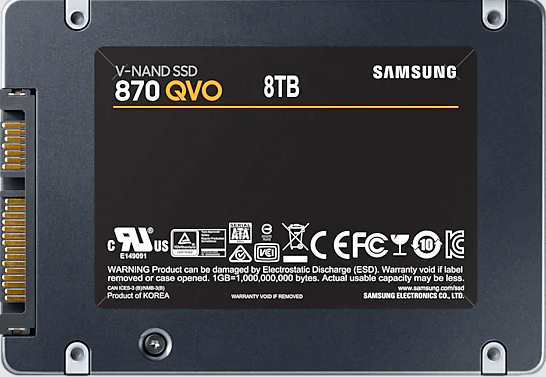
Pros:
- Directly connect to PC, which gives them faster speed.
- Storage space can be better compared to HDD, depending on the type, such as SSDs which have higher storage capacity and faster access times, while others like microSD cards have limited capacity but are portable and convenient.
- The cost of an SSD is typically higher, and its lifespan is shorter compared to a traditional hard drive, as it depends on the number of reads and writes it undergoes.
- The stability of this device is high, making physical damage almost impossible.
Cons:
- It can be challenging to replace components on a PC, especially if they are deeply embedded in the motherboard. This can require partial disassembly of the PC, which can be time-consuming and potentially complicated.
- External hard drives are not portable, making them unsuitable for temporary data transfer. However, they have other advantages and disadvantages. (Note: I removed the "Pros and Cons of External Hard Drive" title as it's not a part of the text)
Pros and Cons of External Hard Drive
An external hard drive offers several benefits, including increased storage capacity, portability, and ease of use. It allows users to expand their computer's storage without having to upgrade the internal hard drive, making it ideal for those with limited space.
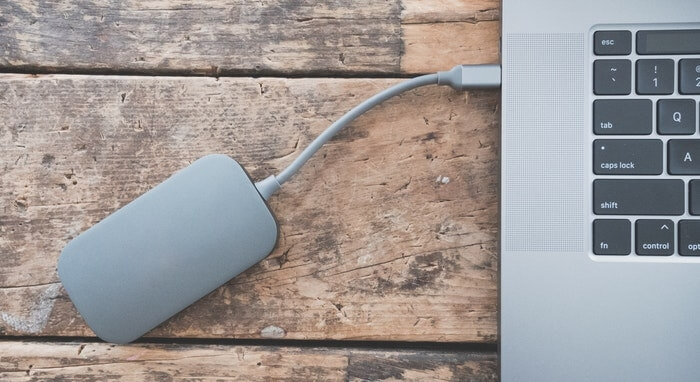
Pros:
- This device is portable and can be used to connect to any computer using the USB Port, making it easy to transfer data between devices on-the-go. It can be taken to different locations, such as a friend's house or college, and used to transfer files between computers.
- No need to install it on the PC, i.e., you can keep it anywhere, even offline. It is best suited if you backup files manually and connect the drive only when you need it.
- You can use this feature to temporarily or permanently move less used files to free up space on your system drive, allowing you to back up at any time.
- Cheaper external hard drives are more affordable than internal ones because they still utilize outdated technology with moving parts. This makes them suitable for backup purposes, where consumers prioritize capacity over speed, leading them to opt for larger drives over smaller, faster ones.
Cons:
- When purchasing an HDD, consider your budget and calculate the cost per TB or GB to ensure you don't exceed your storage size limits.
- External hard drives are more prone to damage due to their mechanical nature and moving parts, making them more susceptible to physical shock, water damage, and data loss if not handled carefully.
Which is Better for you?
In my opinion, external hard drives are the better option for backing up data because they are more affordable, convenient, and easy to use compared to cloud storage.
Internal storage is crucial for various activities such as gaming, video editing, running applications, and work-related tasks.
When building a PC, prioritize internal storage for most of your work and use external drives for everything else. This approach also applies to Network-Attached Storage (NAS) systems, which can help centralize data backup, but may come with a higher cost.
Now that you know which hard drive will work for you, it's essential to optimize it with Qiling Partition Master, a tool that allows you to manage hard disk partitions. This software helps you to effectively utilize your hard drive, ensuring it runs smoothly and efficiently.
Extra Tip: How to Optimize Your Hard Drive?
As you continue to use a hard drive, it becomes slow due to fragmentation, which affects its ability to quickly find information. External hard drives are particularly prone to this issue and require maximum optimization to ensure quick data retrieval. This means that when you access any data, it loads faster.
Qiling Partition Master Features:
- Resize/Move Partitions
- Clone/Create/Format/Delete Partitions
- Migrate OS to SSD
- Merge Partitions
- Copy Disk/Partition
- Dynamic Volume Management
You can use Qiling Partition Master to increase your system drive partition by taking space from the nearby partition, merge partitions if there's an extra one, or move to an SSD without reinstalling the OS. This makes it quick and easy to swap hard drives in and out of the computer, just remember to change the boot drive when you reboot.
Take a look at how to extend system/C drive:
Option 1. Extend System C drive with unallocated space
- 1.Right-click on the System C: drive and select "Resize/Move".
- Extend the system partition to occupy the unallocated space, effectively adding to the C: drive.
- Click "Proceed" to execute the operations and extend the C drive.
Option 2. Extend System C drive without unallocated space
- 1. Right-click a big partition with enough free space on the system disk, and select "Resize/Move".
- 2. Select the system drive at the "Allocate Space From" (*) To section, and drag the end of System C drive into the unallocated space.
- 3. Click"Proceed" to savethe changes and extend the C drive.
Related Articles
- Format RAW SD Card/USB Drive in Windows 11/10/8/7
- Qiling Partition Master 16.0 Key Generator + Key Crack 2022
- How to Convert Basic Disk to Dynamic or Dynamic Disk to Basic in Windows 10/8/7
- How to Fix Error No Such Partition Grub Rescue in Windows 11/10
- 8 Solutions to Fix NTLDR Is Missing in Windows 10/8/7
Have you received NTLDR is missing error when you boot your Windows 10, Windows 7, or Windows 8 computer? If you encounter Windows 10 fails to load and start with NTLDR is missing problem, follow this article to troubleshoot. - What Is the Best SD Card Benchmark Tool? Your Answer Is Here
Follow this guide to learn how to select the best SD card benchmark tool to test SD card performance efficiently.
Products
Articles & Tutorials
- Data Recovery
- Data Backup
- File Recovery
- File Backup
- System Backup and Restore
- Disk and Partition Clone
- Technical articles
- Mobile articles
- Disk Master Help
- Windows Data Recovery Tutorials
- Windows Secure Delete Tutorials
- Windows Partition Management Tutorials
- Windows File Backup and Restore Tutorials
- Windows System Backup and Restore Tutorials
- Windows Disk Backup and Restore Tutorials
- Windows Clone Tutorials