Can I Upgrade SSD to M.2 Without Reinstalling OS? Yes, Here Is Your Guide
SSDs are commonly classified based on their connection types, with the most widely used being PCIe, U.2, mSATA, SATA Express, SATA, and M.2. These different types of SSDs cater to various needs and are used by both users and computer manufacturers.
Upgrading from an SSD to an M.2 SSD can improve your computer's performance. To do this, you'll need to move your data and OS from the SSD to the M.2 drive, following a step-by-step guide. This process can enhance your computer's capabilities and provide a faster user experience.
PAGE CONTENT:
Should I Upgrade from SSD to M.2
SSD vs M.2 SSD, Which Is Better
How Do I Upgrade My SSD to M.2? [Complete Guide]
Extended Reading: M.2 vs NVMe SSD, Which to Choose
1. Should I Upgrade from SSD to M.2?
If your computer is relatively modern, supports the M.2 interface connector, and you have the budget for an M.2 SSD disk, upgrading to an M.2 SSD is a good idea.
When should you upgrade SSD to M.2? Let's check this out:
- Your computer becomes slow.
- To speed up your OS and improve the launch duration of installed programs and applications, consider upgrading to a faster storage drive, such as an SSD (Solid-State Drive), which can significantly reduce loading times. Additionally, disable any unnecessary startup programs, update your OS and installed software to the latest versions, and close unused applications to free up system resources.
- You want to upgrade gaming computer, gaining a better gaming experience.
- You want to separate the OS drive and data drive, moving OS to an M.2 SSD.
2. SSD vs M.2 SSD, Which Is Better
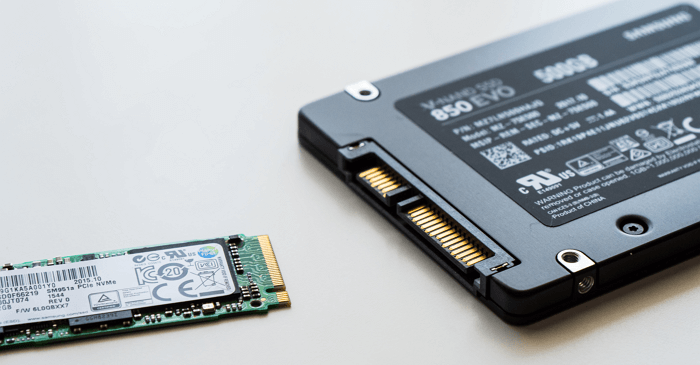
Is it worth upgrading SSD to M.2 SSD?The reason M.2 SSD is faster than SATA SSD is because of its superior technology. A comparison table highlighting the key differences between the two can be seen below, showing that M.2 SSD outshines SATA SSD in terms of speed, interface, and other basic specifications.
| Comparison | M.2 SSD | SSD |
|---|---|---|
| Type Of Connector |
|
|
| Capacity |
|
|
| Reading Speed |
|
|
| Writing Speed |
|
|
M.2 SSD drives are significantly faster than SATA SSDs, with speeds that are roughly 2-2.5 times higher. While they may be more expensive than equivalent SATA SSDs, their superior performance in reading and writing data makes them a worthwhile investment.
3. How Do I Upgrade My SSD to M.2? [Complete Guide]
To move Windows 10 from an SSD to an M.2 or fully replace the old SSD with a new M.2 disk, follow this complete guide. The process allows you to transfer the operating system and all data to the new M.2 disk on your own.
#1. Check If Your PC Support M.2 Slot
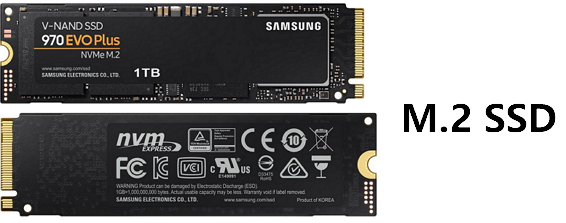
Step 1. Open your computer or laptop case.
Step 2. Check if your computer support M.2 slot: PCIe.
If your desktop's SSD interface is marked with SATA/PCIe, you can add an M.2 SSD to it.
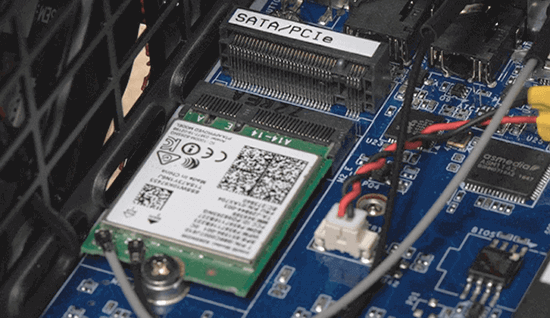
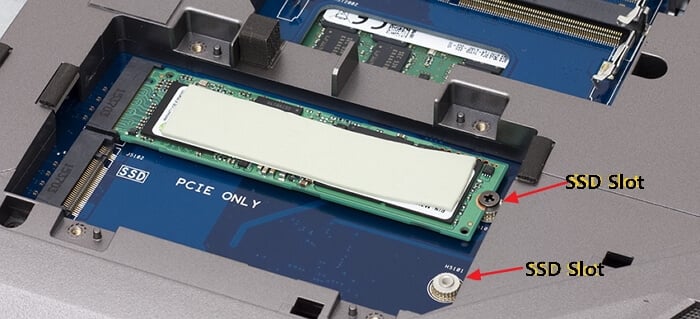
On a laptop, you can clearly see that the type of SSD slot, which is usually located on the motherboard. Most laptops contain one or two M.2 slots, making it easy to identify the type of SSD that can be used.
#2. Select One Of the Best M.2 SSD in 2022
Here are two important factors that you should consider while selecting or purchasing an M.2 SSD:
- Price: The budget you have will determine the brand and storage capacity of the M.2 SSD you can afford.
- Storage Capacity: To upgrade your SSD, make sure the new M.2 SSD has the same or larger storage capacity than your old SSD, with 500GB and 1TB being the most common sizes.
The best M.2 SSDs recommended by professionals include the Samsung 970 EVO Plus, WD Black SN750, Crucial P1, ADATA XPG SX8200, and Sabrent Rocket. These high-performance SSDs offer fast read and write speeds, compact designs, and capacity options, making them suitable for gaming, video editing, and general use.
- The Samsung 980 Pro 1TB M.2 NVMe Gen4 Solid-State Drive is a high-performance storage device available for $199.99.
- WD_BLACK SN850 500GB M.2 NVMe Solid-State Drive — $119.99
- WD_BLACK SN750 500GB M.2 NVMe Solid-State Drive — $69.99
- Sabrent Rocket 1TB M.2 NVMe Gen4 Solid-State Drive — $159.98
#3. Install M.2 SSD to Computer
Step 1. Open the computer or laptop case using a screwdriver.
Step 2. Insert the M.2 SSD into the SSD slot and secure it with screws.
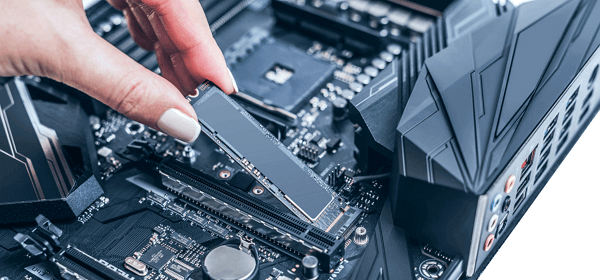
Step 3. Finalize and cover the computer case.
#4. Initialize M.2 SSD
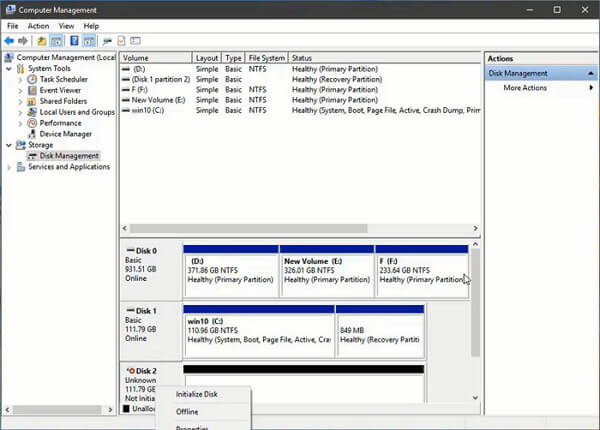
New M.2 SSD won't show up until you initialize the SSD in Disk Management. Here are the steps:
Step 1.In Open Disk Management, check the partition style of your source SSD to ensure it's set to GPT or MBR, matching the target SSD's partition style, which is also GPT or MBR. This ensures a smooth cloning process.
Step 2. Locate and right-click the New M.2 SSD, Select "Properties".
Step 3. Select the "Initialize Disk" option and ensure the partition style is set to match the source disk, whether it's MBR or GPT.
Click "OK" to confirm.
#5.1. Guide to Fully Upgrade SSD to M.2 - Clone SSD to M.2
To upgrade your SSD to an M.2 SSD, you'll need to transfer your data, applications, and programs to the new disk, which can be done with a disk cloning tool.
Here, reliable partition manager software - Qiling Partition Master with its complete disk upgrade feature enables you to clone everything from the source SSD to the new M.2 SSD in just a few clicks.
Step 1. Select the source disk.
Select "Clone". Click the disk that you want to copy or clone.
Step 2. Select the target disk.
Select the desired hard drive or solid-state drive (HDD/SSD) as the destination and click "Next" to proceed.
Step 3. View the disk layout and edit the target disk partition size as needed. Make sure the new size is compatible with the operating system and installed programs.
To erase all data on a disk, open the Disk Management console, select the target disk, and click "Delete Volume" or "Delete Disk" depending on the version of Windows. Then, click "Continue" when the program warns it will wipe out all data on the target disk. If you have valuable data on the target disk, back up it in advance to avoid losing it.
If you want to customize your disk layout, you can choose from "Autofit the disk", "Clone as the source" or "Edit disk layout", with the last option being best if you want to leave more space for the C drive.
Step 4. Click "Proceed" to start the disk cloning process.
If you want to move your Windows OS and installed games from the C drive to an M.2 disk, follow this guide. This will help free up space on your C drive and improve your system's performance. By relocating your OS and games to the M.
#5.2. Guide to Migrate OS (Windows 10) to M.2 SSD - Transfer OS from SSD to M.2
To transfer your operating system, installed games, and important applications from your current SSD to a new M.2 SSD, follow these steps:
Steps to migrate OS to HDD/SSD:
- Run Qiling Partition Master, select Migrate OS from the top menu.
- Select the SSD or HDD as the destination disk and click Next.
- Before proceeding, ensure you have backed up any important data on the target disk, as the process will erase all data and partitions. If you haven't backed up your data yet, do so now to avoid any potential loss.
- Then click Continue.
- Preview the layout of your target disk, then click Proceed to start migrating your OS to a new disk.
Note: When migrating an operating system to an SSD or HDD, be aware that if the target disk doesn't have enough unallocated space, the process will delete existing partitions and data. If you have important files on the target disk, back them up to an external drive before proceeding.
#6. Set Up New M.2, Make It Bootable
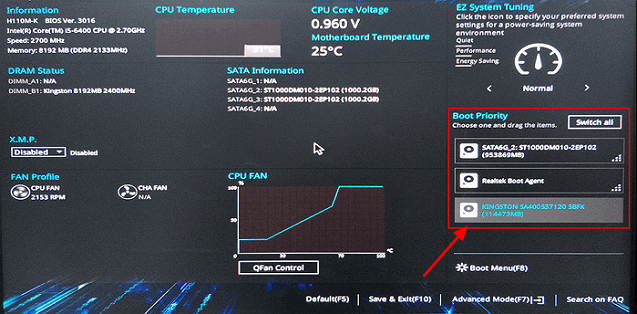
If you replaced the OS drive, ensure you set the new M.2 SSD as the boot drive in BIOS. To do this, follow the steps: Enter your computer's BIOS settings, navigate to the boot order section, and set the M.
Step 1. Restart PC and press F2/F8/F11 or Del to enter BIOS.
Step 2.To boot from the new M.2 SSD, go to the Boot menu, change the boot priority, and set the new M.2 SSD as the boot drive.
Extended Reading: M.2 vs NVMe SSD, Which to Choose
If you're considering upgrading your SSD, you may be wondering about the differences between M.2 and NVMe SSDs. While both types of SSDs are listed, choosing between them depends on your specific needs. A comparison table can help, but in brief, M.2 and NVMe SSDs are not the same thing - M.2 is a type of interface, while NVMe is a protocol that can be used with M.2, as well as other interfaces.
| Comparison | M.2 SSD | NVMe SSD |
|---|---|---|
| Connector |
|
|
| Data Transfer Speed | Up to 550 MB/s | Up to 2100+ MB/s |
| Slots | 6-pin wide on the left, 5-pin wide on the right. | 1 slot: 5 pines on the right. |
When comparing NVMe and M.2 SSDs, it's clear that NVMe is significantly faster in data transfer. So, if you're looking for a high-performance storage solution, NVMe is the way to go. However, if you're on a tighter budget or don't need the extreme speed, a reliable M.2 SSD can still provide excellent performance and value.
- If you have a budget and your PC supports NVMe, consider purchasing an NVMe SSD for improved performance.
- If your computer only supports M.2 slot, consider taking an M.2 SSD, which is specifically designed for this type of slot.
Upgrading SSD to M.2 SSD Is Possible, Follow to Improve Your Computer Performance Now
If you're looking to upgrade your computer's performance, consider replacing its OS drive with an M.2 SSD. This guide explains the process of upgrading to an M.2 SSD, which can help maximize your computer's performance. On this page, we also discuss what an M.2 SSD is and provide a comprehensive overview of the upgrade process.
For a reliable SSD to M.2 SSD upgrade, Qiling Partition Master is here to help.
Related Articles
- C Drive is Full in Windows 11
- Windows 11 End of Support Date Confirmed and What to Do With That [2022 Guide]
- 3 Ways: How to Increase C Drive Space in Windows 11/10/8/7
- How to Change MBR to GPT in BIOS Windows 11
- How Can You Convert GPT to MBR without Data Loss Using Command Prompt?
This article will show how can you convert GPT to MBR without data loss using command prompt. - How to Resize Dynamic Disk Volume in Windows 2012 (R2)?
Here you can learn how to resize dynamic disk, especially extend dynamic disk partition in Windows 10, 8, 7 or Windows Server 2008 (R2), 2012 (R2), 2016 and 2019.
Products
Articles & Tutorials
- Data Recovery
- Data Backup
- File Recovery
- File Backup
- System Backup and Restore
- Disk and Partition Clone
- Technical articles
- Mobile articles
- Disk Master Help
- Windows Data Recovery Tutorials
- Windows Secure Delete Tutorials
- Windows Partition Management Tutorials
- Windows File Backup and Restore Tutorials
- Windows System Backup and Restore Tutorials
- Windows Disk Backup and Restore Tutorials
- Windows Clone Tutorials