How to Wipe External Hard Drive on Windows 10 and Mac Without Recovery
You may want to wipe an external hard drive for various reasons, such as freeing up space, resetting it with a different file system, or dealing with an old drive. If you no longer need an external hard drive, you can consider donating, giving it to a friend, selling it, or even destroying it to ensure your sensitive data is secure.
To securely wipe an external hard drive, it's essential to erase all data first, as any recovery software could restore it. This can be done using various methods, and we'll explore easy and quick ways to wipe an external hard drive on both Windows 10 and macOS.
How to Wipe External Hard Drive in Windows 10
To permanently delete data from a hard drive, you can use a tool like DBAN (Disk Erase) or a third-party software like KillDisk or Blancco. These tools can scan the drive, identify and remove all data, and then wipe the drive clean, making it impossible to recover any files. Alternatively, you can also use the built-in Windows feature, "Disk Cleanup," to delete temporary files and free up space, but this will not completely wipe the drive.
Method 1. Wipe External Hard Drive with a Windows 10 Data Wiping Tool
The first solution we recommend trying is using Qiling's Windows 10 disk management tool, which is the easiest way to wipe a hard drive, SSD, or external drive.
Qiling Partition Master's "Wipe data" feature allows for permanent erasure of all disk data, meeting the DoD 5220.22-M Wiping Standard, and requires two erases to ensure data is unrecoverable.
Qiling Partition Master
- Resize/move, create, format, delete, clone, and merge partitions
- You can use a partition manager software like Qiling Partition Master to convert a logical partition to primary or primary partition to logical, FAT to NTFS partition, MBR disk to GPT, or GPT disk to MBR. This software allows you to resize, move, merge, and split partitions, as well as convert between different partition types.
- Upgrading your Windows 10 to a solid-state drive (SSD) can significantly speed up your computer's performance. This process, also known as migrating OS to SSD, involves replacing your traditional hard disk drive (HDD) with a faster SSD.
Note: Before completely wiping an external hard drive, ensure that all important data is backed up to another drive to prevent loss.
Step 1. Connect the external devices to the PC, then select "Wipe Data".
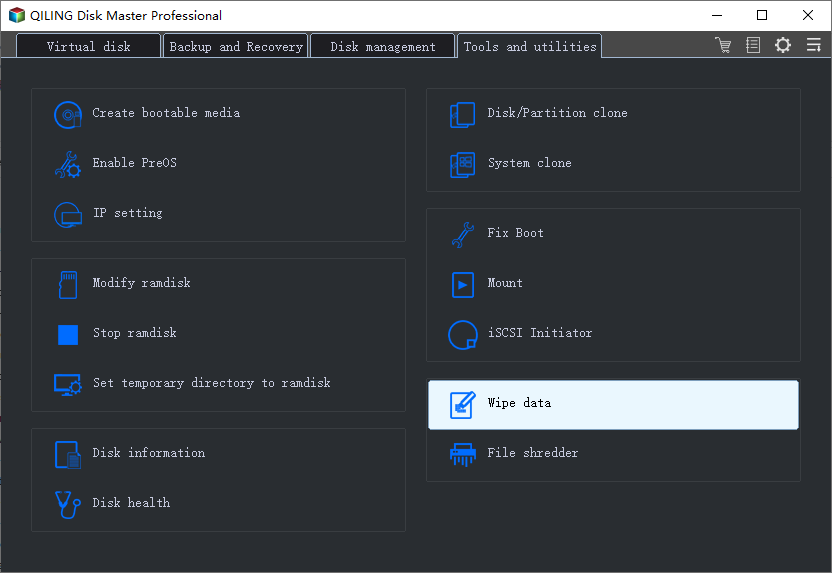
Step 2. Click the external device, set the number of times to wipe data, and then click Proceed. You can set the number of times to 10 at most.
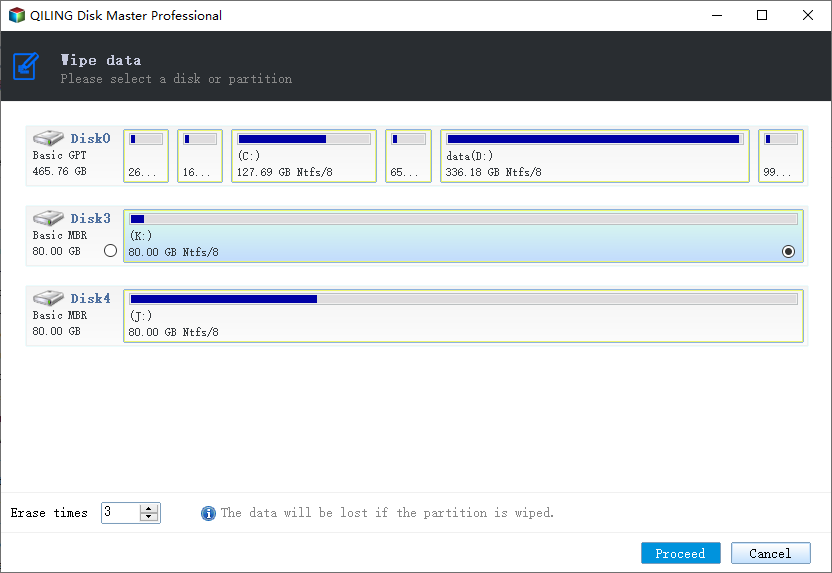
Step 3. Check the warning message and click OK.
Method 2. Wipe External Hard Drive Windows 10 Using CMD
You can also use wipe external hard drives in CMD if you are a computer expert. For beginners, we still strongly recommend that you use a user-friendly data wipe tool to complete the work.
Step 1. To open the Command Prompt as an administrator on Windows 10 or 8.1, right-click the Start button, or press Windows Key + X and select "Command Prompt (Admin)".
On Windows 7, open the Start menu, search for "cmd", right-click the "Command Prompt" shortcut that appears, and choose "Run as Administrator".
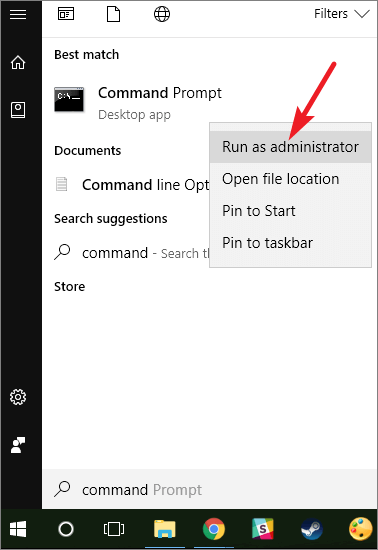
Step 2. Use the Diskpart command to clean the external hard drive. In the CMD window, type the following commands in order and press Enter after each one:
diskpart
list disk
select disk # (# is the external hard drive number)
clean or clean all
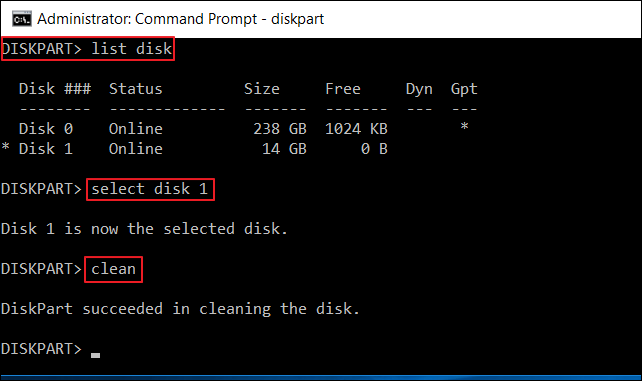
If you successfully run the DiskPart command, you'll see a message saying "DiskPart succeeded in cleaning the disk", indicating that all data on the external hard drive has been thoroughly removed.
How to Wipe External Hard Drive on Mac
For Mac users looking to wipe an external hard drive without spending a dime, there is a straightforward process to follow. To accomplish this, you can use the built-in Disk Utility app on your Mac, which allows you to securely erase the contents of the external drive.
Step 1. Connect the external hard drive to your Mac.
Step 2. Open the Applications folder in Finder, then open "Disk Utility".
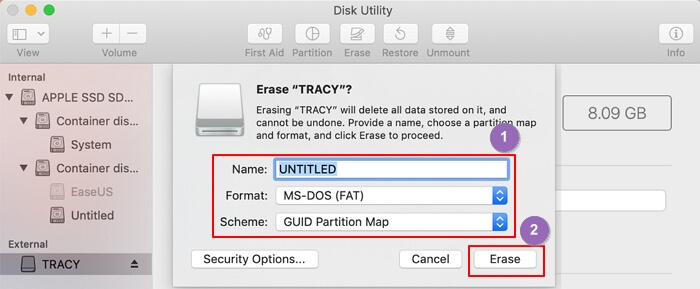
Step 3. Select the external hard drive you want to wipe on the storage media management windows, then click the "Erase" button.
Step 4. Click "Security Options" and then move the slider to the right to the DOE 3-pass secure erase position.
Step 5. Click "Erase" to securely erase the drive.
Summary
It is easy to securely wipe external hard drives on both Windows 10 and macOS. On Windows 10/8/7, you can use Qiling Partition Master to manage and make full use of your disk, making it easy to securely wipe external hard drives. The process is straightforward and can be completed with the software.
Qiling's Partition Master provides disk management features beyond hard drive wiping, including resizing/move partition to address low disk space, converting disk/partition, creating a WinPE bootable disk, partition recovery, and SSD 4K alignment, among others.
More Relevant Topics About Wiping External Hard Drive
If you also have any of the following frequently asked questions about hard drive erase, find solutions here.
1. How do you delete everything off your hard drive?
Wipe the drive to delete everything completely.
To completely remove data from a storage device such as a hard drive, solid-state drive, external hard drive, SD card, or USB flash drive, you need to erase the device. This process, also known as formatting, will remove all data, files, and operating systems from the device, making it ready for reuse or recycling.
Deleting files or formatting disks will not completely erase the files, as they can still be retrieved by professional data recovery software, even after deletion or formatting.
2. Can a wiped hard drive be recovered?
No, the erased hard disk cannot be recovered.
The data wipe tool overwrites hard disk drive storage areas with the same data everywhere, often using a pattern of all zeros, making it impossible to recover previously stored data even with data recovery software. This process can be repeated multiple times, such as 10 times, to ensure complete and permanent deletion.
3. Format data VS wipe data
Formatting can be categorized into low-level formatting, which is physical and typically done by the manufacturer, and high-level formatting, which can be done by users on their computer. High-level formatting only clears the file allocation table, making the system think there are no files on the disk, but does not erase the hard disk itself, allowing data to be potentially recovered using data recovery tools.
Related reading: How to format a hard drive for free
Data wiping on hard disks aims to completely erase data through specialized technology and standards, such as the DoD 5220.22-M Wipe. After executing a full write and zero erasing, no professional data recovery company can recover the data, ensuring the security and privacy of the information.
Related Articles
- System Reserved Partition Recovery in Windows 11/10/8/7
- Initialize SSD/HDD for Free and Fix 'Disk Unknown Not Initialized' Error
- How Do You Create Partitions in Windows with Infographics 2022
- How to Format WD Passport for Mac and PC (3 Ways)
- How to Remove Write Protection for 3DS SD Card
Have you met a situation in that your computer shows that your 3DS SD card is write-protected? This guide will help you to know how to remove write protection for 3DS SD card. - How to Remove Write Protection for a 16GB USB Flash Drive
You may meet a situation where you cannot format the flash drive. This article will help you remove write protection for a 16GB USB flash drive, and then you can format your USB flash drive that displays disk write-protected. You can read on.
Products
Articles & Tutorials
- Data Recovery
- Data Backup
- File Recovery
- File Backup
- System Backup and Restore
- Disk and Partition Clone
- Technical articles
- Mobile articles
- Disk Master Help
- Windows Data Recovery Tutorials
- Windows Secure Delete Tutorials
- Windows Partition Management Tutorials
- Windows File Backup and Restore Tutorials
- Windows System Backup and Restore Tutorials
- Windows Disk Backup and Restore Tutorials
- Windows Clone Tutorials