How to Fix USB flash drive Shows Empty Although It Has Data - 4 Solutions
USB flash drive Shows Empty Although It Has Data
"I have this issue with my storage USB USB flash drive. I use it very frequently in Internet cafes for listening to music or watching movies I previously put on the USB USB flash drive. Yesterday, I inserted the drive to my laptop only to see the USB flash drive showing empty although it still has data and the space is still being used. Can anyone help me fix this issue?"
Pen drives, also known as USB sticks or flash drives, are small, portable storage devices that allow users to move and store data between computers. While convenient and useful, they can also be prone to issues such as corruption, malfunction, and data loss, with one common problem being that the drive appears empty despite containing files and folders.
Do you know why USB flash drive showing empty when data exists? We collected the primary reasons for you, to help you recall the last operation on your own drive.
- Virus infection
- Unknown files/folders hidden
- File system corruption
- USB flash drive bad sectors
If your USB flash drive has become blank after doing something improper, try the solutions below to recover your data. First, check if the USB flash drive is detected by your PC.
Solution 1. Show Hidden Files When USB flash drive Showing Empty
There are two ways to unhide USB files:
Method 1. Show hidden USB flash drive files using Windows Explorer
Step 1. Connect the USB USB flash drive or flash drive to the PC.
Step 2. Open Windows Explorer > Tools > Folder Options > Go to View Tab > Check "Show Hidden Files".
This will make sure that the files and folders are not in hidden mode.
Method 2. Show hidden USB flash drive files using cmd
Step 1. Click on Start Menu -->Run --> Type cmd and press Enter.
Step 2. To make the USB flash drive data visible, type the commands `attrib -h -r -s /s /d k:\*.*` and press Enter, replacing "K" with your USB flash drive letter.
Solution 2. Recover Files with USB flash drive Recovery Software
If your USB USB flash drive is not showing data but the files are actually there, you can use Qiling USB flash drive data recovery software to retrieve your data. This software performs well in recovering shortcut files or hidden files from a USB USB flash drive or flash drive. If the data is lost due to a virus deleting or hiding it, you can scan your USB device to get back the missing files and folders, and it only takes three steps to recover all your data.
Step 1. Select file types and click "USB/SD Scan" to start
Connect the USB drive or USB flash drive to your computer and launch Qiling USB data recovery software on your PC. Then, select the desired file types and click "USB/SD Scan" to initiate the recovery process.
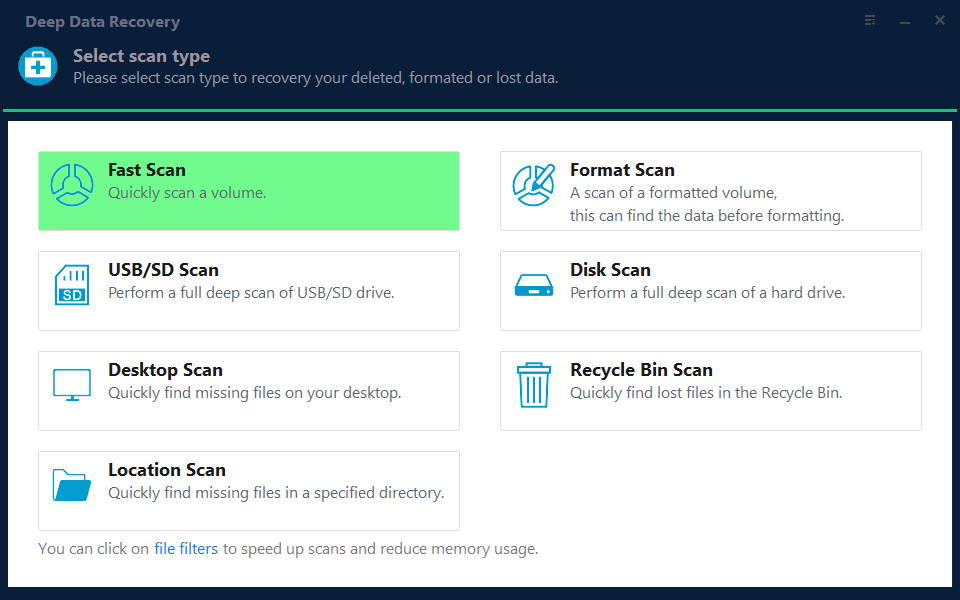
Note: You can choose different search modes based on where and why the data was lost.
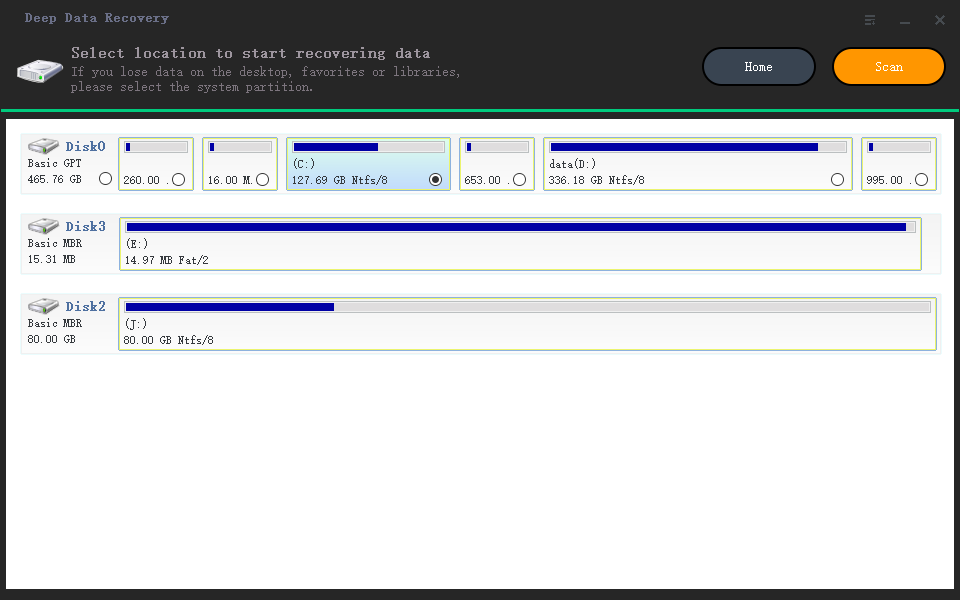
Step 2. Select the drive which is labeled as a External drives
To recover lost files, select the drive labeled as an External drive and click "Scan" to initiate the search.
Step 3. Scan and Search Lost Files on a USB Drive
Deep Data Recovery will thoroughly scan your USB flash drive/USB flash drive and find all your lost data on it, then use the Filter feature to find wanted files.
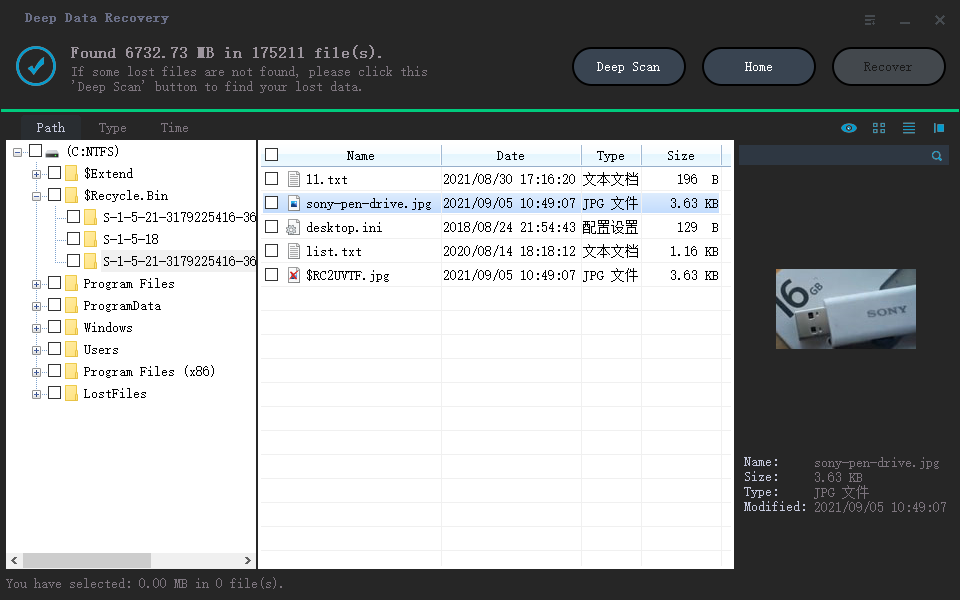
Step 4. Restore All Lost Files from USB
A double-Click will allow you to preview the files. Select the target files to restore and click "Recover" to save them to a secure location on your PC or other external storage devices.
Solution 3. Format Disk When USB flash drive Showing Empty
If your USB flash drive's file system has become corrupted, turning it into a RAW file system, Windows won't allow you to access your data normally. To resolve this, you'll need to perform a quick format to restore the drive's full capacity. This process can also help remove any viruses that may have caused the issue, allowing your USB flash drive to function properly again.
To format a corrupted USB flash drive, download a free partition manager like Qiling and follow these steps:
Step 1. Select the USB drive to format.
To format a USB drive, connect it to your computer, download and launch Qiling partition software, and right-click the USB drive to select "Format".
Step 2. Set the drive letter and file system on USB.
Assign a new partition label, file system (NTFS, FAT32, EXT2, EXT3, EXT4, exFAT), and cluster size to the selected partition, then click "Proceed".
Step 3. Check "OK" to confirm formatting USB.
Click "OK" if you see the Warning window. If you have important data on it, back up the data in advance.
Solution 4. Repair Bad Sectors When USB flash drive Showing Empty
Digital storage devices, including removable flash drives, have a limited lifespan. The lifespan of a flash drive is typically shorter than that of a large hard drive. Over time, particularly if not used regularly, a flash drive's lifespan can be even shorter. A malfunctioning USB flash drive often has more bad sectors than allowed, leading to issues such as empty space on the drive despite containing files and folders.
To fix bad sectors on a USB flash drive, advanced users can use the cmd method, which involves using the built-in Windows command-line tool to identify and remove bad sectors. However, for those who are not comfortable with the command line, a simple tool like the built-in Windows Disk Cleanup or a third-party software like Qiling Partition Master can also be used to fix bad sectors and recover lost data.
If the command line isn't your preference, you can use an alternative tool called Qiling CleanGenius, which allows you to fix file system errors on your hard drive with just one click.
Step 1. Download Qiling CleanGenius on your computer for free.
Step 2. The software can be run, and then the "Optimization" option should be selected from the left panel, followed by choosing "File Showing".
Step 3.To resolve a file system error, go to the "Choose drive" section, select the drive with the error, and check the "Check and fix file system error" option. Then, click the "Execute" button to initiate the repair process.
Step 4. Once the Qiling CleanGenius has completed the repair process, click the "here" button to view the results of the repair.
Extra Tips to Avoid USB flash drive Data Loss
- Back up important data or files to other devices
- Using the same USB device in multiple systems can lead to its corruption, so it's best to use a different device for each system.
- Always disconnect your USB drive safely to avoid virus attack
- Storing flash media in a dry, cool place and avoiding extreme temperatures, humidity, or pressure can help extend the lifespan of the drive.
Related Articles
- Fix the Error that Memory Card Not Show Up or Detected in Mobile/PC
- How to Fix 'USB Says/Shows No Media in Disk Management' Error
- Kingston Flash Drive Recovery
- FIX: Seagate External Hard Drive Not Working Without Losing Data
- How to Recover Temporary Word Files in Windows 10/Windows 7
In Windows 10/7, recovering temporary word files can help prevent permanent loss. To do this, follow these steps to recover word files from the temp location. - How to Recover Uninstalled Programs in Windows 7
To find uninstalled programs on Windows 7, you can use the System Restore feature to revert your computer to a previous state when the programs were still installed. Alternatively, you can use a third-party software recovery tool to scan your computer and recover the uninstalled programs.
Products
Articles & Tutorials
- Data Recovery
- Data Backup
- File Recovery
- File Backup
- System Backup and Restore
- Disk and Partition Clone
- Technical articles
- Mobile articles
- Disk Master Help
- Windows Data Recovery Tutorials
- Windows Secure Delete Tutorials
- Windows Partition Management Tutorials
- Windows File Backup and Restore Tutorials
- Windows System Backup and Restore Tutorials
- Windows Disk Backup and Restore Tutorials
- Windows Clone Tutorials