How to Recover Data from Hard Disk Which Is Not Detecting Easily
How to Recover Data from Hard Disk Which Is Not Detecting
To recover data from an external hard drive not detected, launch Qiling Data Recovery software on your computer and select the external hard drive to get started.
2. The hard drive recovery process will begin by scanning the disk to search for your lost data and files.
3. After the scanning, you can check all recovered files. Preview and click the "Recover" button to recover files from external hard drive not detected.
When and Why the External Hard Drive Not Detected or Recognized
An external hard drive may be helpful for data backup or transfer, but it can also cause trouble if it's not recognized or detected by the computer, resulting in error messages such as "The device is not recognized" or "The drive is not accessible."
- "The drive is not formatted"
- "The drive cannot be accessed"
- "RAW drive is not initialized" etc.
If your hard drive is corrupted due to improper usage or excessive use, you may encounter an error where Windows cannot recognize it. There are three major reasons for this issue: the drive is not properly formatted, the disk is damaged or worn out, or the drive's file system is corrupted. To fix this error, you can try using a disk repair tool, such as Chkdsk, to scan and repair the drive.
- A hardware issue with your computer's USB port
- A driver problem with your Windows computer
- The drive becomes dead
If your external hard drive isn't being recognized by your computer, try connecting it to another computer to see if the issue is with the USB port. If it works on another computer, the problem is likely with the original computer's USB port. Otherwise, try restarting the computer, updating drivers, checking for loose connections, and using a different USB port. If none of these methods work, consider using a data recovery software or seeking professional help to retrieve your data.
- Important
- If your hard drive can't be detected in Disk Management or My computer, data recovery software won't work. First, solve the "Not Detected" problem before attempting data recovery.
Case 1. Hard Disk Is Not Detecting in My Computer or Disk Management
The external hard drive may not show up in the Computer window but is listed in the Disk Management window if it doesn't contain any partitions.
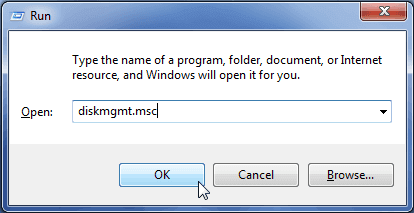
Press the Windows key + R, type diskmgmt.msc into the Run dialog, and press Enter to open Disk Management, where you can check if the drive shows up.
① If you can see the external hard drive, you can recover data from it using software like Qiling, and then properly format it, allowing Windows or other devices to recognize and access it.
② If the drive doesn't show up in Disk Management after trying another computer, you can try the Device Manager. To do this, press the Windows Key + R, type devmgmt.msc into the Run dialog, and press Enter.
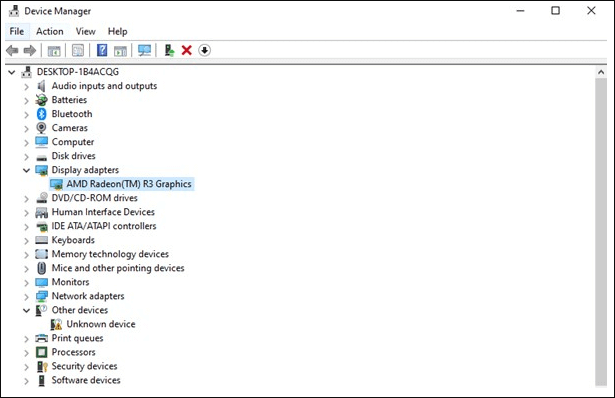
Check under Disk drives for devices with a yellow exclamation mark, which usually indicates a driver issue. Right-click the problematic device, select "Properties", and look for error messages to help resolve the problem.
Case 2. Hard Disk Becomes RAW and Not Detected
Don't follow Windows' instructions on a RAW drive, as it will result in data loss. Instead, use a disk data recovery tool like Deep Data Recovery to recover important data from the inaccessible hard drive. This tool can help you get lost data back with ease.
Step 1. Select file types and click "Fast Scan" to start
Launch Deep Data Recovery software, select the desired file types, and click "Fast Scan" to initiate the recovery process.
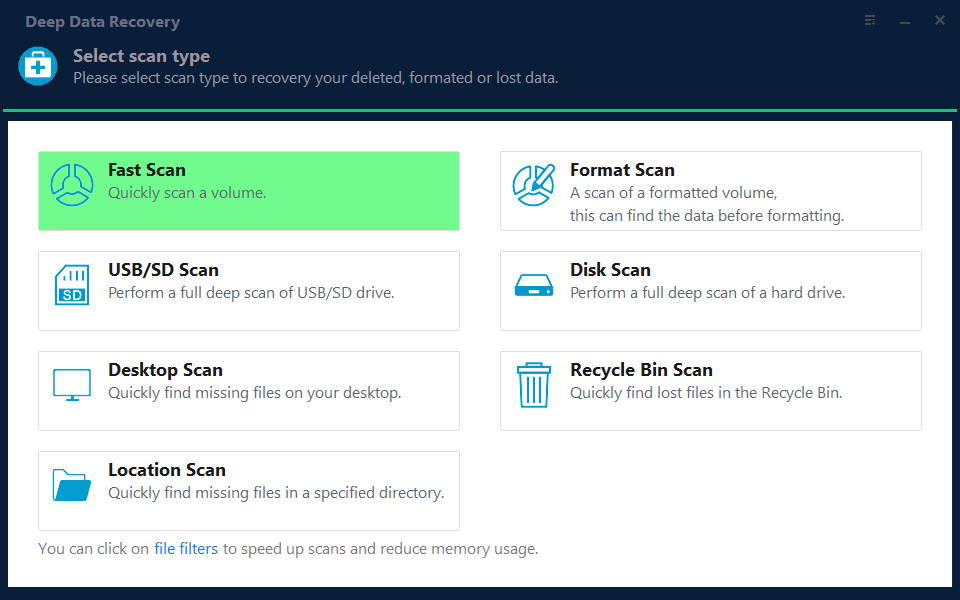
Note: You can choose different search modes based on where and why the data was lost.
Step 2. Select and scan the RAW partition
If the RAW partition has a label, you can select it from the drive list and scan for lost files. If it's lost its label, it will be listed as a "Lost Partition" and you can scan the entire drive to recover files.

Step 3. Preview found data from the scan result
After the scan is completed, all available files in the RAW hard drive will be displayed, allowing you to view and select the files you want to recover. You can sort the scanned data by file format or search directly in the "Search files or folders" box to find specific files.

Step 4. Recover data from RAW partition
Select all files and click "Recover" to get all the data back. Select another internal or external hard drive to save the recovered data and click "OK" to start RAW drive recovery.
After recovering data from a RAW external hard drive, you can format it to a proper file system like NTFS or exFAT to make it detectable and usable again.
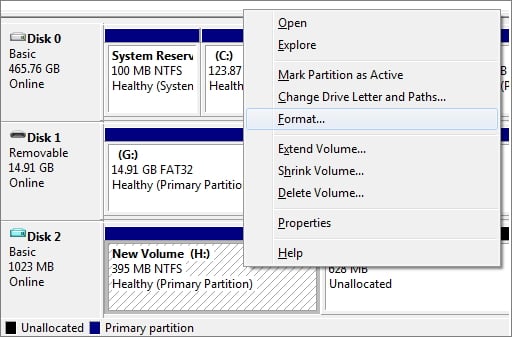
Step 1: Connect the external hard drive to your PC, then right-click on "This PC" and select "Manage", followed by "Disk Management".
Step 2: To format an external hard drive, locate it on your computer, right-click on it, and select the "Format" option.
Step 3: Reset the external hard drive letter and system file (NTFS) and save all changes.
To reuse an external hard drive, unplug it from your PC, wait for 30 seconds, and then plug it back in. This will reset the drive and allow you to use it again. After this, reboot your PC and reconnect the external hard drive to the PC.
Case 3. There Is Something Wrong with Device Driver
If your external hard drive still can't be recognized, you can try updating the driver to fix the issue. To update your computer's storage controller driver, follow these steps.
Step 1: Click the Start button > type Device Manager and hit Enter.
Step 2: To access the Device Manager, select it from the list of available options. Then, expand the categories to locate the name of your hard drive.
Step 3: To update the driver, go to the Device Manager, select the device you want to update, click on "Update Driver", then select "Search automatically for updated driver software".
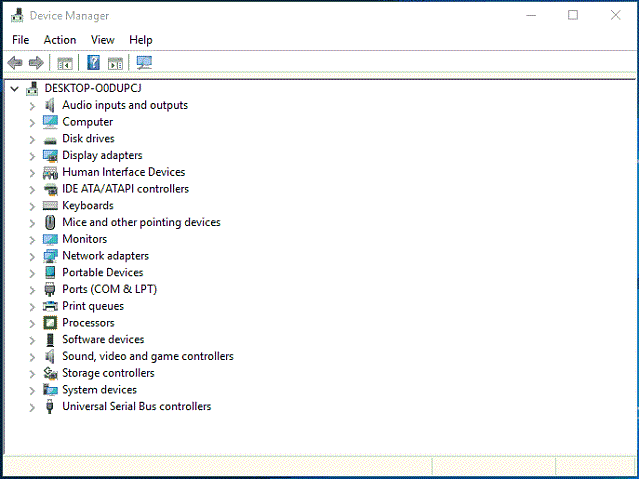
If Windows can't find a new driver for your drive, try looking for the latest one on the device manufacturer's website.
Case 4. The Hard Disk Is Not Detected Because It's Dead
The dead hard drive is a problem that eventually affects all computer users, but it's not the end - there are ways to fix it.
Step 1: If the Online Disk is recognized and its partition or disk space is displayed correctly, you can recover data from it using Deep Data Recovery WinPE Edition.

Step 2: If your dead HDD or external hard drive is not showing as "Online", you can still recover data from it by following the guide "How to Recover Data from a Dead Hard Drive".
How to Recover Data from Hard Disk Which Is Not Detecting FAQs
If your external hard drive isn't being detected, you may be able to recover files from it by trying a few troubleshooting steps. Check if the drive is properly connected to your computer and if it's showing up in the Disk Management tool. If not, try using a different USB port or cable. You can also try booting your computer from a Linux live USB drive, which may be able to detect the external hard drive even if your computer can't.
How do you recover hard disk data when it is not detected?
If your hard disk or external hard drive is not detecting, you can still recover data from it using a file recovery tool. To do this, you'll need to connect the non-detecting hard drive to a working computer using a USB cable or an adapter, and then use a file recovery software such as Deep Data Recovery, Qiling file recovery software, or professional data recovery tools to scan the drive for recoverable files. The software will then display a list of recoverable files, which you can select and save to a safe location, effectively recovering your data from the non-detecting hard drive.
1. Launch Qiling Data Recovery software on your computer, select the internal hard drive or external hard disk to begin the recovery process.
2. The hard drive recovery process will begin by scanning the disk to search for lost data and files.
3. After scanning, you can preview and restore any file you want.
Why is my hard disk not detected?
There are six main reasons why your hard disk will not detect. Here is a list of them.
- Hard drive not enabled in the BIOS
- Serial ATA drivers are not properly installed
- A faulty or unplugged data cable can prevent the BIOS from detecting a hard disk, resulting in an undetected hard disk issue if the data cable is damaged or the connection is incorrect.
- The drive is not working
- Incorrect jumper settings on the drive
- Faulty hard drive aged or the connection is incorrect.
How do I recover files from a hard drive that won't mount?
Qiling data recovery software can often detect and recover files from bad disks that are not detected by the operating system and refuse to mount.
1. Download and install Deep Data Recovery on your computer.
2. Connect the unmounted hard drive to the computer via a USB hard drive adapter or cable.
3. Run Qiling data recovery software and perform a full scan of the failed drive to recover any data that is on the drive.
4. Store the recovered data on removable media or another storage device.
Related Articles
- How to Format SD Card Without Losing Data
- Restarted My Computer and Everything Is Gone Windows 11/10/8/7
- How to Recover Word DOCX/DOC Files
- Old Myspace Photos Not Loading? Recover Old Myspace Photos, Messages, and Videos
- Memory Stick Recovery: How to Recover Files from Memory Stick
Want to recover deleted, formatted or lost files from memory stick? This article walks you through the whole process of memory stick recovery. - How to Recover Deleted Files from Recycle Bin in Windows 7
If you want to know how to recover deleted files from recycle bin in Windows 7 or restore recycle bin in Windows 7, follow the step-by-step guide for Windows 7 recycle bin recovery.
Products
Articles & Tutorials
- Data Recovery
- Data Backup
- File Recovery
- File Backup
- System Backup and Restore
- Disk and Partition Clone
- Technical articles
- Mobile articles
- Disk Master Help
- Windows Data Recovery Tutorials
- Windows Secure Delete Tutorials
- Windows Partition Management Tutorials
- Windows File Backup and Restore Tutorials
- Windows System Backup and Restore Tutorials
- Windows Disk Backup and Restore Tutorials
- Windows Clone Tutorials