Restarted My Computer and Everything Is Gone Windows 11/10/8/7
In Windows 10 or Windows 11, people often experience a frustrating issue where almost everything is lost after restarting their computer. This is not just about a single file being deleted, but rather a widespread loss of data, making it difficult for users to find their disappeared files on the hard drive. The exact cause of this issue can be unclear, adding to the stress and confusion of trying to recover lost data.
| Workable Solutions | Step-by-step Troubleshooting |
|---|---|
| Fix 1. Switch User Account | If this is your case, try to log the current user account out and log in with your...Full steps |
| Fix 2. Get Off Data | Run Deep Data Recovery on your PC and select the drive...Full steps |
| Fix 3. Run System Restore | Go to "Control Panel -> System and Security -> Backup and Restore...Full steps |
Some Guessings on Huge data loss After Restarting Your Computer
If you intentionally do a Windows 10 factory restore and format a hard disk, you'll likely lose everything. However, there are three possible reasons why you might lose everything after a normal computer restart, excluding the consequences of a factory restore.
- Virus infection
- Imminent hard drive failure
- Computer suffered a hard crash and couldn't load your profile on the reboot
Confirmed Solutions to "Files Missing After Restart" Issue (3 Ways)
Three viable solutions are provided here, with the hope that at least one will work for your specific case.
Solution 1: Switch the User Account
The first solution might be helpful if it's because of an unexpected computer restart for configuring Windows 10 updates or something related to a system update, it's likely that your computer suffered a hard crash and couldn't load your profile on the reboot, loading a temporary profile instead, so everything seems to be gone.
- If you're experiencing issues logging in with your work account, try logging out of the current user account and logging in with your own account and password. This should resolve the issue.
- If logging into the user account works, the missing files, folders, and applications should reappear on your computer.
Solution 2: Get Off Data from the Hard Drive and Install a New One
Your system may be running slower and experiencing frequent program crashes or freezes, indicating a potential hardware issue, possibly an imminent hard drive failure, which could result in data loss.
To prevent further data loss, it's recommended to replace the problematic hard drive as soon as possible. This will ensure that all data is safely transferred to a new drive, minimizing the risk of future data loss.
To rescue data from a failing hard drive, the best approach is to copy the old drive to a new one and then use Qiling hard drive data recovery software to recover data after the hard drive replacement.
Step 1. Select file types
Launch Deep Data Recovery, select the file types you want to recover, and click "Fast Scan" to begin the recovery process.
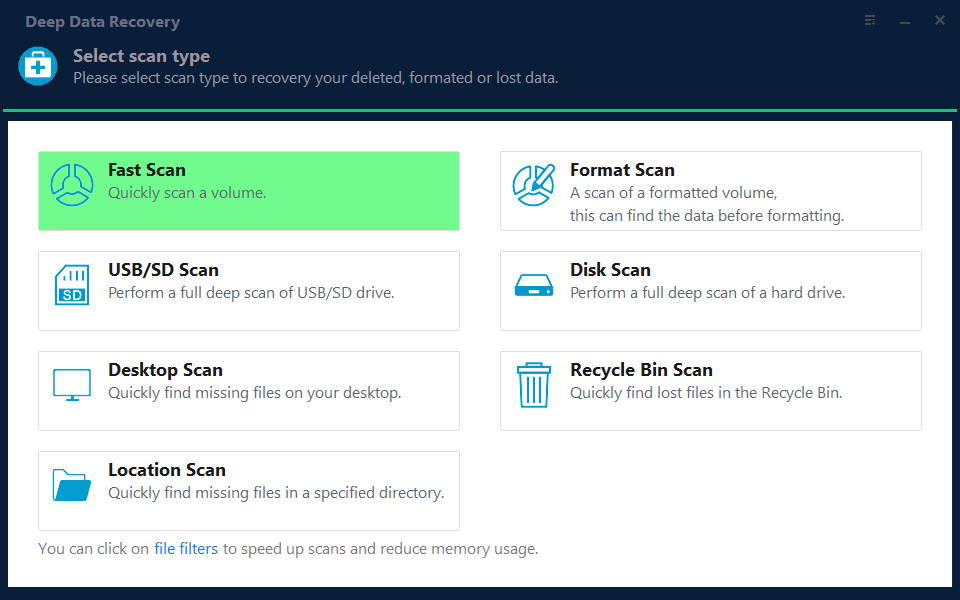
Note: You can choose different search modes based on where and why the data was lost.
Step 2. Scan the hard drive partition
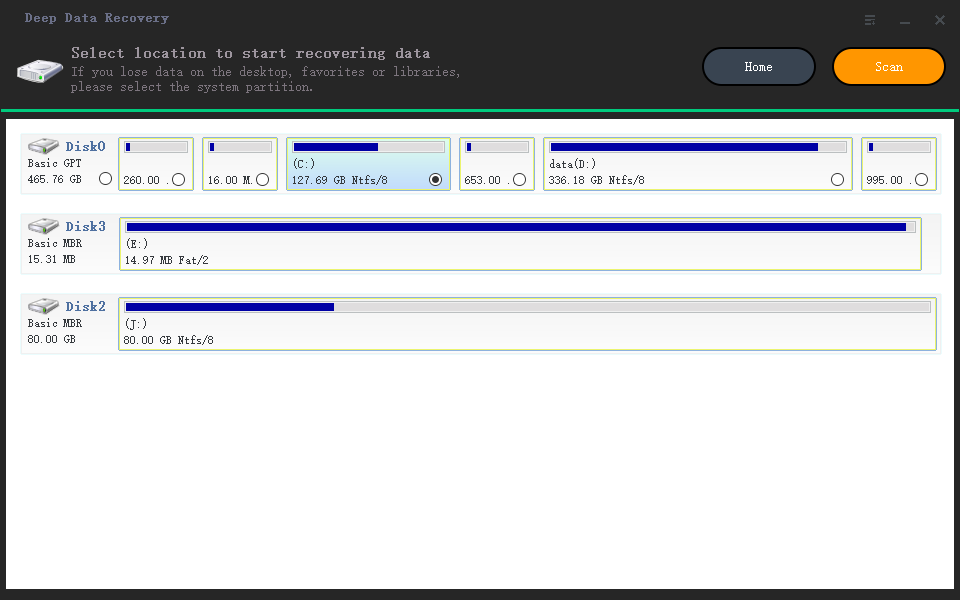
Select the drive on your hard disk where you lost or deleted files, click "Scan" and let the software scan for all lost data and files on the selected drive.
Step 3. Check the results
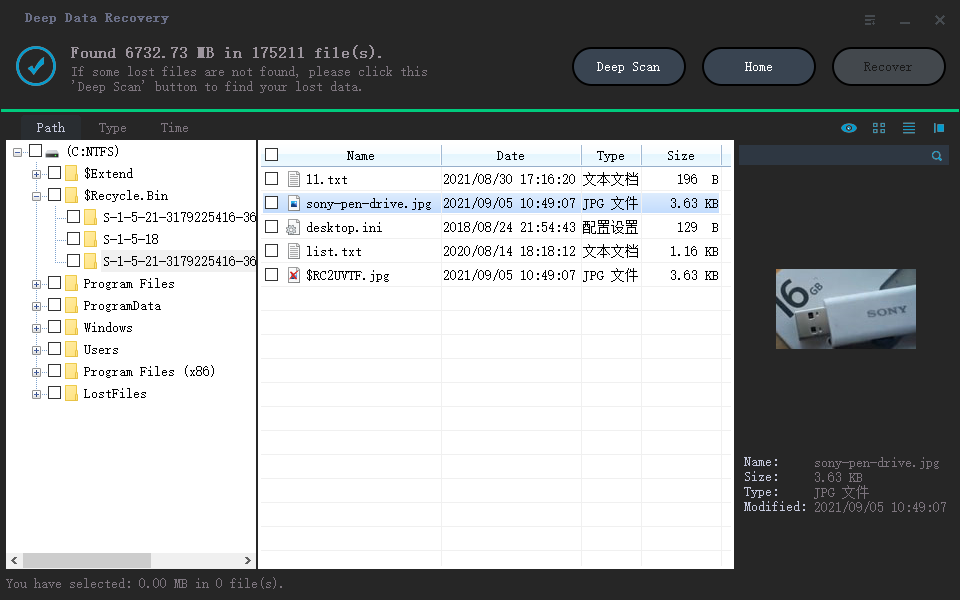
When the scan is finished, you can use the "Filter" feature or click "Search files or folders" to locate the missing files on the hard drive.
Step 4. Restore lost hard drive data
Select the files you want to recover and click "Recover" to save them to a different location.
- This sector by sector recovery tool can be used to copy data from a hard drive to a new one by recovering data sector by sector, which is useful when the operating system is not working properly or when the data is corrupted.
- To recover data on a new hard drive, run Deep Data Recovery and take the three steps.
Solution 3: Perform a System Restore
If you're unsure about the reasons behind your data loss, you might want to consider doing a system restore to potentially avoid the frustrating experience.
- Warning
- Restoring the system to an earlier state could restore missing data and applications, but saved data after the restore point would be erased, and you can still undo the system restore.
To perform a system restore, follow these steps:
"Control Panel -To restore files from a backup, go to System and Security -> Backup and Restore -> Restore files from backup. This will open the Backup and Restore control panel, where you can select the backup you want to restore from and follow the on-screen instructions to complete the restore process.
Bonus Tip - Back Up Your Data to Avoid Data Loss
At this point, people would realize the importance of a backup, and it's better late than never. To prevent data loss, consider backing up your data to external devices or cloud storage services like Google Drive, OneDrive, or Dropbox. This will ensure that your important files and information are safely stored and can be easily retrieved in case of any issues.
To create a backup for your files, you can use Qiling, a free backup software that supports various backup solutions such as file backup, partition backup, system backup, and disk backup.
This software is still used for disk cloning, allowing you to clone a system, disk, or partition. The cloned disk can then be used to replace a problematic disk, providing a quick and efficient solution.
Follow the details to back up files to an external hard drive:
Step 1. To initiate a backup, click the "File backup" button located in the "Backup and recovery" page.
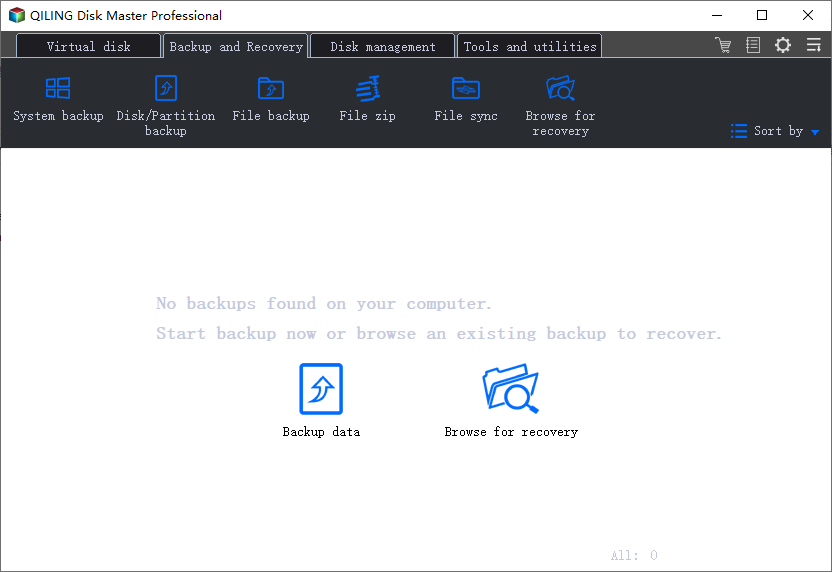
Step 2. Local and network files will be displayed on the left side, allowing you to extend the directory and choose specific files to back up.
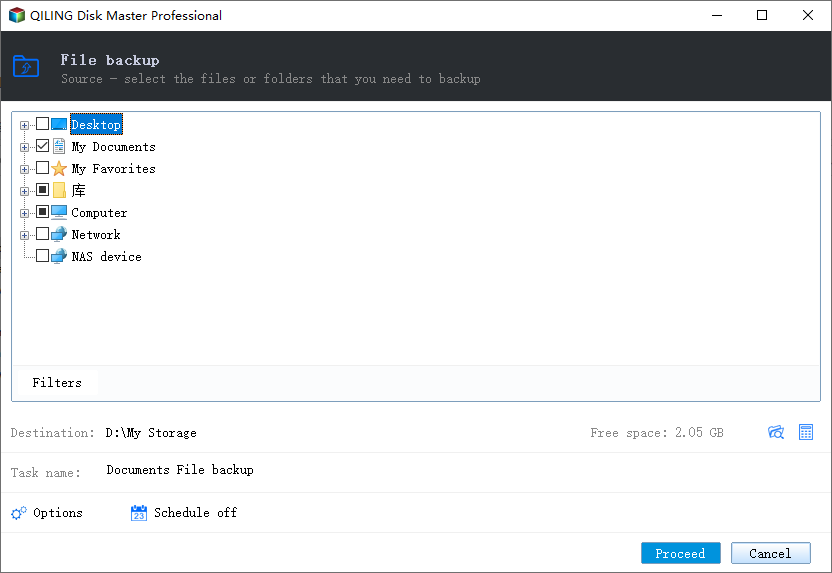
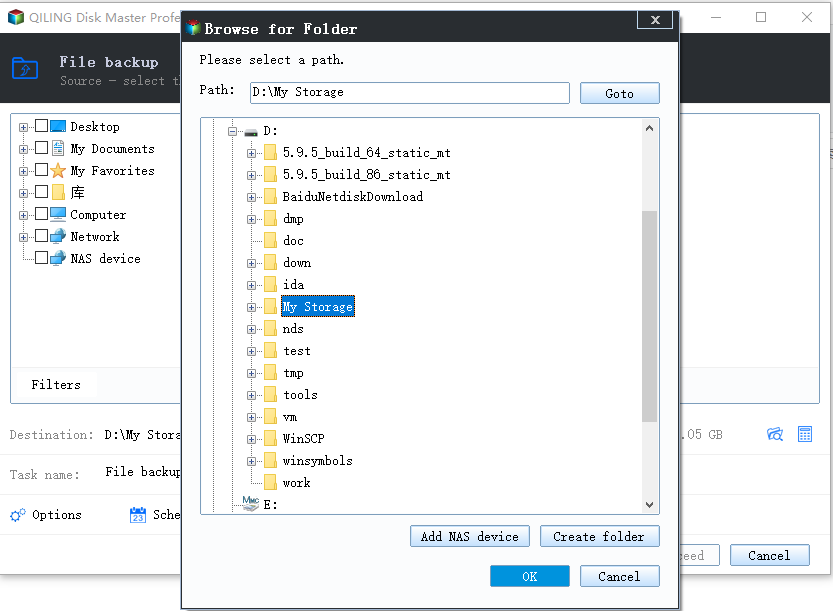
Step 3. Follow the on-screen instructions to select the location where you want to store the backup.
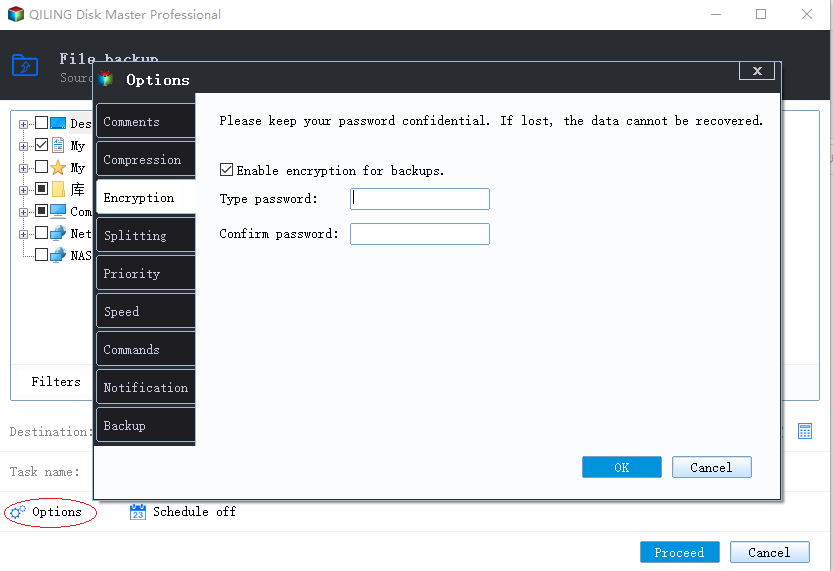
Step 4. To encrypt the backup with a password, click on "Options" in the "Backup Options" section. This allows for various other customization options for the backup process.
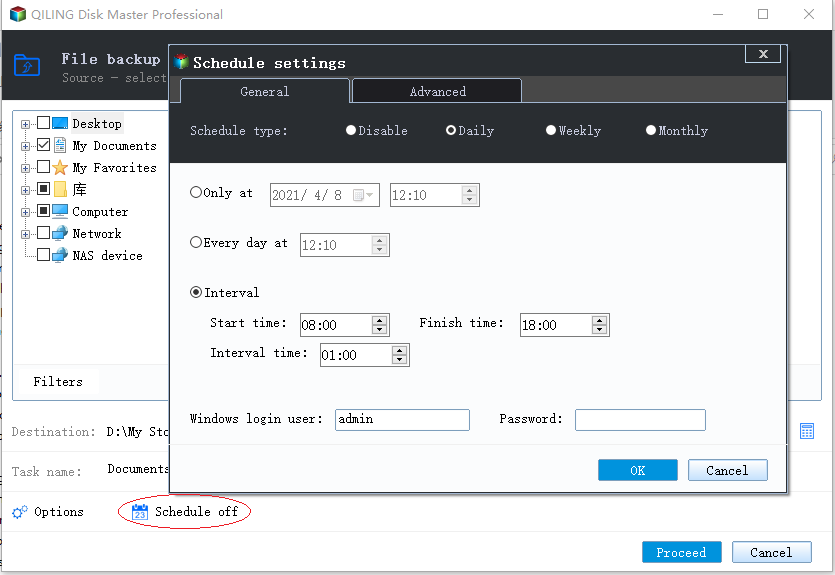
Set up a backup schedule and choose to initiate a backup at a certain event in "Backup Scheme".
Step 5. You can save the backup to a local disk, Qiling's online service, or a NAS.
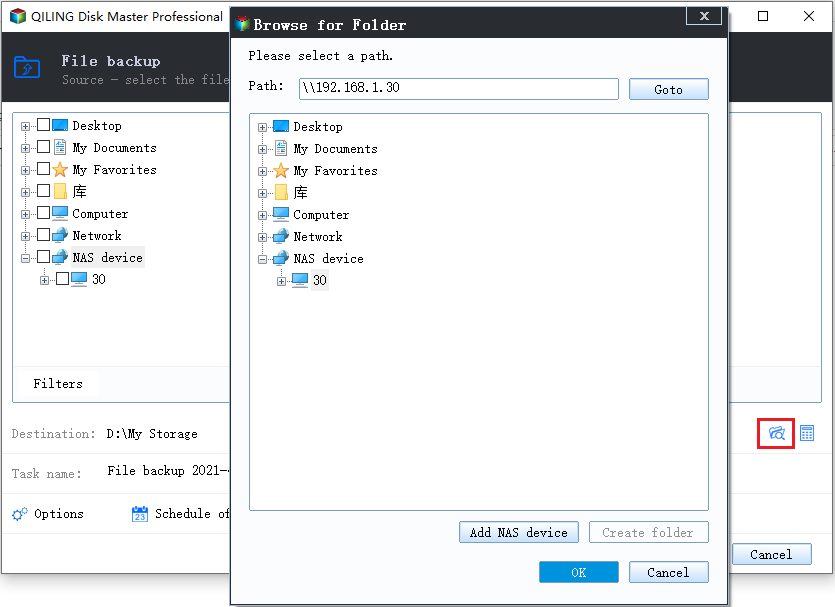
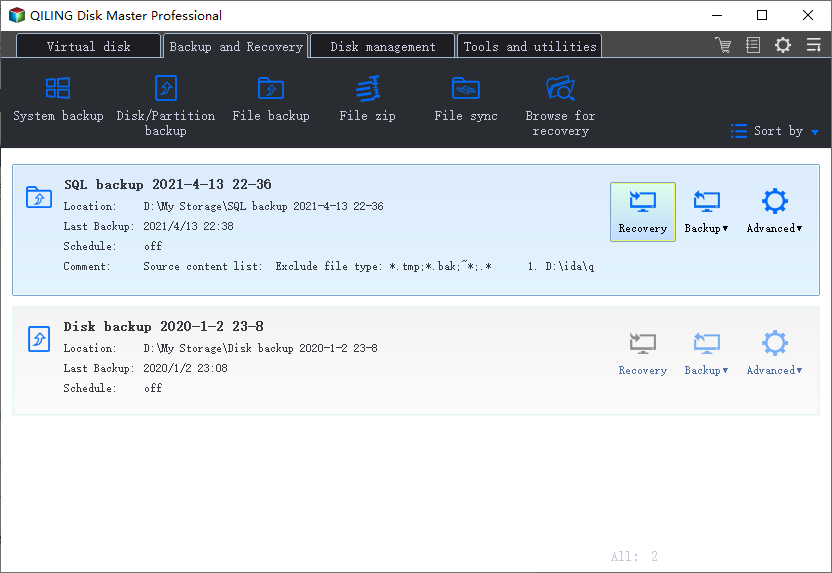
Step 6. To start the backup process, click "Proceed". Once the backup is complete, it will be displayed as a card on the left panel. You can manage the backup job by right-clicking on it.
Related Articles
- Download Microsoft Word Document Recovery Software to Recover Word Files
- How to Repair Windows 11 and Fix Corrupted Files [Guide]
- How to Recover Data After Low Level Format
- Reset and Recover Instagram Password Without Email
- Best Prosoft Data Rescue Alternative Free Download
Prosoft Data Rescue is a powerful tool for recovering lost or deleted data on a computer, but users may be looking for alternative software options. - [Solved] PS4 Not Recogizing/Reading External Hard Drive 2023
PS4 not recognizing USB hard drive is a problem that bothers a lot of people. Here are the steps for how to solve the problem.
Products
Articles & Tutorials
- Data Recovery
- Data Backup
- File Recovery
- File Backup
- System Backup and Restore
- Disk and Partition Clone
- Technical articles
- Mobile articles
- Disk Master Help
- Windows Data Recovery Tutorials
- Windows Secure Delete Tutorials
- Windows Partition Management Tutorials
- Windows File Backup and Restore Tutorials
- Windows System Backup and Restore Tutorials
- Windows Disk Backup and Restore Tutorials
- Windows Clone Tutorials