SD Card Showing Wrong Size: Restore Full Capacity on SD Card Without File Loss
Issue: SD Card Is Not Showing Full Capacity
If your SD card is not showing its full capacity, it may be due to corrupted partitions, bad sectors, or improper formatting. This issue can cause the card to report a lower capacity than its actual size. You can resolve this by reformatting the card or using disk management tools to restore the full capacity.
Typical reasons:
The issue of an SD card showing the wrong size is primarily attributed to three main factors.
- 1. Cheap and faulty SD card bought from dishonest vendors
- 2. Incompatible with card readers or host devices
- 3. Infected by computer viruses
Recover Data SD Card Before Formatting
Disk formatting should be taken very carefully as we addressed many times, it's going to wipe all data out, leaving you a blank SD card in the end. If no backup is available, formatted data will be lost.
We suggest restoring files from your SD card in advance, as Deep Data Recovery Free can recover data from various devices, including HDD, SSD, SD card, USB flash drive, pen drive, external hard drive, and more.
Qiling data recovery program allows you to recover all types of files from your SD card, and in case of file corruption, it can repair corrupted videos, photos, and documents.
Insert the SD card into the computer or device, then open the file explorer or file manager. Locate the SD card icon and click on it to access the files. Browse through the files and select the ones you want to retrieve, then click on the "Copy" or "Save" button to transfer them to the computer or device.
Step 1. Connect the SD card, memory card, or CF Card to your computer, then launch Qiling memory card recovery software on your PC. Select the desired file types and click "USB/SD Scan" to initiate the recovery process.
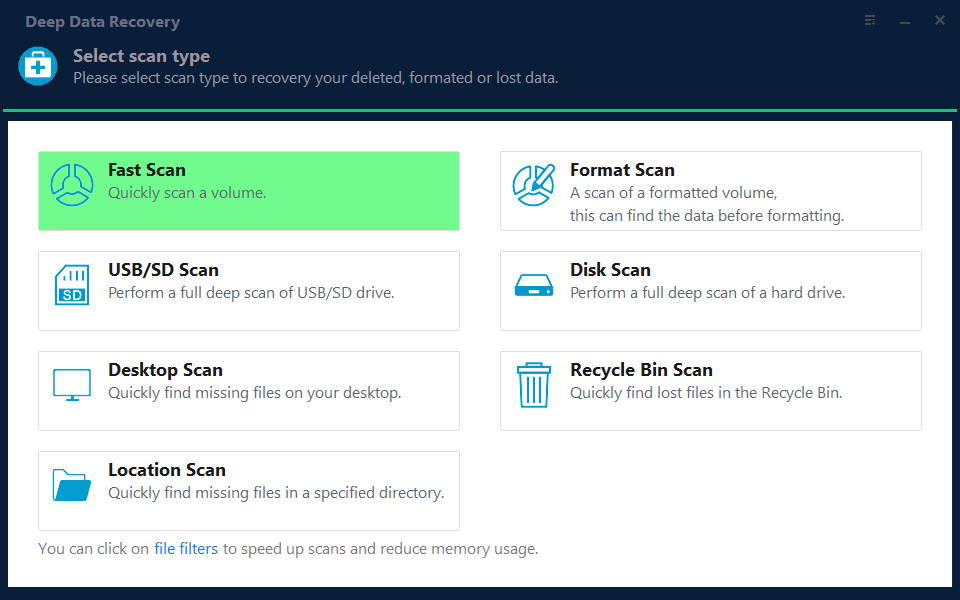
Note: You can choose different search modes based on where and why the data was lost.
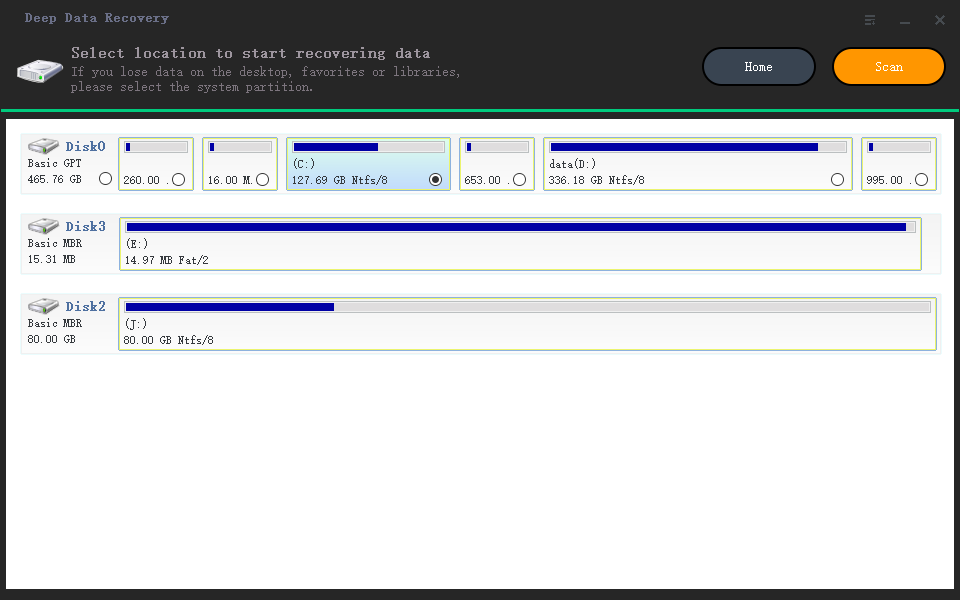
Step 2. To recover data from an SD card, go to the Devices section, select the SD card, and click "Scan" to initiate the data recovery process.
Step 3. The software will automatically start a powerful scan that can find all lost files, including those with unknown or lost file names. After the scan, you can view deleted items in a tree-view panel on the left. If you're looking for a specific type of file, such as photos, documents, videos, or emails, you can filter the results accordingly.
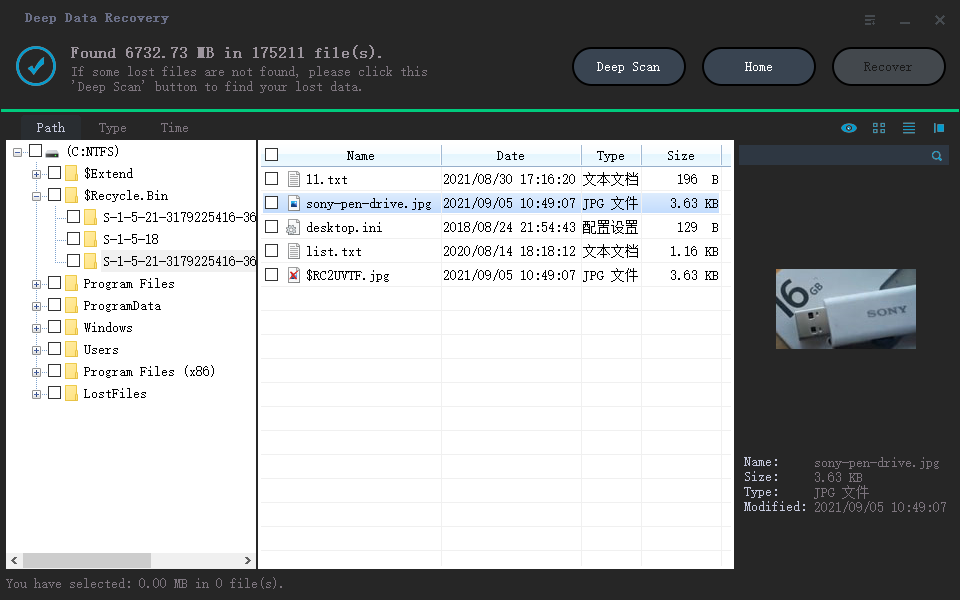
Step 4. You can directly double-click the files to preview the content. Then, choose the wanted files and click "Recover" to restore them to a secure location on your PC or other external storage devices.
How to Restore SD Card to Full Size
To restore the SD card to its full size, perform a quick format after excluding the causes of incompatibility. This will allow the card to function normally.
There are some reliable and free SD card formatting tools available for Windows 10/8.1/8/7, making it easy to find a handy one that suits your needs.
- Warning
- To format an SD card, ensure you've backed up its data first, as formatting will erase all content. If you haven't created a backup, you can attempt to recover data using Deep Data Recovery software.
Method 1. Disk Management
Step 1.Right-click This PC/My Computer > Manage.
Step 2. To format an SD card, go to Device Manager, select Disk Management, find the SD card, right-click on it, and choose the Format option.
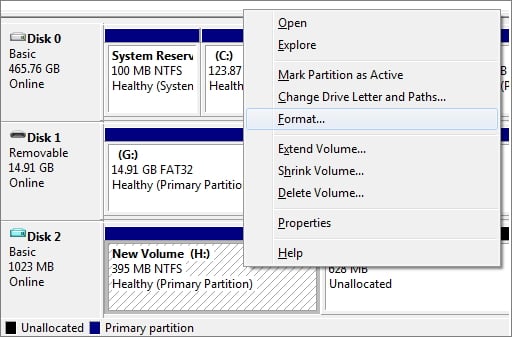
Step 3. To reset the SD card's file system, rename it to NTFS or FAT32 as needed, and follow the on-screen instructions to complete the formatting process.
Once you've completed the steps to wipe the SD card, you'll regain all the storage size that was previously occupied by the deleted files. This means you can use the SD card for storing and saving files and data again, just like it was before.
Method 2. Qiling disk formatting software
This is third-To use this free partition software, you'll need to download and install it on your computer. Once installed, simply follow the guide to format your SD card.
Step 1. Click the hard drive partition and choose the "Format" option.
Step 2. Set the Partition label, File system, and Cluster size for the partition, then click "Proceed" in the new window.
Step 3. Click "OK" to start formatting the hard drive partition. This will erase all data on the selected partition.
Method 3. DiskPart command line
Step 1. To access the Command Prompt in Windows 10, type "cmd" in the search box, and then right-click on the best match "Command Prompt" and select "Run as administrator".
Step 2. In the command prompt, type diskpart and press "Enter".
Step 3. Type list disk to list all the available drives and press "Enter".
Step 4. To format an SD card, you need to select it first. To do this, type "select disk" followed by the disk number of the SD card you want to format, and press Enter.
Step 5. To clean the SD card, type `clean` and press "Enter" on the command line.
Step 6. Type create partition primary to create a partition on the cleaned SD card and press "Enter":
Step 7. To format a drive with NTFS or exFAT, type `format fs=ntfs` (or `format fs=exfat`) and press "Enter".
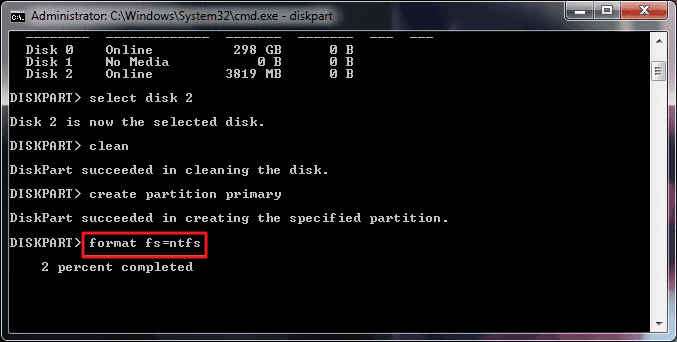
Step 8. To assign a drive letter, type "assign letter=drive letter" (for example, "assign letter=E") and press "Enter".
Related Articles
- Fix 'This Drive Is Read Only' on SD Card/USB/Hard Drive [5 Methods]
- [5 Ways] How to Remove Write Protection from USB in Windows
- How Do I Get My Computer to Recognize a USB Device [Solved]
- SD Card Won't Read or Open on My Computer
- How to Recover BKF Files in Windows 7/10/11
This article guides you on how to recover BKF files in Windows 7/8/10/11, making it easy to restore from BKF files after they've been deleted, or a drive has been formatted. - How to Repair and Recover Corrupted Pictures in SD Card
To repair and recover corrupted photos from an SD card, you can use Deep Data Recovery software, which makes the process easy with just three simple steps.
Products
Articles & Tutorials
- Data Recovery
- Data Backup
- File Recovery
- File Backup
- System Backup and Restore
- Disk and Partition Clone
- Technical articles
- Mobile articles
- Disk Master Help
- Windows Data Recovery Tutorials
- Windows Secure Delete Tutorials
- Windows Partition Management Tutorials
- Windows File Backup and Restore Tutorials
- Windows System Backup and Restore Tutorials
- Windows Disk Backup and Restore Tutorials
- Windows Clone Tutorials