How to Recover Latest Windows Update Deleted Files (21H2/2004)
Windows Update Deleted Files - Files Missing After Windows Update
Windows 10 is a service that gets better through periodic software updates, which usually don't require user action if automatic updates are enabled. However, some users have reported that Windows updates have resulted in missing files, with cases documented on the Microsoft forum.
The user's "Documents" folder is missing, resulting in the disappearance of all their personal documents, with their last backups being outdated.
Does Updating to Windows 11/10 Delete Files?
Updating to Windows 11 will not delete files, but it's recommended to back up your data before upgrading to ensure everything is safe. To upgrade for free, go to Settings > Update & Security > Windows Update, and follow the prompts to download and install the update. Additionally, you can check for updates in the Microsoft Update Catalog or create a bootable USB drive with the Windows 11 installation media and install it manually. It's also worth noting that you can use the Windows 11 Home or Pro version for free if you're eligible for the free upgrade.
"Immediately after installing the latest Windows 10 update, my computer would power on, and the mouse would work until it was fully rebooted, and then the mouse would become unresponsive. Control alt delete would not work. I would have to shut the computer off using the power button. I tried this multiple times. Finally, I got where the mouse would work. Cleaned up some stupid random things off my desktop, emptied the recycle bin. I tried to open an important file I use all the time, and it's gone. I started finding several files gone. Read online that others have found this update deletes files and puts in the recycle bin. So, of course, when I emptied the recycle bin, there they went, I guess. What the heck???????????? You guys need to fix this and fix it fast before this messes up other people's lives. I don't even know which files are there and which aren't. Thankfully I have things backed up to Carbonite, but I will have to do a complete system restore. All thanks to a stupid Windows update."
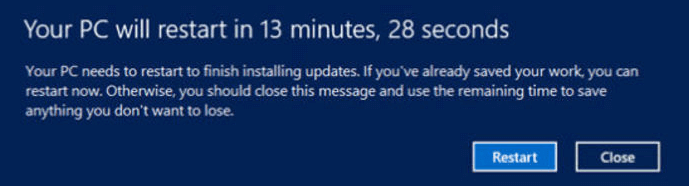
Dealing with deleted files due to Windows 10 updates can be frustrating, especially when the system updates automatically. Many users have experienced unexpected troubles after a Windows 10 update, with essential data or files being lost in the process. Fortunately, there are effective data recovery solutions available to help restore deleted files, and this article provides a guide on how to do so.
- Recover Windows Update Deleted Files with Software
- Restore Files via Windows.old Folder
- Check Your Temporary Profile
- Re-enable Windows 10 Administrator Accounts
Tip 1. How to Recover Windows Update Deleted Files (Recommended)
If you lose files after a Windows 10/8.1/8/7 update, a reliable way to restore them is by using data recovery software. Qiling data recovery software is a powerful tool that can help Windows users recover lost data due to system updating, making it a quick and effective solution.
Deep Data Recovery
- Data recovery software can help recover deleted, formatted, and inaccessible data in various data loss situations, including accidental deletion, hardware failure, and file system corruption. It can also recover data from various storage devices, such as hard drives, solid-state drives, USB drives, and memory cards, and from different file systems, including FAT, NTFS, and HFS.
- Recover deleted photos, audio, music, and emails from any storage effectively, safely, and completely.
- You can recover data from various devices and storage media, including the recycle bin, hard drive, memory card, flash drive, digital camera, and camcorder.
I downloaded Deep Data Recovery and used it to restore lost documents after Windows 10 forced an update.
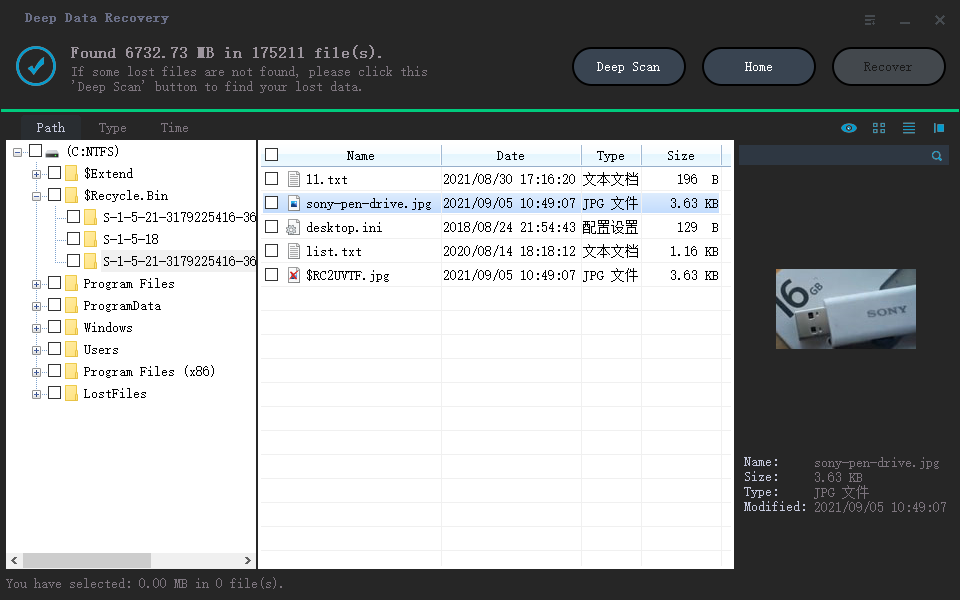
Step 1. Launch Deep Data Recovery on your PC, and click "Fast Scan" to begin the process.
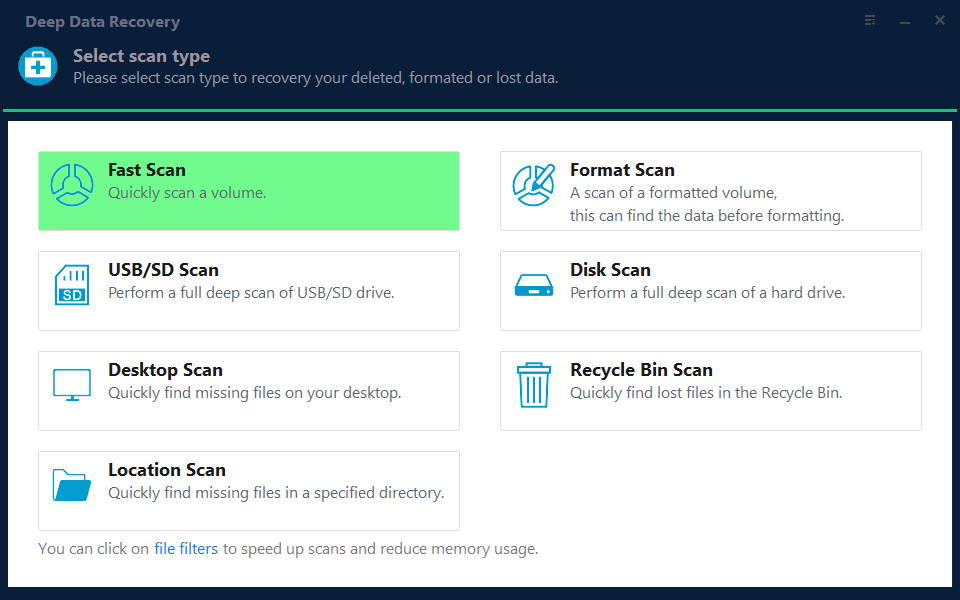
Note: You can choose different search modes based on where and why the data was lost.
Step 2. To recover lost files, launch the Qiling file recovery software on your Windows computer, select the exact location where the files were lost, and click the "Scan" button.
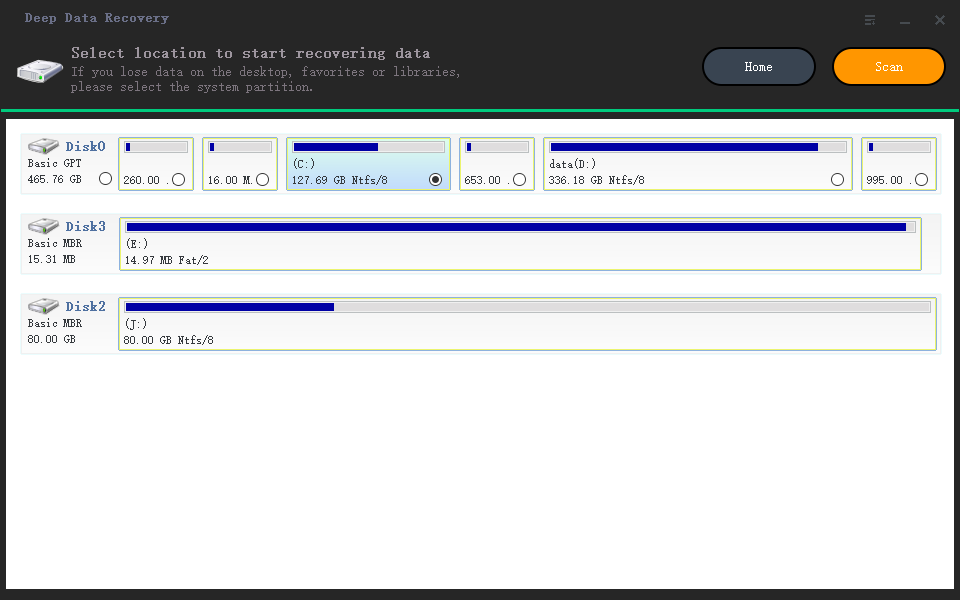
Step 3. The software will immediately start scanning the drive, displaying deleted files, and allowing you to stop the scan if you find the files you need. To quickly locate the target file, you can use the file format filter during the scan.
Step 4. To recover lost files, select the desired files such as Word, Excel, PDF, photos, videos, or emails, and click the "Recover" button. You can then choose a different location to save the recovered files.
Tip 2. Restore Missing Files via Windows.old Folder
After each Windows update, a folder named Windows.old is created on the local drive C: and contains all the data from the previous version. This folder is available for 10 days, so make sure to check the date. To access it, simply navigate to the local drive C:. Here are the steps to get started.
Step 1.To access the Windows.old folder, go to "This PC", then click on "Local Disk (C:)", and finally navigate to the "Windows.old" folder.
Step 2.To find missing files after a Windows 10 update, try checking the System Restore point created before the update. If the files were deleted during the update, they might be recoverable from the System Restore point. You can also check the Recycle Bin and the Windows Update logs for any clues.
Step 3. Copy and paste the files that you want from each folder to a folder in Windows 10.
For more detailed steps with screenshots, refer to how to restore windows.old files in Windows 10.
Tip 3. Check Your Temporary Profile to Restore Files
If you've deleted files after a Windows update, you can try recovering them by checking if you're signed in with a temporary profile. This can sometimes occur after an update, and if you are, it may be possible to recover your deleted files.
Step 1.Go to Settings > Accounts > Sync your settings.
If you're signed in with a temporary profile, a message will appear at the top indicating that you're logged in with a temporary profile, and roaming options are currently unavailable.
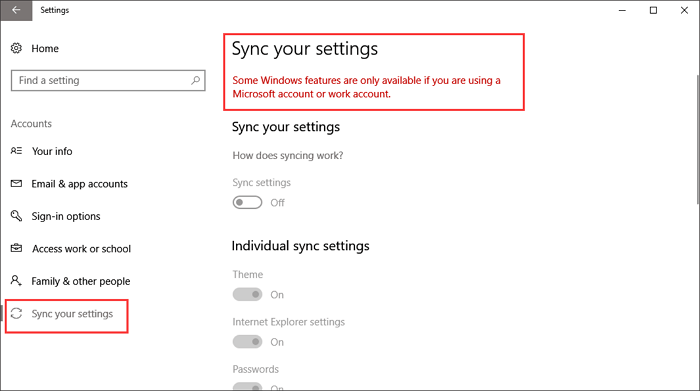
Step 2.After this, Windows will attach an extra account to yours. Then please restart the PC and sign in again to get your account settings and data back.
Tip 4. Re-enable Windows 10/11 Administrator Accounts
To recover deleted Windows update files, it is possible to enable the Administrator account, which grants access to and allows the recovery of deleted files. However, a more recommended approach would be to utilize a file recovery tool, such as Recuva or Deep Data Recovery, which can scan the drive for deleted files and recover them without compromising security.
Step 1.In the Computer Management app, select Disk Management to view a list of all the storage devices connected to your computer, including internal hard drives, solid state drives, and external devices. From here, you can initialize, format, or delete storage devices, as well as extend or shrink partitions, and even convert a disk to a different file system.
Step 2.Select "Local Users and Groups", then open the Users folder.
If the user named Administrator has a down arrow, it's been disabled. You all need to re-enable it.
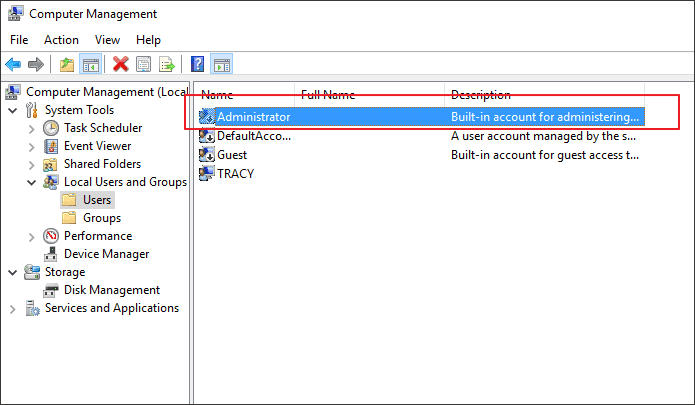
Step 3.To enable the Administrator account, double-click the Administrator icon, open its "Properties", uncheck the box that says "Account is disabled", and then select "Apply".
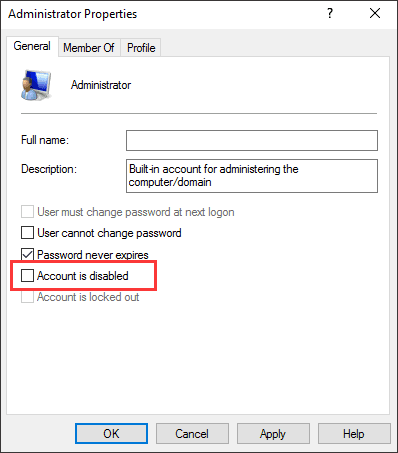
Step 4.Log out and log in to Windows 10 as an Administrator account again.
If you're experiencing issues with missing files or documents after a Windows 10 update, you may be able to recover them. The update might have inadvertently moved or deleted your files, but they could still be accessible through the Windows Update history.
Important Suggestions from Microsoft (After Windows 10/11 Update)
If you've checked for Windows updates and are experiencing issues with missing files after an update, please minimize your device usage and contact Microsoft directly at +1-800-MICROSOFT for assistance, or visit the official website to reach the support team.
Microsoft is advising users not to install the Windows 10 version 21H2/2004 update, which has a bug that deletes user files, and to wait for a solution to be released.
If data recovery is an urgent issue for you, you should immediately follow the first solution to recover deleted files after Windows 10 update, as it is the most effective method to get back your lost files in the shortest time possible.
Safe Steps to Update to the Newest Version of Windows 10
If you want to update to Windows 10, you must follow the steps below to avoid data loss.
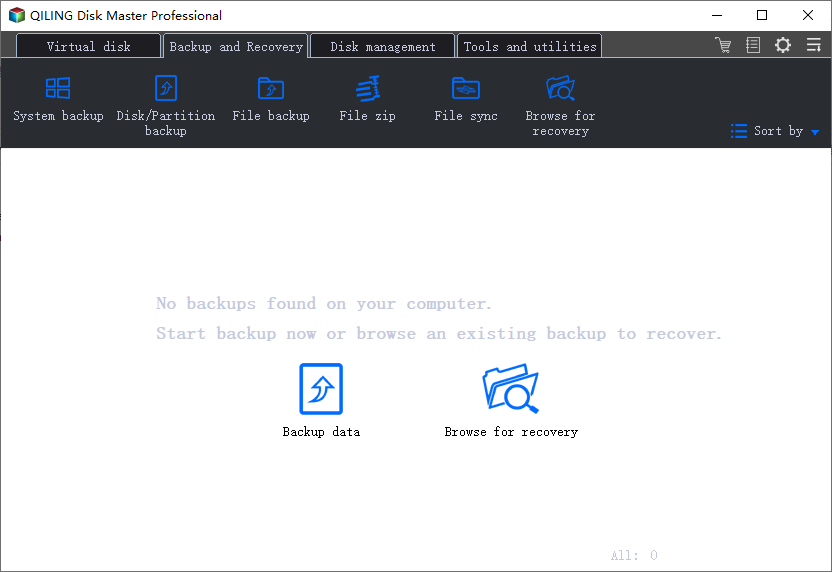
1. Take A Full Backup Before Windows Update
A full system backup allows you to downgrade Windows at any time, even if you've exceeded the 10-day rollback limitation, making the update process risk-free and worry-free.
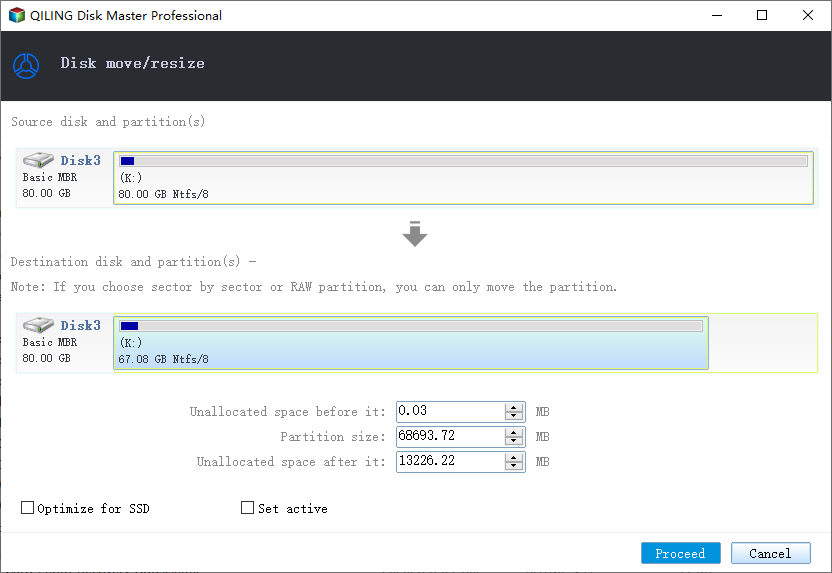
2. Increase or Extend System Disk/C Drive
To install the PC update, it's recommended to have enough space on the system disk partition, and Qiling Partition Master can help by resizing or moving other drives like D, E, or F to free up space on the C drive.
3. Free up disk space by cleaning up junk files in Windows 10 C drive
Qiling CleanGenius clears system junk files, browser caches, and app caches on the C: drive, freeing up disk space in Windows 10.
Step 1. Download and install Qiling Partition Master Suite.
Step 2. Click PC Cleaner and install Qiling CleanGinus. Then, click "Cleanup" and click "Scan" to start cleaning up the system and make your PC as good as new.
Step 3. The software scans your computer to identify large, unnecessary files and system junk, allowing you to select and delete them with a click of the "Clean" button.
Step 4. Once the scan is complete, click the "Done" button to finalize the cleaning of system junk files.
If you have followed the previous steps, you can upgrade to the newest version of Windows 10 without losing any data. Alternatively, you can install Windows 10 from a USB drive directly on your PC.
Conclusion
To avoid data loss when updating Windows 10, it's highly recommended to set up a system backup beforehand. This way, if any files are lost during the update, you can recover them from the backup. If you don't have a backup, using a data recovery software like Qiling can help recover lost files.
Restore Windows 10/11 Update Lost Files FAQs
If you deleted a file in Windows 10, it may still be recoverable even if it's no longer in the Recycle Bin. If you're still having issues, you can refer to the frequently asked questions for more information.
How do I recover deleted files after a Windows update?
To restore missing files after Windows forced update:
Step 1.Run Deep Data Recovery on your computer, choose the drive where you lost files and click "Scan". If lost files were on an external storage device, connect it to your computer first.
Step 2. After scanning, you can double-click on a file to view its contents. Once you've selected the desired files, click "Recover" and choose a location to save all the files at once. This streamlined process allows for efficient recovery of your data.
Is it safe to delete Windows update files?
When you install Windows updates, older versions of system files are kept, allowing you to uninstall them later. It's safe to delete these files if your computer is working fine and you don't plan to uninstall any updates.
How long does Windows 10 update take in 2022?
The Windows 11 update may take around 20-30 minutes to download and install if you already have the 2022 Update installed. However, if you don't have the 2022 Update, it could take longer, up to 20-30 minutes or more, especially on older hardware.
Why is Windows 10 Deleting files?
Storage Sense in Windows 10 is a new feature that automatically deletes unused files when the computer is low on disk space. It can delete files older than 30 or 60 days from the Recycle Bin, or temporary files, freeing up space. This feature helps keep your computer organized and running smoothly by removing unnecessary files.
Related Articles
- Top 5 Free Folder Recovery Software in Windows 10/8/7
- How to Restore Lost Data with Easy Recovery Essentials Free Alternative
- Easily Recover Files Larger than 4GB in Size
- How to Recover Files from USB Flash Drive with or Without Software
- How to Recover Deleted WhatsApp Audio from PC/Mac/iPhone
Here are the step-by-step guide for how to recover deleted WhatsApp audio files from PC, Mac and iPhone. - How to Recover Deleted YouTube Videos
To recover deleted YouTube videos, you can follow a detailed guide that includes steps for recovering videos with links and offline videos. This process allows you to retrieve deleted videos, but the specifics of the recovery method are not provided in this response.
Products
Articles & Tutorials
- Data Recovery
- Data Backup
- File Recovery
- File Backup
- System Backup and Restore
- Disk and Partition Clone
- Technical articles
- Mobile articles
- Disk Master Help
- Windows Data Recovery Tutorials
- Windows Secure Delete Tutorials
- Windows Partition Management Tutorials
- Windows File Backup and Restore Tutorials
- Windows System Backup and Restore Tutorials
- Windows Disk Backup and Restore Tutorials
- Windows Clone Tutorials