What Is Win32 Disk Imager? A Complete Guide on It
PAGE CONTENT:
- [Definition] What Is Win32 Disk Imager
- [System Requirement] What System Win32 Disk Imager Runs on
- [Usage] How to Use Win32 Disk Imager
[Definition] What Is Win32 Disk Imager
Win32 Disk Imager, dd for windows, developed by gruemaster and tuxinator2009, is a free and open-source utility that allows you to write raw disk images to removable devices, or backup a removable device to a raw image file. It supports various types of removable media, including USB drives, CDs, DVDs, and SD cards, and can be used on Windows systems.
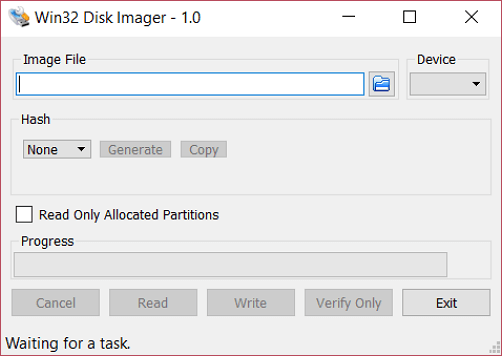
This application owns the following features:
- Simple interface and straightforward function: The app has a simple interface with only one window, where you can select an image file, choose a device, generate Hashes, create a backup, and copy files all within the same screen.
- Lightweight & small size: The application is lightweight, taking up only 44 MB of storage space, and won't interfere with other programs. It efficiently creates exact copies of removable storage units, serving as a reliable backup.
- Quick write and read speed: Win32 Disk Imager is a tool that can read and write data at a fast speed, saving users time.
- Free and Easy tool to make a backup and copy for IMG files: This open-source program is free and allows creating backups for IMG files to prevent data loss or damage.
[System Requirement] What System Win32 Disk Imager Runs on
Win32 Disk Imager is available on Windows 10, 8.1, 7, and XP, making it compatible with a range of older operating systems.
According to some users' feedback, this utility may be effective on Windows Server 2008, 2012, and 2016 editions, although this has not been officially confirmed by the developer.
[Usage] How to Use Win32 Disk Imager
Situation 1: Write ISO Image to Removable Devices
Follow the steps below to write an ISO image to a bootable drive:
Step 1. Connect an external removable device to your computer and launch Win32 Disk Imager.
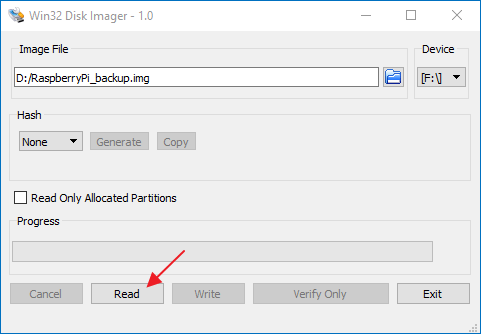
Step 2. To write an ISO file to a portable drive, click the blue folder icon and select the ISO file you want to write to the portable drive.
- Note
- The displayed files are in .img format by default, but can be converted to ISO format by changing the extension in the options after the file name.
Step 3. Choose the Device beside the Image File. Usually, the utility will recognize it automatically.
Step 4. Click Write to copy this bootable image file to a portable device.
Situation 2: Backup A Disk Image for Removable Devices
To create a backup for your removable device, Win32 Disk Image provides an easy way.
Step 1. Connect your device to the computer, and launch Win32 Disk Imager.
Step 2. To set up a new folder under the path, click the Blue folder icon. Then, give the image file a name, such as "backup", and specify the extension format, such as ".img".
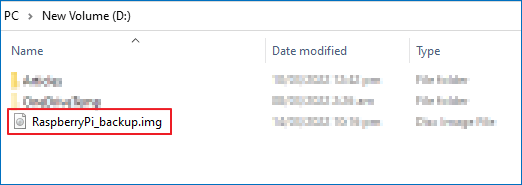
Step 3. Select the device beside the image file, which will automatically recognize the external drive.
Step 4. Click the "Read" button to start the backup process. This will create an image file of the selected drive at the location you specified.
Conclusion
Win32 Disk Imager is a Windows program that enables users to write ISO images to removable devices and create backups. Understanding how it works and using it effectively is crucial, and this post aims to provide a helpful guide. By following this post, users can gain a better understanding of Win32 Disk Imager's capabilities and learn how to utilize it for their needs.
Related Articles
- Restore Point in Windows [What Is and How to Use]
- [Tracing IP Address] How to Trace An IP Address?
- Tape Data Recovery Glossary
- What Is Mac Recovery Key? [Everything You Get]
- What to Do If Computer Restarts After Shutdown (for Windows 11/10/8/7)
Fix a computer that restarts after shutdown. Learn common causes, including Fast Startup, power settings, drivers, BIOS, and hardware issues. - Computer Restarts When Playing Games | 10 Fixes🔥
The issue of computer restarts when playing games can be easily resolved if we understand the underlying reasons. This post explores the common causes and provides ten practical solutions to solve the problem, allowing you to enjoy gaming without interruptions.
Products
Articles & Tutorials
- Data Recovery
- Data Backup
- File Recovery
- File Backup
- System Backup and Restore
- Disk and Partition Clone
- Technical articles
- Mobile articles
- Disk Master Help
- Windows Data Recovery Tutorials
- Windows Secure Delete Tutorials
- Windows Partition Management Tutorials
- Windows File Backup and Restore Tutorials
- Windows System Backup and Restore Tutorials
- Windows Disk Backup and Restore Tutorials
- Windows Clone Tutorials