Guide on How to Create a System Image Backup of Windows 11 on USB Drive
What's a System Image?
A system image is a complete copy of a computer's state at a specific point in time, stored as easily accessible files, often used in backup and restore processes as a full restore point.
Restoring from an image backup can be helpful in situations like drive corruption, OS failure, where regular file backups might not be enough. With the right tool, you can use the system image backup to restore your computer's state back to a point before the issue started, effectively reverting back to a normal state.
System image backups are more comprehensive than individual file or folder backups and can be used to restore a computer in case of system failure, whereas individual backups may not be sufficient. A full system backup can easily resolve issues like system failure, and using a professional Windows backup and recovery tool can make this process easy with just a few clicks.
Why Create a Windows 11 System Image on a USB Drive
Users should regularly create backups of their computer system to mitigate potential disasters, and knowing how to store them safely is equally important, allowing for easy restoration in case of major issues or system crashes.
To avoid losing your backup in the event of data loss, it's recommended to keep it on an external device, such as a USB drive, rather than on the same system as the original files. This way, your backup will be available when you need it, and you can also use the USB device to transfer the image backup to a different computer if needed.
Once the external backup is created, it's best to keep it unused and safely stored, only to be used for creating new backups, to prevent data loss issues that could damage the backup.
You can also use external hard drives, DVDs, or perform cloud backups to store system image backups, ensuring accessibility and protection from hardware damage or loss, but be aware of potential storage size restrictions.
How to Backup Windows 11 System Image to USB Drive
Qiling Disk Backup is a versatile and powerful tool suitable for all backup and restore tasks, offering more functionality and user control compared to built-in tools like Windows File History. With Qiling Backup, you can automate the backup process by scheduling regular backups, ensuring you're always prepared for data loss issues. Unlike File History, which only allows you to backup selected files or folders, Qiling Backup provides flexibility and usefulness in various situations.
Qiling Backup offers various features like OS backup and restore, smart backup, email backup, and more, making it user-friendly with a simple interface, suitable for all experience levels.
Qiling products offer 24/7 technical support to users, providing assistance with backup and other tasks. If you have any concerns or questions, the data specialists are available to guide you through the process, ensuring a successful backup and restore of your computer.
To backup Windows 11 system image to a USB drive, you can use Qiling Backup to create a system image and save it to a USB drive.
Step 1.On the main page, click "Backup and recovery page".
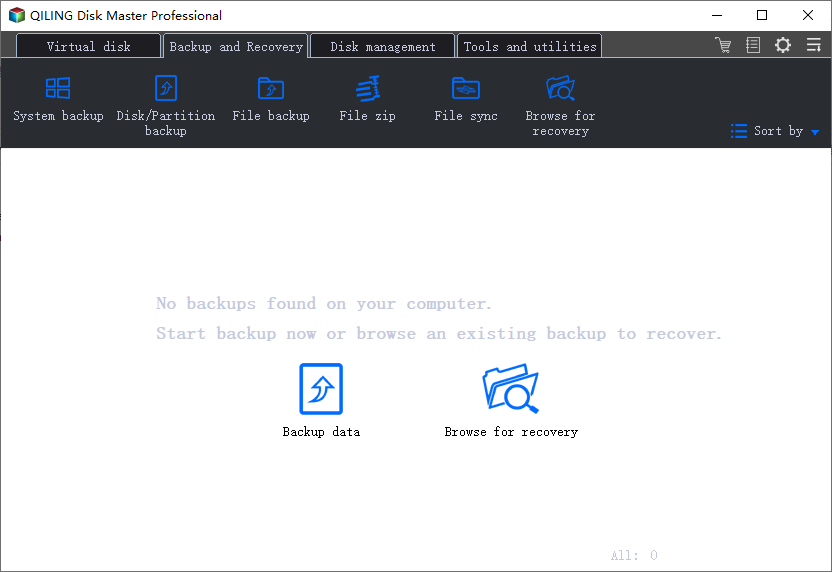
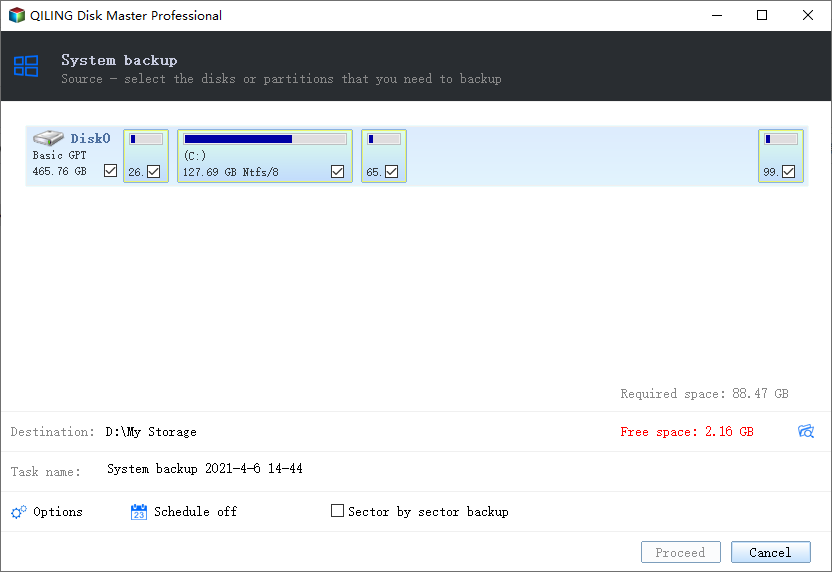
Step 2.To save a Windows 10 system image, click the "browse icon" to select the external hard drive or USB as the destination for saving the image.
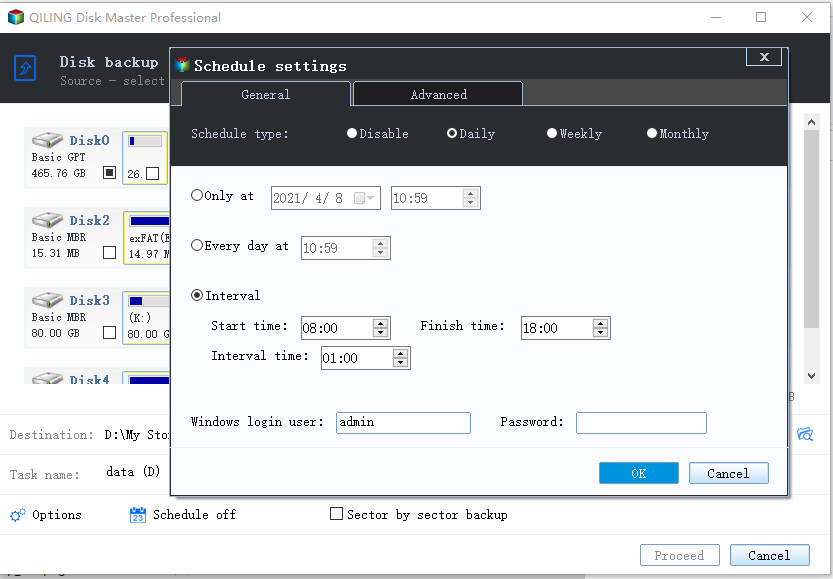
Step 3.Users can customize their scheduled backup to be one-time, daily, weekly, or monthly, allowing them to choose the frequency that best suits their needs.
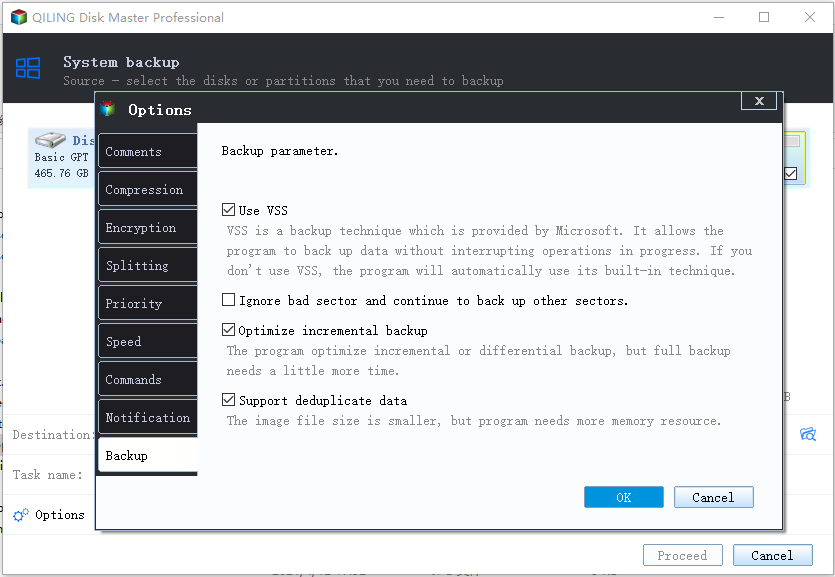
Step 4.You can also set backup compression, password, and splitting through clicking Backup Options.
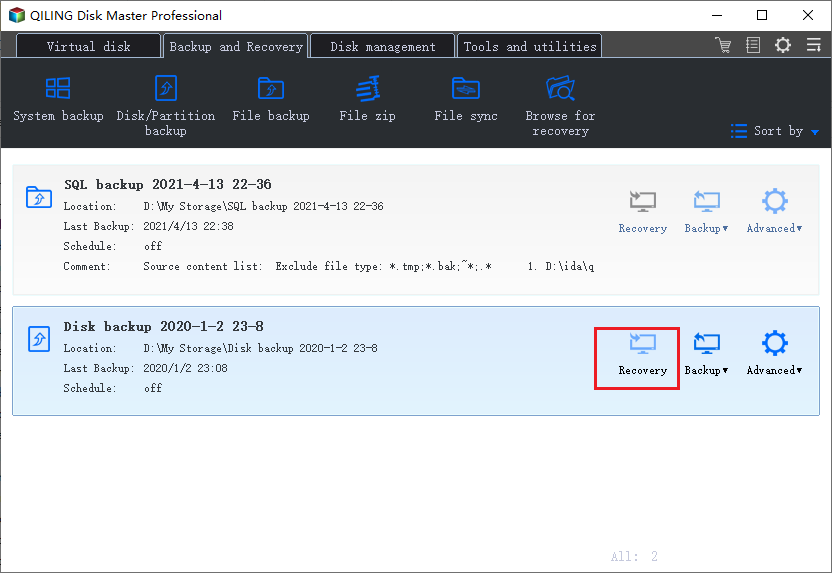
Step 5.After completing the backup process, you can view the backup status, restore, open, or remove the backup by selecting the backup task from the list.
Conclusion
Using system image backups, you can easily restore your system to a previous state, fixing issues like disk corruption or accidental deletion, with just a few clicks. This backup method is especially useful for recovering from data loss, and can be easily managed with tools like Qiling Backup, which allows you to create and schedule automatic backups. By following the steps outlined in this article, you can use a USB drive backup to perform a system restore and get back up and running quickly.
For restoring a Windows 11 image on different hardware, read Can a Windows 11 Disk Image Restore to Another PC?
Related Articles
- Samsung Magician Software Download for Data Backup and OS Migration
- Paragon Backup & Recovery Review in 2022: Pro, Cons and All-around Alternative for You
- Fake Windows Update Virus Removal and Prevention Tips in 2022
- Top 8 Best Enterprise Backup Software in 2022
- How Do I Clone My Old SSD to My New SSD?
Do you know how do I clone my old SSD to my new SSD? If you do not know, this short post can help you. After reading this post, you can learn how to clone an old SSD to a new SSD. - How Do I Clone Only C Drive to SSD?
Learn when cloning only C: is enough, when boot partitions must be included, and how to select the correct source and target SSD.
Products
Articles & Tutorials
- Data Recovery
- Data Backup
- File Recovery
- File Backup
- System Backup and Restore
- Disk and Partition Clone
- Technical articles
- Mobile articles
- Disk Master Help
- Windows Data Recovery Tutorials
- Windows Secure Delete Tutorials
- Windows Partition Management Tutorials
- Windows File Backup and Restore Tutorials
- Windows System Backup and Restore Tutorials
- Windows Disk Backup and Restore Tutorials
- Windows Clone Tutorials