Five Things You Need to Do Before Windows 10 Update

This guide provides a detailed step-by-step process to fully prepare your PC for installing the latest Windows update, including Windows 10 (1607, 1703, 1709, 1803, 1809) and Windows 8.1/8/7 updates.
To prepare for the Windows update, follow these five steps:
1. Create a Recovery Drive for Windows Update
Before running a Windows update, create a Windows recovery drive on your PC, which can be a USB drive or a bootable CD/DVD.
The Windows recovery drive can quickly restore the Windows system to a secure state when encountering issues during OS upgrades.
Here are the steps:
Step 1. Plug in your USB flash drive to a free USB port on your computer.
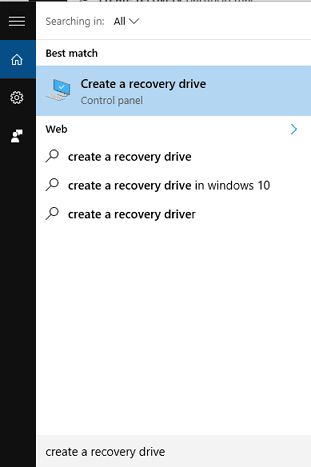
Step 2. To create a recovery drive, type "recovery drive" in the search box on your computer, select the option, and click on it to open it. This will guide you through the process of creating a recovery drive on your computer.
Step 3. Check the box that says "Back up system files to the recovery drive" and click Next.
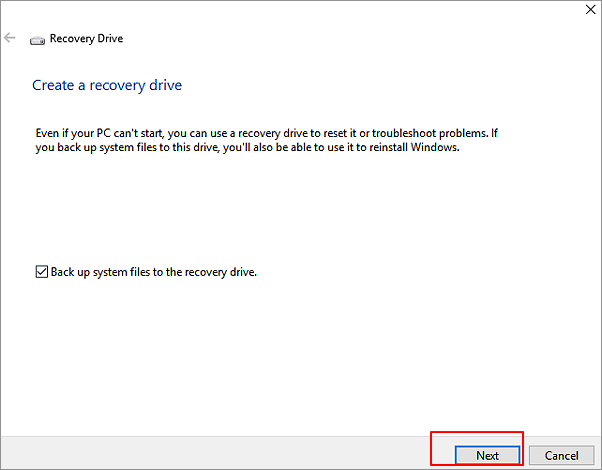
If you are not sure whether to select this option, read should you back up system files to the recovery drive. You can also check what is stored in a Windows recovery drive and how long it takes to create a recovery drive before starting a major update.
- Step 4. Once the wizard prepares to copy files to your flash drive, you'll see a window with a list of files to be copied. Click on the "Start" button to initiate the copying process.
- Step 5. Select your USB flash drive and click Next.
- Step 6. Confirm the warning message that "everything on the drive will be deleted. If you have any personal files on this drive, make sure you've backed up the files" and click Create. This will finalize the process of formatting the drive.
- Step 7. When the final message "The recovery drive is ready" appears, click Finish.
If you're a Windows 7 or Windows 8 user, you can follow the guidelines above to create a recovery drive, which will allow you to boot and reinstall your operating system if something goes wrong.
If you prefer to create a system image rather than a recovery drive to backup everything, please refer to create a system image on a USB drive for help.
If Windows Update itself cannot check for updates, fix the update service and cache first with this guide: Windows Update cannot currently check for updates.
2. Backup Your Data
Many users experienced file loss or deletion errors while installing the new Windows 10 update, with some also experiencing issues with the October 2018 update.
It's highly necessary to create a backup of essential data and valuable files on your PC to an external storage device before updating Windows 10 or other Windows OS to ensure data safety and prevent potential loss during the update process.
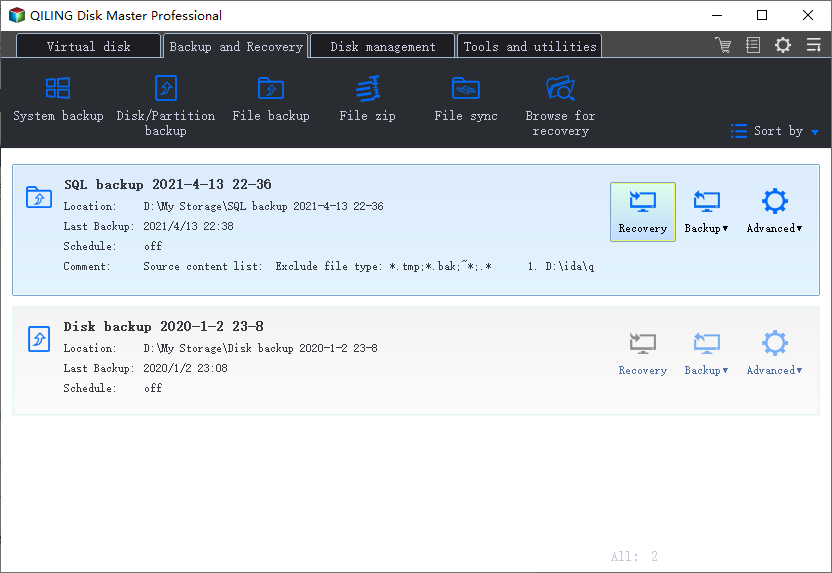
Instead of manually copying and pasting files one by one to an external storage device, smart backup software like Qiling Backup can be used to streamline the process.
You can easily back up specific files or an entire disk partition using the following simple steps. This process allows you to safeguard your important data by creating a copy of it, which can be restored in case of any data loss or corruption.
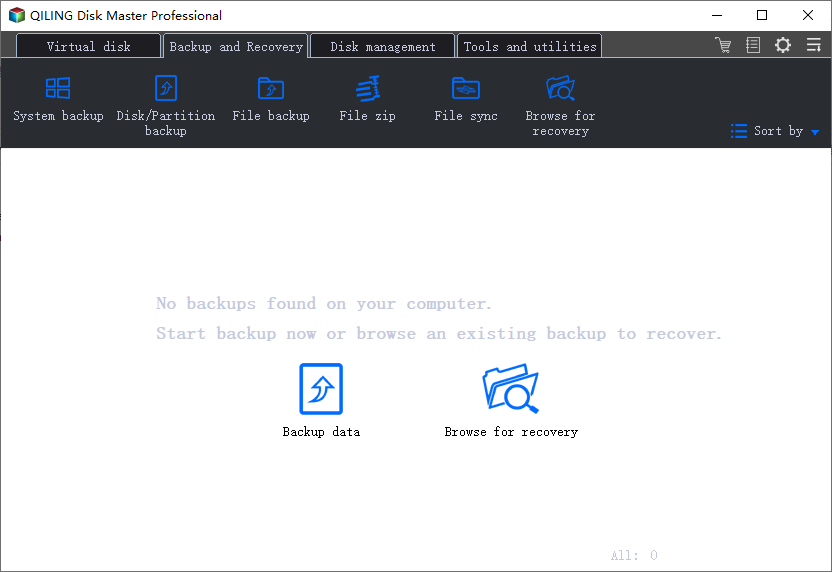
Step 1. Click "File backup" button to initiate a backup.
Step 2. Local and network files will be displayed on the top list view, allowing users to extend the directory to choose which files to back up.
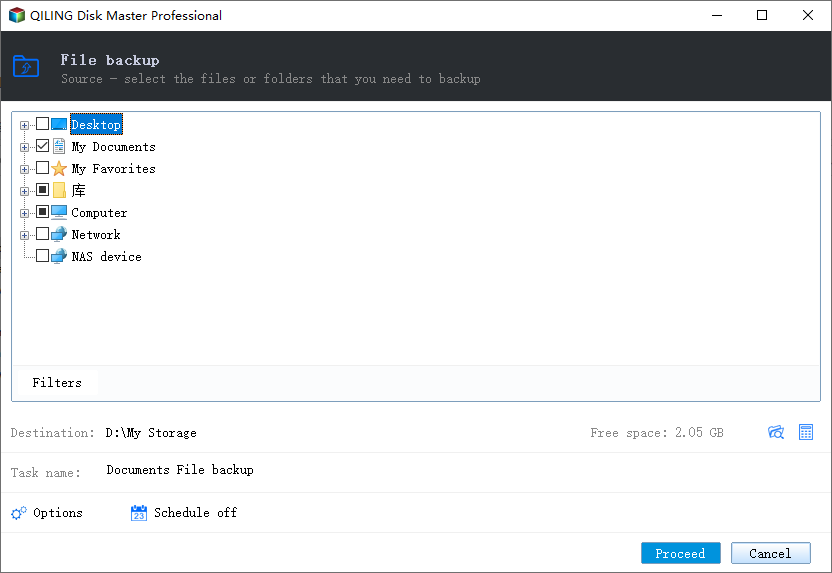
Step 3. To store the backup, follow the on-screen instructions to select a location.
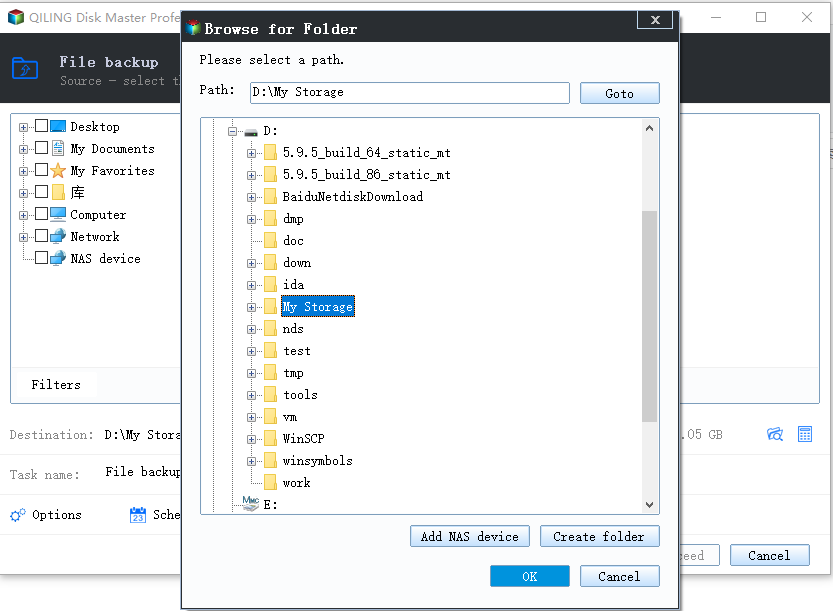
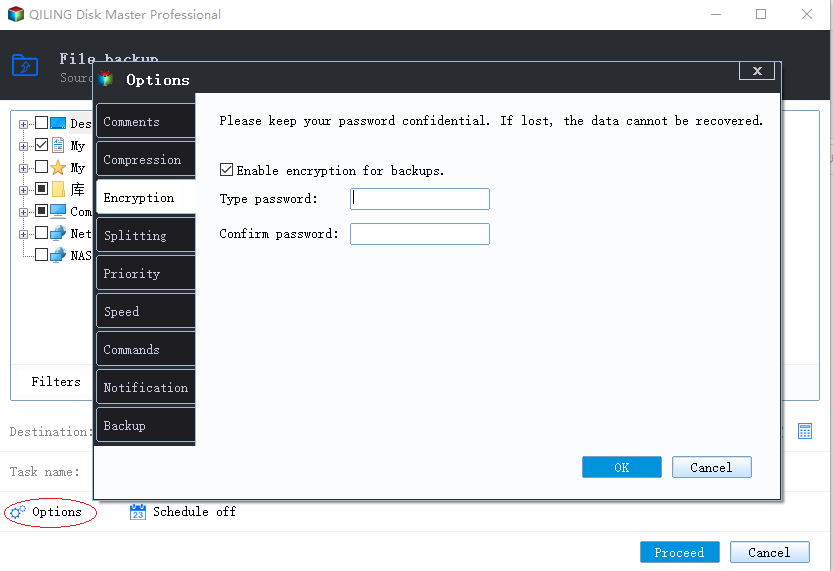
Step 4. Click "Options" to encrypt the backup with a password in "Backup Options". There are other customization options available for the backup process.
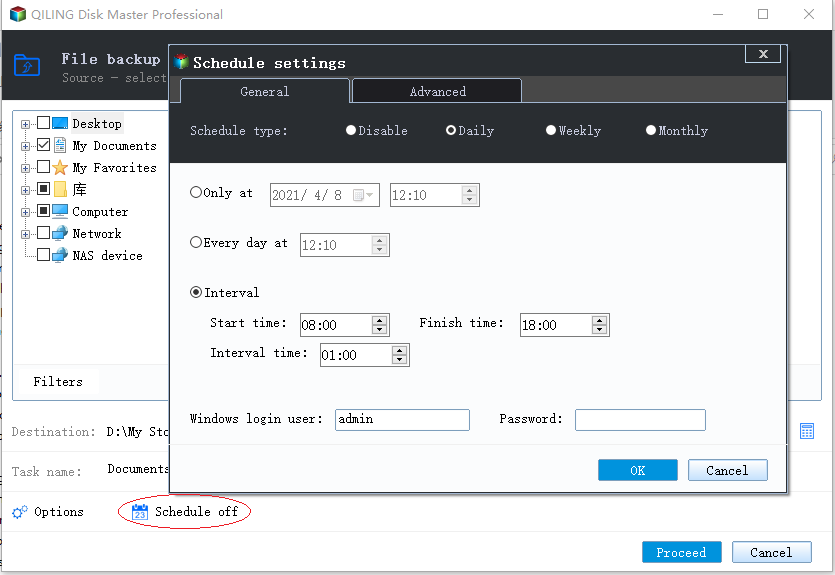
To set up a backup schedule, navigate to "Backup Scheme" and select the option to initiate a backup at a specific event. This allows you to automate the backup process and ensure that your data is safely stored at regular intervals.
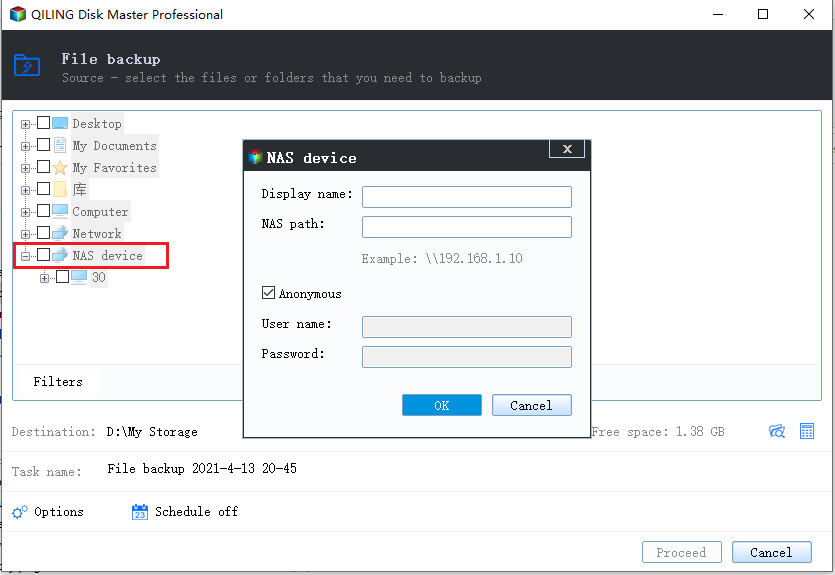
Step 5. You can save the backup to a local disk, Qiling's online service, or a NAS.
Step 6. To start a backup, click "Proceed" after selecting the desired files. Once the backup process is complete, the backed-up files will be displayed as a card on the left panel, and you can further manage the backup job by right-clicking on it.
3. Make Sure the System Has Enough Disk Space
Windows update failures can occur when the system drive lacks sufficient space to install the new Windows OS, leading to errors and hindrances in the update process.
To ensure a smooth Windows update process, it's essential to have enough disk space on your system drive. This allows the update to proceed without any issues, ensuring that your system functions properly after the update.
If you're unsure about how to extend the C drive, I suggest checking out the tutorial on extending system C drive for step-by-step guidance. This will help you understand the process and ensure a successful outcome.
Plus: If you have unallocated space directly after your system C drive, you can utilize Disk Management to expand the system drive's space.
4. Decide Whether to Upgrade or Clean Install New Windows Update
The latest cumulative Windows update is available for you to check in Settings > Update & security > Windows Update.
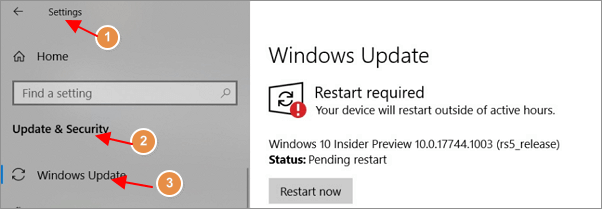
- If you check the specified location, you'll be able to determine whether you want to install the new Windows update automatically or download it from Microsoft's website and perform a clean install.
- If a new update is available in Windows Update, you can install the new OS by clicking Restart PC or Install Now.
- If nothing shows up, you can either wait for the mass rollout or download the new update from Microsoft and perform a clean install of Windows 10/8/7.
5. Keep Windows Product Key and Your Microsoft Account
Be patient and take your time when installing a new Windows update on your PC. Don't rush through the process, as this can lead to errors or other issues. Instead, follow the instructions carefully and take breaks if needed to ensure everything goes smoothly.
Before you start, make sure you have two things ready: your Windows product key or the Microsoft account and password, which you'll need to access and install Windows.
After installing Windows, the system will prompt you to reactivate with either your product key or Microsoft account, requiring you to enter this information to complete the activation process.
If you don't have the key, purchase a new one or contact the Microsoft support team for help.
Related Articles
- How to Restore System Image from External Hard Drive Windows 10
- TF Card vs. SD Card: 10+ Things You Want to Know
- Fix System Restore Failed and Did Not Complete Successfully Error in Windows 10
- [3 Solutions] Fix Word Not Opening on Mac
- Is TotalAV a Good Antivirus? (2024 Ultimate Review)🔥
Thinking about “Is TotalAV a good antivirus?” This article provides a detailed review of TotalAV, covering its features, pros, and cons, to help you decide if it's the right choice for you. - Microsoft Surface Factory Reset Without Password or Recovery Key
If you need to perform a factory reset on your Microsoft Surface device but have forgotten your password or can't access your recovery key, - this guide has got you covered.
Products
Articles & Tutorials
- Data Recovery
- Data Backup
- File Recovery
- File Backup
- System Backup and Restore
- Disk and Partition Clone
- Technical articles
- Mobile articles
- Disk Master Help
- Windows Data Recovery Tutorials
- Windows Secure Delete Tutorials
- Windows Partition Management Tutorials
- Windows File Backup and Restore Tutorials
- Windows System Backup and Restore Tutorials
- Windows Disk Backup and Restore Tutorials
- Windows Clone Tutorials