Fix "Recovery Drive Please Wait" [Step-by-Step Guide]
Some Windows users are unable to build a recovery drive on a USB flash drive or local drive, resulting in error messages such as "We can't create recovery drive Windows 11" or "Recovery drive, please wait." This indicates that creating a recovery for Windows 11/10/8/7 has failed.
1) Take a few deep breaths and focus on the present moment. 2) Identify the source of your anxiety and address it.
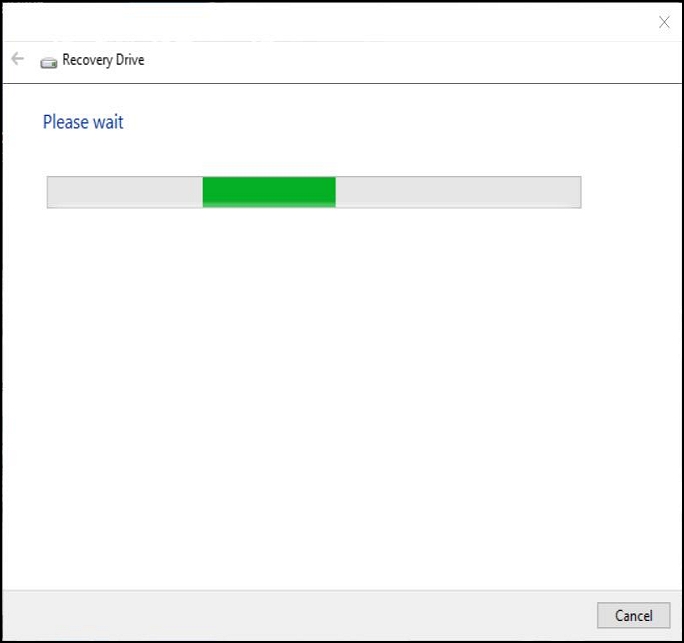
Quick Introduction - Recovery Drive Please Wait?
Creating a recovery drive for Windows 11 is a straightforward process that utilizes a built-in application to integrate necessary system files, but it's essential to note that the recovery drive is not for reinstalling Windows 11, which requires a bootable installation disc instead.
Windows 11 may display the message "We can't create the recovery drive" if the system drive is not a traditional hard drive, such as an SSD or NVMe drive, but rather a newer type of drive like a USB drive or an SD card. In this case, the system drive is not recognized as a valid drive to create a recovery drive from, resulting in the error message.
To create a recovery drive without the error, you can try restarting your computer, checking for any issues with your USB drive, and ensuring that the drive is empty and not in use by any other program. If you're still facing the issue, you can try using a different USB drive or checking for any updates for the Windows Recovery Environment.
There are other related articles about recovery drive you may get interested in:
How to Fix "Recovery Drive Stuck Please Wait"?
If you're experiencing the "Recovery Drive Stuck Please Wait" error on Windows 11, don't worry, as our research has discovered five practical options to help you quickly create a recovery drive.
- Solution 1. Prepare Another Big USB Flash Drive
- Solution 2. Disable Antivirus Software
- Solution 3. Check and Repair Corrupt System Files
- Solution 4. Analyze and Format a USB Drive
- Solution 5. Run DISM Tool
Solution 1. Prepare Another Big USB Flash Drive
To create a Windows 11 64-bit recovery drive, you'll need a USB drive with a minimum capacity of 16GB.
- Notice:
- To create a recovery drive, we recommend using a 32GB or larger USB drive.
Step 1. Unplug the old USB drive from the computer and replace it with the new, larger one.
Step 2. Repeat the same procedure you did before to create a recovery drive on your USB drive.
Solution 2. Disable Antivirus Software
Disable the antivirus software temporarily, then try to create a recovery drive again to see if it works.
Step 1. First, open your computer's antivirus programs and turn them off.
Step 2. Launch Windows Defender
If you successfully created a recovery drive after shutting down your antivirus, you should reactivate it once more.
Solution 3. Check and Repair Corrupt System Files
If system files are corrupted, Windows won't be able to access your external USB device.
To check for any file corruption, perform a System File Checker (SFC) scan, which will check the machine for damaged system files and fix them.
Step 1. Click "Command Prompt (Admin)" by pressing "Windows + X".
Step 2. The command `sfc /scannow` is used to scan and replace corrupted system files in Windows. When you type this command in the Command Prompt and press Enter, the System File Checker (SFC) tool will scan all protected system files and replace any corrupted or missing files with a cached copy from the Component Store.
Solution 4. Analyze and Format a USB Drive
To ensure the USB drive is ready for creating a recovery drive, it's essential to check its health and format it correctly. This involves verifying the USB drive's capacity, checking for any existing partitions, and then formatting it to the correct file system type, such as FAT32 or NTFS, depending on the operating system being used.
Step 1. To back up data on a USB drive, first, ensure the drive is securely attached to your computer. Next, open the File Explorer on your computer and locate the USB drive.
Step 2.To format a USB device, open "This PC" on your computer, click on the USB device you want to format, and select "Format" from the context menu.
Step 3. To format the drives, select FAT32 from the drop-down menu next to "File System" in the File System section.
Step 4. Select "Quick Format" and press "Start".
Solution 5. Run DISM Tool
Deployment Image Servicing and Management, referred to as the DISM tool, can be tried again by running it using the command prompt (CMD).
Step 1To open the Command Prompt as an administrator, press the Windows key + X and click on Command Prompt (Admin).
Step 2. Enter command dism.exe /online /cleanup-image /scan health and press enter.
Still Can't Create Recovery Drive Windows 11? Try Another Way
If you're having trouble creating a Recovery drive for Windows 11, you can consider using a third-party tool like Qiling Backup to back up and restore Windows instead.
Qiling Backup is a great alternative to the Windows recovery drive, allowing you to back up your OS and recover it from a bootable disk at any time if your OS fails to boot.
Features of Qiling Backup
Following are some unique features of this professional tool:
- Quick Recovery Solution: The software can quickly and easily create a recovery drive without any extra hassle, making the process straightforward and efficient.
- 250 GB Cloud Storage: Microsoft OneDrive provides 250 GB of free cloud storage to make backup smoother for users.
- Safe Recovery: It recovers and backs up your data with high security and advanced privacy protection.
- Highly Responsive UI: It allows for simple and advanced UI that enables rapid backup and recovery of multiple files.
- Disk & Partition Clone: You can clone your device to replace an old or failing hard drive with a new one without losing data or setting up a new PC without reinstalling Windows. This process involves creating an exact copy of the original hard drive, including all installed programs, settings, and data, onto the new hard drive.
Now, let's check how this software creates a recovery drive.
Step 1. Prepare a USB drive which can be written and read.
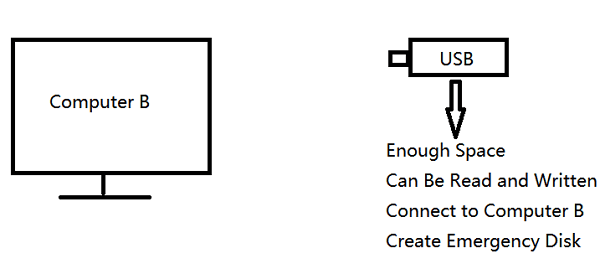
Step 2. Launch and install Qiling Backup on the Computer B.
Step 3. Find and click "Tools" and choose "Create bootable media".
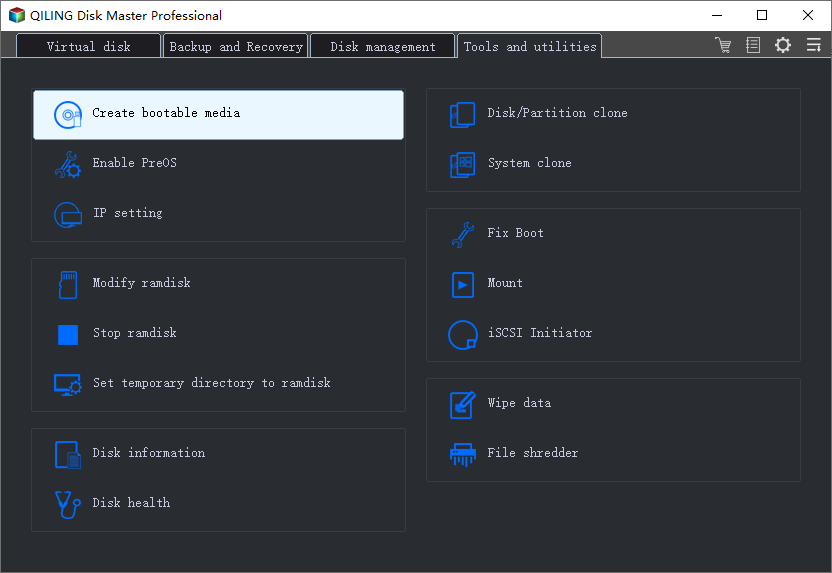
Step 4. To begin the installation process, you need to select the location where the bootable disk will be created. This can be done by choosing to create an ISO file, which can be used to install the operating system on a computer, or by creating a bootable USB or CD/DVD disc, which can be used to install the operating system on a computer.
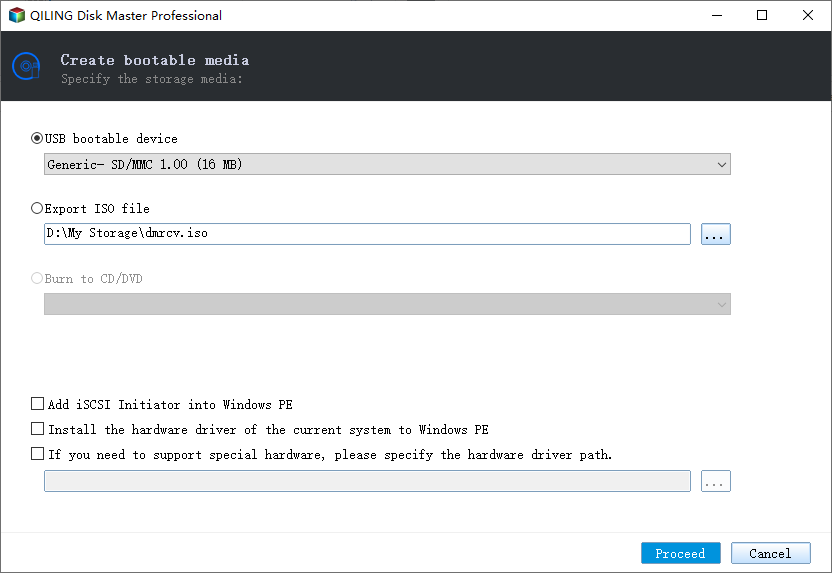
Step 5. Then click "Proceed" to start.
Conclusion
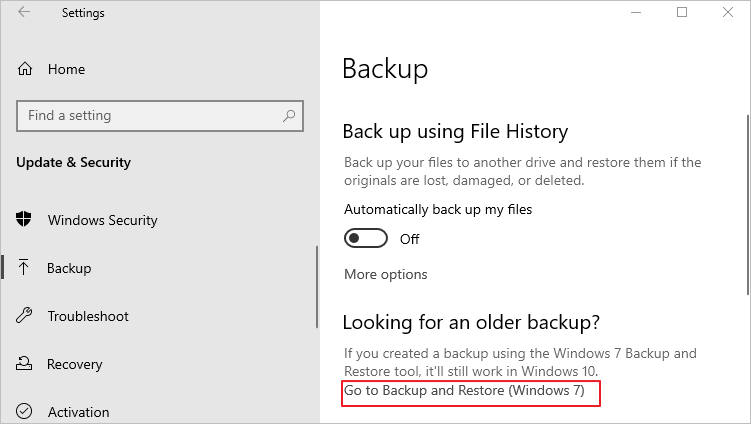
Windows 11 has a built-in backup and restore feature that allows users to create a system image and restore their computer to a previous state in case of a problem. To use this feature, go to Settings > Update & Security > Backup, and select the option to create a system image.
Windows 11 has a built-in backup and restore feature that allows users to create a system image, which is a snapshot of their entire system, including the operating system, installed programs, and settings. This feature, called Backup and Restore (Windows 11), can be accessed through the Control Panel or Settings app.
Windows 11 Backup and Restore (Windows 7) is a free utility from Microsoft that helps you back up and restore your files, making it a valuable tool.
If you're still experiencing issues with creating a recovery drive for Windows 11, consider using Qiling Backup as an alternative solution. It's a reliable and efficient method for backing up your system, allowing for quick recovery in case of unexpected OS crashes or failures.
"Recovery Drive Please Wait" FAQs
You're likely looking for a solution to the "can't create recovery drive Windows 11" issue. Let's dive into answering some frequently asked questions about this problem.
1. How long does creating a recovery drive take?
With a reasonable speed and good USB drive, the backup process might take 2-3 hours, which is significantly faster than the average 8 hours.
2. What do you do if your recovery drive doesn't work?
If your recovery drive doesn't work, you need to identify the cause and then apply the solutions mentioned above to resolve the issue.
3. What happens when the recovery drive is full?
The "recovery drive stuck please wait" error may occur when the recovery drive is full, but it can be resolved by applying the fixes mentioned in this article.
4. How do you fix it? We can't create a recovery drive on this PC if some required files are missing.
To fix the recovery drive on Windows 11, you can try the fixes mentioned in this article, or use Qiling Backup for a quick solution.
Related Articles
- How to Copy and Backup Files without Admin Rights
- Windows File Backup - 4 Efficient Ways for You to Protect Data
- Windows 11 Backup to External Hard Drive Guide [3-Minutes Solution]
- Restore your hard drive and operating system
- How to Backup Photos to pCloud on Various Devices [Solved]🔥
PCloud is an efficient and secure cloud storage service compared to its contemporaries. If you want to know how to back up photos to pCloud on various devices and access from there, here's a detailed guide. Find the step-by-step guides for various devices. - How to Backup SD Card to Dropbox [PC & Android]🔥
Dropbox is a leading cloud storage service that allows users to save and backup their data. This article provides a convenient guide for users who want to backup their SD card data from Android and PC to Dropbox storage.
Products
Articles & Tutorials
- Data Recovery
- Data Backup
- File Recovery
- File Backup
- System Backup and Restore
- Disk and Partition Clone
- Technical articles
- Mobile articles
- Disk Master Help
- Windows Data Recovery Tutorials
- Windows Secure Delete Tutorials
- Windows Partition Management Tutorials
- Windows File Backup and Restore Tutorials
- Windows System Backup and Restore Tutorials
- Windows Disk Backup and Restore Tutorials
- Windows Clone Tutorials