How to Backup Files in Windows 10 for Full Recovery (100% Work)
- What Are Files on a Computer?
- Importance of File Backup in Windows 10
- Microsoft Office Can Automatically Back up Your Working Docs and Sheets
- Windows 10 File History for Limited Files Backup in C Drive
- Windows Backup and Restore (Windows 7) in Windows 10 for System Image Backup
- Best of all: Third-party Automated File Backup Software
What Are Files on a Computer?
A complete backup is crucial as it's part of your retrieval plan and helps protect against hardware failure, malware, and spyware attacks that can corrupt system files and disrupt the Windows 10 installation process.
If you're not creating complete backups of your computer, you risk losing valuable files, such as pictures and documents, that you've spent hours organizing. A file is a standard storage unit on a PC, containing all the programs and data, and is typically stored on a hard drive, floppy disk, or folder. To avoid jeopardizing your files, it's essential to create proactive backups to preserve your digital assets.
The system recognizes three main types of files: regular, special, and directory. While the OS uses various variations of these basic types, they all fall into similar categories.
Importance of File Backup in Windows 10
In Windows 10, users often lose files due to accidental deletion without creating a backup, or they may be hidden and not visible in File Explorer. To backup files in Windows 10, users can utilize the built-in File History feature, which automatically saves copies of files to an external drive or network location. Additionally, users can also use third-party backup software or cloud services like OneDrive to create backups of their files. This ensures that important files are safely stored and can be easily recovered in case of accidental deletion or other data loss scenarios.
To prevent primary data failures, which can occur due to data corruption, software or hardware failure, or a malicious attack, it's crucial to back up files on your Windows PC. This solution helps to recover lost data, which is often lost mistakenly, with 62% of data loss occurring due to human error, and 76% of these cases involving unintentional deletion.
Microsoft Office Can Automatically Back up Your Working Docs and Sheets
While it's both hassle-To ensure you have a copy of the newest version of your files, it's a good idea to back them up daily, especially if you frequently copy and forget files to an external hard drive. This way, you'll have a recent version of your files in case you need to access them. Many PCs can automatically back up specific files or your entire hard drive, making the process easier.
Using Windows
Windows Backup, previously known as File History in Windows 8, allows you to automatically create copies of specific folders or files, including a system picture backup of the entire hard drive and installed applications and files.
Microsoft's OneDrive, formerly known as SkyDrive, offers 5GB of free cloud storage and access to MS Office online, including Excel, Word, OneNote, and PowerPoint.
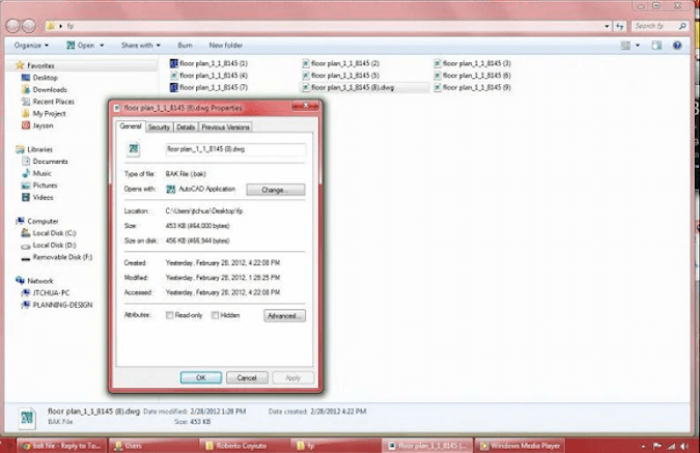
Besides MS Office, AutoCAD is another software application that can be used to restore files from a current backup, allowing you to retrieve unsaved AutoCAD files from a backup.
Step 1: Using back up file strategy.
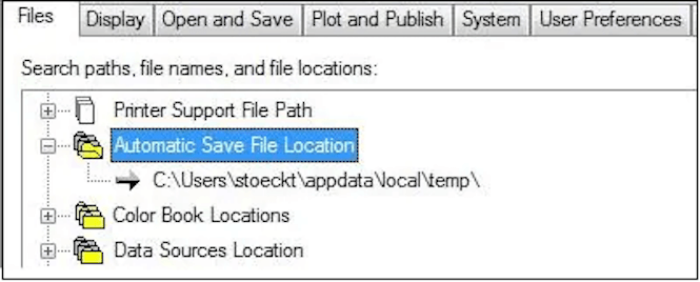
Step 2: Utilizing the Automatic Save Method.
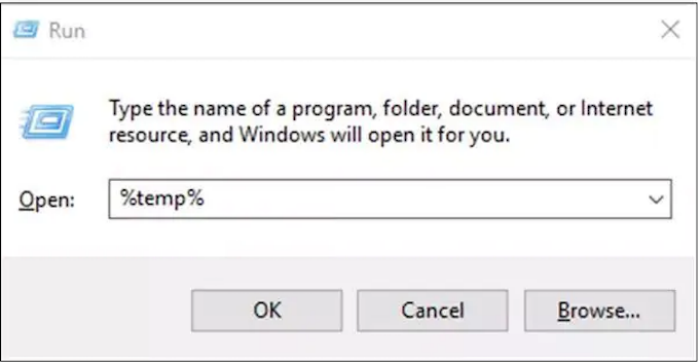
Step 3: Save temporary files .acs extension.
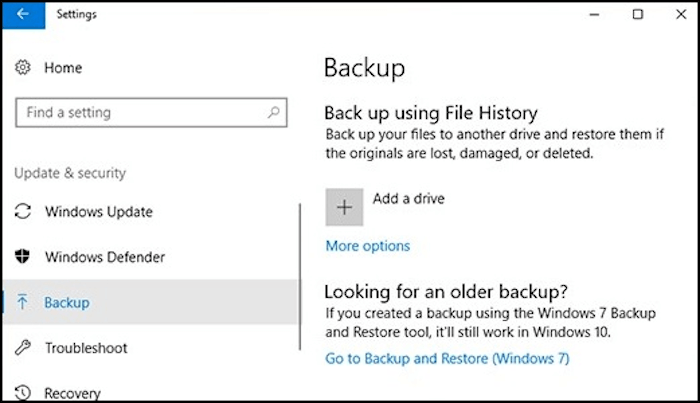
Windows 10 File History for Limited Files Backup in C Drive
In Windows 10, you can back up your files to a network location or external drive, such as the C drive, using the File History feature. To do this, go to Start > Settings > Update and Security > Backup, then select Add a Drive and choose the C drive for your backups.
Retrieve your files with File History
Are you missing a vital file or folder you have backed up lately? This is the best way to retrieve it:
- On the taskbar in the search box, type "Restore Files."
- To find a specific file, simply type its name in the search bar and press Enter. You can then use the navigation arrows to scroll through the different versions of the file, allowing you to compare and select the one you need.
- When you've found the version you want to restore, select "Restore" and save it in its original location.
To save the backup in a separate place, right-click on "Restore" and select "Restore to" followed by a new location.
Windows Backup and Restore (Windows 7) in Windows 10 for System Image Backup
To create a complete backup of Windows 10 with system image backup, you can use the system image tool to create a complete backup to an external drive. This involves following a series of steps, including using the built-in tool in Windows 10 to create a system image, which captures a snapshot of the entire system, including all installed applications, settings, and data. This allows you to restore your system to its current state in case of a disaster or other issue.
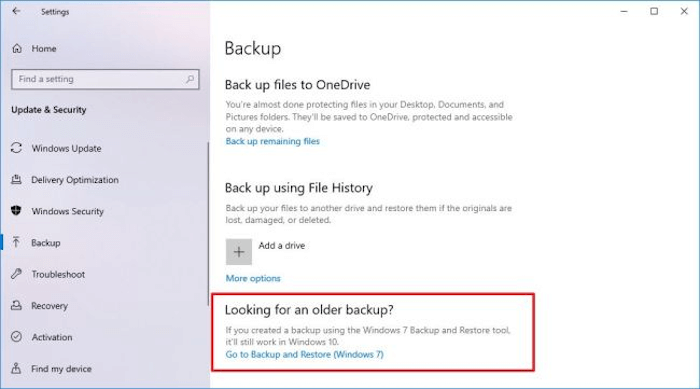
Step 1: Visit Settings.
Step 2: Select Update and Security.
Step 3: Choose Backup.
Step 4: The "Go to Back up and Restore (Windows 7)" option is selected from the "Looking for an older backup?" section.
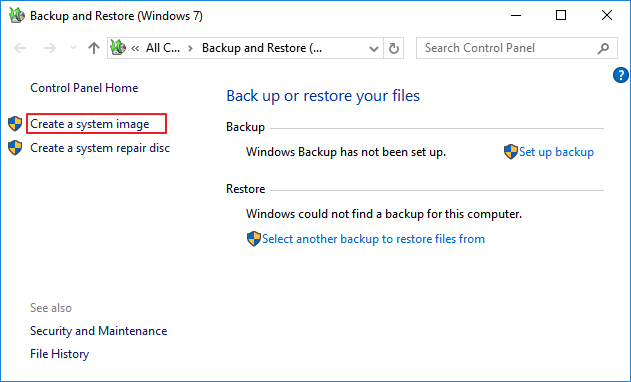
Step 5: The "Build a system image" option must be selected from the left control panel.
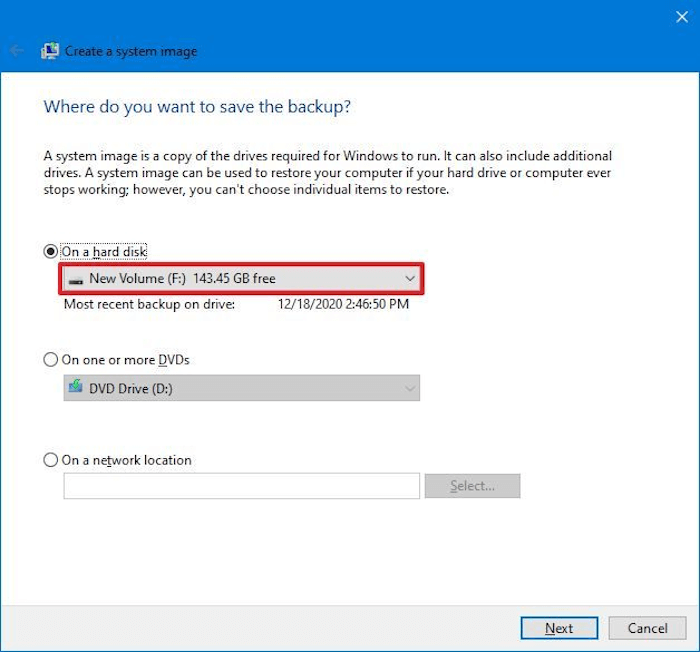
Step 6: Choose the "On a hard disk" option.
Step 7: To export the Windows 10 complete backup, select the desired location using the "On a hard disk" drop-down menu.
Step 8: To add additional hard drives to the backup, choose the "Next" button and select any additional hard drives you want to include in the backup.
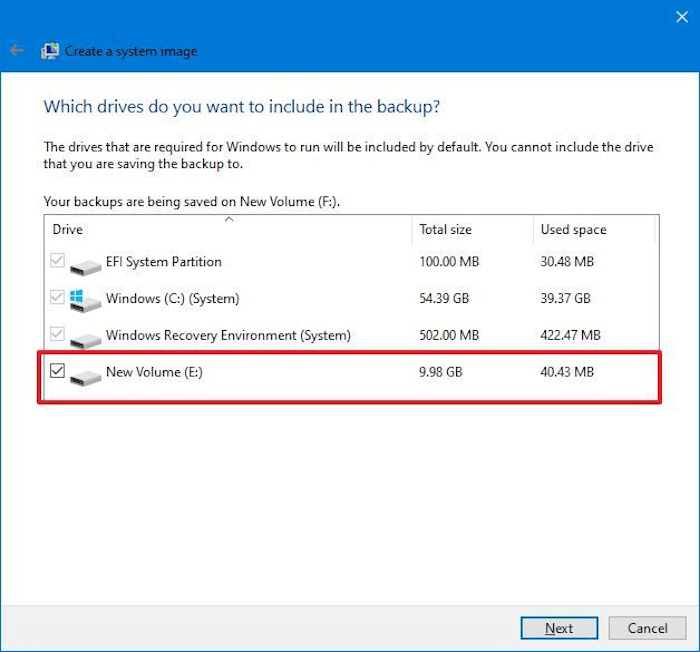
Step 9: Hit the next button and choose the "Start Backup" button.
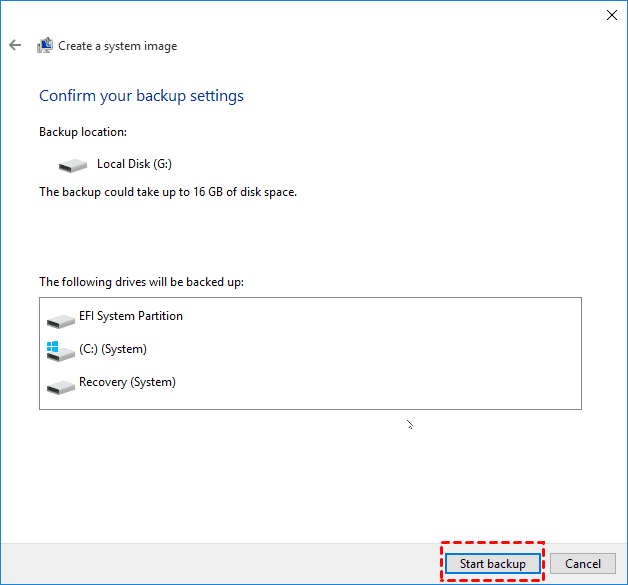
Step 10: Hit the Close button once done.
Best of all: Third-party Automated File Backup Software
Despite the steps mentioned to backup Windows files, Qiling Backup stands out as the best third-party automated file backup software. It allows you to create multiple backups of your essential files, making it a reliable tool for protecting your vital data.
- Multiple backup options: Qiling Backup offers various backup options, including file backup, partition or disk backup, smart backup, and system backup. It also allows users to clone their hard drive, which is necessary when replacing an old drive with a new one.
- File monitoring: This tool allows you to set up a schedule for the program to assess specific files through its Smart Backup feature. Whenever modifications are made to the monitored files, it will automatically create a backup of the updated versions.
- Create emergency disk: The emergency disk of this software is a bootable version of Qiling Backup that allows for a worry-free or risk-free backup recovery, even in cases of Windows system corruption or freezing, enabling a backup to be retrieved without needing to boot into Windows.
If you need to use Qiling Backup, you can follow these steps:
Step 1. Click the "File backup" button to start backup.
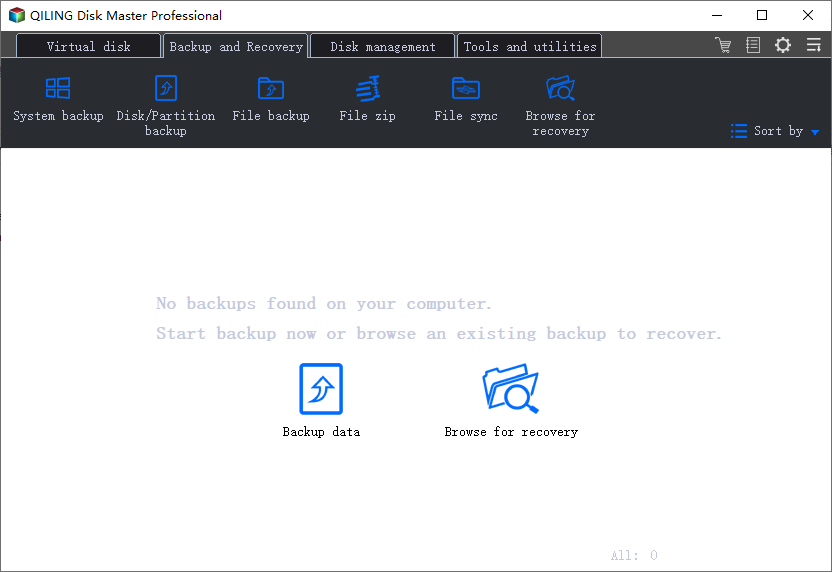
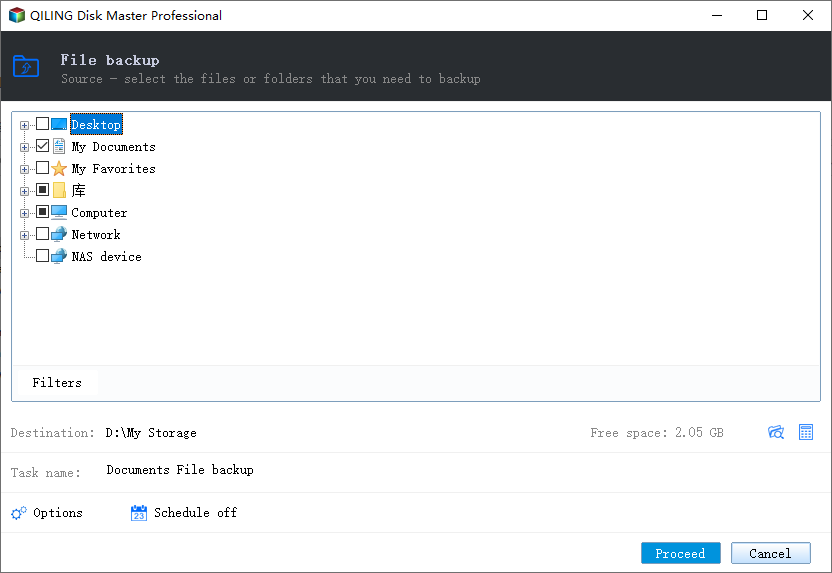
Step 2. Both local and network files will be listed on the left, allowing you to expand the directory and select the files to be backed up.
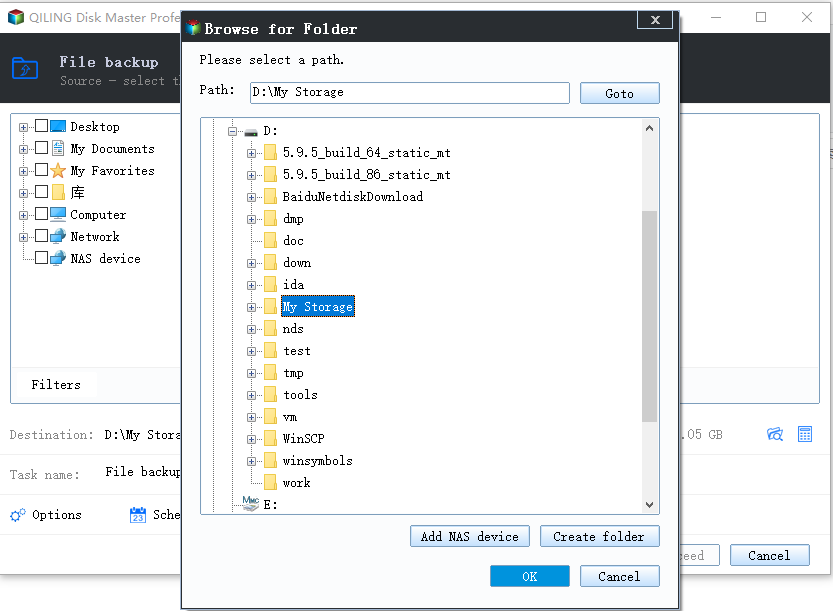
Step 3. Select the destination where you want to save the backup.
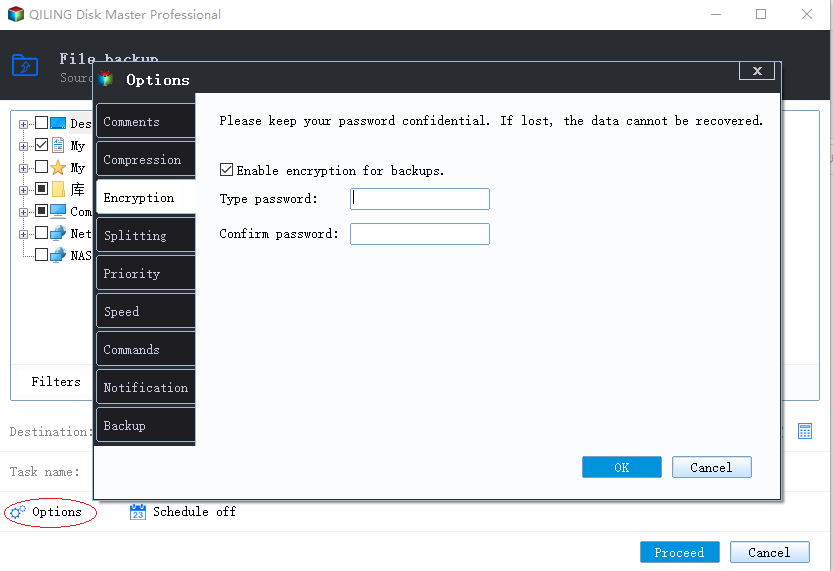
Step 4. To encrypt the backup with a password, click on the "Options" tab and select the "Backup Options" section. This allows you to customize the backup task according to your specific needs, and also enables you to add a password for encryption.
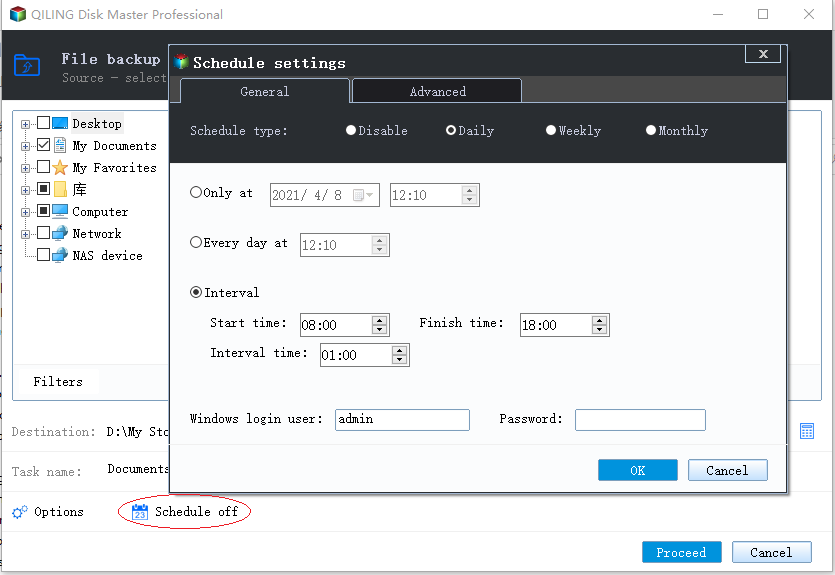
Set the backup schedule and choose to start back up at a certain event in "Backup Scheme".
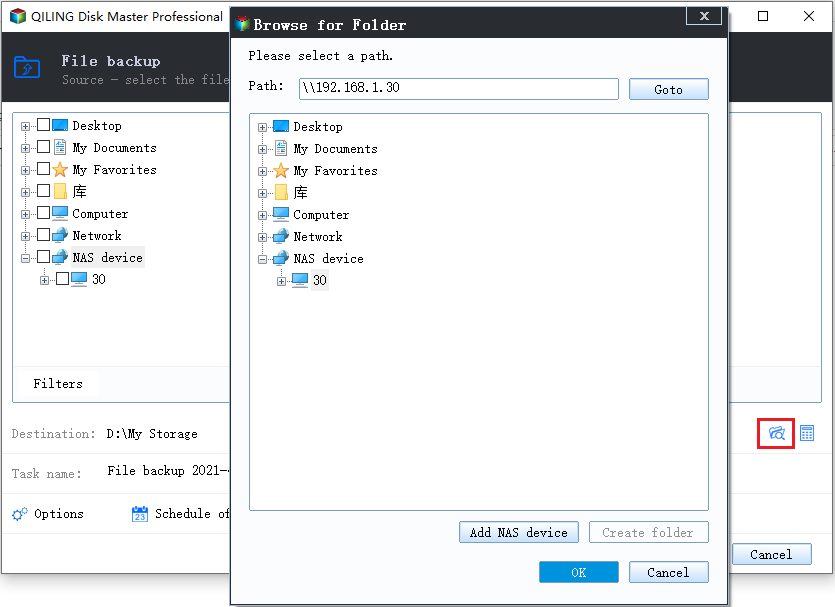
Step 5. You can store backups to a local drive, Qiling's cloud service, or a NAS (Network-Attached Storage) device.
Step 6. Qiling Backup allows users to back up data to both third-party cloud drives and its own cloud drive.
To back up data to a third-party cloud drive, select the "Local Drive" option, scroll down to add a "Cloud Device", add and log in to your account.
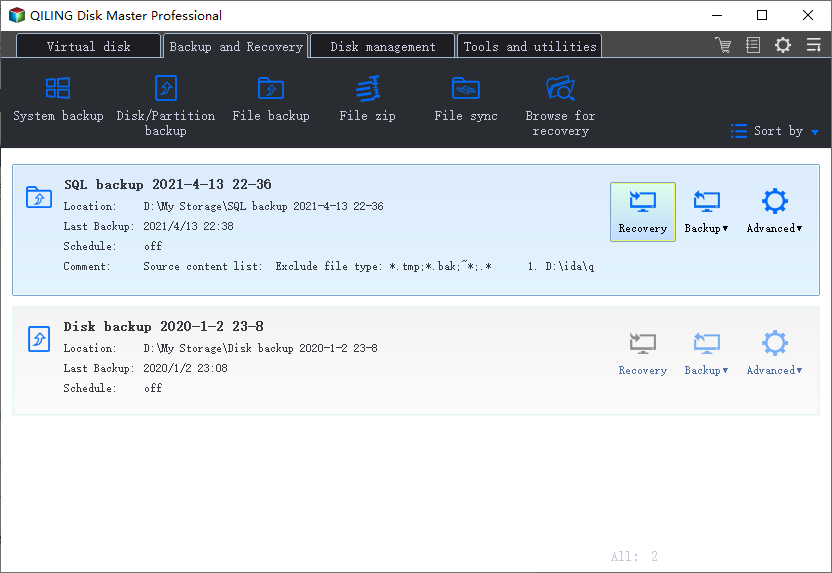
Step 7. After clicking "Proceed", the backup task will be completed and displayed as a card on the left side of the panel, where you can further manage it by right-clicking on it.
FAQs
1. What is the best way to backup files in Windows 10?
A: In Windows 10, an external USB hard drive is the most cost-effective and fastest way to backup files, providing a reliable and efficient solution for data protection.
2. How do I backup my computer files?
A: To backup your PC, start by clicking the Start button, then type "backup" in the search box. Next, click on "Backup and Restore" in the Programs list. From there, select either "Backup files from your PC" or "Under backup files", then choose where you want to store the backup file and click "Next".
3. Is Windows 10 backup any good?
A: Windows 10's built-in backup tool has some functionality, making it better than nothing, but it still falls short of expectations.
4. Which files should I backup on my computer?
A: The best files to backup are the ones you've created yourself, as they're the most valuable and unique to you.
Related Articles
- Computer Imaging: Image A Computer with Step-by-Step Guide
- How to Backup Laptop to Google Drive Step by Step
- [All-in-One] Create Windows 11 Backup to NAS (Network drive)
- Top 5 Best Free SSD Backup Software for Windows in 2022
- How to Use Seagate Backup Plus Slim on Windows [2022 Tips]
An ultimate guide for those who are using Seagate hard disk or storage. This post looks at how to use Seagate Backup Plus on Windows and how you can effectively back up data. If you find it difficult, check out recommended software that makes it even easier. - Server Migration: Everything You Need to Know | 2022 Complete Guide
This guide provides a step-by-step process to migrate Server data between Windows Server computers, covering everything you need to know about Server Migration to ensure a successful transfer of Server data.
Products
Articles & Tutorials
- Data Recovery
- Data Backup
- File Recovery
- File Backup
- System Backup and Restore
- Disk and Partition Clone
- Technical articles
- Mobile articles
- Disk Master Help
- Windows Data Recovery Tutorials
- Windows Secure Delete Tutorials
- Windows Partition Management Tutorials
- Windows File Backup and Restore Tutorials
- Windows System Backup and Restore Tutorials
- Windows Disk Backup and Restore Tutorials
- Windows Clone Tutorials