How to Copy OS from Laptop to USB USB Flash Drive
This tutorial is also applicable to copying an operating system from a laptop's hard drive or solid state drive to a USB pen drive, making it a versatile guide for various storage transfer needs.
For example:
- To transfer Windows OS from a laptop to a USB drive and make it bootable, you'll need to create a bootable USB drive using a tool like Rufus or Windows USB/DVD Download Tool. First, download the Windows installation media from Microsoft's website and save it to a folder on your laptop.
- To install a laptop OS on an external pen drive, you'll need to follow these steps:
Why Do You Copy OS from Your Laptop to a USB Pen Drive
The biggest advantage of copying an operating system to a USB drive is its portability, allowing users to access the copied system anywhere they go. This flexibility is convenient, especially when you need to use the same operating system on different computers or locations, such as at home, in the office, or on a business trip.
With a bootable USB pen drive, you can feel worry-free and risk-free in case of accidents, such as hardware failure or system crashes, that prevent your laptop from booting normally.
Backup OS in Pen Drive with Built-in Tool?
For users who want to copy OS, there was a Windows built-in tool called Windows To Go that allowed creating a Windows To Go workspace on a USB-connected external drive, which could be booted on PCs, specifically in Windows 10 Enterprise and Windows 10 Education.
In Windows 10, version 2004 and later, the feature to copy the computer OS from laptop to a pen drive is removed, making it impossible to stay current with feature updates. Additionally, the required USB type is no longer supported by many OEMs, making it necessary to use a third-party tool for the task.
How to Copy Laptop OS to a USB Pen Drive
Windows To Go is not available in Windows 10, which means you can't create a portable version of your Windows installation on a USB drive. If you try to backup Windows 10 to a USB drive using Windows To Go, you'll likely get an error message saying the drive is removable and not compatible with Windows To Go, and the process will fail if you're using a non-certified USB flash drive.
We recommend using a reliable third-party backup and restore software, such as Qiling Backup, to backup your OS, allowing you to boot the laptop OS anytime on any other computer or laptop without needing additional tools.
Key features of Qiling Backup:
- This tool helps you to clone, upgrade, or transfer your system with ease.
- It protects your data in a few clicks, restores everything instantly.
- It supports you to create file backup, system backup, and disk backup.
Note: If you use the software to back up the laptop operating system, you can also restore the system from a USB pen drive via the software, in addition to that.
To copy an operating system to a USB drive, download Qiling Backup on your laptop and follow the guide below.
Step-by-step Guide to Create a Portable USB Pen Drive
USB requirements:
1. To check the system C drive's disk space usage, you can use the built-in Disk Cleanup tool or the Command Prompt. Assuming the C drive has 40GB of used space, you would need a USB drive with a capacity larger than 40GB to ensure you have enough space to back up or transfer data. This will prevent any potential data loss or errors due to insufficient space on the USB drive.
2. You should use an empty new USB drive or an old one that you don't mind erasing, to ensure that all important data is safely transferred before the system clone overwrites it completely.
3. Connect the USB drive to your machine, and ensure Windows has detected it and assigned a drive letter to it.
Follow the overall process to create a portable Windows USB drive and boot from it:
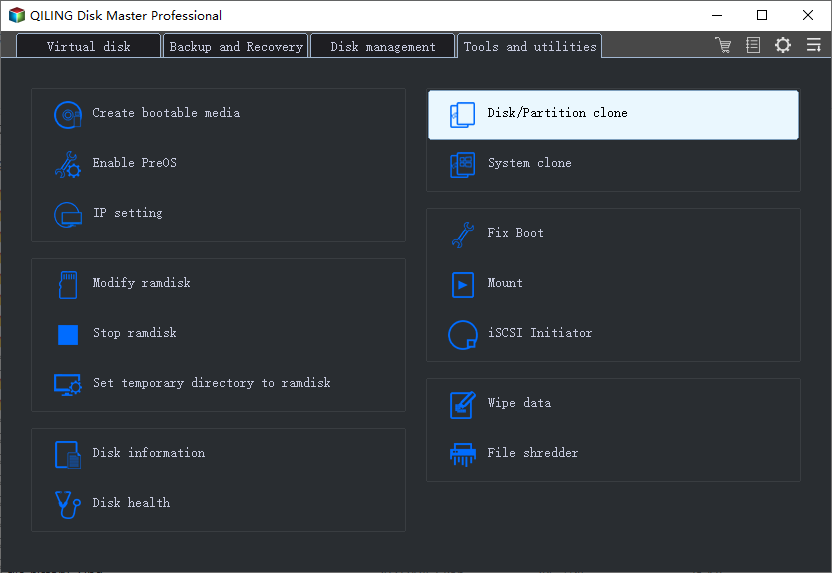
Step 1. Launch Qiling Backup. Expand the menu and click "System Clone" in the tools page.
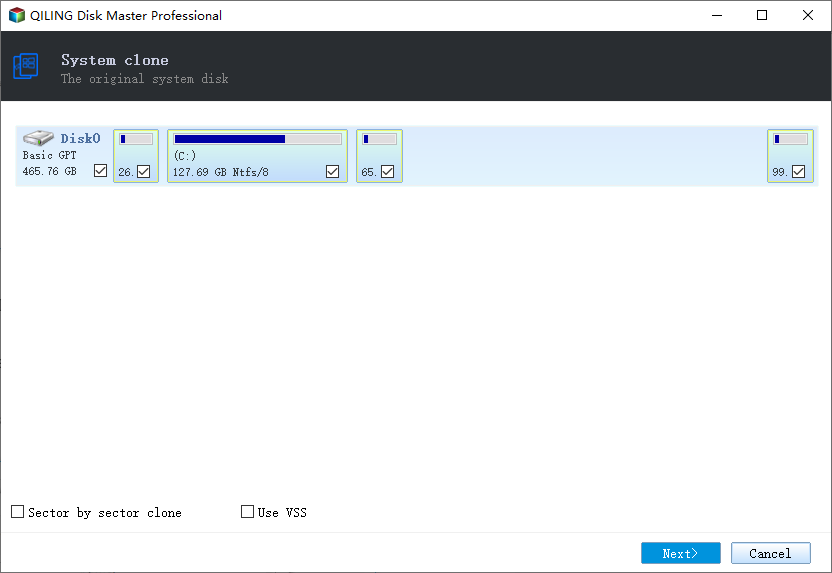
Step 2. On the "System clone" window, the software will choose the system partition and boot partition by default. Click "Next".
To clone a disk, select the "Sector by sector clone" option, which will replicate all sectors from the source disk to the destination disk, including system data.
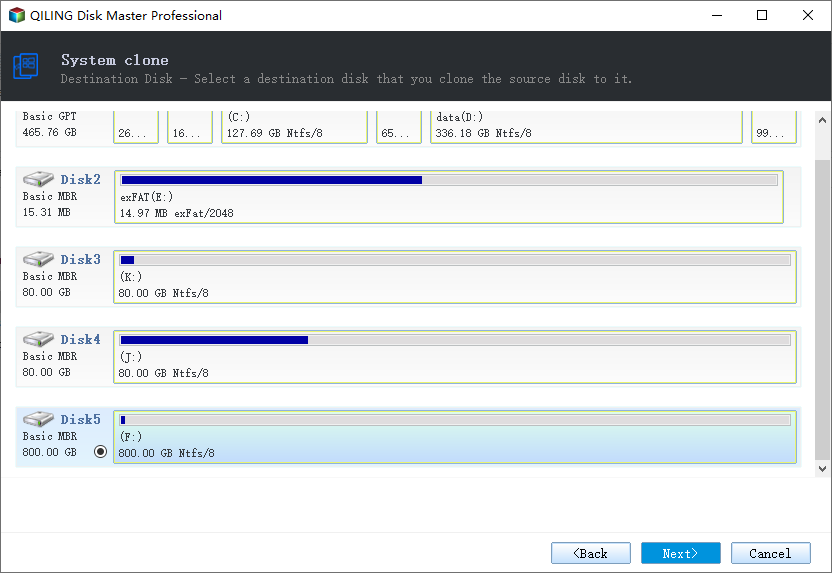
Step 3. Just Choose the USB drive as the destination disk.
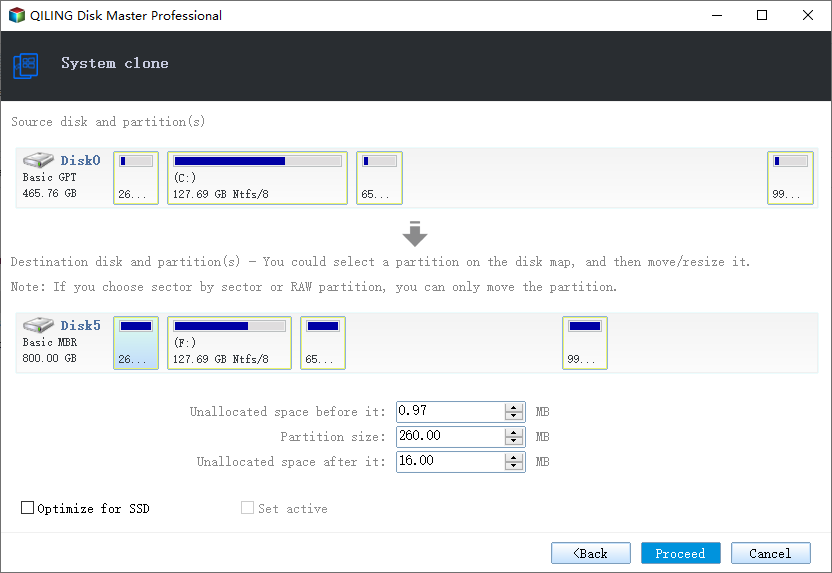
Step 4. Confirm the disk layout settings, click "Proceed", and then the software will start cloning the default partitions of the desktop/laptop to the USB drive. Once the cloning is complete, the USB drive can be safely removed.
To improve the performance of a new Solid-State Drive (SSD), you can enable the "Optimize for SSD" feature. This will optimize the drive's performance.
Step 5. Boot from the USB drive.
- Connect your portable USB to the computer
- Restart the computer and press "Del" to enter BIOS
- To set the PC to boot from a portable USB, change the boot order in the BIOS under the "Boot" tab, selecting the USB drive as the primary boot device. This allows the PC to initiate the boot process from the USB drive instead of the internal hard drive.
- Insert your USB drive into a computer, boot from the USB drive, and save changes to see your system booting up from the USB drive.
Related Articles
- How to Clone SSD to Larger SSD in Windows 10/8/7
- How to Backup/Save Outlook Emails to Hard Drive Automatically in 3 Ways
- [Solved] This Application Was Unable to Start Correctly (Error Code: 0xc000007b)
- Seagate Backup Software Download | Back Up Seagate External Hard Drive
- Reset Lenovo Laptops with OneKey Recovery Without Data Loss
- Windows 7 Portable Download: How to Create Windows 7 Portable USB Drive
With the help of Qiling OS 2Go, you can create a portable copy of your Windows 7 OS, allowing you to boot the original OS on any PC without any issues. By following the guide, you can easily create a Windows 7 portable USB drive that's ready to use.
Products
Articles & Tutorials
- Data Recovery
- Data Backup
- File Recovery
- File Backup
- System Backup and Restore
- Disk and Partition Clone
- Technical articles
- Mobile articles
- Disk Master Help
- Windows Data Recovery Tutorials
- Windows Secure Delete Tutorials
- Windows Partition Management Tutorials
- Windows File Backup and Restore Tutorials
- Windows System Backup and Restore Tutorials
- Windows Disk Backup and Restore Tutorials
- Windows Clone Tutorials