How to Save Outlook Emails When Leaving a Job | 2 Available Options
You're looking to transfer your personal emails, contacts, and notes from your current computer to your spouse's computer, and then store them separately in their Outlook account. You can use Outlook's import and export features to move your emails, contacts, and notes to your spouse's computer. For contacts, you can export them as a CSV file and import them into your spouse's Outlook. For personal folders, you can export them as a PST file and import them into your spouse's Outlook. For notes, you can export them as a text file and import them into your spouse's OneNote or Outlook. To store them separately, you can create a new folder in your spouse's Outlook and label it with your name, and then move your emails, contacts, and notes into that folder. This way, they'll be easily identifiable and can be re-imported into your new machine when you get it.
To save Outlook emails when leaving a job, export them to a file or save them on a cloud storage service like Google Drive or Dropbox. You can also use the "Save As" feature in Outlook to save emails as a file, or use a third-party add-in to export emails. Additionally, you can forward emails to your personal email account or save them to a cloud storage service like OneDrive.
Many workplaces use Outlook, making it a challenge to switch to a new email service. If you've been using Outlook for a while, you likely have a significant amount of important data stored in your account.
To save your Outlook data before leaving your job, you have two options: backing up your emails with a backup tool or exporting them to a PST file. You can choose the best method for you, and we'll show you how to do both. This way, you can ensure that your important emails are safely stored and accessible even after you're no longer with the company.
Preparations You Need to Do Before Saving Outlook Emails
Before taking any action to save your Outlook emails when quitting your job, prepare by backing up your emails and contacts to an external drive or cloud storage service. This will ensure that you have a copy of your important emails and contacts in case you need them later.
- To save Outlook emails, ensure you have the necessary authorization, especially if handling sensitive information or working on projects related to company privacy. This includes research and development or client personal data. If authorized, you can export emails to a secure location, such as an external hard drive or cloud storage, for future reference or use.
- To prepare for backing up your Outlook emails, you'll need to decide on a storage location. This can be a USB drive or an external hard drive with sufficient storage capacity to hold all your emails. This will provide a secure place to store your emails for future reference or in case of data loss.
- If you're backing up your Outlook emails, look for a tool that's compatible with Outlook and has good reviews. Qiling Backup is a popular and well-regarded option that you can consider.
2 Available Methods to Save Outlook Emails When Leaving Job
We'll demonstrate two methods in detail with a step-by-step guide on how to save your emails before quitting your job, allowing you to follow the one that suits you best.
Method 1. Save Outlook Emails with Backup Software
To create a new PST file and copy files to it, follow these steps: First, open Outlook and go to File > New > Outlook Data File to create a new PST file. Then, navigate to the location where you want to save the new PST file and give it a name. Once the new PST file is created, you can copy the files you want to transfer from the old PST file to the new one.
Method 1. Save Outlook Emails with Backup Software
To back up your Outlook emails, you can use a backup tool that automatically saves your emails without requiring you to export them to a file.
Qiling Backup Outlook Backup software is one of the best options available, offering compatibility with Outlook and quick backup of emails. It also supports various backup types, including full backup, differential backup, and incremental backup.
You can use it to save Outlook data to an internal or external drive, Cloud service, or Network locations.
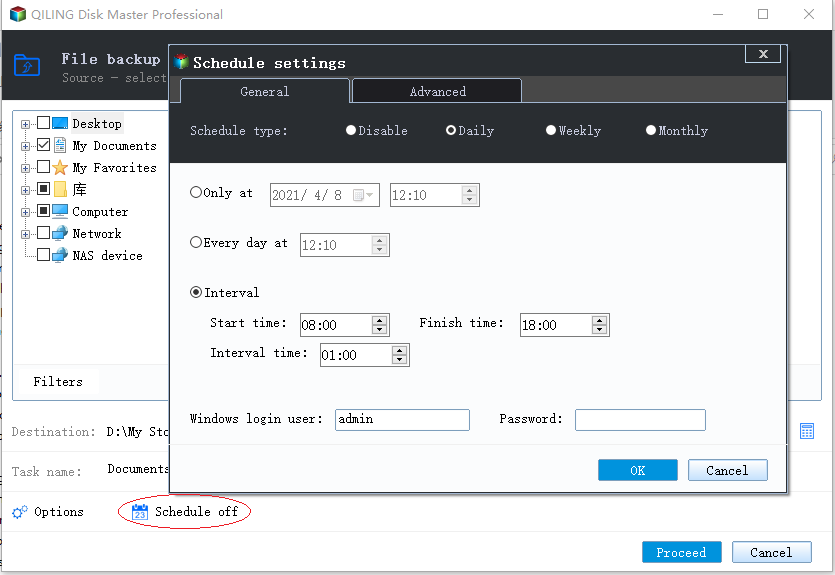
This software allows for automatic backups, enabling you to set up backups at regular intervals, ensuring your backup data stays up-to-date.
To use Qiling Backup to save Outlook emails before quitting your job, you can follow these steps:
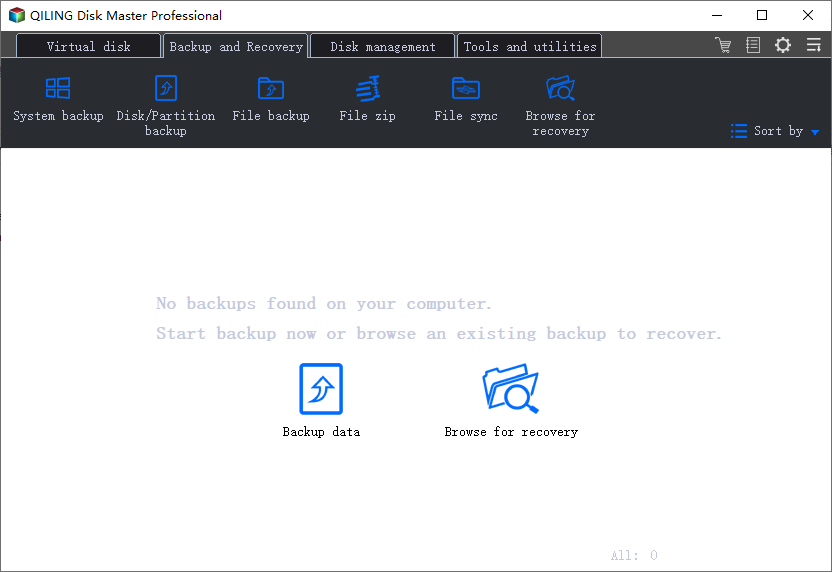
Step 1. Launch Qiling Backup on your computer, and click File Backup on the home screen.
Step 2. Select the mailbox addresses you want to make a backup of, such as mails, contacts, or calendars, and the Microsoft Outlook database folder will appear.
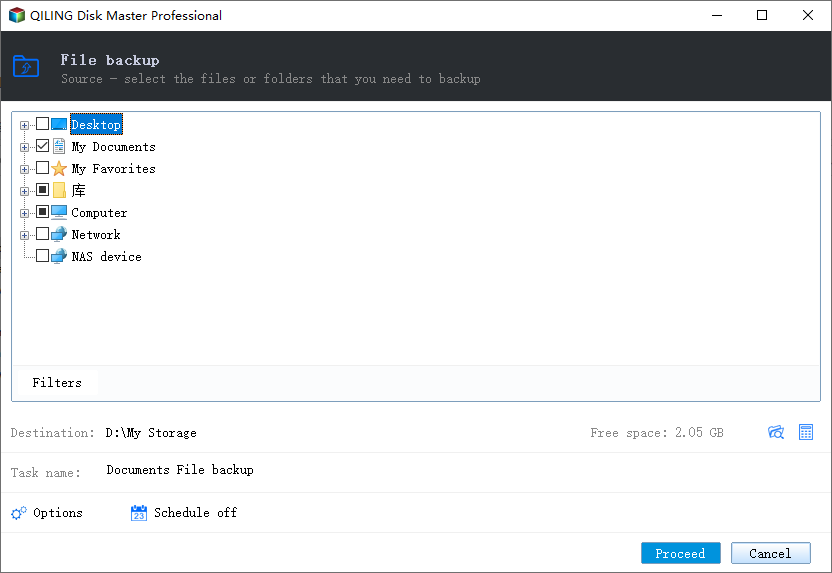
Step 3. To save the Outlook backup, select a location by clicking on the illustrated area.
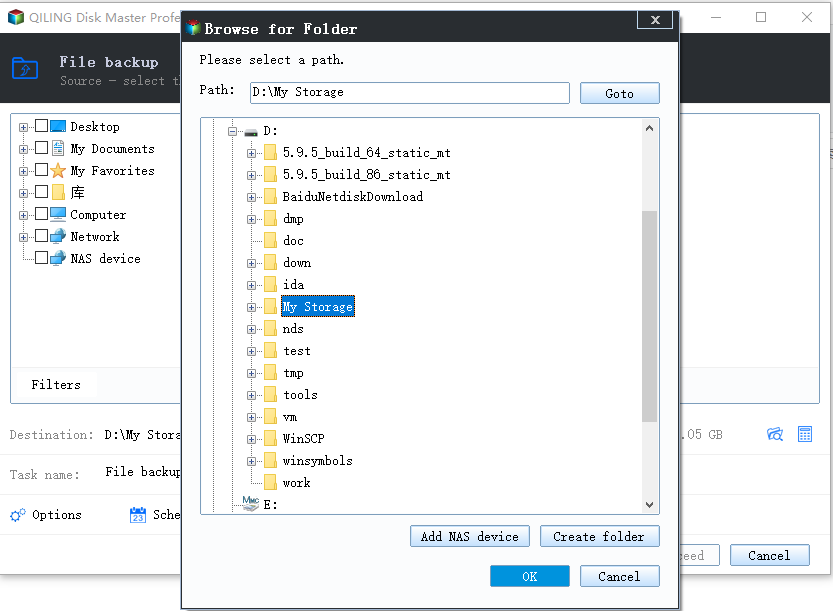
Step 4. When choosing a backup location, consider another local drive on your computer, an external hard drive, a network, cloud, or NAS. We recommend using an external physical drive or cloud to preserve backup files.
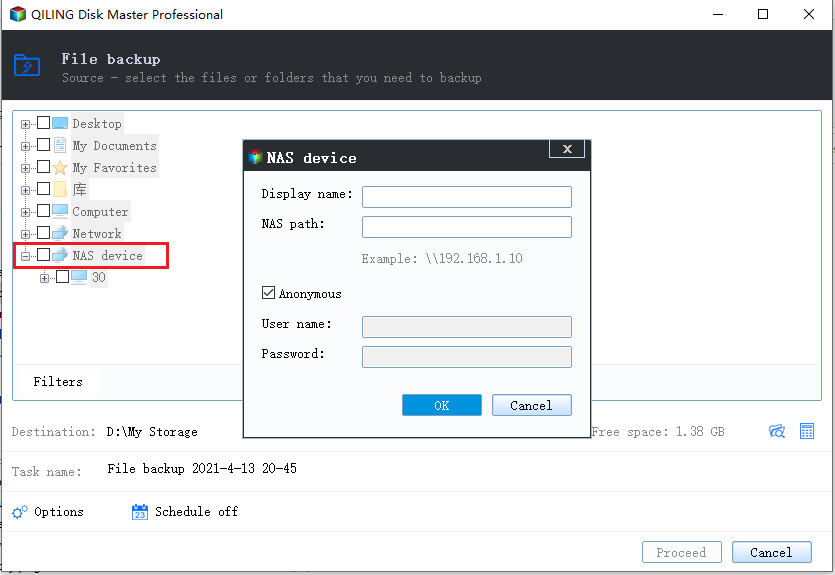
Step 5. Settings like automatic backup schedule and differential and incremental backup are available in the Options button. You can set a daily, weekly, monthly, or event-based backup schedule and proceed with the backup process. The completed backup task will be displayed on the left side in a card style.
Method 2. Create A New PST File & Copy Files to It
To save emails in Outlook, you can create a new PST file and copy the desired emails to it, which can then be moved to a new computer when needed.
You can copy a PST file to another location, such as another hard drive, a CD, or an external drive, or even to a new computer, by using this method.
Compared to the Outlook Backup software Qiling Backup, this solution is a bit more complicated.
To transfer emails from one PST file to another, you'll need to export your emails from Outlook and then import them to the new PST file. This process allows you to move your emails, contacts, and other data to a new PST file, which can be useful for upgrading your Outlook version or switching to a new email client. To do this, open Outlook, go to File > Export, choose the "Export to a file" option, and select "Outlook Data File (.
To create a PST file, start by opening the Microsoft Outlook application and clicking on the "File" menu. From there, select "Save As" and choose the "Outlook Data File (.pst)" option.
Step 1. Open your Outlook account and enter the inbox.
Step 2. To add a new Outlook data file, click on "File" > "New" > "Outlook Data File" in the Outlook menu.
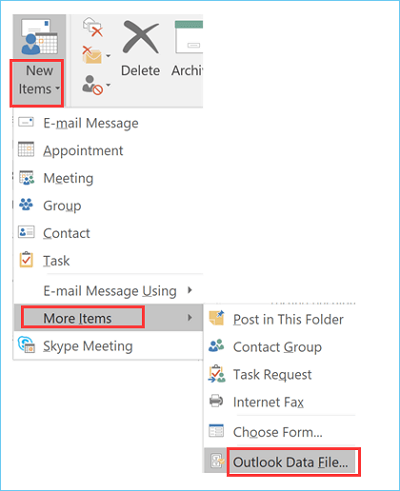
Step 3. In the "Types of storage area" section, choose the Outlook data file (.pst) and give a name to the file.
Step 4. Select a place where you want to save the file.
Step 5. Finally, click OK to finish creating the file.
The newly created PST file is now listed in your inbox and you can add items to it.
Final Words
If you're leaving a job, it's a good idea to save any important work emails from Outlook before you quit. This way, you can keep a record of your work-related communications and ensure that you don't lose any important information.
If you want to save Outlook emails without exporting them one by one, you can use backup software like Qiling Backup, which is a convenient and efficient option.
The backup software has additional features like disk clone, system backup, and file sync, which can help protect your data. You can try it for free.
FAQ on How to Save Outlook Emails When Leaving Job
1. How do you save your emails when you leave a company?
To store essential emails, consider using Outlook backup software like Qiling Backup, or save them in PST file format and transfer to a new computer.
2. Is it legal to take emails from a previous job?
It depends on your job position and the country you work in. We suggest you check with an HR or IT professional in your company before saving these emails.
3. What to do with emails when leaving a job?
If the emails contain personal info, delete them. If they're work-related, save them with backup software or create a new PST file and save them under legal circumstances.
4. What should I back up when I quit my job?
When leaving a job, it's essential to back up all work-related documents, photos, and emails. This includes any files stored on the company's server, which can be accessed through the IT department before departure. This ensures that all important work materials are preserved and can be retrieved after quitting.
Related Articles
- How to Backup Outlook Live Emails: Automatic Real-Time Backup
- How to Create Recovery Partition for Windows 7/8/10/11 with 2 Possible Ways
- How to Copy or Clone Windows XP OS to HDD/SSD
- How to Create a Backup Windows 10 with the Least Effort
- Need to Find Setup Information File Location in Windows 7? Fixed!
Need to find Setup Information file location in Windows 7 before using the System Recovery Options? This article will walk you through the issue. - How to Fix This Copy of Windows Is Not Genuine
After installing a Windows Update, there are chances that you might see the sign this copy of Windows is not genuine. Here are some fixes.
Products
Articles & Tutorials
- Data Recovery
- Data Backup
- File Recovery
- File Backup
- System Backup and Restore
- Disk and Partition Clone
- Technical articles
- Mobile articles
- Disk Master Help
- Windows Data Recovery Tutorials
- Windows Secure Delete Tutorials
- Windows Partition Management Tutorials
- Windows File Backup and Restore Tutorials
- Windows System Backup and Restore Tutorials
- Windows Disk Backup and Restore Tutorials
- Windows Clone Tutorials