Fix SD Card Keeps Disconnecting or Disappearing
If your SD card keeps disconnecting or disappearing, don't worry, there are seven fixes you can try. These fixes can be summarized in the table below, but let's dive into the details for each one. 1) Check for loose connections, 2) Update your device's operating system, 3) Run a disk check on your SD card, 4) Format your SD card, 5) Use a different SD card reader, 6) Check for malware or viruses, and 7) Replace your SD card. Let me know if you'd like me to expand on any of these points!
| Workable Solutions | Step-by-step Troubleshooting |
|---|---|
| Fix 1. Reinsert SD card | When the SD card disconnects or disappears randomly, you can retry to insert the card to the computer...Full steps |
| Fix 2. Change SD card reader | If the SD card reader is not working properly, your SD card won't be able to show up on the computer...Full steps |
| Fix 3. Change to another computer | You can also insert your SD card to another computer to see if it shows up stably or not...Full steps |
| Fix 4. Disable PC turning off device | When the computer turns off the Mass Storage Device, your SD card won't be able to show up correctly...Full steps |
| Fix 5. More useful methods | Update SD card driver, change SD card drive letter, or format SD card to NTFS/FAT32...Full steps |
Memory cards, including micro SD cards, TF cards, and larger SD/SDHC/SDXC cards, are widely used in digital devices due to their portability and extensibility. However, like all storage devices, they can degrade over time due to physical stress such as scratching, bending, and repeated connecting and disconnecting.
Here, we are going to discuss one commonly seen consequence of SD card problems after a long time use or improper use, which is an unstable SD card connection. Many users experience their SD card randomly disconnecting from their computer, Android phone, or camera. This issue can be caused by physical damage to the SD card, improper handling or storage, or software glitches. To resolve this issue, users can try cleaning the SD card slot, checking for physical damage, and updating their device's operating system. Additionally, formatting the SD card in the device it's being used with can also help resolve the issue.
- Tip
- This page focuses on resolving SD card issues on a Windows computer. If you're experiencing problems like the SD card disconnecting or disappearing on Android and camera devices due to errors like "SD card unexpectedly removed" or "SD card blank or has unsupported file system", the linked pages can provide helpful solutions to address these specific SD card problems.
SD card keeps disconnecting in Windows 10/8/7 [7 fixes]
Fix 1. Remove and reinsert SD card to Windows PC
If your SD card reader is not working, try replacing it with a new one and reconnecting to your PC. This may resolve the issue. If not, you may need to troubleshoot further to determine the cause of the problem.
Insert the SD card into another computer to see if it shows up. If it does, the issue is likely with the first computer, and you can try reinstalling the SD card reader software or updating the operating system. If it doesn't show up, the issue may be with the SD card itself or the card reader.
Fix 4. Disable PC from turning off Mass Storage Device
Fix 6. Change SD card drive letter
Fix 7. Format SD card to NTFS/FAT32
Sometimes, an SD card shows up on a computer, but then disappears, only to reappear later. This issue is different from the SD card not showing up at all, and it's frustrating when you're trying to access your files. If you're experiencing this problem, don't worry, as there are seven potential solutions that can help resolve the issue and ensure your SD card is recognized and accessible by your computer.
1. Remove and reinsert SD card to Windows PC
When the SD card disconnects or disappears randomly, you can try reinserting it into the computer to see if it's stable and can be read again.
2. Change SD card reader and reconnect to your PC
If the SD card reader is not working properly, your SD card won't appear on the computer.
3. Insert SD card to another computer to see if it shows up
Another way to troubleshoot the issue is to insert the SD card into a different computer to see if it appears consistently or not, which can help determine if the problem lies with the SD card itself or the original device.
If your SD card shows up and can be accessed again after these three steps, the problem is resolved. If not, continue with the next steps to resolve the issue on your SD card.
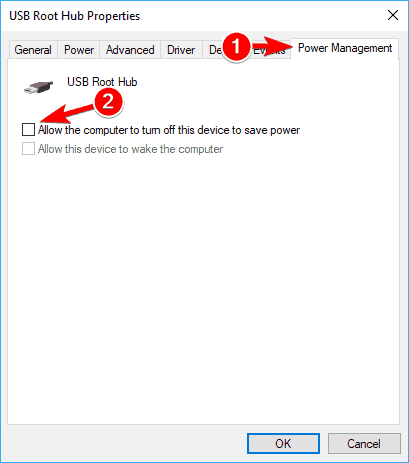
4. Disable PC from turning off Mass Storage Device
To prevent your SD card from being ejected when the computer turns off the Mass Storage Device, follow these steps: go to the Disk Management tool, select the SD card, and choose "Change Settings" from the context menu. Then, uncheck the box next to "Quick Remove" and click "OK" to save the changes. This will prevent the SD card from being ejected when the computer turns off the Mass Storage Device.
- Press the Windows key + X to open the Start menu, and select Device Manager from the menu.
- To access the USB Mass Storage Device, go to the "Universal Serial Bus Controller" section in the Device Manager, and select the "USB Mass Storage Device" option.
- Click the "Power Management" tab and uncheck the box in front of "Allow the computer to turn off this device to save power".
- Click "OK" and save the changes.
5. Update SD card driver
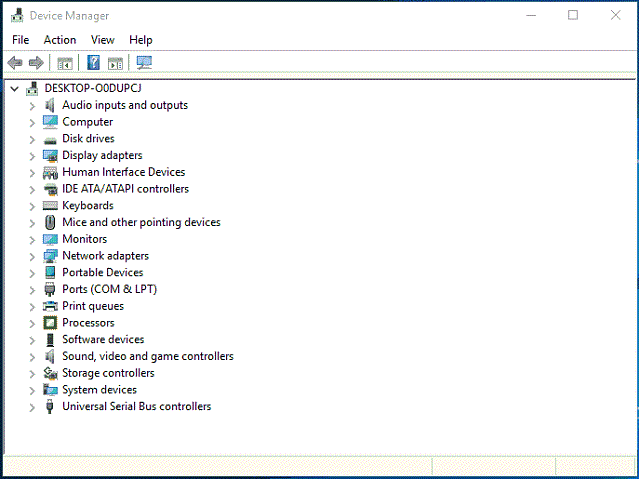
If the SD card driver is incompatible or outdated, it may start malfunctioning, causing the card to randomly connect and disconnect. In this case, updating the driver to the latest version is necessary to resolve the issue.
- Press the Windows key + X to open the Start menu, and then select Device Manager from the list of options.
- Expand Disk drives, right-click the SD card driver and choose "Update driver software".
- Windows can automatically search for and find available drivers for your device by using the "Search automatically for updated driver software" option, which streamlines the driver update process.
6. Change SD card drive letter
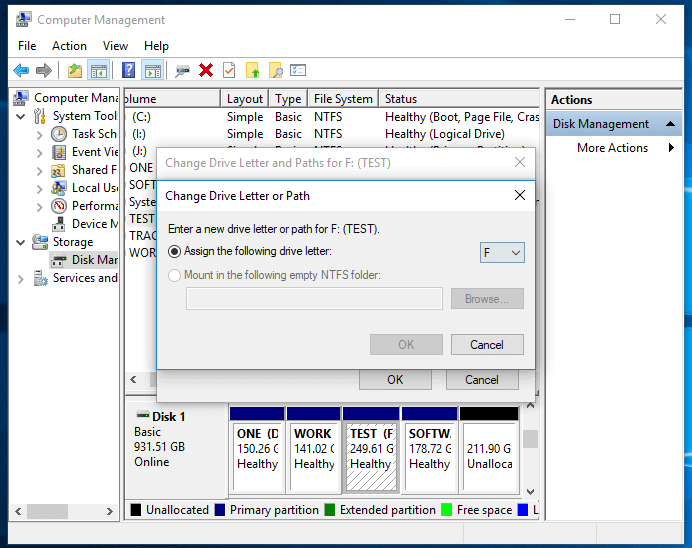
To resolve drive letter confliction, which may be causing the connection to be unstable and the SD card to randomly disappear and appear, try assigning a new drive letter to the SD card in Disk Management. This can help resolve the issue.
- To open the Disk Management console, press the Windows key + X on your keyboard, then select "Disk Management" from the menu that appears.
- Right-To change the drive letter and paths for your SD card, click on it in File Explorer, then select "Change drive letter and paths..." from the context menu. This will allow you to assign a new drive letter or change the path where the SD card is mounted.
- To change the drive letter of your SD card, select it in the list and click on the "Change" button. In the new drive letter field, enter the desired letter and click OK to save the changes.
7. Format SD card to NTFS/FAT32
This method is specifically designed for SD cards that have been in use for a long time and are no longer in good health. A disk formatting is often sufficient to fix minor corruption issues and restore the SD card to a like-new state.
- Warning
- Formatting a disk can be risky for data, but it can also resolve many corruption issues. If the disk contains important files like photos, videos, or other data, back it up before formatting to avoid losing them. If not, you can use third-party data recovery software to try and recover data from a formatted SD card.
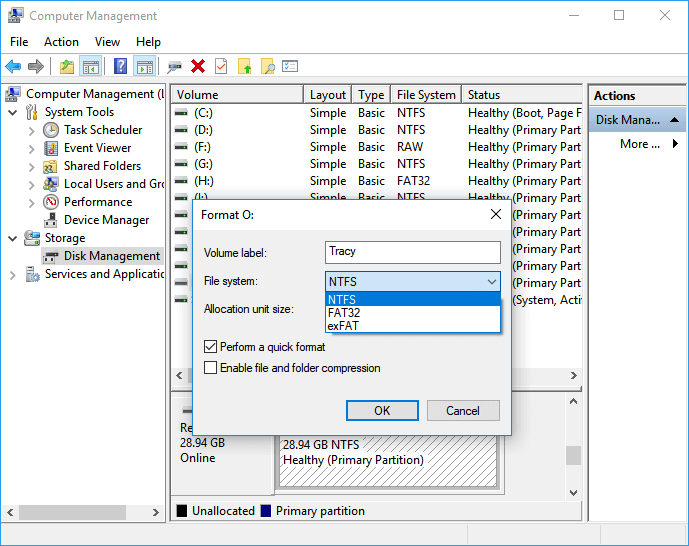
To format a memory card in Disk Management:
- Enter Disk Management again.
- Right-click on your SD card and this time, select "Format".
- Choose a file system like NTFS/FAT/FAT32 and click "OK".
If your SD card is not connecting to your computer, try restarting your computer and SD card reader. If this doesn't work, try removing any unnecessary devices connected to your computer and SD card reader, and then restart them again. If this still doesn't work, try formatting your SD card and then reinstalling any drivers that may have been uninstalled.
How to recover data from an inaccessible or formatted SD card
Don't worry too much about losing data unless you directly formatted the SD card without making a backup, as the other 7 troubleshooting methods can be attempted without risking data loss.
The real cases of SD cards not showing up are often complex and unexpected. If not addressed promptly, they can lead to further damage, ultimately resulting in the card failing to appear on the computer altogether. This is why it's crucial to back up important data before it's too late to prevent potential losses.
Losing access to data can be a nightmare, but finding a reliable and user-friendly hard disk data recovery software can be a lifesaver. Deep Data Recovery is a great option, compatible with both Windows and Mac OS X/macOS platforms, and capable of recovering 250+ file types. What's more, you can preview the recovered files before deciding to recover them, making it a trustworthy and user-oriented solution.
Step 1. Select the file types and click "USB/SD Scan".
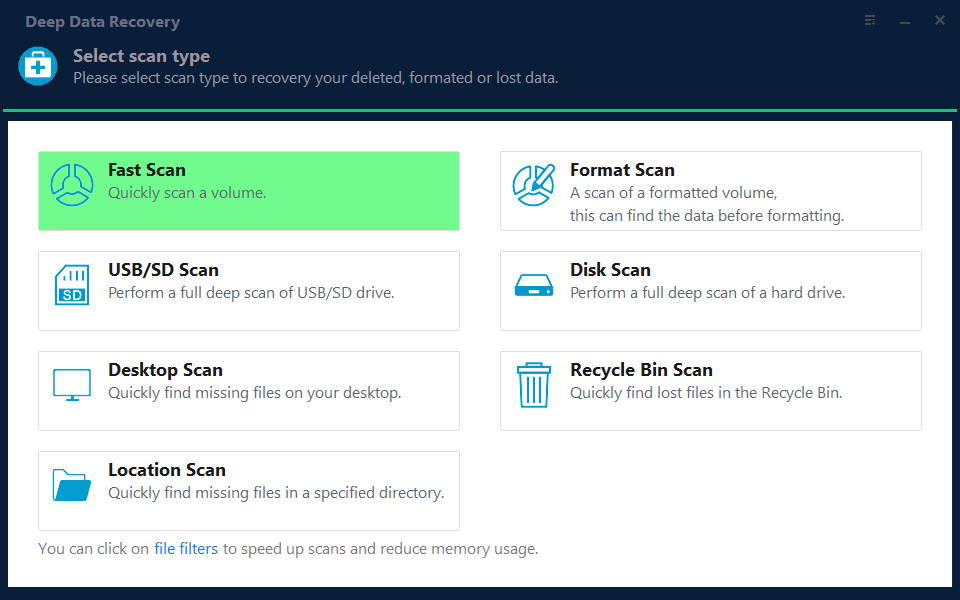
Note: You can choose different search modes based on where and why the data was lost.
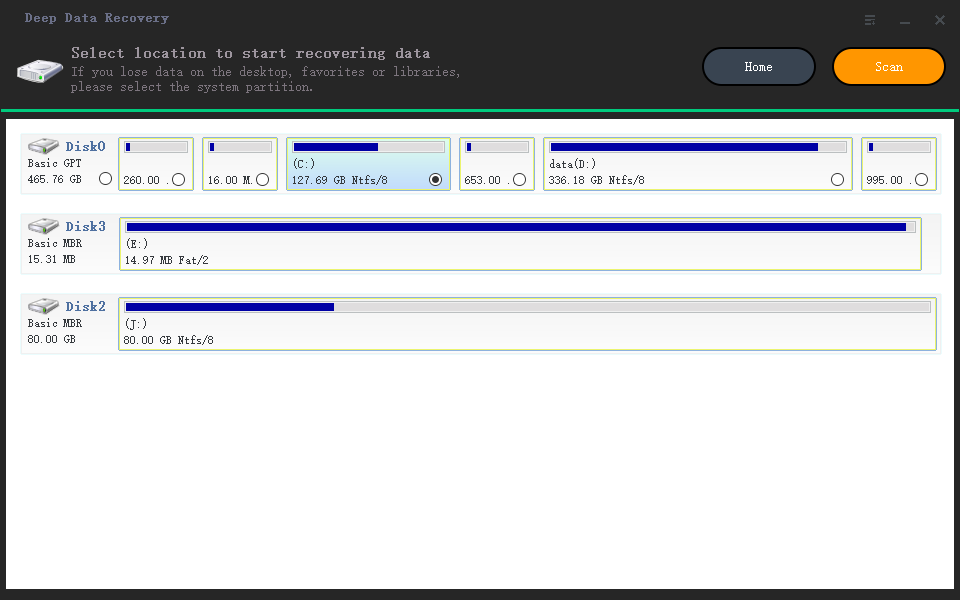
Step 2. Select the drive where you lose your data and click "Scan" to begin the recovery process.
Step 3. When the scan is complete, you can use the "Filter" or "Search" feature to locate the lost files. This allows you to narrow down the results and find the specific files you're looking for.
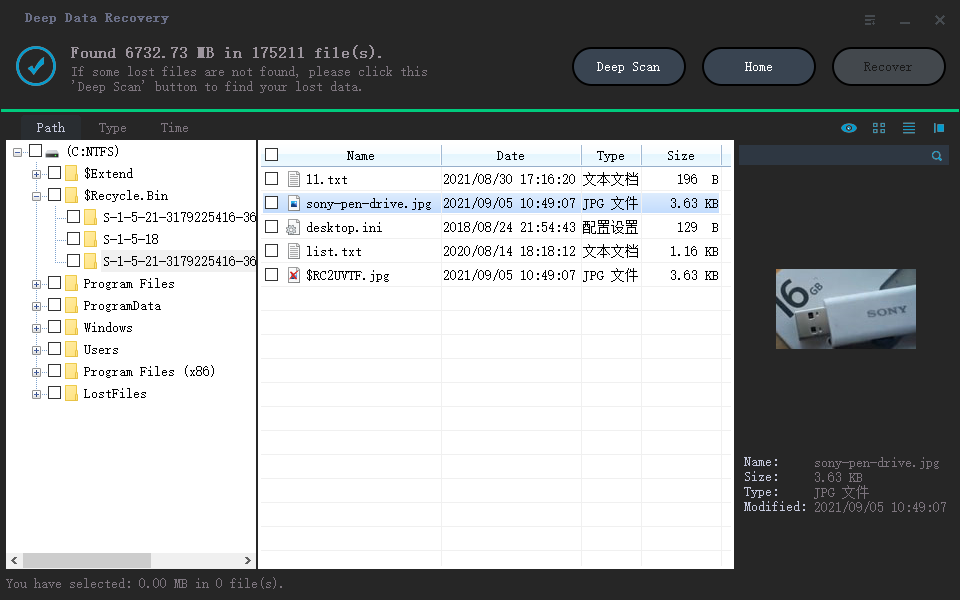
Step 4. Select the files you want to recover and click "Recover". Browse a secure location to save them.
Related Articles
- How to Recover Unsaved/Lost/Corrupted Adobe Acrobat Files on Windows PC
- Fix Windows (11/10/8/7) Won't Boot From USB Error
- How to Stop Windows 10 Deleting Files Automatically
- How to Fix File Explorer Keeps Popping Up Without Losing Data
- Bare Metal Restore in Windows Server 2008 (R2) | 2 Ways Inside
Want to figure out more information about bare metal restore in Windows 2008 (R2)? This article will help you solve the most often asked questions about bare metal recovery under Windows Server 2008 (R2) operating system. - Create System Image Backup in Windows Server 2012 Easily (2 Ways)
You can choose to create a system image in Windows Server 2012 step by step with Windows Server Backup or Qiling Disk Master Server. It depends on the level of disaster recovery you need.
Products
Articles & Tutorials
- Data Recovery
- Data Backup
- File Recovery
- File Backup
- System Backup and Restore
- Disk and Partition Clone
- Technical articles
- Mobile articles
- Disk Master Help
- Windows Data Recovery Tutorials
- Windows Secure Delete Tutorials
- Windows Partition Management Tutorials
- Windows File Backup and Restore Tutorials
- Windows System Backup and Restore Tutorials
- Windows Disk Backup and Restore Tutorials
- Windows Clone Tutorials