Fix Windows (11/10/8/7) Won't Boot From USB Error
Windows 11/10/8/7 Won't Boot from USB, Help!
Windows 10, 8, and 7 have a built-in feature that prevents booting from a USB drive by default. To boot from a USB drive, you need to disable this feature in the BIOS settings. The steps to do this vary depending on your computer's BIOS version and manufacturer, but generally, you'll need to enter the BIOS settings, look for the "Secure Boot" or "Boot Order" option, and change it to allow booting from USB drives.
Here in the below, you'll find two reliable methods to fix Windows won't boot from USB error and you may follow either one to realize your goal so to make Windows boot from a USB drive now.
Method 1. Manually Fix Windows Won't Boot from USB Error
If your computer won't boot from a USB drive, try checking your BIOS settings to ensure the USB drive is set as the first boot device. You may also need to disable Secure Boot and enable Legacy Boot or UEFI Boot mode. If you're using a UEFI BIOS, you might need to create a UEFI bootable USB drive. Additionally, make sure the USB drive is properly formatted and the operating system installation media is in the correct format.
Step 1. Check if the USB drive is bootable
If the bootable USB drive isn't created in the right way or the USB drive is damaged, you will not be able to install Windows with it. So first, you should check if the USB drive is bootable. On Windows computers, you can check with Disk Management or Command Prompt. Here we will introduce the method with Disk Management.
1. Insert your USB drive into a computer.
2. Right-click the Windows icon, and choose Disk Management.
3. Right-click the formatted drive and go to Properties.
4. In the pop-up window, go to the Volumes tab, where you can check the partition style of your bootable USB drive, and see the removable media with bootable ISO display a status like "no volume" or very little volume.
If you're sure you've created the bootable USB drive correctly, you can check its status in Disk Management, but if not, you can format your USB drive and recreate a Windows Installation Media, which is a time-consuming option.
Step 2. Make sure your computer support boot from USB
To check if your computer can boot from a USB drive, you can enter the BIOS settings, where you can look for the option to boot from USB. This is usually found in the advanced or boot settings section. If your computer does not have this option, it may be too old to support booting from a USB drive.
1. Enter BIOS, go toBoot Options, checkBoot Priority.
2. If you see the USB boot option in Boot Priority, it indicates that your computer is capable of booting from a USB device.
If your computer doesn't recognize the USB drive, it's likely because your motherboard doesn't support booting from USB, which means you won't be able to use it to install an operating system.
Step 3. Set Computer/PC to boot Windows from USB
Another reason you failed to boot from a USB drive is that the computer may not be set to boot from it by default. Typically, computers boot from the internal disk first, so you need to change the boot order to prioritize the bootable USB drive.
1. To access the BIOS settings on your Windows PC, restart the computer and press the F2 (or DEL, F10, etc.) key while it's booting up. This will bring up the BIOS settings menu, allowing you to make changes to your computer's configuration.
2. Find Boot Options, select USB-HDDin the First Boot Device option.
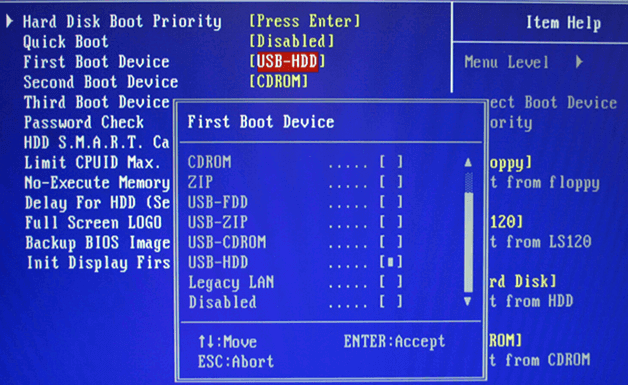
3. To enable Windows to boot from USB, confirm and save all changes to the BIOS settings. This will allow Windows to recognize the USB drive as a bootable device, enabling the operating system to load from the USB drive instead of the internal hard drive.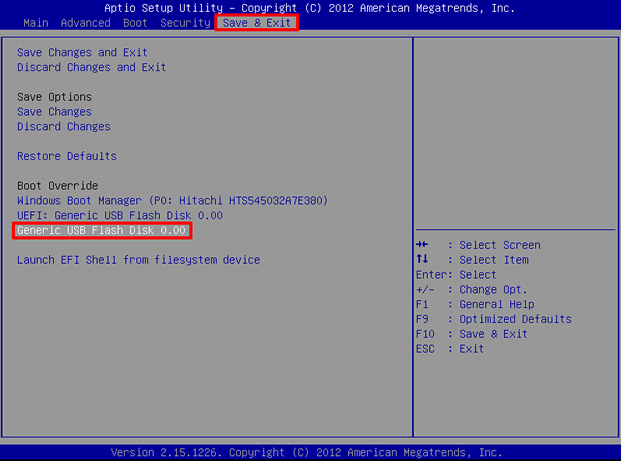
Step 4. Enable Booting from non-EFI device
You need to change the boot setting to enable booting from non-EFI devices.
1. Follow the method in Step 3 to enter the BIOS setting.
2. Find the option called Compatibility Support Module or CSM. This option is sometimes hidden until you disable Secure Boot.
3. To enable the CSM module and set it to boot EFI + Legacy boot devices, you can simply enable the CSM module in your BIOS settings and set it to boot both EFI and Legacy boot devices, which should allow you to boot your USB device without any issues.
Method 2. Create A Portable Windows USB Drive
You can also create a portable Windows USB drive, which clones your computer's system drive, allowing you to use your OS on any device. This can be useful for working from home, for example, by creating a portable USB drive for your office computer. You can then plug the portable USB drive into your home computer, boot from it, and access everything installed and stored on your office computer's system drive. Tools like Qiling Disk Master can help you achieve this.
Note:To ensure a successful boot, make sure that the boot mode of your portable USB drive and your target computer are the same, either both in UEFI or Legacy mode, to avoid any booting issues.
Related Articles
- Fix: There Was a Problem Resetting your PC in Windows 10/8.1/8
- 5 Ways to Fix a Corrupted User Profile in Windows 10/8/7
- Fixes for Bad System Config Info Error in Windows 10/8/7
- [Fixed] Windows Cannot Run Disk Checking on This Volume Because It Is Write Protected
- How to Backup Game Data on PS5 in Every Possible Way
Do you know how to backup game data on ps5? If you do not know yet, you are on the right page. This article will offer three ways to help you back up PS5 game data. After reading this post, you can use any method to back up PS5 game data on your own. - How to Backup Office 365 Emails - Top 2 Methods of 2024
You can easily back up your Office 365 emails using two simple methods. This article will guide you through the process, allowing you to securely store your emails in a safe location. By following the steps outlined here, you'll be able to backup your Office 365 emails with ease.
Products
Articles & Tutorials
- Data Recovery
- Data Backup
- File Recovery
- File Backup
- System Backup and Restore
- Disk and Partition Clone
- Technical articles
- Mobile articles
- Disk Master Help
- Windows Data Recovery Tutorials
- Windows Secure Delete Tutorials
- Windows Partition Management Tutorials
- Windows File Backup and Restore Tutorials
- Windows System Backup and Restore Tutorials
- Windows Disk Backup and Restore Tutorials
- Windows Clone Tutorials