PrimoCache vs Qiling Fast Cache: Which Disk Cache Tool Wins?
When a hard drive or older SSD slows your PC down, a disk cache tool can give it new life. Two popular options are PrimoCache and Qiling Fast Cache. Both work the same way in principle — they keep frequently accessed data in fast RAM or on a fast SSD, so repeat reads skip the slow drive — but they differ in features, complexity, and cost.
This guide compares the two tools side by side, looks at how each handles cache management, and walks through setting up Qiling Fast Cache so you can see how simple the process can be. By the end, you will know which tool matches your needs.
PAGE CONTENT
- What Each Tool Does
- Feature Comparison at a Glance
- Cache Architecture and Performance
- Ease of Use: Setup with Qiling Fast Cache
- Pricing and Licensing
- Which Should You Choose?
- FAQs About Disk Cache Tools
- Back Up Windows Before You Change Settings
What Each Tool Does
Both tools are block-level disk caches. They sit between Windows and your drives, watch which data blocks are accessed most often, and store copies of the hot data in faster storage. When the same data is requested again, it is served from the cache instead of the slow drive.
PrimoCache (by Romex Software) is a long-established caching tool. It supports two cache levels — L1 in RAM and L2 on an SSD — and emphasizes write handling, including write deferring that batches small writes for better throughput and to protect SSD endurance. It offers a fairly deep set of configuration options for users who want to tune cache behavior.
Qiling Fast Cache is built for simplicity. It also supports RAM (L1) and SSD (L2) caching, but focuses on a one-click setup: install it, click the plus button, choose the cache medium and size, and pick the drive to accelerate. It shows clear statistics such as hit rate and cached data size so you can see the cache working.
Feature Comparison at a Glance
| Feature | PrimoCache | Qiling Fast Cache |
|---|---|---|
| Cache medium | RAM (L1) + SSD (L2) | RAM (L1) + SSD (L2) |
| Read caching | Yes | Yes |
| Write handling | Write deferring options | Read-focused caching |
| Setup complexity | Detailed configuration | One-click, beginner friendly |
| Performance stats | Yes | Hit rate and cache info |
| Target user | Power users | Everyday users |
| Supported OS | Windows | Windows 11/10/8/7 |
On paper the two overlap closely. The real differences show up in how much control you want and how quickly you want to be up and running.
Cache Architecture and Performance
Both tools use the same underlying idea: measure access frequency and recency, keep the hottest blocks in the fastest tier, and evict the least useful data when the cache is full.
- RAM tier (L1) — the fastest, but limited by spare memory and volatile across reboots. Ideal for the most frequently read blocks.
- SSD tier (L2) — slower than RAM but much larger and persistent. Holds a broad set of hot data that survives restarts.
In practice, the speedup you feel depends far more on your workload and how much cache you can dedicate than on which of these two tools you pick. Both dramatically reduce load times on an HDD and give a modest boost to an already-fast SSD. PrimoCache gives advanced users more knobs for write behavior; Qiling Fast Cache keeps the model simple and transparent.
- Note
- For read-heavy workloads such as booting, launching apps, and loading games, the two tools perform very similarly. The choice comes down to usability and price, not raw speed.
Ease of Use: Setup with Qiling Fast Cache
This is where Qiling Fast Cache stands out. Creating a cache takes only a few clicks.
Step 1. Download and install Qiling Fast Cache.
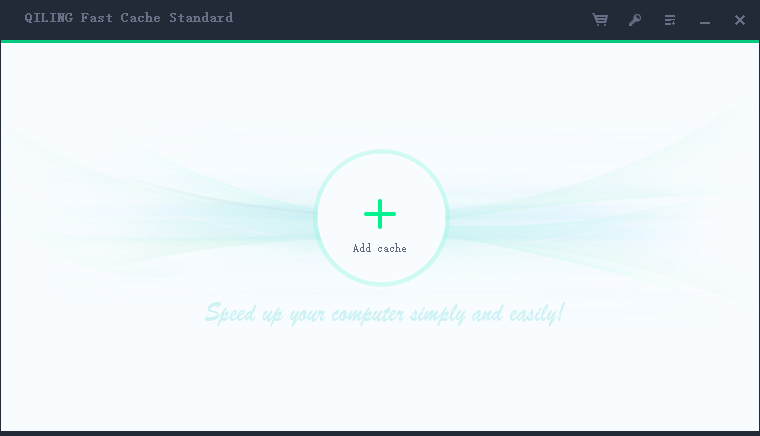
Step 2. Open the app and click the + button to create a new cache task.
Step 3. Choose RAM or SSD as the cache medium, set the size, and pick the drive you want to accelerate.
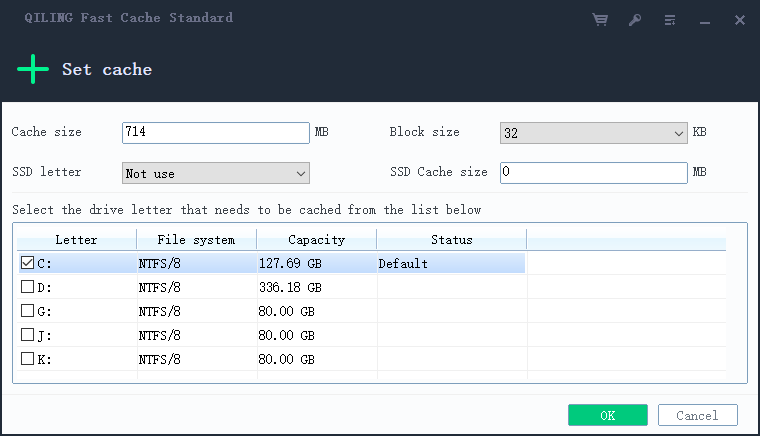
Step 4. Click OK to start the cache. Fast Cache begins learning your access patterns right away.
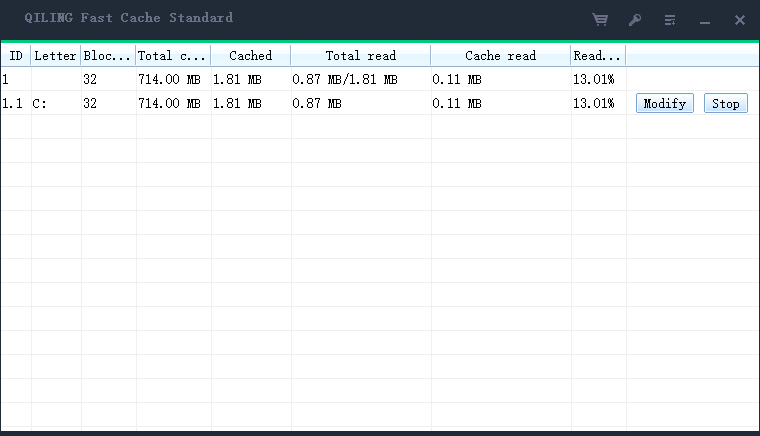
Step 5. Watch the statistics. The main window shows the hit rate and cached data size, so you can confirm the cache is helping.
For a detailed walkthrough, see Windows 11 Fast Cache: Speed Up HDD with RAM and SSD Cache.
Pricing and Licensing
Pricing is a clear dividing line. PrimoCache is commercial software with a paid license, offered with a trial so you can evaluate it first. Qiling Fast Cache offers a free trial download that lets you test the cache with no cost, and it is part of the Qiling performance tool family.
For users who just want to speed up a slow drive without a purchase up front, Qiling Fast Cache is the easier starting point. Users who need very specific write-cache behavior may find PrimoCache's options worth paying for.
Which Should You Choose?
- Choose Qiling Fast Cache if you want a quick, simple setup, clear performance feedback, and a free way to start.
- Choose PrimoCache if you are a power user who needs deep write-cache configuration and do not mind a paid license.
Both tools deliver the same core benefit — faster reads on a slow drive — so if ease of use and cost matter most, Qiling Fast Cache is the practical choice. Many users find the one-click workflow is enough to transform an aging HDD into a responsive system.
FAQs About Disk Cache Tools
Can I run both tools at the same time?
You should not. Running two disk caches on the same drive can cause conflicts. Pick one tool per drive.
Does a disk cache damage my data?
No. Read caching copies data without modifying the original. If you enable write caching, use a UPS so a power failure cannot lose unflushed writes.
How much cache do I need?
More cache holds more hot data and raises the hit rate. As a rule, allocate about one-third of your free RAM, or 40-80% of a spare SSD's free space, while leaving enough memory for Windows and apps.
Will a cache speed up a fast NVMe SSD?
The gain is small because the SSD is already fast. Cache tools deliver the biggest improvement on mechanical hard drives.
Do both tools work on Windows 11?
Yes. Qiling Fast Cache officially supports Windows 11/10/8/7, and PrimoCache supports modern Windows versions as well.
Back Up Windows Before You Change Settings
A disk cache is safe to set up, but if you are also changing storage drivers or BIOS settings, a backup protects your system. Qiling Disk Master creates a full Windows image you can restore from if anything goes wrong.
Part 1: Create a Full System Backup
Step 1. Install and open Qiling Disk Master. On the home screen, open "Backup and Recovery" and choose "System Backup". This option automatically includes Windows and the hidden boot partitions, so you do not have to select them one by one.
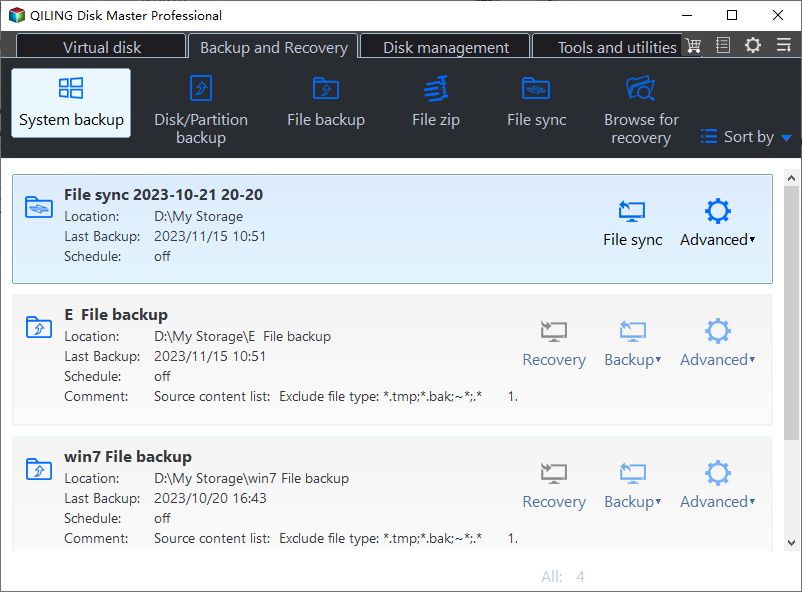
Step 2. Check the source. The disk where Windows is installed and its system partitions are already ticked for you. If you only need your personal documents, run a separate "File Backup" task instead.

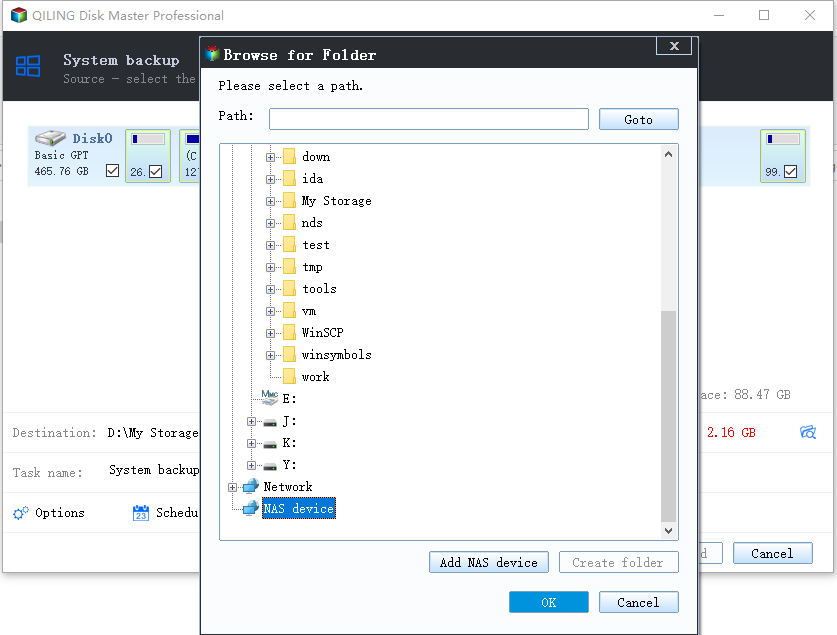
Step 3. Click the destination box and choose where the image should be saved. Use an external HDD or SSD, a NAS, or any drive other than the one Windows is installed on, and make sure it has enough free space.
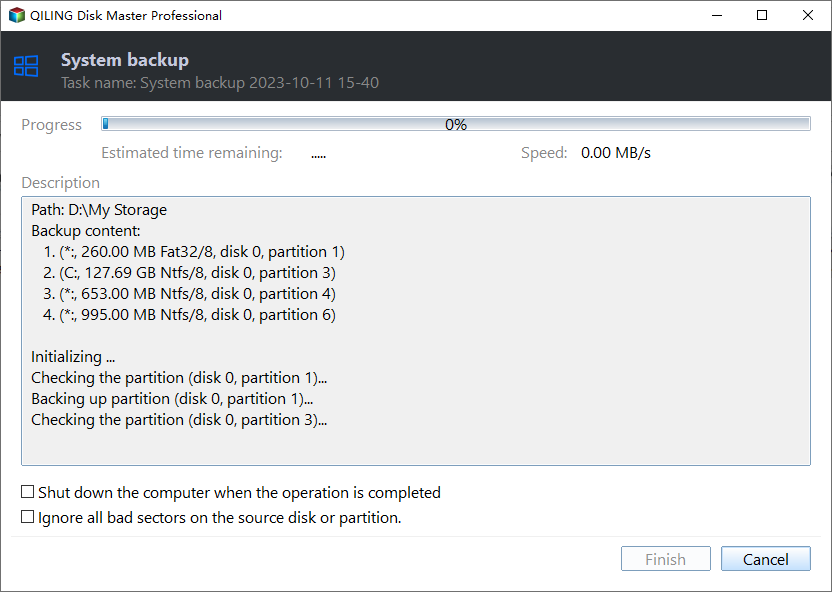
Step 4. Review the task summary and click "Proceed". Wait until the progress bar reaches 100%. Do not unplug the drive or turn off the PC while the backup is running.
Part 2: Restore Windows from the Backup
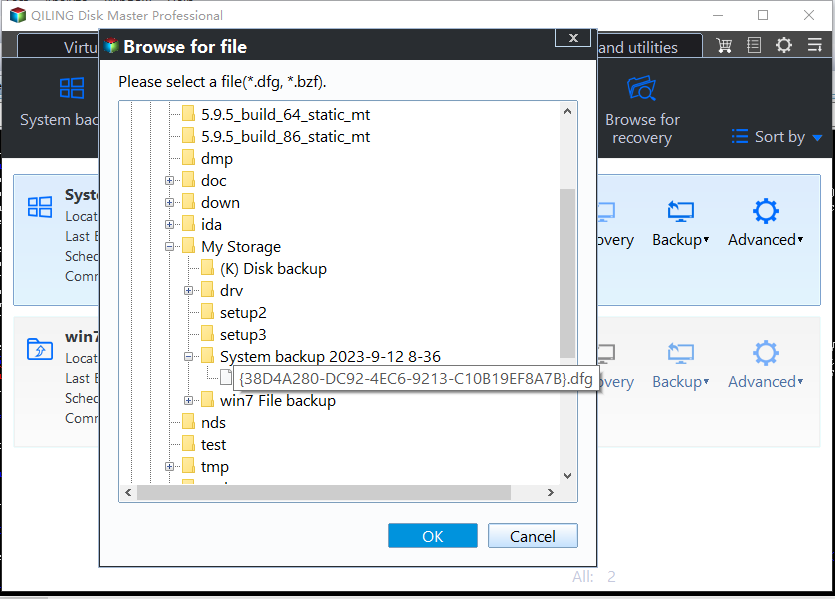
Step 1. Open Qiling Disk Master again, go to "Backup and Recovery", and select the recovery option. Your backup images are listed, so pick the one you created before the changes began.
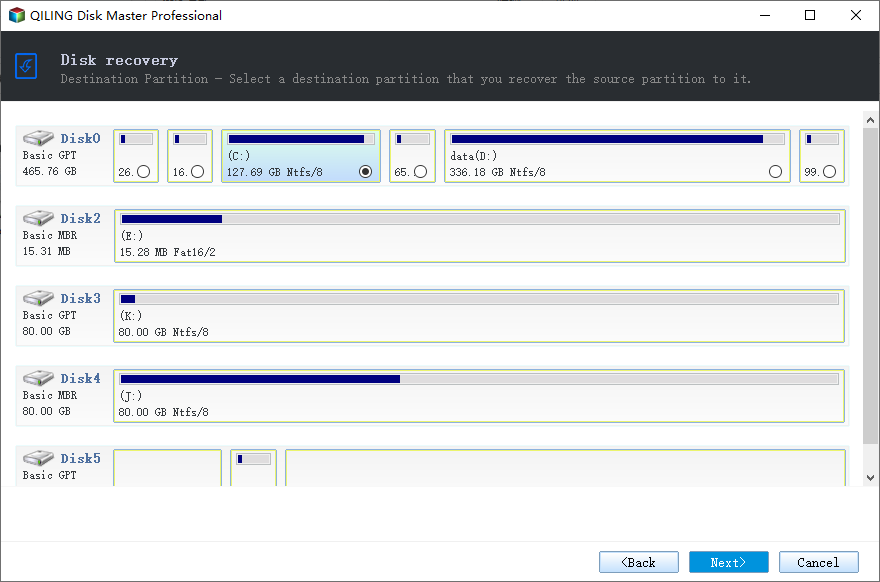
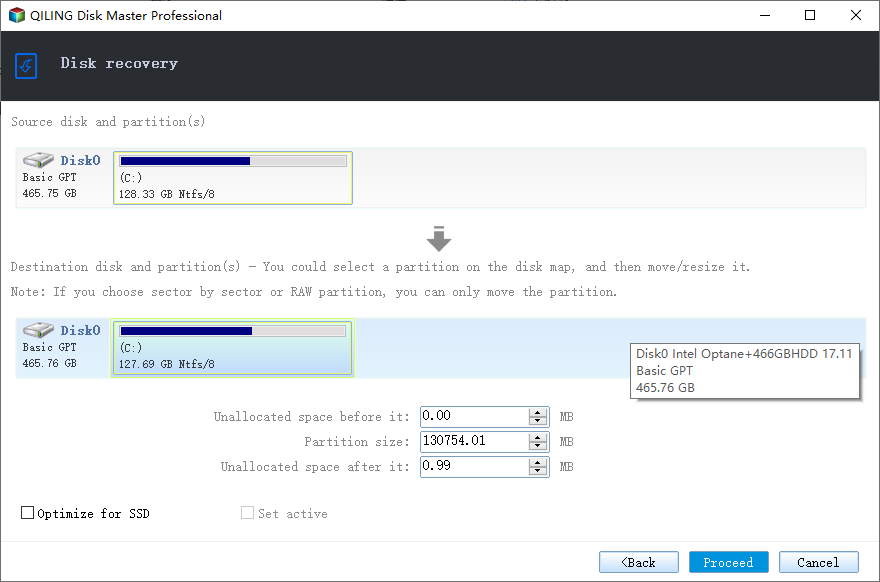
Step 2. Choose the target disk or partition. Normally you restore to the original system disk. If the drive was replaced, select the new disk instead, and the restore rebuilds Windows together with its boot partitions.
Step 3. Preview the restore plan, click "Proceed", and confirm the warning. The PC restarts to finish the job, and Windows comes back exactly as it was on the day the image was created, with your files and programs intact.
- Note
- Keep the backup image on a separate drive, and refresh it before changing storage drivers or BIOS storage settings.
Conclusion
PrimoCache and Qiling Fast Cache both accelerate slow drives by caching frequently used data in RAM and on an SSD, and for everyday read-heavy tasks they perform very similarly. PrimoCache appeals to power users who want detailed write-cache control, while Qiling Fast Cache wins on simplicity and price: install it, click the plus button, choose the cache medium and size, and start caching in minutes, with clear hit-rate feedback. If you want the fastest path to a faster PC without paying up front, choose Qiling Fast Cache.
Protect your PC with Qiling Backup—create a system image before your next round of settings changes.
For more Windows 11 performance guides, see Windows 11 Fast Cache, SSD Cache vs RAM Disk, Fast Cache Best Practices, How to Use M.2 Disk for Cache, and Speed Up Windows 11 with RAM and SSD Cache.
Related Articles
- SSD Cache vs RAM Disk: Which Speeds Up Windows 11 More?
Understand how disk cache compares with a RAM disk before you choose. - Configure FAST Cache Best Practices and Limitations
- How to Use M.2 Disk for Cache Data
- Windows 11 Guide: Features, Upgrade Tips and What to Know
- Intel Optane Memory vs SSD Caching Software: What's the Difference?
- SoftPerfect RAM Disk vs Qiling RAM Disk: Which Is Better?
Products
Articles & Tutorials
- Data Recovery
- Data Backup
- File Recovery
- File Backup
- System Backup and Restore
- Disk and Partition Clone
- Technical articles
- Mobile articles
- Disk Master Help
- Windows Data Recovery Tutorials
- Windows Secure Delete Tutorials
- Windows Partition Management Tutorials
- Windows File Backup and Restore Tutorials
- Windows System Backup and Restore Tutorials
- Windows Disk Backup and Restore Tutorials
- Windows Clone Tutorials