Google Drive for Desktop VS Backup and Sync [What's the Differences]
Google offers two top options for keeping your files organized: Backup and Sync and Google Drive for Desktop. Both tools help store files in the cloud and keep them synced across devices, but they have distinct features. Despite this, some users wonder if Google Drive is going away, prompting the need to understand the differences between the two and which one is best suited for their needs.
What Is Backup and Sync
Google Backup and Sync is a tool that allows you to easily and safely back up and share your files between your computer and the cloud, providing a secure and accessible solution for businesses and individuals.
To ensure all your important documents, photos, and videos are backed up and synced to the cloud, a small business owner can use a cloud storage service like Google Drive, Dropbox, or OneDrive. This allows them to access and share their files from anywhere, and also provides a backup in case of data loss or hardware failure.
With Backup and Sync, you can easily set up a backup of all your files and folders, ensuring your data is safe in case of a computer crash or theft.
Google Backup and Sync allow you to access and edit files from any device, making it easy for you and your team to collaborate and stay productive on the go.
What Is Google Drive for Desktop
Google Drive for Desktop is software that provides a centralized location for storing, sharing, and managing digital files, combining the functions of Drive File Stream and Backup and Sync.
As a student, using Google Drive for Desktop allows you to access and work on your Google Drive files offline, and also syncs your local files with your Google Drive account, making it easy to share and collaborate with classmates.
Syncing files with the cloud allows you to access and work on them even when offline, while keeping them synced with the cloud. This makes it easy to find and work on files from anywhere, making it a valuable tool for anyone who wants to stay organized and productive.
Google Drive for Desktop vs. Backup and Sync
Google offers multiple ways to store and sync files, including Google Drive for Desktop and Backup and Sync, which allow users to access and manage their files across various devices.

Google Drive for Desktop has replaced Backup and Sync, which was a separate tool that allowed users to sync their Google Drive files to their computer and back up their computer files to Google Drive. The two tools have now been merged into one, simplifying the process for users.
Here is a comparison of the two tools:
| Comparison | Google Drive for Desktop | Backup and Sync |
| Features | A simple tool allows users to access and manage Google Drive files directly from their desktop, with the option to mirror or stream files. | This service allows you to back up files and folders from your computer to the cloud, ensuring your data is safe and secure in case of a hardware failure or other disaster. Additionally, it enables you to sync files across multiple devices, so you can access your files from anywhere, on any device, at any time. |
| File Sync | Syncs all files in the Google Drive folder | Allows users to select specific files and folders to sync |
| File Versioning | Yes | Yes |
| Shows Who's Editing | Yes | No |
| Support for Non-Google Files | Yes | Yes |
| Stream from Google Drive to Computer | Yes | No |
| Make Selected folders available offline | Yes, via streaming | Yes |
| Space | Cloud and user's computer with the option to mirror or stream | Computer and Cloud |
A Better Backup Option: Using Professional Backup Software
If you're experiencing issues with Google Drive for Desktop or Backup and Sync, such as syncing problems or the software not working, consider using professional backup software like Qiling Disk Master to ensure your data is safely backed up.
Qiling Disk Master Pro offers an all-in-one solution for backup needs, providing a powerful alternative to Google Drive for Desktop and a perfect replacement for the discontinued Google Backup and Sync. This tool enables efficient and secure backup and recovery, system backup and recovery, disk and partition backup and recovery, and allows storing backups on multiple paths, including cloud storage.
- Backup and recovery options.
- Backup files to the cloud.
- Security Zone to protect your data from ransomware.
- Clone a hard drive.
- Create WinPE bootable disk.
- Compress backups to save space.
Here is the detailed steps to back up your files.
Step 1. To initiate the backup process, select the backup contents by clicking the corresponding button.
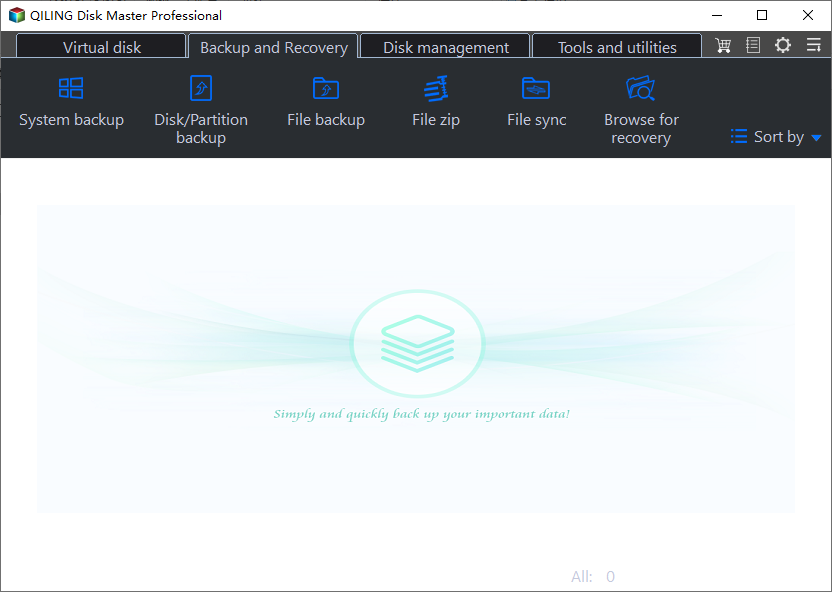
Step 2. There are four main categories of data backups: File, Disk, OS, and Mail. These categories refer to different types of data that need to be backed up, including personal files, entire hard drives, operating system configurations, and email accounts.
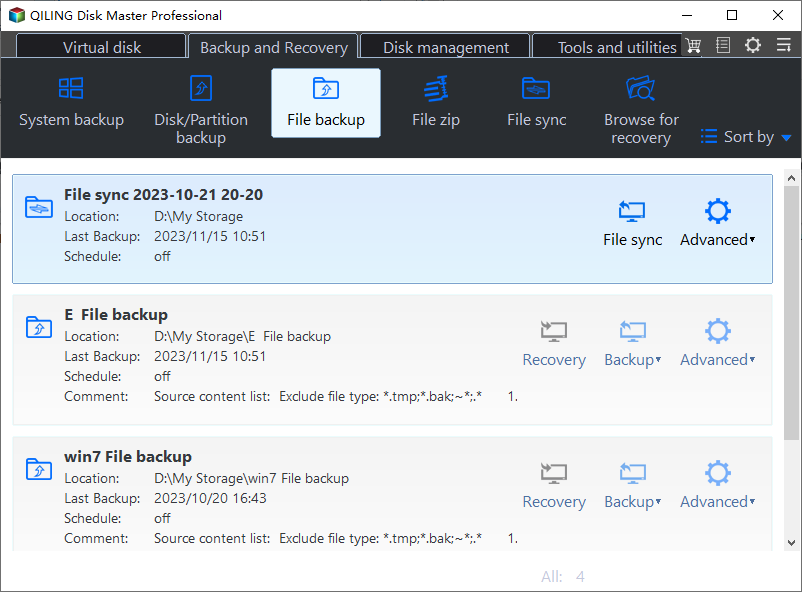
Step 3. A list of both local and network files is shown on the left-hand side of the screen, allowing you to expand the directory and select the files to back up.
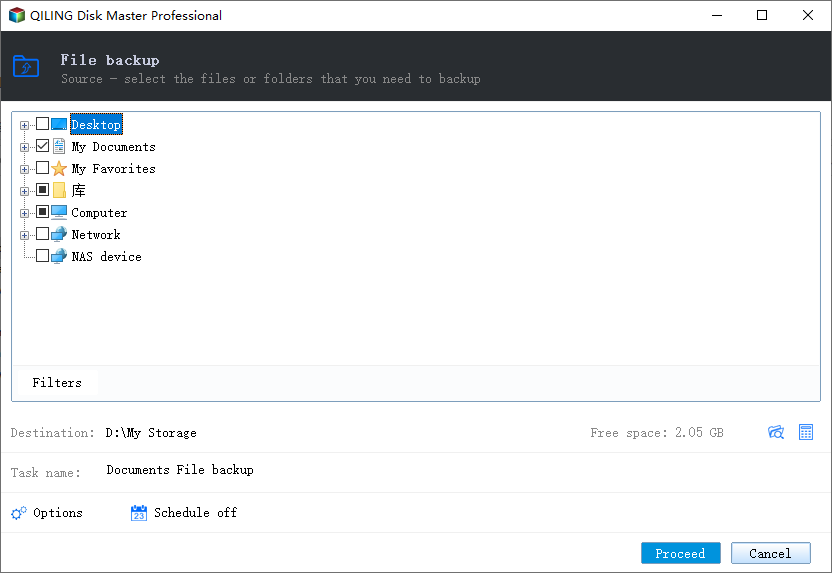
Step 4. Follow the on-screen instructions to choose a location for storing the backup.
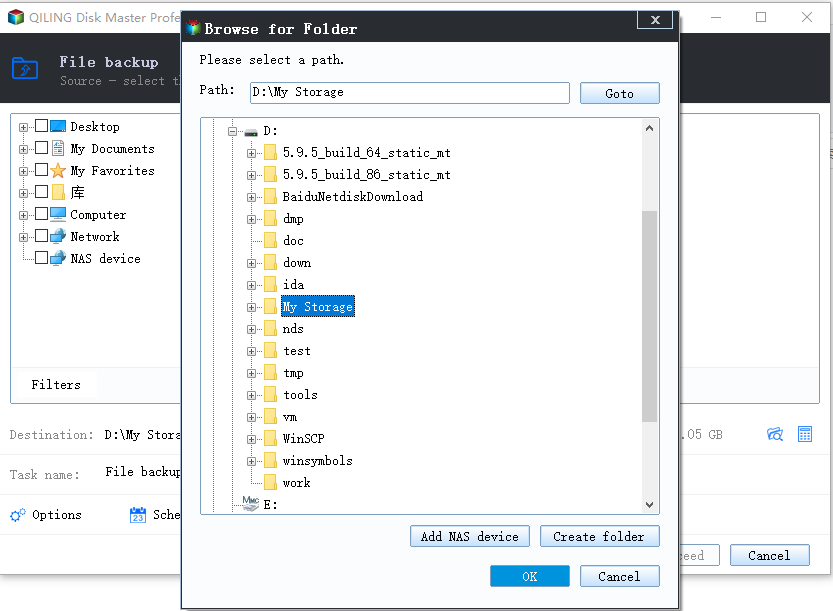
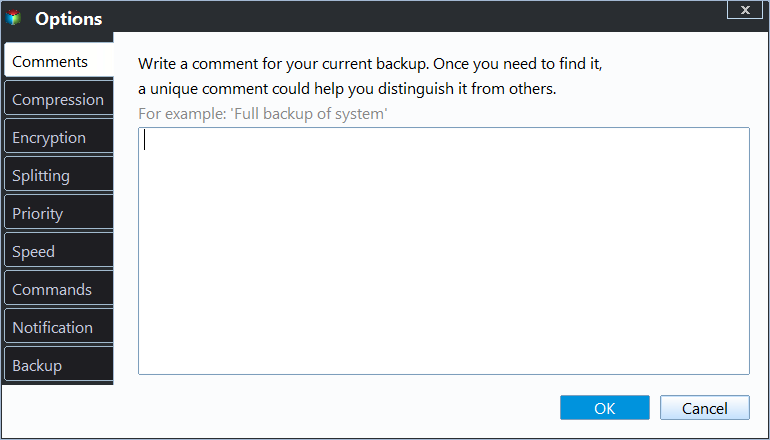
Set up your backup by clicking Options in Backup Options, ensuring the backup is encrypted. You can also customize the backup schedule by choosing a specific time to start the backup in Backup Scheme, and explore other available options.
Step 5. You can save the backup file on your computer, use Qiling's cloud service, or store it on a network-attached storage device (NAS).
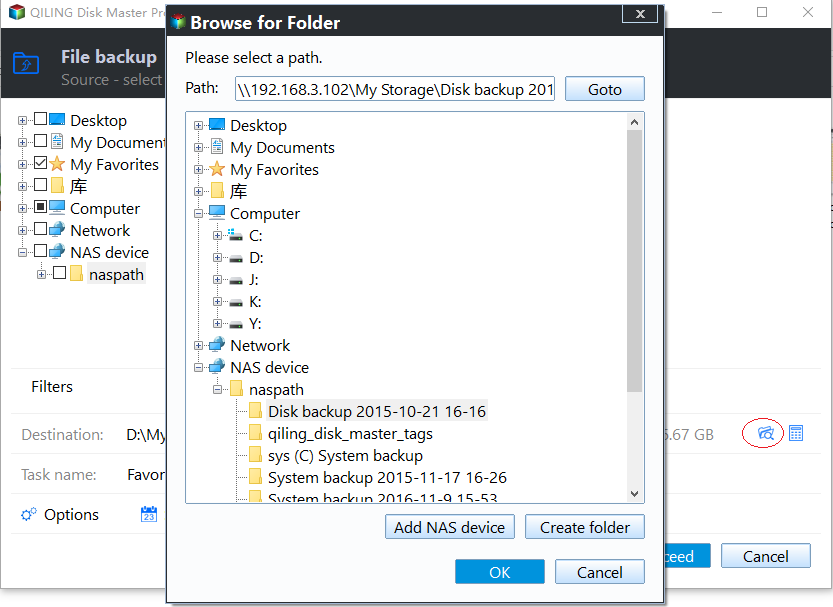
Step 6. Qiling Disk Master allows users to store backup copies of their files on either a third-party cloud drive or the company's own cloud storage.
To back up data to a third-party cloud drive, select Local Drive and add a Cloud Device by scrolling down, then fill in your account information.
Step 7. Click on "Proceed" to start a backup, and once the process is complete, the backup job will appear as a card on the left side of the screen. You can right-click on the card to access additional information and options for managing the backup job.
Final Thoughts
Google Drive for Desktop has taken up combined roles previously held by Backup and Sync, a tool that has been discontinued. Both tools from Google are powerful options for backing up files to the cloud. Now, Google Drive for Desktop handles the tasks that Backup and Sync used to perform.
Qiling Disk Master is a great solution for those seeking a fresh alternative to traditional storage software. With numerous complaints about other options, this program provides ample storage space to keep anything you need, giving you peace of mind and a host of other advantages, including storing and retrieving data from the cloud.
FAQs
1. Is Google Drive for Desktop going away?
Google Drive for Desktop is here to stay, with Backup and Sync's features now integrated into it, making it a more robust and improved service.
2. Is Google Drive better than Backup and Sync?
Google Drive for Desktop has become a more reliable and user-friendly option, combining the features of Google Drive File Stream and Backup and Sync into one.
3. What if I don't want Google Drive for desktop?
The Qiling Disk Master is a comprehensive backup solution that provides all the features of Google Drive for Desktop, including automatic backups, file synchronization, and cloud storage. It also offers additional benefits, such as enhanced security, flexibility, and convenience, making it an ideal choice for users looking for a reliable and efficient backup plan.
4. Do files stay in Google Drive forever?
Files will remain in Google Drive unless they are intentionally deleted by the user or removed due to inactivity or a violation of Google's terms of service.
Related Articles
- Access Denied When Copying Files Windows 10/8/7
- How to Format SD Card on GoPro [Quick Solutions]
- 4 Proven Ways to Fix Zsh Permission Denied in Terminal on macOS Ventura/Monterey
- 8 Ways to Fix Migration Assistant Not Working on Mac
Is migration assistant not working on your mac? Worry no more; this article will help fix the issue with multiple methods! - CPU Comparison Guide: Compare and Choose the Best CPU in 2023
Are you planning to purchase a new CPU? As we all know, the better your CPU is, the faster your computer will run, so how to choose the best and appropriate CPU for yourself? Follow this CPU Comparison Guide, where we compare and choose the best CPU in 2023. - CR2 Photos Not Opening, How Do I Fix and Open CR2? Your Guide Is Here
CR2 photos not opening on Windows or Photoshop? Learn what CR2 files are, common causes of the issue, and 3 proven fixes including using correct programs, converting to JPG, and repairing corrupted CR2 files.
Products
Articles & Tutorials
- Data Recovery
- Data Backup
- File Recovery
- File Backup
- System Backup and Restore
- Disk and Partition Clone
- Technical articles
- Mobile articles
- Disk Master Help
- Windows Data Recovery Tutorials
- Windows Secure Delete Tutorials
- Windows Partition Management Tutorials
- Windows File Backup and Restore Tutorials
- Windows System Backup and Restore Tutorials
- Windows Disk Backup and Restore Tutorials
- Windows Clone Tutorials