[Solved] How to Show Hard Drives on Mac Desktop
After upgrading to Monterey, some Mac users may find that their hard disks no longer appear on the desktop. If you're wondering how to show hard drives on your Mac, the solution is simple: you can easily access your hard drives by clicking on "Finder" in the dock, then selecting "External" or "Internal" from the left menu, or by using the "Go" menu in Finder and selecting "Computer" or "Devices".
| Workable Solutions | Step-by-step Troubleshooting |
|---|---|
| Show Hard Drive Icon on Mac | Navigate to the Menu area and proceed to "Finder." Then, select the "Settings"...Full steps |
| Find a Missing External Drive | Launch the Browser. In the selection at the upper end of your computer...Full steps |
| Find HDD with Software | Launch Deep Data Recovery for Mac and choose the hard drive, SSD, SD card...Full steps |
Having easy access to the Mac HD database can be extremely useful, allowing you to access various directories such as systems, accounts, apps, and libraries. However, in macOS Ventura, the Macintosh HD subdirectory may not be visible on your screen or Finder by default, making file access challenging.
You can display the hard disk on a Mac using various methods, and this article will guide you on how to do so and locate an additional hard disk on a Mac.

Hard Drive Not Showing Up on Mac, Why?
Here are possible reasons why your hard drive is not showing up on Mac:
- File system fraud
The hard drive's file system may be contaminated due to bad sections, logical errors, or other issues, potentially preventing it from installing in the Finder.
- Problem of Preference
You might not have made parameters to enable the hard disk to be accessible on your Mac Terminal or screen.
- Hard drive malfunction
Your drive may have been severely damaged due to hardware failures, head collisions, or other issues.
1 - How to Show Hard Drive Icon on Mac Desktop
You can easily display or conceal your Mac's primary hard disk from the screen of your Mac by adjusting some Finder settings. If you'd like to retain your external hard disk symbol on the screen so that you can quickly retrieve the information, follow these instructions to display the HD icon on Mac.
To start, make sure the Finder is the active window on your Mac. Look for the Finder icon in the top navigation area or click on the Finder icon in the Dock to bring it to the front.
To display the hard disk on a Mac workstation, first, ensure that the hard disk is connected to the Mac. Then, click on the Apple logo in the top left corner of the screen and select "About This Mac" from the dropdown menu.
Step 1. To access the settings for Finder, go to the Menu area, select "Finder," and then choose "Settings."
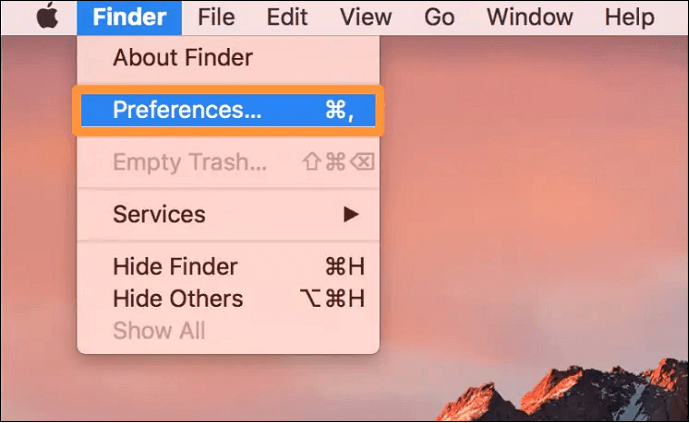
Step 2. When the Finder settings box opens on your Mac computer, click on the "General" menu.
Step 3. Select the "Hard disks" option under "Display these things on the desktop".
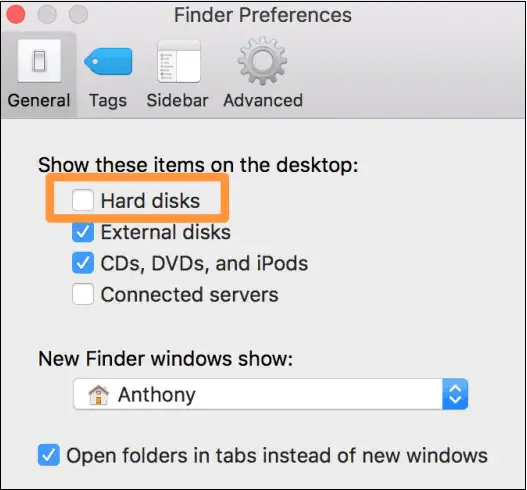
Step 4. The Mac hard drive symbol should now be displayed on your screen.
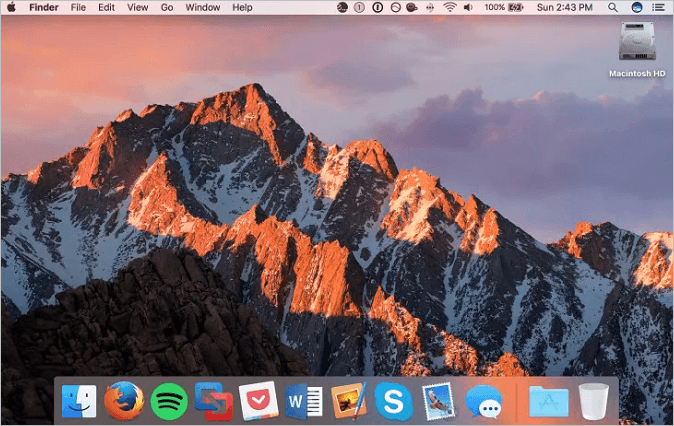
Accessing your Mac's storage devices or hard drives is a straightforward process. To view and manage your Mac's contents, simply double-click on the Mac HD disk from the taskbar, which will take you to a centralized location where all your Mac's information is stored.
2 - How to Find a Missing External Drive on Mac
There are several possible reasons why a hard disk, removable disk, USB stick, or SSD isn't appearing. It could be due to improper formatting, compromise, a defective or insufficient connection, or other issues.
Upon following the steps below, you must be able to find and resolve the "find external hard drive on Mac" issue that is preventing your external disk from appearing on your Mac.
Change your settings
Fortunately; there is a simple solution to installing the hard disk on your workstation. To ensure that your Mac is configured to display installed files on the desktop, carry out the steps following steps:
Step 1. Launch the Browser.
Step 2. In the top menu bar of your computer, select Finder.
Step 3. Go to Select Options > General and check the box next to External Devices.
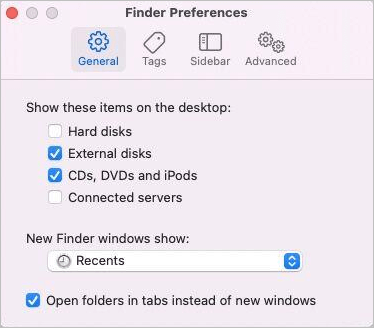
Attempt another Mac, then a Computer
If the initial strategy fails, try connecting the drive to another Mac. If it also fails, the issue likely lies with the drive, but if it succeeds, the problem is probably with your Mac.
If the drive boots on the PC, it's likely configured for PCs and can't be recognized by a Mac. To resolve this, you can reformat the drive to a Mac-compatible format, such as APFS or HFS+, or use a tool like Disk Utility to convert it. If the drive doesn't boot on the PC, check the power and connections to ensure it's properly connected and powered.
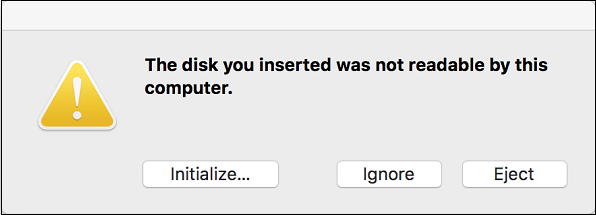
3 - How to Find HDD/ External Hard Drive with Software
If your Mac's hard disk information is inaccessible due to a power outage or malware infection, data recovery tools can help you recover hard drive data.
Deep Data Recovery for Mac will assist you in recovering lost data whenever it occurs, even if you have yet to create a copy of your gadget. This data recovery program will be useful in retrieving misplaced or accidental deletions from your Macintosh hard disk, which you now understand how to split and unpartition.
This professional tool allows you to recover files from any storage media that is compatible with any macOS version, including files from various devices. It supports the recovery of files from different types of storage media, including those that are no longer compatible with newer macOS versions. With this tool, you can retrieve files from devices that have been formatted or corrupted, and it supports the recovery of files from various file systems, including APFS, HFS, and HFS+.
- If you're experiencing issues with your Mac, such as data loss due to a corrupted operating system like macOS Ventura or Monterey, don't worry! There are still ways to recover your data.
- Both internal and external hard disks
- SSD, fusion drives, time machine backup drives, and USB drives
- SD cards, memory cards, and cameras
Losing data in a catastrophe, such as a system breakdown, equipment malfunction, or human error, can be devastating. However, with Qiling data recovery software, you can recover lost data and undelete folders quickly and efficiently, minimizing the impact of such incidents. This software can handle various data loss situations, providing a reliable solution to a potentially disastrous problem.
Step 1. Search for lost files
Choose the disk location where your lost files were stored, which can be an internal hard drive, solid state drive, or an external hard drive, and then click the "Search for lost files" button.
Note: Before attempting data recovery, it's recommended to create a backup of your HDD/SSD by clicking "Disk Backup" from the left sidebar to avoid further data loss. This backup can then be used for data recovery, and the original disk can be reused.

Step 2. Go through the scanning results
This software scans the selected disk volume and displays various file types, including pictures, documents, audio, videos, and emails, in the left pane.

Step 3. Select the file(s) and recover
To recover deleted files, click on the "Recover" button after previewing the data.
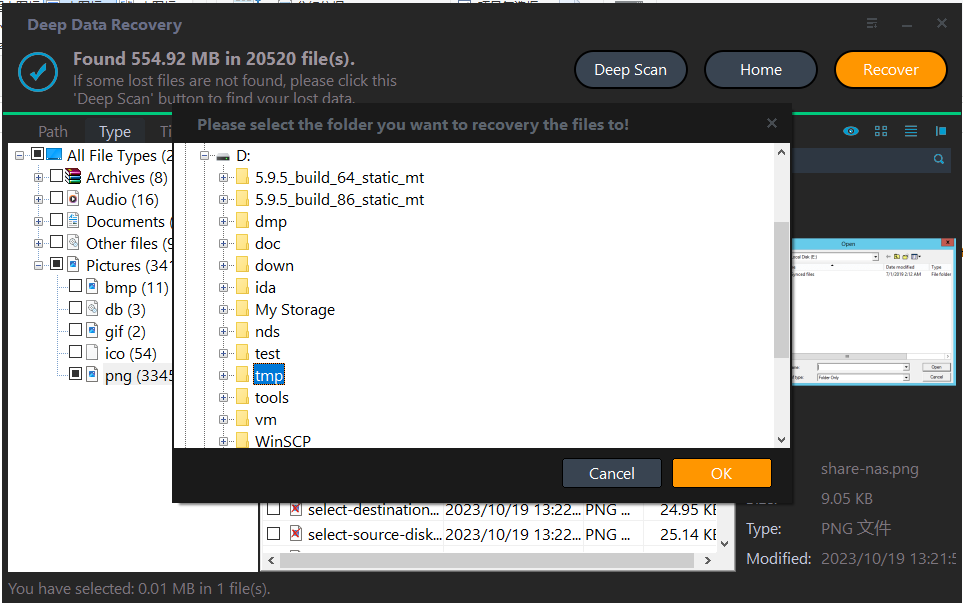
If data isn't being stored and there's no backup, you can use Qiling Mac data recovery tool, which handles over 500 file formats, to recover your data. Download it now for macOS data recovery.
Conclusion
Building and deleting a Mac disk partition is relatively easy, but requires caution throughout the process. If an accidental deletion occurs, Qiling Mac data recovery software is available to assist in recovering lost data.
Show Hard Drives on Mac FAQs
Have a look at the below-mentioned FAQs to get a better comprehension of the topic:
1. How to show a hard drive on a Mac desktop?
To customize your Mac's Finder, go to Finder > Preferences and click on the "General" tab. Here, you can select what you want to see on the screen, such as hard drives, by clicking on the relevant option. If you want to display specific items in the Finder window, click on the "Sidebar" tab and choose the items you're interested in viewing.
2. How do I put a hard drive shortcut on my Mac desktop?
In the Finder, go to Finder > Options, then select General to customize your screen settings. Note that the Desktop icon represents a folder on your Mac, so it can't be moved onto the desktop itself.
3. Why is my Mac not detecting my hard drive?
The most common issue is that your disk needs to be properly formatted. To resolve this, you can use Disk Utility to format your disk. Other potential causes include a faulty power source, a malfunctioning connection, or the disk being damaged or compromised.
4. How to access external hard drives on Mac?
When you plug an external hard drive into a Mac's USB port, it may automatically appear on the desktop, or you can find it in the Finder under various locations in the left column.
To help more people handle their hard drives on Mac, you can share this post to spread the knowledge. This way, others can learn how to manage their storage, back up their files, and troubleshoot common issues with their Mac's hard drive.
Related Articles
- PS5 No Sound? 8 Fixes Here! [Reasons Explained]
- [Fixed] Function Keys Not Working | 6 Tested Methods
- How to Fix Windows 10 Update with Error Code 0x800F0922 Issue
- What is WindowServer on Mac and How to Fix WindowServer High CPU
- [All You Should Know] How to Save Sims 4 While Frozen
Learn what to do when Sims 4 freezes and how to protect your saves. Try recovery steps, backup tips, and fixes to reduce future freezes. - 4 Ways | How to Stop Windows 11 Update Pending Restart
If you're seeing a 'Windows 11 update pending restart' message under the Windows updates menu and aren't sure how to stop it, this article is here to help. We'll guide you through the process of stopping the Windows 11 update pending restart.
Products
Articles & Tutorials
- Data Recovery
- Data Backup
- File Recovery
- File Backup
- System Backup and Restore
- Disk and Partition Clone
- Technical articles
- Mobile articles
- Disk Master Help
- Windows Data Recovery Tutorials
- Windows Secure Delete Tutorials
- Windows Partition Management Tutorials
- Windows File Backup and Restore Tutorials
- Windows System Backup and Restore Tutorials
- Windows Disk Backup and Restore Tutorials
- Windows Clone Tutorials