Fix Windows 11 Freezing Randomly (2026 Guide)
Random freezes are one of the most frustrating problems in Windows 11. Your PC suddenly becomes unresponsive, the mouse cursor won't move, and you have to force a restart—losing any unsaved work. When Windows 11 keeps freezing randomly, the cause is often a driver issue, overheating, corrupted system files, or failing hardware.
This guide covers 9 proven solutions to fix random freezing in Windows 11.
PAGE CONTENT
- Common Causes of Windows 11 Freezing
- Fix 1: Update All Drivers
- Fix 2: Check for Overheating
- Fix 3: Run SFC and DISM Scans
- Fix 4: Test RAM with Windows Memory Diagnostic
- Fix 5: Check Disk Health with CHKDSK
- Fix 6: Disable Fast Startup
- Fix 7: Update BIOS and Chipset Drivers
- Fix 8: Perform a Clean Boot
- Fix 9: Check Power Supply and Hardware
- FAQs About Windows 11 Freezing
- Back Up and Restore Windows with Qiling Disk Master
Common Causes of Windows 11 Freezing
Random freezing in Windows 11 is usually caused by one of the following:
- Outdated or incompatible drivers (especially GPU and chipset drivers)
- Overheating due to dust, dried thermal paste, or fan failure
- Corrupted system files
- Failing RAM or hard drive/SSD
- Fast Startup conflicts
- Outdated BIOS/UEFI
- Conflicting third-party software
- Insufficient or faulty power supply
- Note
- Before troubleshooting, back up your important files with Qiling Backup. Random freezes can sometimes indicate failing hardware, so protecting your data first is essential.
Fix 1: Update All Drivers
Outdated or incompatible drivers are the most common cause of random freezing, especially GPU drivers.
Step 1. Press Win + X and select "Device Manager".
Step 2. Expand "Display adapters", right-click your GPU, and select "Update driver".
Step 3. Choose "Search automatically for drivers", or download the latest driver directly from NVIDIA, AMD, or Intel.
Step 4. Also update chipset drivers from your motherboard manufacturer's website.
Step 5. Update network, audio, and other drivers the same way.
Step 6. Restart your PC and monitor if freezing continues.
Fix 2: Check for Overheating
Overheating is a leading cause of random freezes, especially under load.
Step 1. Install a monitoring tool like HWMonitor, Core Temp, or HWiNFO.
Step 2. Check your CPU and GPU temperatures. Normal idle temps are 30-50°C; under load, 60-80°C is acceptable. Anything above 90°C indicates a problem.
Step 3. If temperatures are high, clean dust from fans, vents, and heatsinks using compressed air.
Step 4. For desktops, consider reapplying thermal paste if the PC is several years old.
Step 5. Make sure all fans are spinning. Replace any failed fans.
Step 6. Ensure your PC has adequate ventilation (don't block vents).
Fix 3: Run SFC and DISM Scans
Corrupted system files can cause random freezing. Run SFC and DISM to repair them.
Step 1. Press Win + X and select "Windows Terminal (Admin)".
Step 2. Run DISM:
DISM /Online /Cleanup-Image /RestoreHealth
Step 3. Run SFC:
sfc /scannow
Step 4. Wait for both scans to complete. If corrupted files are found and repaired, restart your PC.
Fix 4: Test RAM with Windows Memory Diagnostic
Failing RAM is a common cause of random freezes. Windows has a built-in memory diagnostic tool.
Step 1. Press Win + R, type mdsched.exe, and press Enter.
Step 2. Select "Restart now and check for problems (recommended)".
Step 3. Your PC will restart and run the memory test. This can take 15-30 minutes.
Step 4. After the test, Windows will restart and show the results. If errors are found, one of your RAM sticks is faulty.
Step 5. If errors are found, test each RAM stick individually to identify the faulty one.
Fix 5: Check Disk Health with CHKDSK
A failing hard drive or SSD can cause random freezes. Check its health with CHKDSK.
Step 1. Press Win + X and select "Windows Terminal (Admin)".
Step 2. Run:
chkdsk C: /f /r
Step 3. Type Y when asked to schedule the check on next restart.
Step 4. Restart your PC. The disk check will run and may take a while.
Step 5. Also check your SSD/HDD health with a tool like CrystalDiskInfo. If it shows "Caution" or "Bad", back up your data and replace the drive.
Fix 6: Disable Fast Startup
Fast Startup can cause freezing and boot issues on some systems. Disabling it often helps.
Step 1. Press Win + R, type control, and press Enter to open Control Panel.
Step 2. Go to "Hardware and Sound" > "Power Options".
Step 3. Click "Choose what the power buttons do".
Step 4. Click "Change settings that are currently unavailable".
Step 5. Uncheck "Turn on fast startup (recommended)".
Step 6. Click "Save changes" and restart your PC.
Fix 7: Update BIOS and Chipset Drivers
An outdated BIOS/UEFI can cause stability issues. Updating it can fix random freezing.
Step 1. Find your motherboard or PC model.
Step 2. Go to the manufacturer's website (Asus, MSI, Gigabyte, Dell, HP, Lenovo) and check for the latest BIOS version.
Step 3. Follow the manufacturer's instructions to update the BIOS. Never interrupt a BIOS update.
Step 4. Also install the latest chipset drivers from the same website.
Step 5. Restart your PC and monitor for freezing.
Fix 8: Perform a Clean Boot
Third-party software that starts with Windows can cause conflicts and freezing. A clean boot helps identify the culprit.
Step 1. Press Win + R, type msconfig, and press Enter.
Step 2. Go to the "Services" tab.
Step 3. Check "Hide all Microsoft services" (important!), then click "Disable all".
Step 4. Go to the "Startup" tab and click "Open Task Manager".
Step 5. Disable all startup items.
Step 6. Close Task Manager, click "OK" in System Configuration, and restart your PC.
Step 7. If freezing stops, re-enable services and startup items one by one to find the culprit.
Fix 9: Check Power Supply and Hardware
If software fixes don't work, the freezing may be caused by hardware issues.
Step 1. For desktops, check that your power supply (PSU) provides enough wattage for your components.
Step 2. Reseat RAM sticks, GPU, and SATA/NVMe cables to ensure solid connections.
Step 3. Check for swollen capacitors on the motherboard.
Step 4. Test with a known-good power supply if possible.
Step 5. Check Windows Event Viewer (eventvwr.msc) for critical errors around the time of the freezes.
Step 6. If hardware failure is suspected, consider professional diagnosis.
FAQs About Windows 11 Freezing
Why does my Windows 11 PC keep freezing randomly?
Random freezing is usually caused by outdated drivers, overheating, failing RAM, a failing drive, or Fast Startup conflicts. Update all drivers and check your CPU/GPU temperatures first.
How do I know if my RAM is failing?
Run the Windows Memory Diagnostic tool: press Win + R, type mdsched.exe, and select "Restart now and check for problems". If errors are reported, test each RAM stick individually to find the faulty one.
Can overheating cause Windows 11 to freeze?
Yes. When the CPU or GPU overheats, the system may freeze or shut down to protect itself. Check temperatures with HWMonitor or HWiNFO. If they exceed 90°C under load, clean dust from fans and consider reapplying thermal paste.
Does Fast Startup cause freezing in Windows 11?
Fast Startup can cause freezing and boot problems on some systems. Disable it: Control Panel > Hardware and Sound > Power Options > Choose what the power buttons do > uncheck "Turn on fast startup".
Should I reinstall Windows 11 to fix freezing?
Reinstalling Windows should be a last resort. Try all the software and hardware fixes above first. If freezing continues and hardware tests pass, a clean install of Windows 11 may resolve deeply corrupted system files. Back up your data with Qiling Backup first.
Back Up and Restore Windows with Qiling Disk Master
Before you update drivers, run memory diagnostics, or change power settings to stop random freezes, create a full system backup. Freezing is usually tracked down by changing drivers and hardware settings, and a system image lets you undo all of it in minutes if a change makes Windows unstable. Qiling Disk Master handles both the backup and the restore.
Part 1: Create a Full System Backup
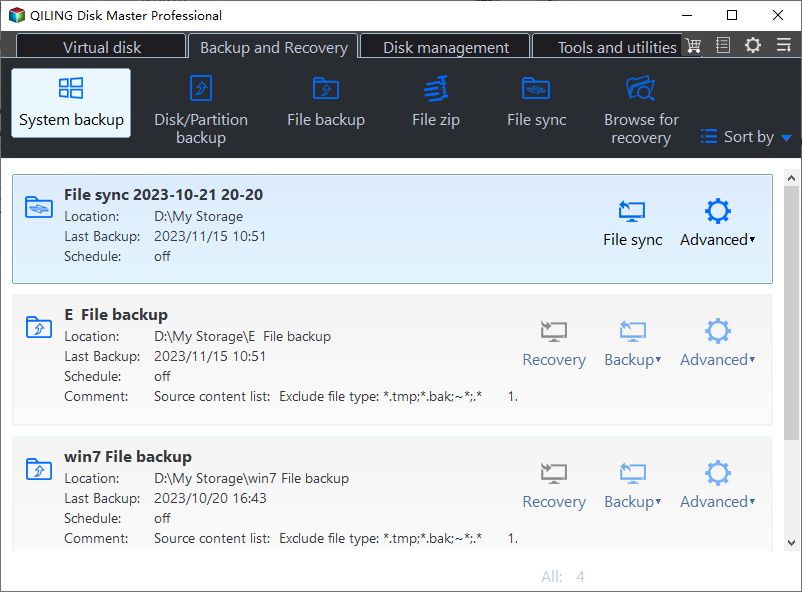
Step 1. Install and open Qiling Disk Master. On the home screen, open "Backup and Recovery" and choose "System Backup". This option automatically includes Windows and the hidden boot partitions, so you do not have to select them one by one.
Step 2. Check the source. The disk where Windows is installed and its system partitions are already ticked for you. If you only need your personal documents, run a separate "File Backup" task instead.

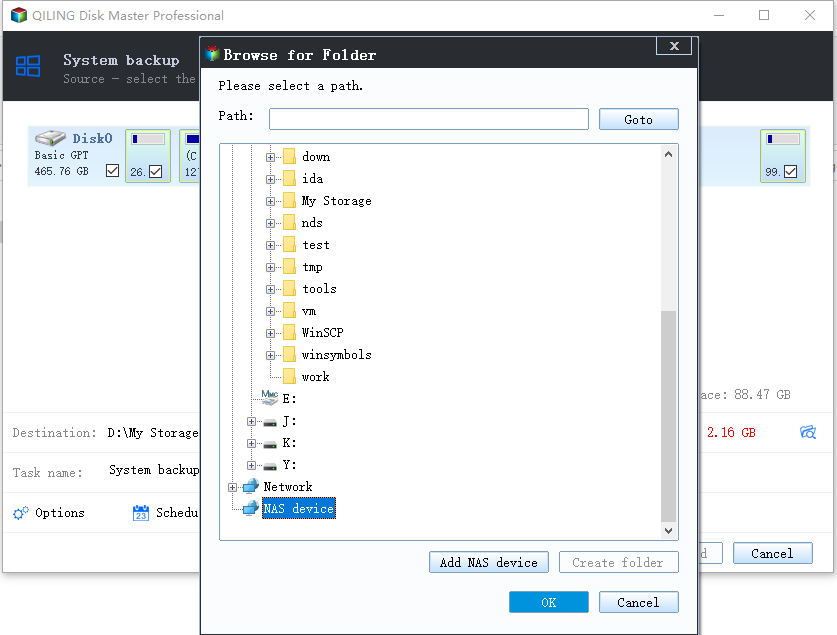
Step 3. Click the destination box and choose where the image should be saved. Use an external HDD or SSD, a NAS, or any drive other than the one you are about to repair, and make sure it has enough free space.
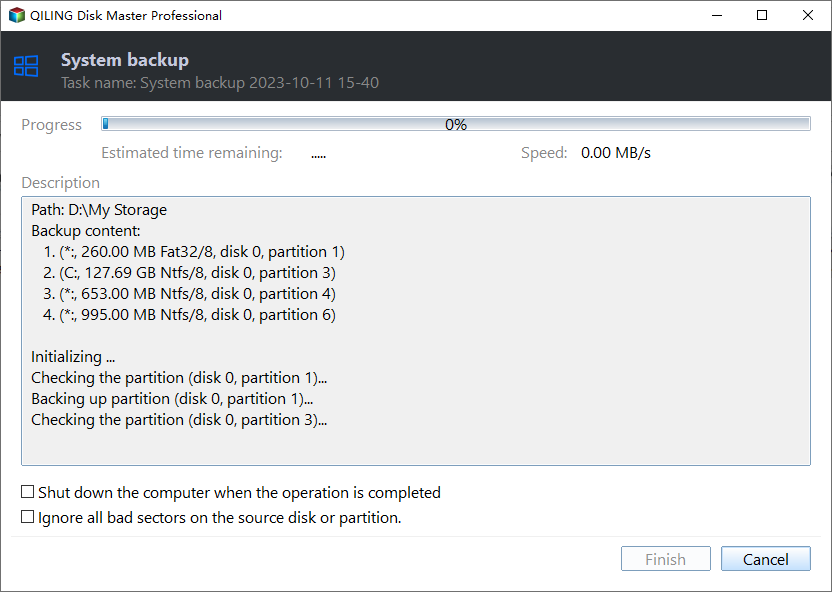
Step 4. Review the task summary and click "Proceed". Wait until the progress bar reaches 100%. Do not unplug the drive or turn off the PC while the backup is running.
Part 2: Restore Windows from the Backup
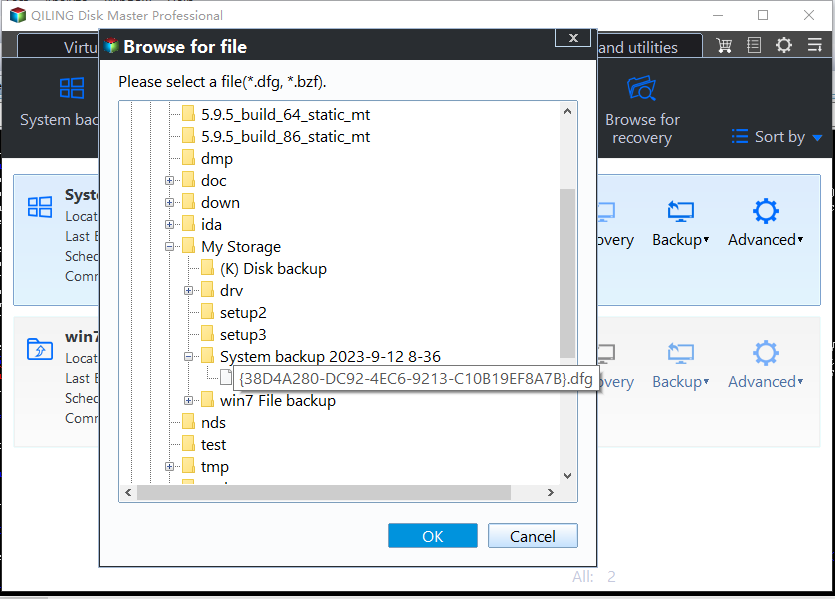
Step 1. Open Qiling Disk Master again, go to "Backup and Recovery", and select the recovery option. Your backup images are listed, so pick the one you created before the repair.
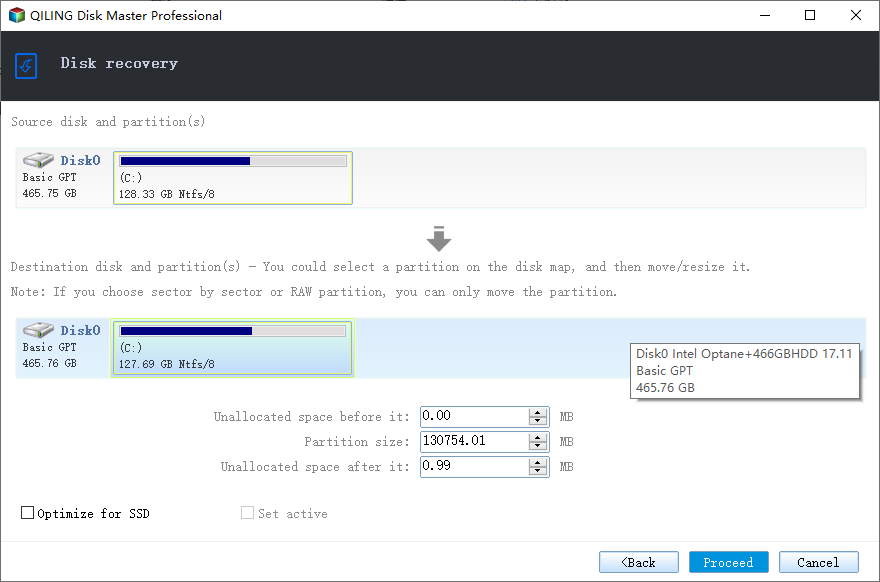
Step 2. Choose the target disk or partition. Normally you restore to the original system disk. If the drive was replaced, select the new disk instead, and the restore rebuilds Windows together with its boot partitions.
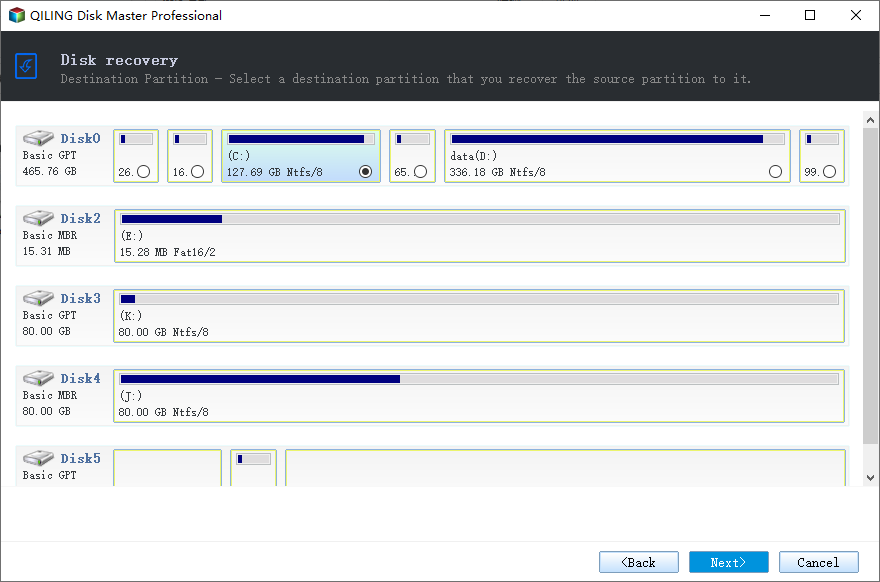
Step 3. Preview the restore plan, click "Proceed", and confirm the warning. The PC restarts to finish the job, and Windows comes back exactly as it was on the day the image was created.
- Note
- Keep the backup image on a separate drive, and refresh it before every major change, such as a Windows update, a driver upgrade, or a disk operation.
Conclusion
Windows 11 freezing randomly is usually fixable by updating drivers, checking for overheating, running SFC and DISM scans, or testing your RAM and disk. If the issue persists, disable Fast Startup, update the BIOS, perform a clean boot, or check hardware like the power supply. Always back up your important files before troubleshooting, since random freezes can indicate failing hardware.
For more Windows 11 troubleshooting, see our guides on No Sound, File Explorer Not Working, and Windows 11 24H2 Problems.
Related Articles
- Fix Windows 11 File Explorer Not Working (2026 Guide)
- Windows 11 24H2 Problems and How to Fix Them (2026 Guide)
- Windows 11 25H2 Problems and How to Fix Them (2026 Guide)
- Fix Windows 11 Taskbar Not Working (2026 Guide)
- How to Check Disk Health on Windows 11/10
If Windows 11 keeps freezing, your drive may be failing. Learn how to check disk health with SMART data, CHKDSK, and manufacturer tools. - 3 Ways | How to Reinstall Windows 10 Without CD
Need to reinstall Windows after persistent freezing? Learn 3 ways to reinstall Windows 10/11 without a CD using Reset, installation USB, or system image. - Kernel-Power Event 41 in Windows 11: How to Find the Cause
Products
Articles & Tutorials
- Data Recovery
- Data Backup
- File Recovery
- File Backup
- System Backup and Restore
- Disk and Partition Clone
- Technical articles
- Mobile articles
- Disk Master Help
- Windows Data Recovery Tutorials
- Windows Secure Delete Tutorials
- Windows Partition Management Tutorials
- Windows File Backup and Restore Tutorials
- Windows System Backup and Restore Tutorials
- Windows Disk Backup and Restore Tutorials
- Windows Clone Tutorials