What Happens If You Delete the System32 Folder? Here Are the Answers
The System32 folder on your computer may have sparked curiosity, with some thinking deleting it will boost performance. But is that the case? In this blog post, we'll answer these questions and more, guiding you on when it's safe to delete the System32 folder and when it's not, providing valuable information for both new and experienced Windows users.
What Is a System32 Directory/Folder
System32 is a folder on a computer that contains critical Windows system files, including drivers, DLL files, and EXE files, which are essential for the proper functioning of the operating system.
The System32 folder is located in the C:\Windows directory on your hard drive, which can be accessed by viewing hidden files and folders in File Explorer, and is a crucial part of the Windows operating system, but can sometimes be associated with errors.
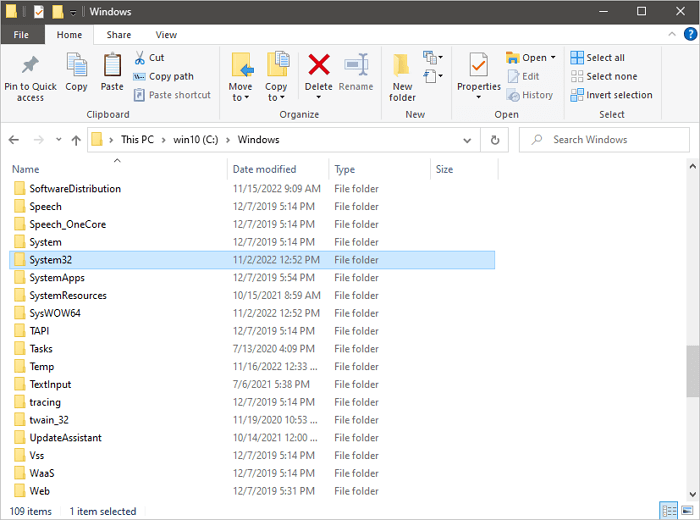
When there are multiple versions of the same DLL file in the System32 folder, it can cause conflicts and make programs run incorrectly, known as "DLL Hell".
Another System32 error is the "Startup repair loop", which occurs when System32 tries to load a file that doesn't exist, resulting in a continuous cycle of loading and reloading.
System32 errors can be frustrating, but are often fixed by reinstalling affected files or running a System File Checker (SFC) scan, which can resolve the issue.
What Happens If You Delete the System32 Folder?
Deleting the System32 folder is a bad idea, as it can cause more harm than good, even if you're trying to delete a virus. If deleted, your computer will likely experience problems such as system crashes, inability to boot, and corrupted files, making it difficult to recover. It's recommended to use a reputable antivirus software to safely remove any malicious files instead.
No longer be able to start up.
The C:\Windows folder contains many critical system files that are necessary for your computer to boot up properly. If these files are missing or corrupted, your computer may not be able to start up correctly.
Your computer will crash.
If you install the Windows 10 May 2020 Update, you'll likely have to reinstall Windows 10. Even if your computer doesn't crash, you'll probably experience many problems.
Deleting the System32 folder can cause a Windows system to crash or become unstable, as it contains essential system files and drivers. This can lead to a range of problems, including the inability to boot up the system, errors when trying to install software, and even complete system failure. It's generally not recommended to delete the System32 folder, as it can cause more harm than good.
- 0:32 What is System32
- 2:00 System32 VS System64
- 6:01 What happens if you delete System32
How to Delete Windows System32 in Windows 11/10/8/7
To delete the contents of the Windows System32 folder using CMD, open Command Prompt as an administrator, navigate to the System32 folder using the cd command, and then use the del command to delete the contents, but be aware that this can cause errors and instability in the Windows operating system.
Step 1. Click the start icon and search for Command Prompt.
Step 2. Select "Run as administrator".
Step 3. Type del /s /q C:\Windows\System32\* and hit "Enter".
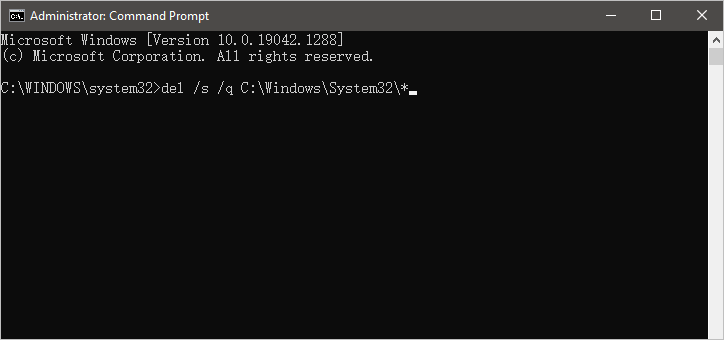
This will delete all files and folders within System32
Step 4. Type rd /s /q C:\Windows\System32 and press Enter.
This will delete the System32 folder itself. Keep in mind that deleting System32 is not reversible, so make sure you want to do this before proceeding.
How to Recover Deleted Windows System32 Folder/Files
You should keep the Windows System32 folder to avoid startup errors. If you've deleted it and want to recover it, consider using a reliable data recovery software like Deep Data Recovery to recover lost or deleted data.
- You can recover deleted files from external storage devices like USB drives and memory cards.
- Support for data recovery is available in various operating systems, including Windows 11, 10, 8, and 7, as well as macOS 13.0 and all the way back to OS X 10.9.
- After a Windows update, system crash, or virus attack, you can retrieve lost files using various methods. First, check the Recycle Bin and System Restore points to see if the files are still available.
Qiling hard drive recovery software is a reliable tool for recovering lost data, featuring an user-friendly interface and useful tools that can aid in specific data recovery situations. It can be used to recover a deleted System32 folder in Windows 11/10/8/7.
Step 1. Launch Deep Data Recovery on your Windows computer. Select the file types you want to recover and click "Fast Scan" to begin the recovery process.
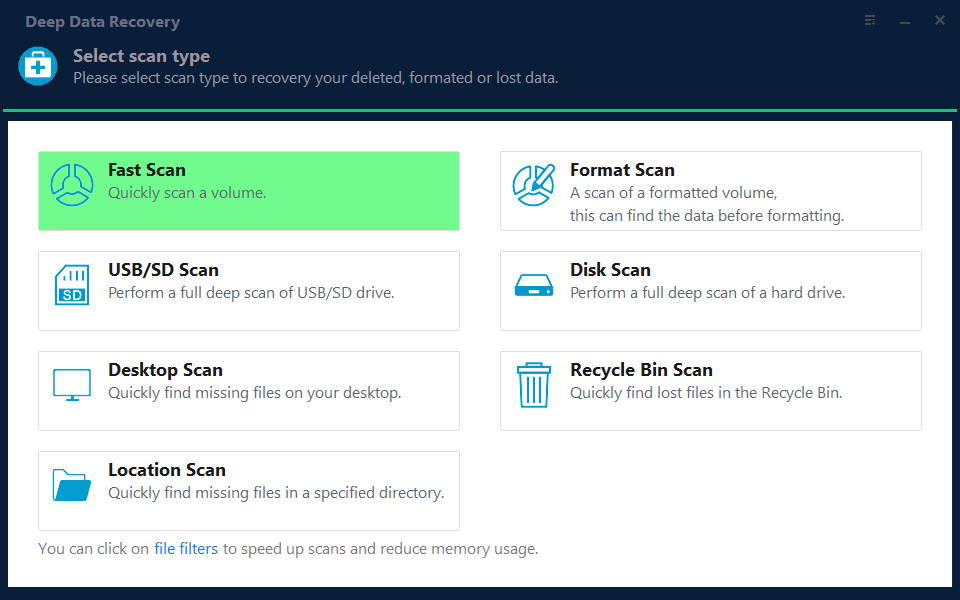
Note: You can choose different search modes based on where and why the data was lost.
Step 2. Select the specific file location you want to scan and click the "Scan" button to proceed with the process.

Step 3. After the process, select the "Deleted Files" and "Other Lost Files" folders in the left panel, then apply the "Filter" feature or click the "Search files or folders" button to find the deleted files.

Step 4. Click the "Recover" button and save the restored files ideally in a different location from the original one.
Conclusion
This article clarifies the purpose of the System32 directory, which should not be deleted or altered as it can cause significant problems with your computer. If you've accidentally deleted something from this folder or need to recover lost data, there are recovery methods available, but it's recommended to work with a professional data recovery tool to avoid further damage.
Delete System32 FAQs
As a general rule, we recommend not deleting this folder or any of its contents, as doing so can render your computer unusable. If you still have confusion, read the questions and answers below to get help.
1. Do you need System32?
System32 is a folder in Windows that holds essential files for the operating system's normal functioning, and it should never be deleted.
2. Is there a way to reinstall System32?
Yes, you can reinstall System32 with the following steps.
- Restart your PC.
- Keep tapping the F8 Button until a menu appears.
- When the menu appears, use the UP and DOWN arrow keys to select the "Last known good configuration" option. Then press ENTER to apply it.
- Once selected, press Enter.
- The PC should now reinstall the "last known good configuration file".
- Restart your PC and see if the problem has been solved.
3. How to fix the System32 error in Windows 10?
You can repair corrupted System32 with these solutions:
- Fix 1. Restore corrupted registry via Easy Recovery Essentials
- Fix 2. Reboot a PC into Last Known Good Configuration
- Fix 3. Check the disk file system with the CHKDSK utility
- Fix 4. Restore the registry manually
Related Articles
- [Fixed Lately] How to Perform a Netsh Winsock Reset on Windows
- How to Stop Windows 10 Update in Progress in 3 Ways
- Why Is My Camera Telling Me to Format My SD Card [Full Explanation]
- DMG File No Mountable File Systems on macOS Ventura/Monterery/Big Sur [SOLVED]
- What Is Microsoft Identity Manager? Overview, Features & Deployment [Everything You Need]
Are you looking to deploy the Microsoft Identity Manager or MIM? This article features a complete overview, followed by its features and deployment. Look into this article to learn more about the tool and its accessibility in the mainstream market. - What Is MSI Boot Menu [Detailed Info]🔥🔥
The MSI boot menu is a feature that allows users to access various boot options on their MSI laptop. This article provides information on the MSI boot menu and how to access it, giving users a comprehensive understanding of the feature.
Products
Articles & Tutorials
- Data Recovery
- Data Backup
- File Recovery
- File Backup
- System Backup and Restore
- Disk and Partition Clone
- Technical articles
- Mobile articles
- Disk Master Help
- Windows Data Recovery Tutorials
- Windows Secure Delete Tutorials
- Windows Partition Management Tutorials
- Windows File Backup and Restore Tutorials
- Windows System Backup and Restore Tutorials
- Windows Disk Backup and Restore Tutorials
- Windows Clone Tutorials