How to Back Up Programs Before Reinstalling Windows 10/11 [3 Quick Ways]
Do I Need to Backup Programs Before Reinstalling Windows
Windows can be buggy and cause issues like getting stuck on "Windows ready", system crashes, or no bootable device. If you're experiencing problems, reinstalling Windows 10 might be the best solution.
When reinstalling a system, the files and programs on the system disk will be formatted and lost, making it essential to back up your programs and files to ensure they remain secure in case something goes wrong during installation.
To backup programs before reinstalling Windows 10 or 11, you'll want to save your installed programs and their settings. This can be done by creating a System Image backup, which captures the entire state of your computer, including installed programs, settings, and files. Alternatively, you can use the built-in "Backup" feature in Windows to create a backup of your installed programs and their settings.
How to Back Up Programs Before Reinstalling Windows 10/11 with File Backup Software
To prepare for reinstalling Windows 10 or the latest Windows 11, it's a good idea to back up any installed programs beforehand, allowing for a smooth restoration process once the reinstallation is finished.
You can back up your programs on Windows using a PC backup software like Qiling Backup Home, which creates an image of your entire hard drive, including your programs, that can be stored on an external hard drive or network location.
Highlights and special functions of Qiling backup software are:
- Back up disks, partitions, and files smartly and restore them quickly, ensuring data integrity and minimizing downtime.
- Excellent clone features allow for system and disk clone
- Back up systems, boot partitions, and program files securely
- You can back up your files to different devices, such as a network shared location, a USB drive, or cloud storage services.
To backup programs with Qiling Backup, follow the steps below.
Step 1. Launch Qiling Backup and choose "System Backup" on the home page to start a system backup.
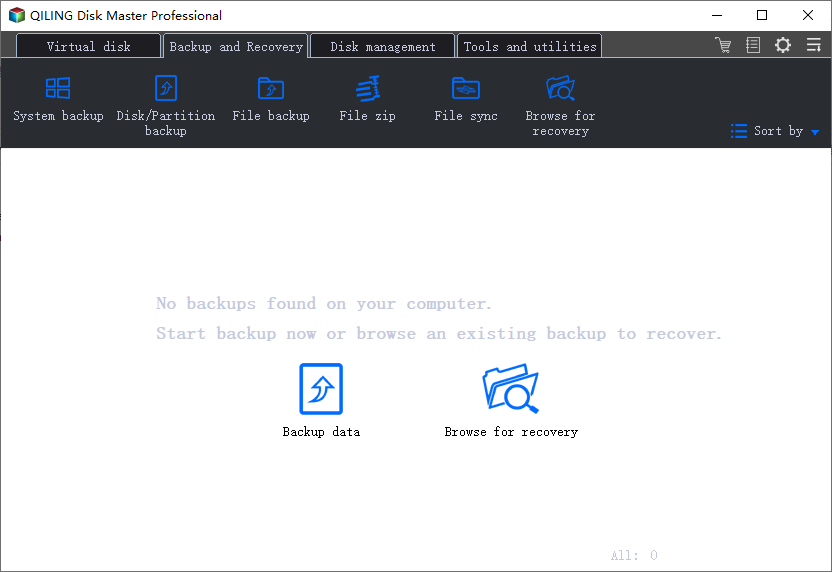
Step 2. The system partition will be automatically selected, so you just need to choose the location for the installation.
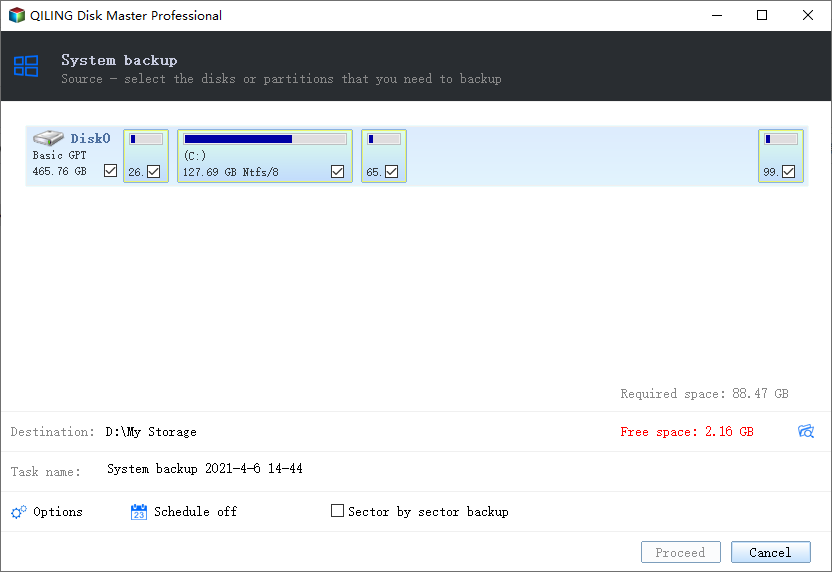
Step 3. You can save backup files to your local drive, cloud storage, NAS, or even connect an external hard drive to store system backup files.
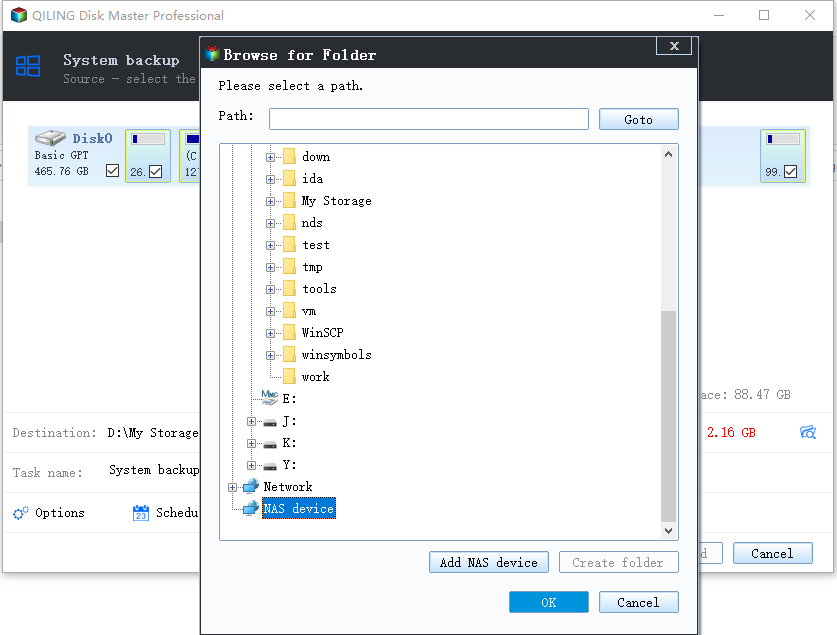
Step 4. To customize the settings, go to the left bottom and click on "Options", then click "Proceed" to start the process.
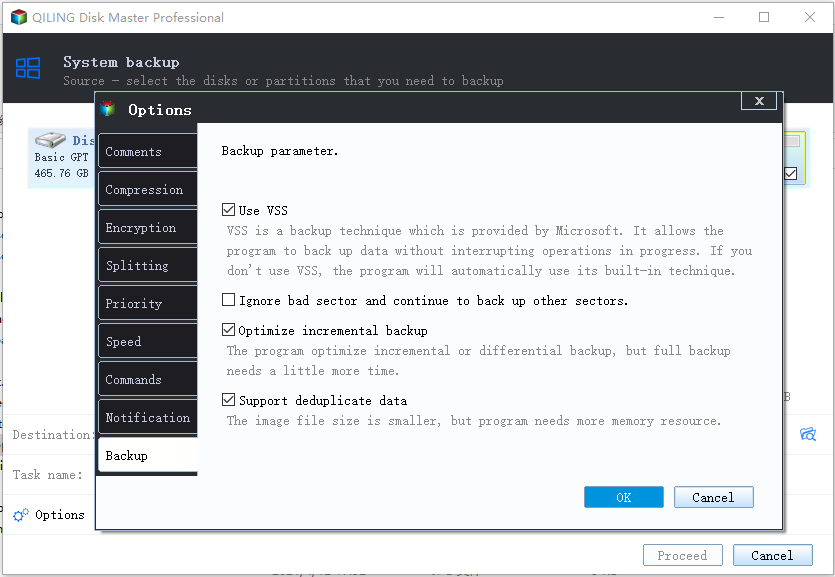
After completing the backup process, you can check the backup status, recover, open, or delete the backup by right-clicking on the backup task on the left.
How to Back Up Program with Windows Built-in Tool
Windows 10 backup and restore is a built-in utility that allows users to back up and restore files and system images, helping to prevent data loss by backing up programs.
Here's how:
Step 1. To access the Control Panel and the "Backup and Restore (Windows 7)" option, follow these steps: Open the Control Panel on your computer, navigate to the "Backup and Restore (Windows 7)" section, and proceed with the instructions provided.
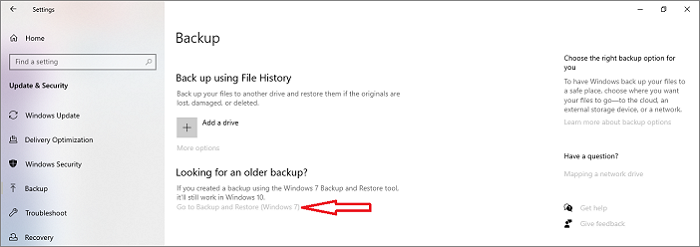
Step 2. Click "Create a system image" on the screen.
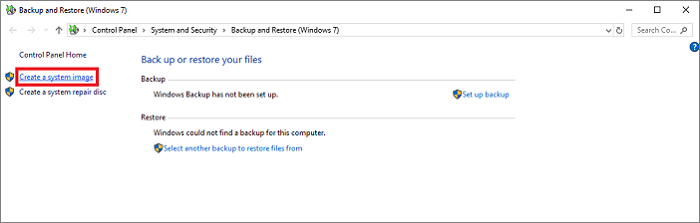
Step 3. Save the backup image to an external hard drive or USB flash drive.
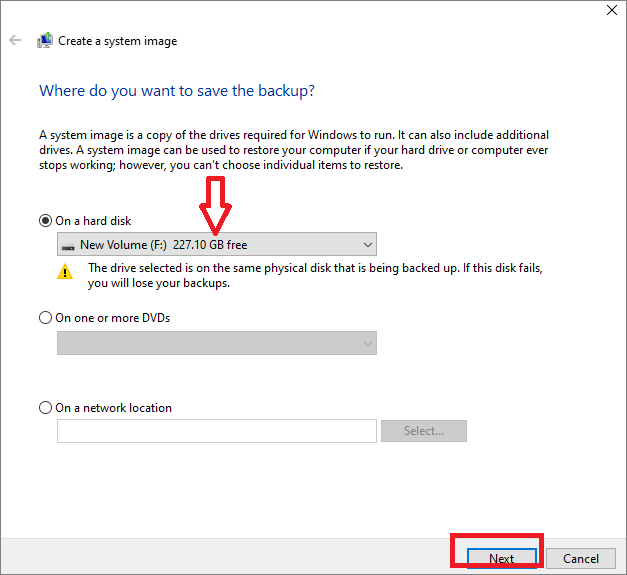
Step 4. Choose the "Include a system image of drives" option and click "Next".
Step 5. On the next screen, you'll be able to select which drives you want to include in the backup image. By default, only the drive that Windows is installed on will be selected, so make sure to select all relevant drives.
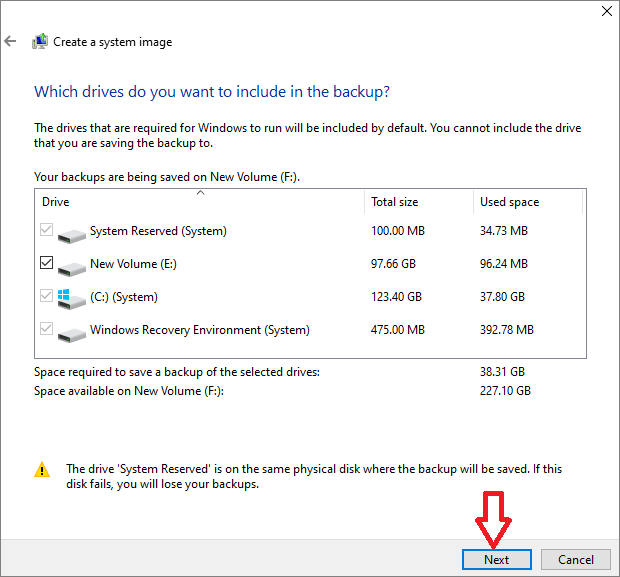
Step 6. Once you've made your selections, click "Next" and the backup process will begin. The backup process may take a while depending on the size of your hard drive.
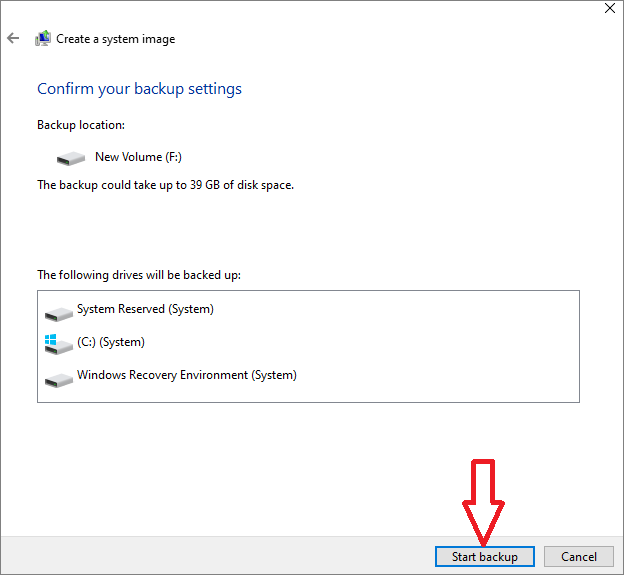
Once the backup is complete, you'll have a full image of your programs and data that can be restored later if needed.
How to Back Up Programs Before Reinstalling Windows 10 with Export-and-Import Tool
Another way to back up programs on Windows is to use a program's export feature, which allows you to save settings and data in a file, that can be imported into the same or another program after reinstalling Windows 10.
To export a program's settings:
Step 1. To export or back up your data, follow these steps: Open the program, navigate to the File menu, and look for an "Export" or "Backup" option. This will allow you to save your data in a format that can be easily imported back into the program or used in other applications.
Step 1. Select the desired option and choose where to save the exported file, taking note of the chosen location for future reference.
Step 1. After exporting the file, you can reinstall Windows 10.
Step 1. Once the re-installation is complete, open the program and look for an "Import" or "Restore" option in the File menu.
Step 1. Choose the exported file to restore your program's settings and data. This will restore your program's settings and data.
Back Up Programs Before FAQs Reinstalling Windows 10 FAQs
Get additional information on program backup before reinstalling Windows.
Will I lose my programs if I reinstall Windows?
If you reinstall the operating system, the files and programs on the system disk will be lost, so it's recommended to back up programs before reinstalling Windows.
How do I reinstall Windows without losing programs?
To reinstall Windows without losing programs, first back up your programs if your system is running properly. If your computer can't boot with important programs and data, don't worry - you can use Deep Data Recovery WinPE to restore data and files from an unbootable computer, saving all your data and reinstalling Windows without any loss.
How do I back up my Windows programs?
To quickly back up your programs on your disk, consider using professional disk backup software. This type of software can efficiently and effectively protect your data by creating a duplicate copy of your programs, allowing you to restore them in case of any issues or system failures.
Step 1. Download and install Qiling Backup Home.
Step 2. Choose disk backup to back up the system disk.
Step 3. Restore your system disk with programs whenever you need them.
How do I reinstall Windows 10 and keep everything?
If you want to start fresh with a clean Windows 10 installation without losing your personal files and settings, you can use the "Reset this PC" feature. This will give you a brand new installation of Windows 10, while still preserving your important files and settings, effectively giving you a fresh start without the bloatware and junk that came with your PC.
Related Articles
- Windows 11 Download - How to Get the Windows 11 22H2 ISO File
- Top 7 Free Cloud Storage Service for Backup
- [Steam Tutorial] How to Back Up and Restore Steam Game Files
- How to Factory Reset PC Without Losing Data in Windows
- [Easiest] How to Transfer/Move/Migrate Outlook to New Computer
If you're looking for a hassle-free way to move Outlook to a new computer, you're in the right place. - How Do I Transfer Photos from Verizon Cloud to My phone
You can transfer photos from Verizon Cloud to your phone, and also use it to transfer photos to a new phone or computer, allowing you to easily sync and keep your photos safe on your devices.
Products
Articles & Tutorials
- Data Recovery
- Data Backup
- File Recovery
- File Backup
- System Backup and Restore
- Disk and Partition Clone
- Technical articles
- Mobile articles
- Disk Master Help
- Windows Data Recovery Tutorials
- Windows Secure Delete Tutorials
- Windows Partition Management Tutorials
- Windows File Backup and Restore Tutorials
- Windows System Backup and Restore Tutorials
- Windows Disk Backup and Restore Tutorials
- Windows Clone Tutorials