Backup Solutions for Small and Mid-sized Companies of 2022
We live in a digital age, where data has become a new form of currency that's revolutionizing the way businesses operate. As Clive Humby, a mathematician, puts it, "Data is the new oil," emphasizing its value as a precious resource that can be refined and enhanced.
The Data Universe economy has revolutionized digital trading by analyzing real-time unstructured data flows, making data the most valuable currency in our time. Everything generates data, and the flow of data has led to new money, infrastructure, businesses, and leaders. As we progress towards an information-driven economy, the value of data increases, and it has become a means of exchanging goods and services across borders and time, just like traditional currencies like gold, bonds, and equities. The amount of data collected and made available grows rapidly with the development of the internet and connected devices.
* Qiling Backup - Your Safeguard of Crucial Business Data
As the digital world continues to grow exponentially, data trading has become increasingly common. Companies buy, sell, and trade bits and bytes, adding value to their databases and increasing profits. With the vast amount of data we produce, businesses can tap into a potential goldmine. In the payments sector, data is also being used as currency, with mobile pay, cryptocurrency, and money transfer apps generating valuable insights. This payment data, combined with other customer information, enables businesses to make informed decisions about marketing, targeting, and sales, ultimately driving revenue and profitability.
Companies have been buying and selling data for years, generating revenue by identifying trends and patterns in it. The value of data lies in its uniqueness, personal nature, and accuracy, making it a crucial component in creating personalized internet experiences. As data is transformed into customized services using artificial intelligence, new revenue streams emerge, allowing businesses to better target potential clients and increase marginal profits. With exponential data growth, sophisticated networks, and smarter algorithms, data has become the new global currency, and companies must invest in protection techniques and disaster recovery plans to safeguard their sensitive information, especially in industries like finance where data loss can have significant operational impacts.
Companies often underestimate the importance of backing up their data, perceiving it as a cost rather than a crucial investment. This mindset can lead to a misunderstanding of risk vs. cost, where businesses weigh the potential danger of losing data against the expense of safeguarding it. However, just as one wouldn't leave their office, home, or car unlocked, businesses shouldn't take the risk of losing data, as it can lead to data breaches, loss, and theft, ultimately affecting their reputation and accountability.
Databackup is a procedure to secure company information against various threats, including physical ones like fire, flood, and hurricane, as well as digital risks such as hacking, employee error, and technical failures.
Key Points of Backing Up Business Data
Data backup has three vital components: the type of information being backed up, the frequency of the backups, and the speed at which the backups are performed.
- Information: What Data should be backed up?
- Frequency: Daily, weekly, and monthly backups will be performed. The hourly backups will be done in case of any unexpected data loss.
- Speed: In the event of problems or emergencies, the speed of data recovery is crucial. It's essential to have a plan in place to quickly restore access to critical data and systems, minimizing downtime and its impact on business operations.
Now, let's talk about your options. There are several types of data backups: hardware, software, and cloud. There are pros and cons to each. To make the best decision, Just see the below options while considering your systems type (Desktop or Servers) and do you care about recovery operations, encryption, and file sizes.
Three Types of Data Backups
#1. Hardware Backups
Hardware backups are tangible devices that store data, such as USB drives, discs, and tapes, providing a physical copy of important information.
- Pros: very inexpensive, easy to install
- Cons: The life of a caveman is one of constant physical effort, limited file space, and no modern conveniences like fires or floods to worry about.
* Related: How to Automatically Backup Data to External Hard Drive
#2. Software Backups
Software-Software backups, like Qiling backup and recovery software, keep data on a separate hard drive. This type of backup is flexible, allowing recovery of data from various devices such as hard discs, memory cards, USB devices, pen drives, and digital cameras. Qiling software solutions are user-friendly and easy to configure, making them suitable for small to medium businesses with desktop or server-level data management needs. Additionally, Qiling features prioritize data security, providing uncompromised backup that can be stored in a safe place.
- Pros: Flexibility, diverse possibilities
- Cons: Required installation on all systems, more shopping may be necessary
One of the best parts of using Qiling Backup is the ability to. (Please provide the rest of the sentence so I can complete the paragraph)create a system image for disaster recovery on PC/Server.
#3. Cloud Backups
The future of data backups lies in the cloud, where files are stored on virtual servers connected to data centers, rather than using a computer's own storage space.
Writing a general article on backup is challenging due to the unique needs and priorities of each business, which can vary greatly. Every business has its own distinct infrastructure, making it difficult to account for all possible variations in a single article. As a result, a one-size-fits-all approach to back up is unlikely to be effective, and businesses may need to consider their specific requirements and priorities when implementing a backup solution.
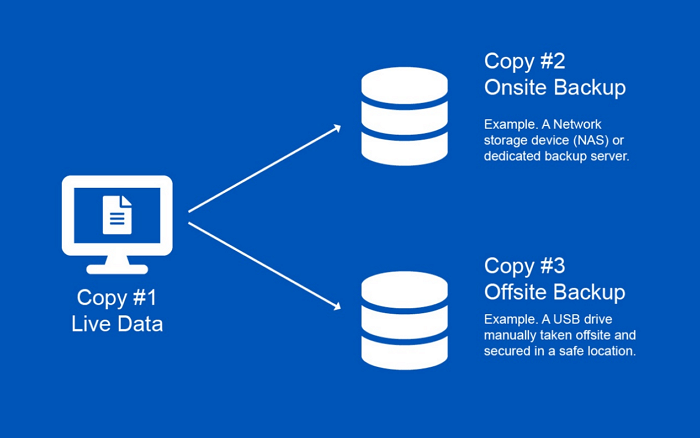
Apart from that, a comprehensive 3-2-1 backup strategy is necessary for businesses, and our Qiling cloud backup solution provides the automatic last part of this strategy.
Our proactive maintenance service involves regular audits, testing, updates, and optimizations to ensure every aspect of the IT environment we manage is running smoothly and efficiently.
We analyze historical incident data to identify potential problems, allowing us to suggest modifications to improve your IT environment before they become costly.
Recent historical event data has revealed a concerning trend - offsite backup solutions that rely on manual processes have become increasingly unreliable.
- Team member to swap tapes,
- Rotate USB Drive; Or
- Take your backup drives offsite every week to ensure they're not neglected and can be easily accessed in case of an emergency.
By automating your offsite backups, you can free up time to focus on what matters most - taking care of your customers and growing your business.
Cloud backup and recovery can be cost-effective by allowing businesses to store data off-site, reducing the need for on-site storage and maintenance, and providing scalability to meet changing data needs. This can help reduce costs associated with hardware, personnel, and facilities.
- Backing up data to cloud storage is a straightforward process that can serve as a simple replacement for on-premises backup media. The cloud can provide an easy and reliable way to store and protect your data.
- Cloud backup allows data to be backed up to actively running instances in the cloud, enabling the cloud to replace secondary data centers.
- Disaster Recovery as a Service (DRaaS) is a cloud-based approach that uses automation to manage backup and recovery processes, providing a highly efficient and reliable way to protect against data loss and downtime.
Cloud-Implementing a shortly based backup and recovery plan can lead to cost savings in several ways. By using a shortly based approach, businesses can reduce storage costs, as they only need to store data for a shorter period.
- Cloud spend is considered operational expenditure (OpEx), not capital expenditure (CapEx), as there is no major upfront cost to purchase large amounts of storage, making it a cost-effective option.
- Reducing the cost of maintaining secondary sites by leveraging cloud storage and virtual machines, eliminating the need for physical locations.
- The low cost of downtime and high levels of automation in DRaaS enable shorter recovery times.
- The cloud-based backups are highly automated, requiring less manual intervention, which frees up staff to focus on other tasks.
Qiling uses cloud capabilities to create affordable, tailored business continuity plans.
Cloud backup and local backup are two different methods of data storage, each with its own advantages and disadvantages. Cloud backup involves storing data on remote servers accessed through the internet, providing convenience and accessibility. Local backup, on the other hand, involves storing data on a physical device, such as an external hard drive, offering greater security and control. Ultimately, the best approach may be to use both methods in combination, ensuring that data is both accessible and secure.
You can use a cloud backup service like Backblaze or Google Drive to automatically back up your data to the cloud, and also create a local copy on an external hard drive or USB drive for an additional layer of protection. This way, you have a convenient cloud backup and a local copy in case something happens to your data.
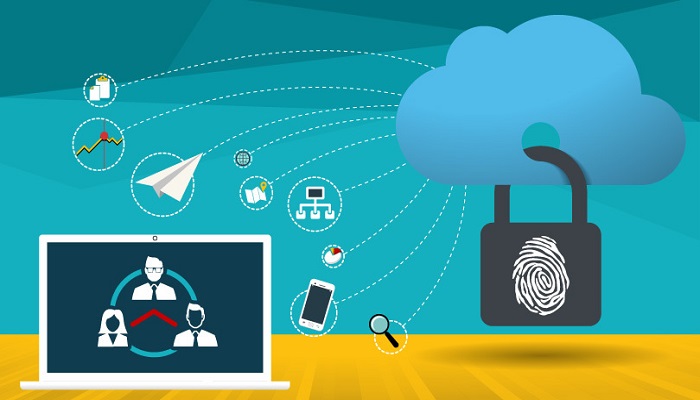
By switching to our new Qiling cloud backup solution, you'll not only enjoy numerous benefits, but also experience a significant boost in credibility and a substantial reduction in risk to your business. Say goodbye to awkward calendar reminders and hello to a more streamlined and efficient backup process.
Contact us to learn how to use cloud-based disaster recovery to reduce the cost of protecting your business.
Related Articles
- More Windows Guides: What Changed in Windows 11 KB5012592
- Are There 1TB Free cloud storage Available? See What We've Found
- Lenovo OneKey Recovery Free Download for Windows 10 64 Bit/32 Bit
- 5 Best Free Windows 11 Backup Software | Backup Data for Free
- Transferring and Migrating Microsoft Visual Studio 2010 Tools to a New PC
Microsoft Visual Studio 2010 is a powerful tool for web developers, mobile app developers, and website developers, but transferring its tools to another PC can be a challenge. - Fix 'Unable to Uninstall Program' in Windows Server 2012/2016/2019
If you're experiencing issues uninstalling programs on Windows Server, this guide has got you covered.
Products
Articles & Tutorials
- Data Recovery
- Data Backup
- File Recovery
- File Backup
- System Backup and Restore
- Disk and Partition Clone
- Technical articles
- Mobile articles
- Disk Master Help
- Windows Data Recovery Tutorials
- Windows Secure Delete Tutorials
- Windows Partition Management Tutorials
- Windows File Backup and Restore Tutorials
- Windows System Backup and Restore Tutorials
- Windows Disk Backup and Restore Tutorials
- Windows Clone Tutorials