Two Ways: Encrypt Backup Drive to Protect Your Data
PAGE CONTENTS:
- 1. What is Encryption?
- 2. What Kind of Data Should You Encrypt?
- 3. Why Should You Encrypt Backup Drive?
- 4. Step by step Guide: How to Encrypt Backup Drive
- 5. Best Alternative - Qiling Backup
If you're concerned about data theft, you might be surprised to learn that a thief can gain access to your laptop's data without a password. To protect your sensitive information, consider encrypting your backup drive, which can be done by reading this article.
What is Encryption?
The increasing number of security issues, including data breaching, has become a major concern on both personal and business levels. Various types of attacks, such as cross-site scripting, ransomware, DDoS, and brute force attacks, are on the rise, making encryption a necessary measure to protect against these threats.
Encryption is the process of transforming readable data, known as plaintext, into an unreadable format, called ciphertext, using a set of mathematical rules, or an algorithm. To decrypt the ciphertext and turn it back into plaintext, a key, essentially a password, is required, which tells the algorithm how to encrypt or decrypt the data.
Encryption is a process used to encode data, making it hidden or inaccessible to unauthorized users. It helps protect private information and sensitive data, improving security in communication between clients and servers. Businesses and organizations use encryption to safeguard sensitive information, such as customer credit card numbers or passwords, while individuals use it to protect personal info, like online banking login details.
Should You Encrypt Backups? Here's the Answer
Encrypting backups provides a layer of protection against ransomware attacks by making it more difficult for attackers to access and exploit sensitive data. This helps safeguard against data breaches and unauthorized access, ensuring the integrity and confidentiality of your backups.
What Kind of Data Should You Encrypt?
Data encryption enhances security for both at-rest and in-transit data, emerging as the top recommended option due to rising security breaches. Attackers often target database servers to steal valuable information, and once accessed, the data is vulnerable to theft and misuse.
When it comes to data encryption, it is highly advised to encrypt the most common types of data, which are personal identifiable information (PII) and sensitive business data. This includes information such as names, addresses, phone numbers, emails, passwords, financial information, and confidential business data.
Personally identifiable information
The personally identifiable information is reasonably necessary to encrypt, protecting you from being identified by using your details such as your driving license or social security number over the world wide web by other sources. This unique identification provides absolute security for users, and even backing up files to the Cloud is not entirely safe.
Confidential business intellectual property
When running a business, it's essential to encrypt confidential business intellectual property to keep all business-related information secure. This helps protect the details and values of your business, giving you a unique identity and safeguarding your company's secrets.
Why Should You Encrypt Backup Drive?
Encrypting a backup drive provides users with control over their information, protects backups from ransomware, viruses, and malware, and ensures that even if someone gains access to the backup drive, they won't have the same level of information as the primary device.
Security is the primary concern that prompts people to encrypt their backups, and even the latest Windows 11 has incorporated several security features to safeguard data from malware. However, losing a device can be disastrous, and identity theft is a significant and life-changing crime that can lead to weeks of stressful maneuvering. Encrypting backups can be a process with both pros and cons, which are worth considering.
- It prevents others from accessing your data
- Provides absolute safety to your valuable data
- Protect the information being there in the cloud
- Provides complete control over the different data files
Step by step Guide: How to Encrypt Backup Drive
BitLocker is a fantastic tool that provides absolute security to data by encrypting the entire drive, offering a robust protection mechanism for sensitive information.
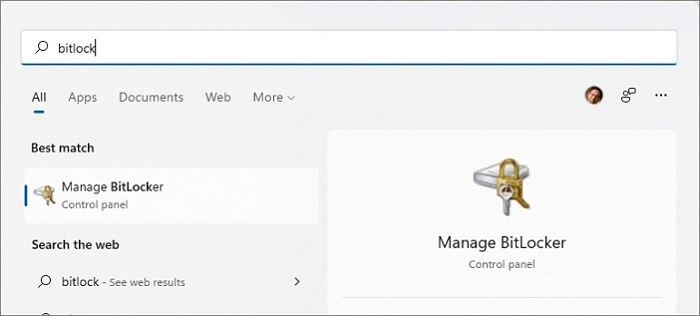
Step 1: To access BitLocker, go to the search bar on your taskbar, type "BitLocker", and select the "Manage BitLocker" option, which will open the BitLocker Drive Encryption Windows.
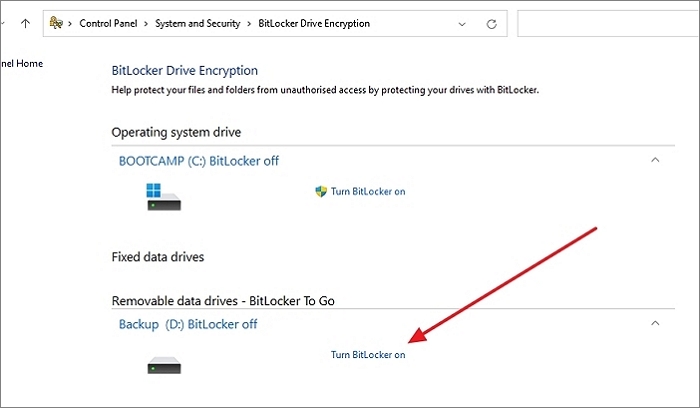
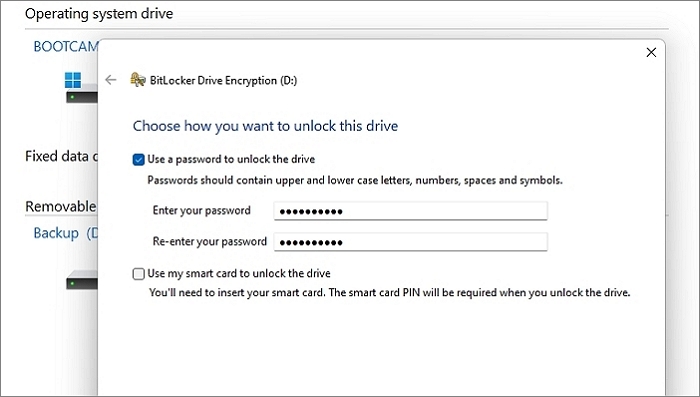
Step 2: To protect your data, find the backup drive and tap on it to see different options. Tap on the "Turn on" Bitlocker button for a backup drive, then select how you want to unlock it and use a password to unlock it.
Step 3: To set up a secure password, enter the password in the designated field, then reconfirm it, and finally tap the "Next" button to proceed.
Step 4: Select a location to back up your recovery key, choosing a preferred option and tapping Next to proceed. Make an informed choice.
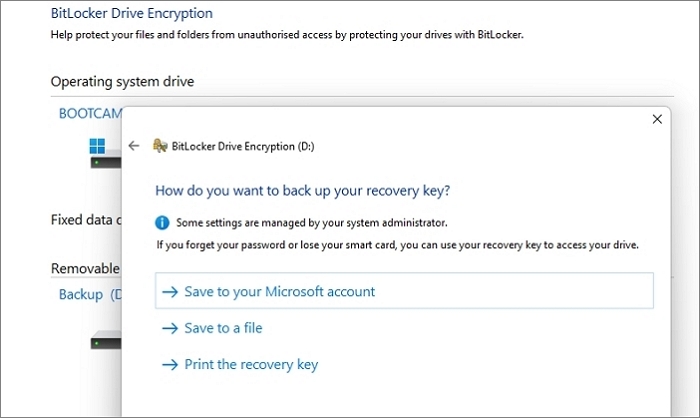
Step 5: You can choose to encrypt a portion of your drive or the entire disk, and you can select to encrypt only the free space available on the disk, which will be faster, and new data will be automatically encrypted.
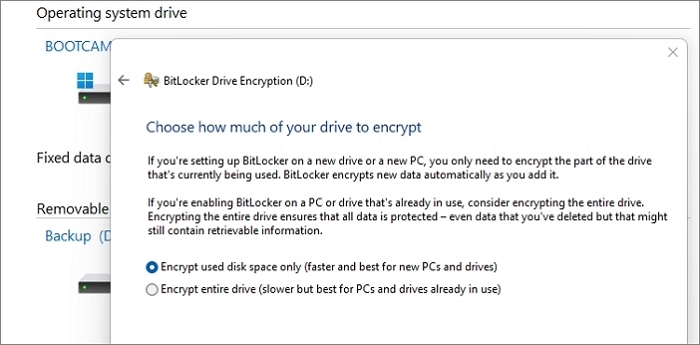
Step 6: After tapping the Next button, select the encryption mode that is most suitable for fixed drives on the device. If additional drives are connected, choose the compatible encryption mode.
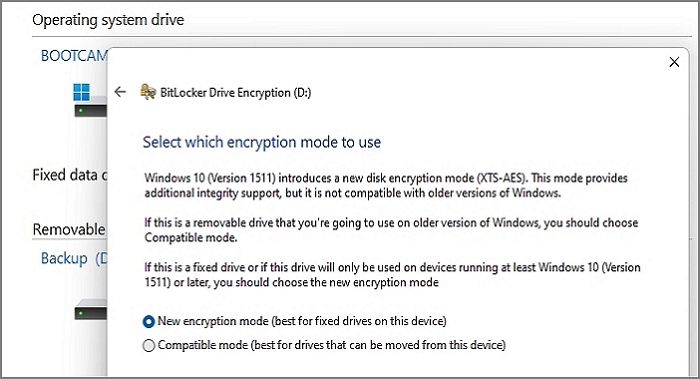
Step 7: Tap on the Start Encrypting button and tap on the Close button to close the process, which may take a significant amount of time. Once completed, the encrypted drive will be displayed, similar to the image below.
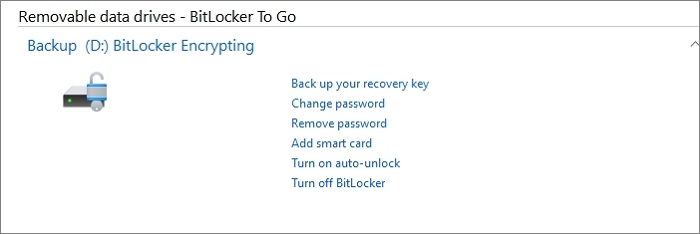
The tool comes up with a wide range of pros and cons, such as:
Pros:
- Robust disk encryption algorithms
- Absolute encryption key management
- Encrypts data in hard drive for absolute security
- Easy to manage the solution
- Enables encrypting removable media as well
Cons:
- It takes a long time to encrypt a disk
- Encrypting secondary drives is a bit tricky
Best Alternative - Qiling Backup
Qiling Backup is a free tool that allows users to easily create a backup of all their essential files, with a streamlined interface that makes backing up their entire computer a hassle-free process.
Accessing the Qiling Backup tool is straightforward. Once you select the type of backup, the process will start instantly. This feature-rich option provides users with absolute functions and features, including various tools and functionalities.
- The tool provides a simple and efficient way to back up data and recover it instantly with just a single click.
- Offer a 250GB Cloud storage for free
- The system provides easy scheduling and running of backups actively, leading to increased security by ensuring that data is regularly backed up and can be restored in case of a loss or disaster. This proactive approach helps prevent data loss and minimizes downtime, providing a higher level of security and peace of mind for users.
- To create copies of files and file folders, simply copy them to a USB drive, external hard drive, or cloud storage service like Google Drive, Dropbox, or OneDrive. This will ensure that your important files are backed up and can be easily accessed from anywhere.
- Offer options to create full, differential, and incremental backups
- Security Zone protects backups from any sort of ransomware
To create a security zone on your computer, follow these steps: First, open the Control Panel and click on the "User Accounts" icon. Next, click on the "User Accounts" tab and then click on the "Create a new account" button.
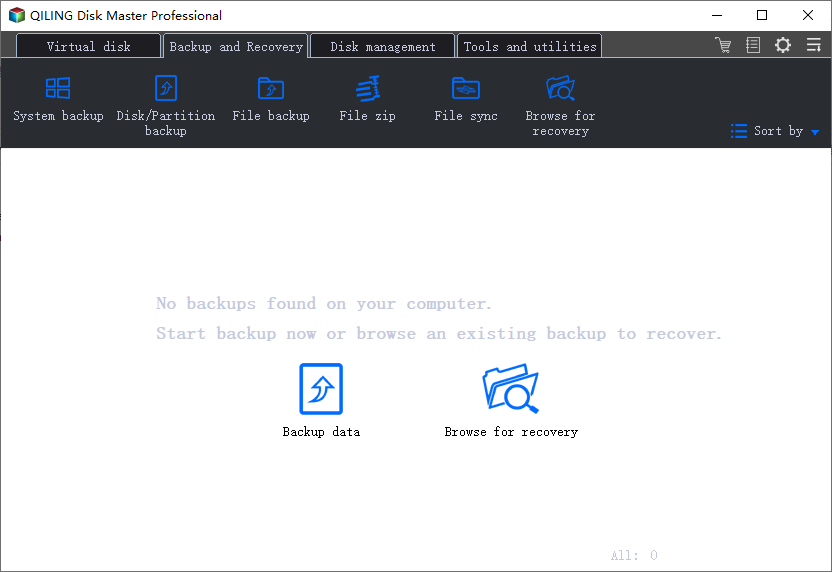
Step 1. To start a system backup, launch Qiling Backup and navigate to the "Backup and recovery" page, then select the "System Backup" option. This will initiate the backup process.
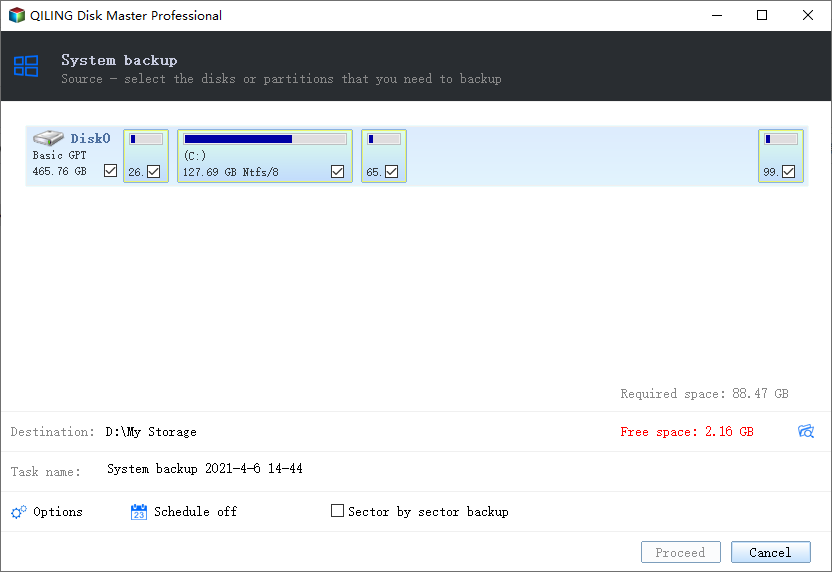
Step 2. The system partition will be automatically selected, you only need to choose the installation location.
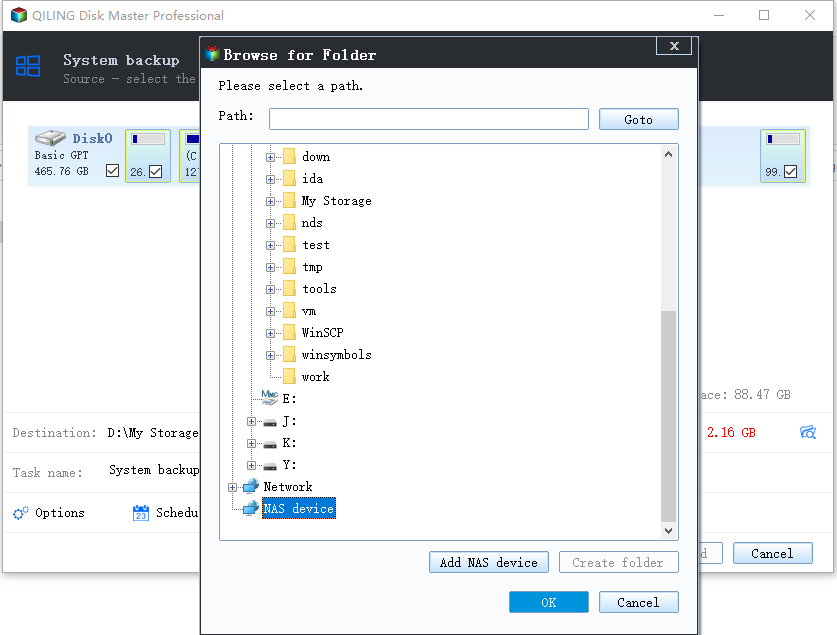
Step 3. You can save the backup file on your local drive, in the cloud, or on a network-attached storage (NAS) device, and even connect an external hard drive to store system backup files.
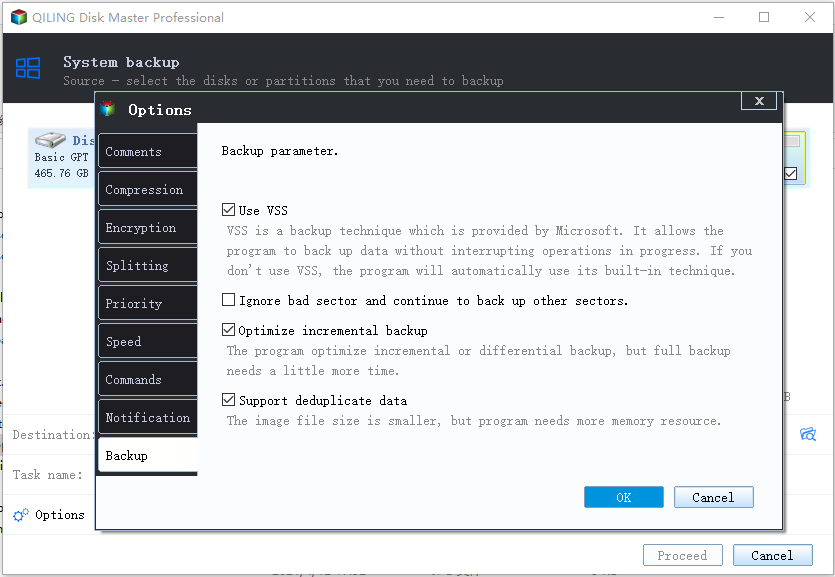
Step 4. To customize the settings, go to the left bottom and click on "Options". Once you've made your selections, click "Proceed" to start the process.
After completing the backup process, you can check the backup status, recover, open, or delete the backup by right-clicking on the backup task on the left.
Conclusion
To perfectly protect your data, encrypt your backup drive using one of the solutions provided in this guide. You can easily access and choose from various options, and for better access, it's recommended to go with the Qiling Backup solution. This way, you can ensure your data is secure and safely stored.
Related Articles
- How to Encrypt a USB Flash Drive with Password Protection
Encrypt the USB stick that carries your backup copies so a lost drive does not expose your backups. - How to Encrypt an External Hard Drive on Windows
Encrypt the external hard drive that holds your backups so a lost drive does not expose the backup data. - Windows 11 File History: Create File Backups and System Backup Image
- Step-by-step Guide: How to Back Up PC to WD My Cloud Home
- Centralized Backup Software - Backup All Computers on Network
Any enterprise backup software can create centralized backup for all computers within LAN simultaneously? Here is an example along with brief tutorial. - How to Do Complete PC Backup in Windows 10/8/7? [Free Ways]
How to create a complete PC backup in Windows 10/8/7? Well, there are several free ways you can try to back up the entire Windows computer. The last one is the most flexible and fast.
Products
Articles & Tutorials
- Data Recovery
- Data Backup
- File Recovery
- File Backup
- System Backup and Restore
- Disk and Partition Clone
- Technical articles
- Mobile articles
- Disk Master Help
- Windows Data Recovery Tutorials
- Windows Secure Delete Tutorials
- Windows Partition Management Tutorials
- Windows File Backup and Restore Tutorials
- Windows System Backup and Restore Tutorials
- Windows Disk Backup and Restore Tutorials
- Windows Clone Tutorials