How to Back Up Computer to SanDisk Extreme Portable SSD [Windows & Mac]
When a computer crashes, it's essential to have a backup plan in place. Typically, we backup files to the internal hard drive, but this can become a problem if the computer starts to slow down. To avoid this, using an external hard drive like the SanDisk Extreme Portable SSD is a great option. Its high-speed capabilities make it easy to copy and restore backups, ensuring that important files are always accessible.
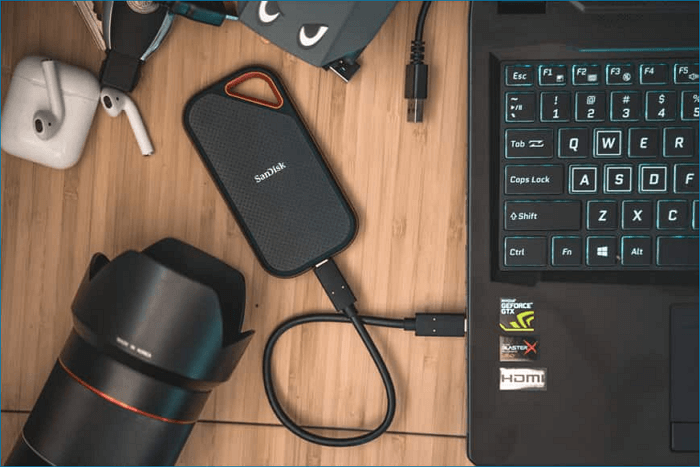
Why Backup Computer to SanDisk Extreme Portable SSD
In today's digital age, backing up our data is crucial to prevent loss due to various factors such as computer virus infection, system formatting, human error, or natural disasters.
Using an external hard drive like the SanDisk Extreme Portable SSD is one of the best ways to protect your data, along with backing up to another hard drive or the cloud.
The followings are the highlighted features:
- Save storage Space: Free up space on the system hard drive
- Cost-effective: Prices are often value for money and affordable
- Easy to carry: Can find important information anywhere
- No internet need: The app is still functional even without an internet connection, unlike cloud-based apps which require internet access.
To ensure your computer's safety, it's essential to back up your data to an external hard drive, such as the SanDisk Extreme Portable SSD. Fortunately, there are four easy ways to do this, allowing you to safeguard your files and prevent potential losses.
How to Back Up Computer to SanDisk Extreme Portable SSD for Windows
Here are three methods you can try if your device's operating system is windows.
- Method 1: Using a Trustable Backup Software [Windows 11/10/8/7]
- Method 2: Using Files History [Windows 10/8]
- Method 3: Using Windows Backup for Windows 7
Method 1: Using a Trustable Backup Software [Windows 11/10/8/7]
Qiling Backup Home is an all-in-one backup tool that can be used to back up your computer to a portable SSD, such as a SanDisk Extreme, and also back up the entire system or individual files to various sources. It can even back up specific items like files, system images, disks, partitions, or Outlook emails, providing a safeguard against data loss in unexpected situations.
Here is the essential step to automatically backup to an external hard drive.
Step 1. Launch the Qiling Backup software, and start by selecting the backup contents.
Step 2. There are four data backup categories available: File, Disk, OS, and Mail. Choose what you want to back up. The File backup category allows you to select specific files and folders to include in the backup.
Step 3. After selecting the backup source, click on the "Options" button at the bottom of the screen.
Step 4. Click on the "Backup Scheme tab" > "Upon Event".
Step 5. You can choose a backup location such as an external hard drive, a network drive, or a cloud storage service.
Step 6. Now the automated backup function will become active.
Method 2: Using Files History [Windows 10/8]
You can use File History to back up your files to your internal and external hard drives, but in Windows 10/8, it defaults to the internal drive, and you can easily change it to an external drive instead.
Here is how to back up the computer to Sandisk Extreme Portable SSD using file history.
Step 1. Pug your Sandisk Extreme Portable SSD into your computer.
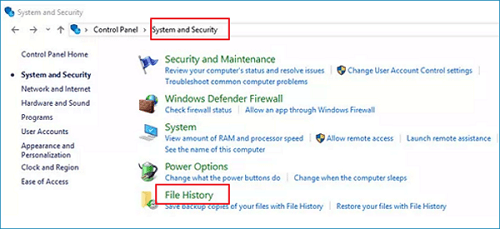
Step 2. Launch the Control Panel and click on System and Security, then click File History.
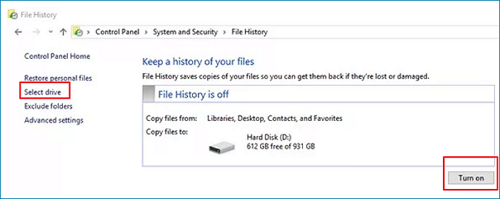
Step 3. To start using File History, click on the "Select drive" option and then click on "Turn on" to launch the feature.
Step 4. Select your external hard drive as shown below and click on OK.
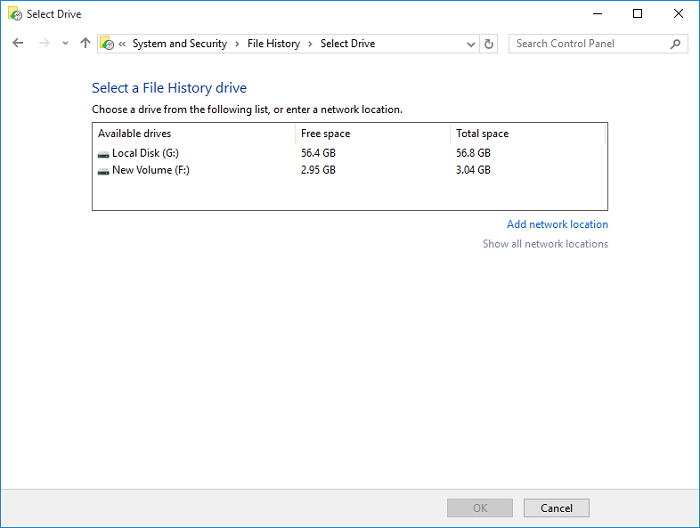
After completing the steps above, File History will store your backed-up files on the chosen external hard drive.
Method 3: Using Windows Backup for Windows 7
The Windows Backup feature is another way to back up your computer, specifically for Windows 7, and can be found in the Control Panel. This method allows you to back up your computer to an external hard drive, such as a Sandisk Extreme Portable SSD, making it easy to find and use.
Step 1. Pug your Sandisk Extreme Portable SSD into your computer.
Step 2. Launch the Control Panel, click on "System and Security", and then select "Backup and Restore".
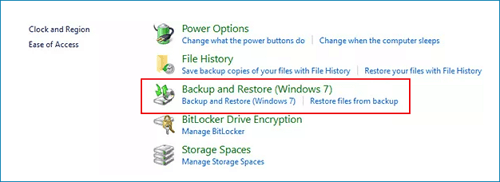
Step 3. To set up a backup, click on "Set up backup". A popup will appear where you can choose which external hard drive to use as the backup location. Click "Next" to complete the process.
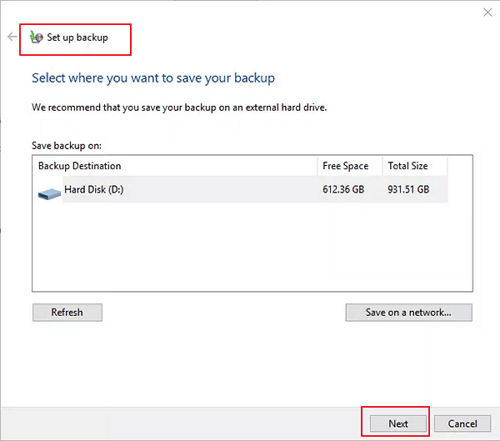
Follow all the steps above, Windows backup will work.
How to Back Up Computer to Sandisk Extreme Portable SSD for Mac
You can refer to the two methods below if your device's operating system is macOS or mac OS X.
Method 4: Using Time Machine for Mac
For Mac users, Time Machine is a great utility to back up your computer to an external hard drive like the SanDisk Extreme Portable SSD. To do this, follow these essential steps: follow the steps below.
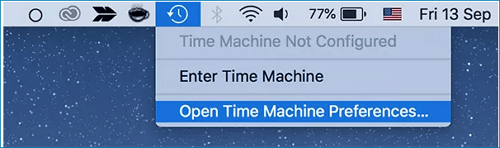
Step 1. Click on the Time Machine icon, then select Open Time Machine Preferences from the drop-down menu.
Step 2. To select a backup disk, click on the "Select Backup Disk" option and choose your external hard drive to store your backups.
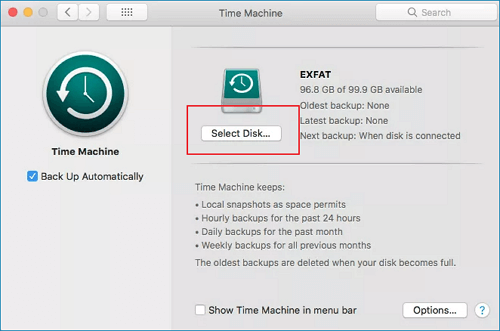
Step 3. Checked the Back Up Automatically to start creating a backup of your Mac.
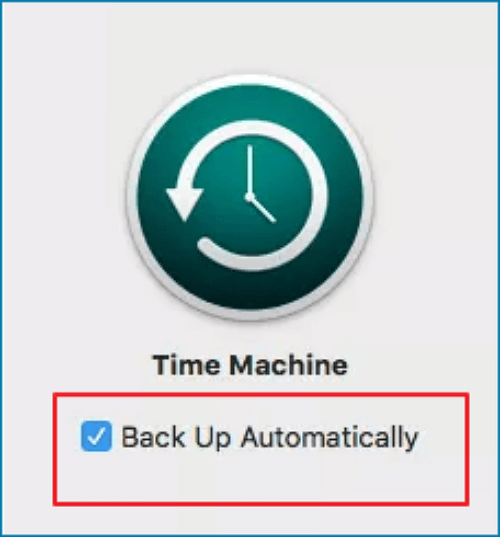
To back up your computer to an external hard drive like SanDisk Extreme Portable SSD, connect the drive to your computer, open the File Explorer on Windows or Finder on Mac, select the files and folders you want to back up, and click "Copy" or "Move" to transfer them to the external drive. You can also use the built-in backup software, such as Windows Backup and Restore or Time Machine on Mac, to automate the process.
Method 5: Using Qiling Backup for Mac
Qiling Backup for Mac offers a range of features, including smart backup, system image and clone, and full, incremental, and differential backup options, making it a comprehensive backup solution for Mac users, including backing up to external hard drives like SanDisk Extreme Portable SSD.
Summary
If you're looking to back up your computer to a SanDisk Extreme Portable SSD, you can choose from various methods based on your device's operating system. For Windows users, I recommend Qiling Backup, which offers a range of essential features to help you back up your computer. Its highlighted features make it a great choice for Windows users, but Mac users may need to explore alternative methods. Regardless of your operating system, having a reliable backup solution like Qiling Backup can provide peace of mind and protect your important files.
Highlighted features:
- Support Operating system: Windows 11/10/8/7.
- Meet various backup needs: File, system, disk, and partition backups protect different types of data, while Windows 11 automatic backup helps run backups on a schedule.
- Three backup methods: Full backup, Incremental backup, and differential backup
- Backup Storage Devices: SSD, HDD, RAID, USB Drive, FTP Server, NAS, DVD, etc.
- Other vital functions: system image, clone, recovery
Pros:
- 1. High backup speed
- 2. Security Zone Backup
- 3. Prime Technical Support
- 4. Offsite copy
- 5. WinPE Bootable Disk
FAQ
1. Are external SSD good for backup?
YES. SSDs are a good option for external drives due to their compact size, fast speeds, and durability. However, one drawback is that they tend to be more expensive than HDDs for the same storage capacity. Despite this, the price of SSDs is expected to decrease as technology improves.
2. How many GB do I need to back up my computer?
To determine the ideal size for a backup drive, consider the storage capacity of your computer and multiply it by 1.5 to 2 times. For instance, if your Windows 11 laptop has 128GB of storage, a suitable backup drive would be one with 256GB of space.
Related Articles
- 6 Solutions for Windows 10 Can't Create Recovery Drive
- Top 10 Best Free Open Source Backup Software | 2022 Selections
- Cloud Backup vs Cloud Storage: What's the Difference
- Windows 10/8/7 System Restore Points Not Working
- Incremental Backup Archive Bit and Backup Methods
Incremental and differential backup methods, often used in conjunction with archive bit, are compared and contrasted in this article. The archive bit, a flag used to track file changes, is also discussed in relation to these backup methods. - How to Deploy Windows 7/XP/10 Image over Network in the easiest way?
Want to deploy Windows 7/XP/10 image from network? This guide will show you how to (mass) deploy Windows image to PCs over network with free Qiling Image Deploy.
Products
Articles & Tutorials
- Data Recovery
- Data Backup
- File Recovery
- File Backup
- System Backup and Restore
- Disk and Partition Clone
- Technical articles
- Mobile articles
- Disk Master Help
- Windows Data Recovery Tutorials
- Windows Secure Delete Tutorials
- Windows Partition Management Tutorials
- Windows File Backup and Restore Tutorials
- Windows System Backup and Restore Tutorials
- Windows Disk Backup and Restore Tutorials
- Windows Clone Tutorials