Comprehensive Tips: Keep Your Data Backup Safe
PAGE CONTENTS:
- 1. Why Does Data Safety Matter?
- 2. Backup Your Data In Advance
- 3. Is Backup Absolutely Safe?
- 4. Step by step Guide: How to Encrypt Backup Drive
- 5. How to Encrypt Backups with Qiling Backup
Worried about data safety? This guide provides complete information to help you keep your data backup safe with perfect assistance.
Why Does Data Safety Matter?
Data security is a concern for everyone, but maintaining it can be a challenge. Backing up data is crucial for adequate security, as any issues or mismanagement can significantly exacerbate security woes.
A significant percentage of security breaches are often attributed to the mismanagement of data backups. To mitigate this risk, it's essential to have a solid backup infrastructure or a reliable fallback plan in place. This can help keep your data safe without any hassle.
The safety of data is a primary concern for both personal and business internet users, as hackers can easily breach security and access sensitive information if not properly protected. This is particularly relevant for businesses that rely heavily on internet sources for data storage, making it essential to implement robust security measures to safeguard against potential threats.
Securing sensitive information is crucial, whether it's employee records, customer details, loyalty schemes, transactions, or data collection. Data protection is essential to prevent unauthorized access and misuse of your valuable data by third-party sources or fraudsters.
Data security is the best way to protect oneself from scams and identity thefts.
Backup Your Data In Advance
Backing up your data is crucial, and there are various methods to achieve this, each addressing different issues, storage needs, and vulnerabilities. To ensure complete safety, it's recommended to opt for continuous data backup. Before selecting a backup method, assess your network's capabilities and the volume of data you need to back up, allowing you to determine the right amount of backup for your needs.
Data backup in USB
Baking up your data in a USB drive is an affordable, convenient, and easy way to save and back up your files. Simply connect the USB drive to your computer's USB port and you can easily drag and drop your files for further use, all within a few minutes.
Pros:
- Affordable and portable option to pick in
- This device allows for convenient storage of files while using a minimal amount of energy.
- A faster transfer speed can significantly enhance the convenience of the password securing process.
- Usage of passwords makes it more secure
Cons:
- It can be misplaced easily
- Durability is an issue sometimes
- Limited capacity or storage space
Data backup in Cloud
Cloud services are a convenient method for backing up data, eliminating the need to worry about physical damage. Once set up, data is quickly backed up on the cloud, including changes, making it a hassle-free solution.
Pros:
- Enables automatic backup to the users
- Can be accessed easily from anywhere anytime
- Provides a vast range of storage capabilities to the users
Cons:
- Requires internet connectivity to back up and sync data
- Possibilities for security breaches are a bit higher
- Limited by storage space and subscription plan
Should You Encrypt Backups? Here's the Answer
Encrypting your backups is a crucial step in protecting your data from ransomware attacks. By encrypting your backups, you can ensure that even if your data is stolen or accessed by unauthorized individuals, they will not be able to read or use it without the decryption key.
Is Backup Absolutely Safe?
Backing up data provides safety to the data stored, but it is not 100% safe. There are certain risks that can ruin the best backup strategies, including threats below.
- Backup Data theft is not uncommon
- Storage or hardware failure can result in total loss
- Online backups are risked because of account dependency
- Ransomware attacks can encrypt data, making it difficult to recover, and often demand payment in exchange for the decryption key.
- Automatic backup failure can lead to the loss of data for that day, making it essential to ensure the backup process is functioning correctly.
- Data corruption can result in irrecoverable data
- Malware and Viruses can corrupt data and replace it with malicious code, causing system instability and potential data loss.
While online and offline backups may seem foolproof, there's always a risk that you can't anticipate. To mitigate this, it's crucial to take multiple backups to ensure you have options if one fails.
In addition to implementing multiple backup solutions, it's also crucial to have a backup strategy in place. This involves not only having multiple backups but also storing them on different cloud services, which can be beneficial in case of account compromise, providing an additional layer of security and peace of mind.
How to Keep Data Backup Safe?
To keep data backups safe, it's essential to either maintain comprehensive backups on multiple levels or encrypt the backup, making it inaccessible to anyone without the decryption key or password. This approach ensures that even if one backup is compromised, the others remain secure, or that unauthorized parties cannot access the data, respectively.
Make Comprehensive Backups
Comprehensive backups involve backing up all data, not just files, but also the operating system, applications, and settings, ensuring easy recovery in case of a system failure or disaster. It is recommended to have both full and incremental backups to ensure maximum protection. This approach ensures that all data, including files, applications, and system configurations, are safely backed up, making recovery a straightforward process.
Pros:
- Help you in accessing your content effortlessly
- Partially or completely restore files and apps
- Incremental backup is a process that saves only the changes made to the data since the last backup, making it faster and requiring less storage space.
Cons:
- The process of backing up data can be time-consuming, especially if you choose to back up everything, including large files and extensive databases. This is because the backup process involves copying all the data, which can take a significant amount of time, depending on the size of the data and the speed of the backup device.
Encrypt backups
Encryption adds an extra layer of protection to your device, ensuring that no one can access it or acquire data without authorization, as it is password-protected and encrypted.
Pros:
- Works for providing personal control over your personal information
- Adds up an extra layer of protection for the users
Cons:
- Users may face difficulties accessing their encrypted files if they lose the encryption key, which can be a significant issue in various scenarios, such as data recovery or sharing with others.
Step by step Guide: How to Encrypt Backup Drive
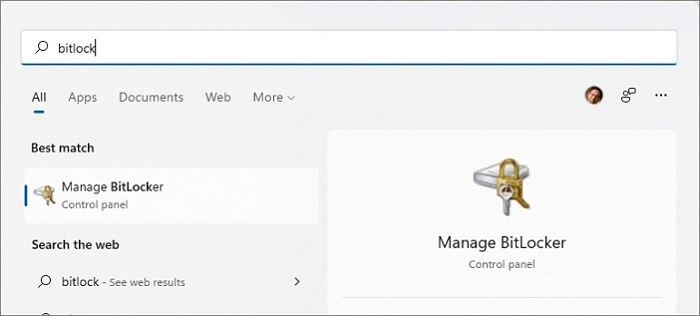
Step 1: To access BitLocker, press the Start button, click on the search bar, type "BitLocker" and click to open the BitLocker Drive Encryption Windows.
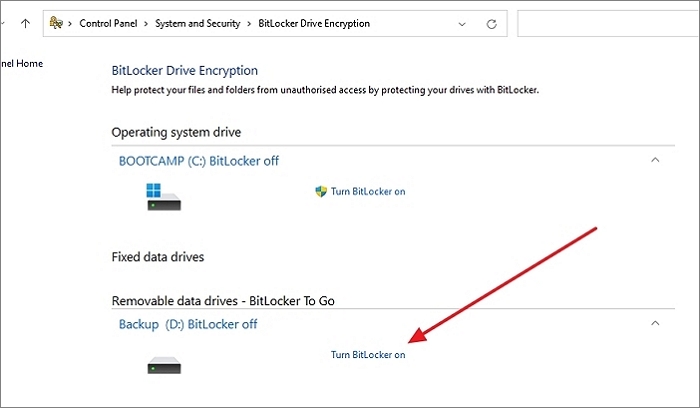
Step 2: To enable BitLocker on a backup disk, locate the disk in the list and click on the "Turn on Bitlocker" button for that drive, then select the desired unlock method.
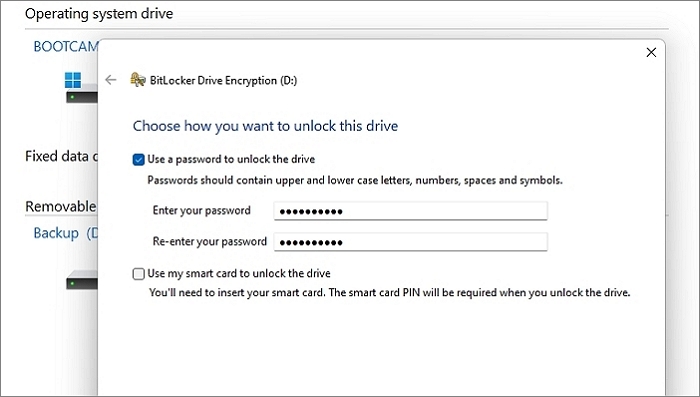
Step 3: To enable, enter a strong password and confirm it. If you have a smart card, you can also use that.
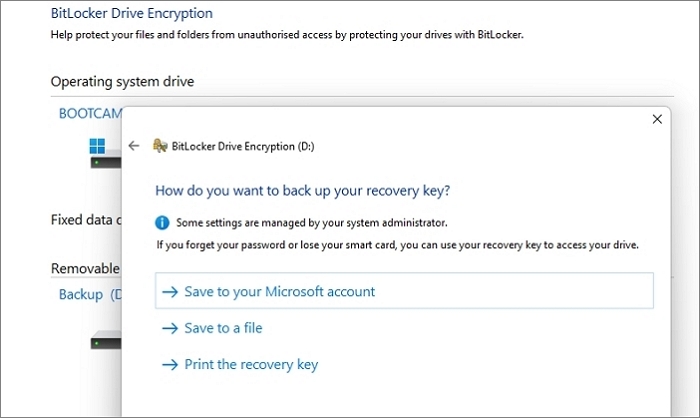
Step 4: BitLocker will then offer the option to back up your recovery key. You can save it into a file, print it, or save it to your Microsoft account, which is useful if you plan to use the device on multiple devices with the same account for a seamless experience.
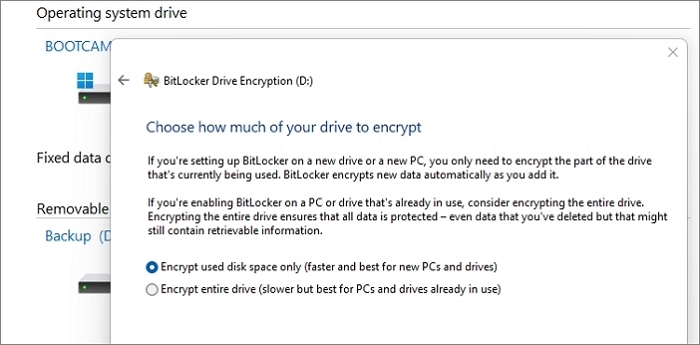
Step 5: Next, you can choose to encrypt whatever is available on the disk or the complete drive. The latter will take longer, while the former will encrypt data as it arrives.
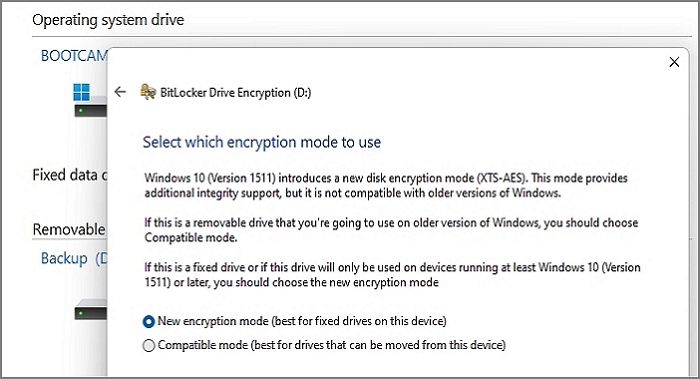
Step 6: The next screen may ask you to choose a compatible mode, allowing you to carry your device anywhere and work anywhere.
Step 7: Click on the Start Encrypting button and the Close button to close the process. It will take a reasonable amount of time, especially if you have vast storage, so be patient.
How to Encrypt Backups with Qiling Backup
Qiling Backup is a popular and reliable option for backing up devices effortlessly, making the process more convenient and accessible for users.
The backup option is designed to be relatively safe and secure to use, offering a range of top features and functionalities, including the following features.
- Ensures backup of more than 1000 types of computer files and folders.
- Complete and precise backup of the entire hard drive or selected drive, ensuring that all data, operating systems, and applications are safely preserved in case of a disaster or system failure. This includes backing up files, folders, and system settings, as well as capturing the state of the operating system and installed applications.
- Offers the freedom of creating a free system backup image successfully
- Works effectively great for automating a backup task on schedule
- Enable backup encryption effortlessly
- This feature provides users with the ability to save backups of their data to both a local disk and a cloud drive, offering flexibility and redundancy in data storage and protection.
- Provides full-on differential and incremental backup
Security Zone
One of the biggest problems with any backup solution is protection against ransomware attacks, which can encrypt backup files, rendering them inaccessible, even if they were previously safe.
Qiling Backup stands out with its Security Zone feature, which safeguards backups from ransomware or virus attacks by adding an extra layer of protection, preventing unauthorized access or encryption.
Step-by-step guide
To create a security zone without any difficulty, follow the tutorial below. It's a straightforward process that requires attention to detail and a clear understanding of the steps involved.
Step 1. Launch Qiling Backup, click "Tools" on the top right menu and choose "System clone".
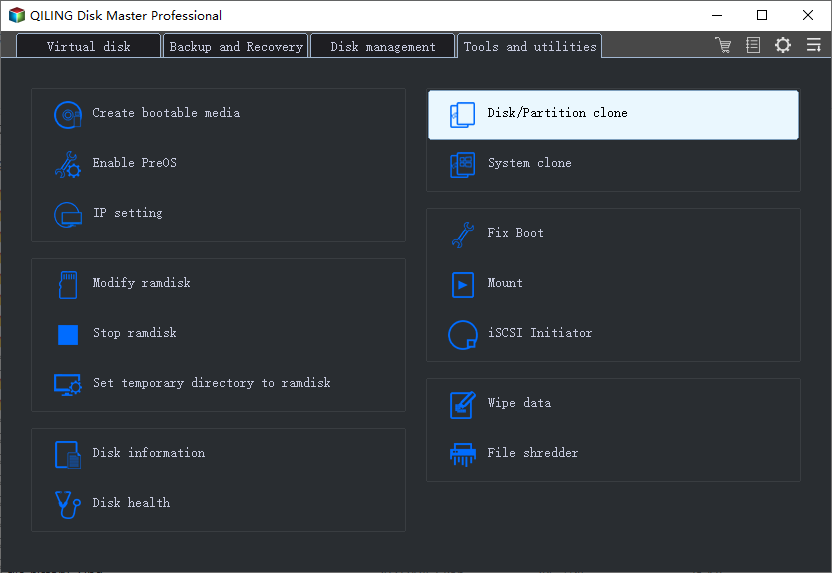
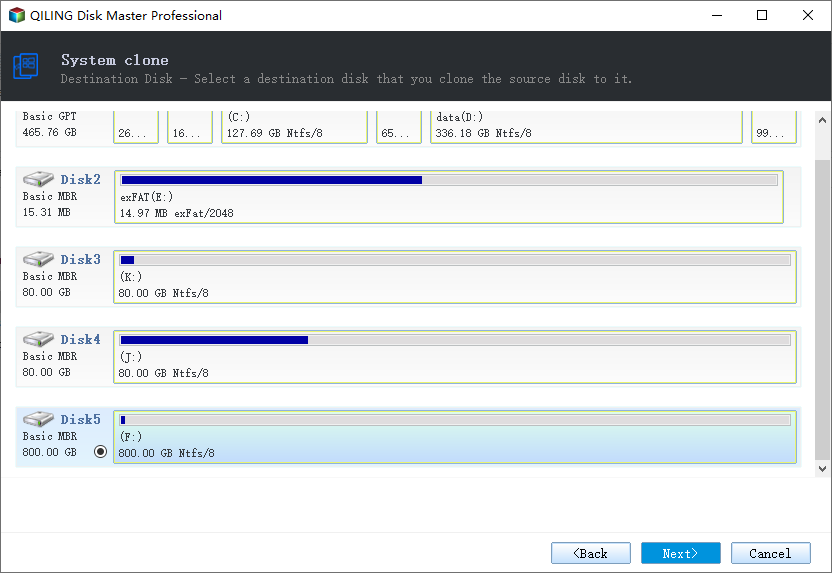
Step 2. Qiling Backup will automatically select the boot and system partition, allowing you to simply choose the target disk and click "Next" to proceed.
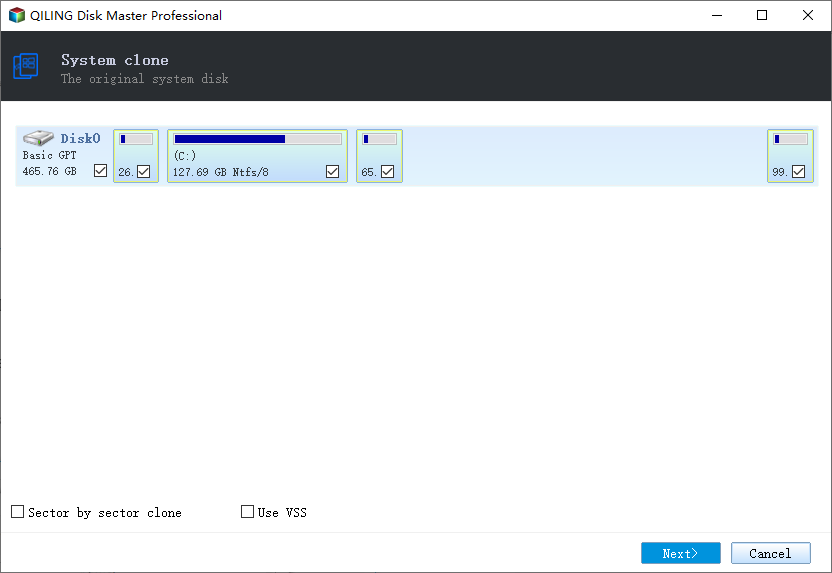
The system clone will completely erase all data, so please ensure you back up your data beforehand to avoid losing any important information.
Step 3. If you want to clone your system to an SSD, you can choose "optimize for SSD" in the advanced options.
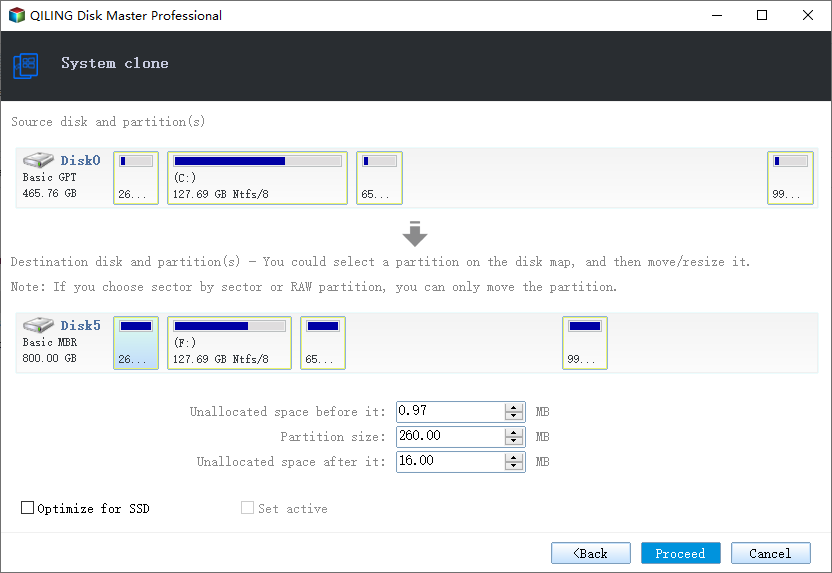
Step 4. Click "Proceed" to start cloning.
Conclusion
To ensure data backup safety, create a complete backup of your device to access your data effortlessly anytime in the future. This comprehensive guide helps keep your data safe and secure through various mediums, with our top recommendation being Qiling Backup, which offers 250GB of free cloud storage.
Related Articles
- Backup Hard Drive to Cloud [How to] + Feasible cloud backup Suggestion
- Download the Lenovo OneKey Recovery Software
- For Backup Beginners: Windows 11 Backup vs Windows 10 Backup vs Qiling Backup
- Types of Backup: Full vs. Incremental vs. Differential Explained [When & How-To Guide]
- Windows Server 2012 End of Life: How to Prepare for It
Windows Server 2012 and 2012 R2 will no longer receive security updates or technical support from Microsoft after October 10, 2023, putting users at risk of security vulnerabilities and data breaches. - Windows Server 2016 Repaired with Command Prompt (Attached Tutorial)
Do you get stuck in Windows Server 2016 boot failure and desire to figure out how to repair it? Learn how to repair Server 2016 with Command Prompt and a powerful backup and restore tool from this page.
Products
Articles & Tutorials
- Data Recovery
- Data Backup
- File Recovery
- File Backup
- System Backup and Restore
- Disk and Partition Clone
- Technical articles
- Mobile articles
- Disk Master Help
- Windows Data Recovery Tutorials
- Windows Secure Delete Tutorials
- Windows Partition Management Tutorials
- Windows File Backup and Restore Tutorials
- Windows System Backup and Restore Tutorials
- Windows Disk Backup and Restore Tutorials
- Windows Clone Tutorials