Ransomware-proof Backup Solutions in 2022
Ransomware is a threatening virus that leaks personal information. So, how do you save your data from it?
Saving data from viruses can be a challenge, but recovering programs and games is relatively manageable. However, the real concern is when personal information, documents, and photos are compromised, as this is what the community refers to as ransomware, where sensitive files are leaked through viruses.
To secure your computer from ransomware, you need to employ a few extra steps and third-party programs like Qiling Backup. This involves setting up a backup system, such as using cloud storage or an external hard drive, to regularly save your files. Additionally, using antivirus software and keeping your operating system and software up to date can help prevent ransomware attacks. Furthermore, being cautious when opening emails and attachments, and avoiding suspicious links and downloads can also help prevent ransomware infections. It's also a good idea to use a reputable backup solution like Qiling Backup to ensure your files are secure and can be easily restored in case of a ransomware attack.
What is a Ransomware Attack?
Ransomware is a type of malware that threatens to leak or deny access to personal information unless a ransom is paid.
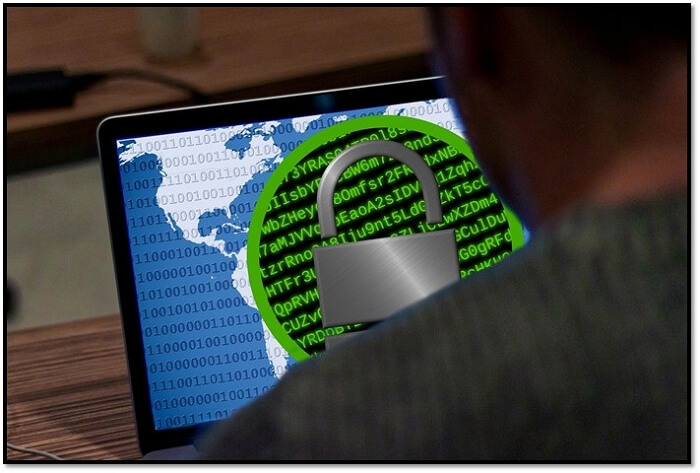
Ransomware attacks can have severe consequences, going beyond just personal files. They can also lock you out of your online accounts, including social media, bank accounts, and more. To protect yourself, it's essential to secure your files and personal information through regular backups. Unfortunately, ransomware often targets individuals, including those who may be unaware of the risks.
- Personal account users, i.e., home PC users
- Institutions including hospitals and academies
- Workplaces and professional environments—hence the increased security in some places
- ATM devices
People who use public Wi-Fi, store sensitive data on their devices, or engage in online activities that involve sharing personal information are at a higher risk of falling victim to ransomware attacks, and therefore need to take extra precautions to protect themselves.
Can Ransomware Infect Backups?
Backups can be vulnerable to ransomware attacks if they're not encrypted. However, there are various methods of encrypting data backups to safeguard them from virus attacks.
To avoid a ransomware disaster that also affects your backups, it's essential to ensure that at least one of the following methods is employed: using a backup system that is isolated from the network, using a backup system that is encrypted, using a backup system that is stored on a device that is not connected to the internet, or using a backup system that is stored on a device that is not running any operating system. By implementing one of these measures, you can prevent ransomware from infecting your backups and protect your data from being held for ransom.
1. Maintaining an offline backup in an encrypted device or storage, such as a hard disk separate from your primary one or an external device, is a crucial step in ensuring data security and integrity. This involves storing a copy of your important files and data on a separate, offline location that is not connected to the internet, thereby protecting it from cyber threats and unauthorized access.
2. Using immutable storage means keeping data in a state where it can't be deleted or modified, making it safe from ransomware attacks. This allows you to preserve data for a specific period.
3. Increasing the frequency of creating backup restore points ensures that the latest data is included, reducing the risk of losing important information in case of a virus attack or ransomware damage.
4. Endpoint protection on backup servers prevents attacks on cloud storage, allowing users to schedule backups without intervals or intervention.
Should You Encrypt Backups? Here's the Answer
Encrypting backups provides a layer of protection against ransomware attacks by preventing unauthorized access to sensitive data. This helps safeguard your information from being compromised or held for ransom, ensuring the integrity and confidentiality of your backups.
Why is Ransomware so Dangerous?
Ransomware is a type of virus that has a point of no return, where hackers demand payment in exchange for restoring access to encrypted data, and if the ransom is not paid, the data is lost forever.
It's crucial to be cautious of cybertraps set by hackers, as no security measures or expertise can protect your data once it's compromised. If your data is stolen, you'll be left with no choice but to pay the ransom, which is often a difficult decision.
Ransomware is a particularly dangerous type of virus that attacks computers, as it not only causes harm but also demands payment in exchange for restoring access to your data. This makes it more hazardous compared to other types of viruses that may simply cause damage or disrupt operations, but do not necessarily require payment to resolve the issue.
- It only targets valuable data, i.e., information, photos, etc.
- Once a hacker gains access to your personal data, there's often no turning back. The sensitive information they've obtained can be used for malicious purposes, such as identity theft, financial fraud, or blackmail.
- No backup or restore point can save it
- The only way out is by paying the ransom
- More than 81% of businesses experience a cyber-attack for ransom
Ransomware is considered the most dangerous type of malicious threat today due to its severe consequences, including permanent data loss and financial ruin, making it a highly destructive and difficult to recover from type of cyberattack.
Try Qiling Backup to Protect Backups from Ransomware
Qiling Backup offers a secret partition to protect backups from ransomware, which is encrypted and accessible only with a password.
It's called "Security Zone", which you can find after downloading Qiling Backup.
Qiling Backup offers a secure choice for creating backups due to its use of a secret partition, called Security Zone, which stores data in an encrypted image file. This partition can only be accessed or modified by the user who created it, providing protection against ransomware and malware.
This special partition ensures thorough safety and security of your data, keeping a backup that only you can access. It's separate from other files, so hardware or software failure won't affect it, providing an extra layer of protection.
Creating Qiling Backup Security Zone
Creating a Qiling Backup's Security Zone is a straightforward process. First, download Qiling Backup 2022 to your computer, and then follow the tutorial to secure your backups.
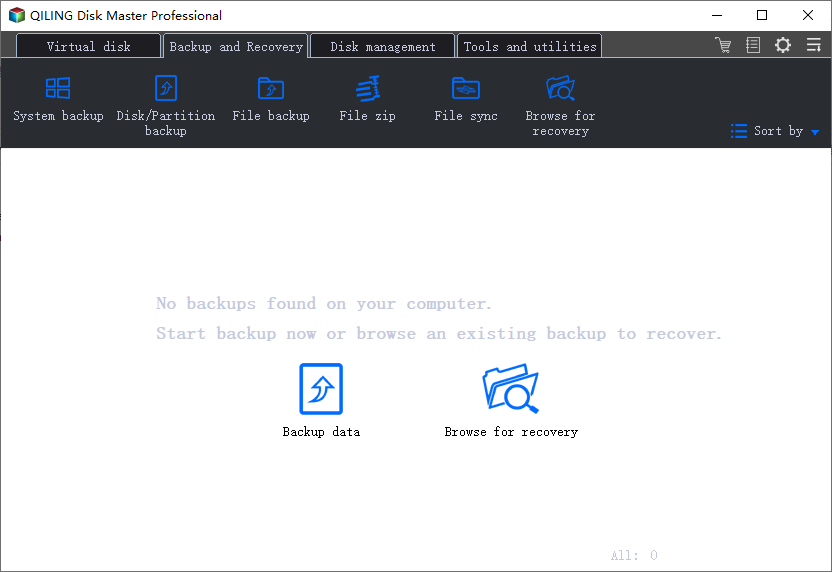
Step 1. Launch Qiling Backup on your computer, and click System Backup on the home screen.
Step 2. Your Windows operating system information and all system related files and partitions will be automatically selected, so you don't need to do any manual selection at this step. Next, you'll need to choose a location to save the system image backup by clicking on the illustrated area.
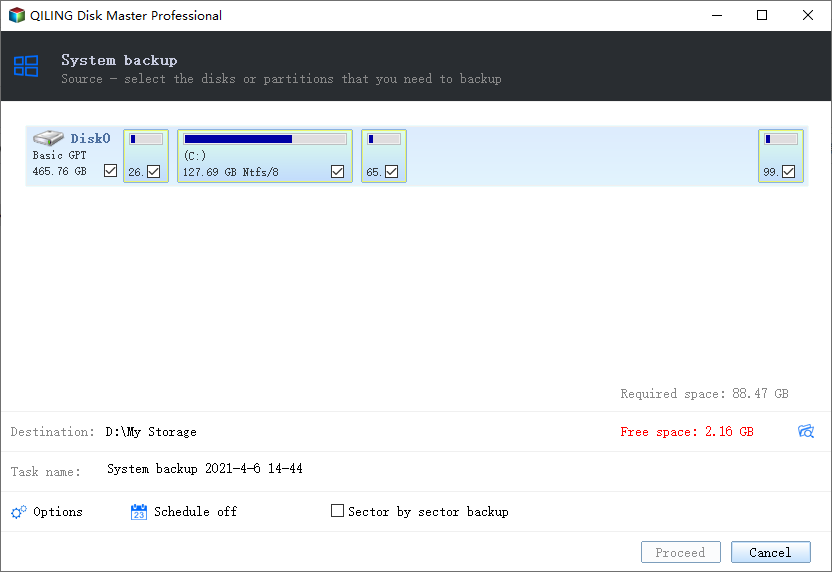
Step 3. The backup location can be another local drive on your computer, an external hard drive, network, cloud, or NAS. We recommend using an external physical drive or cloud to preserve system backup files.
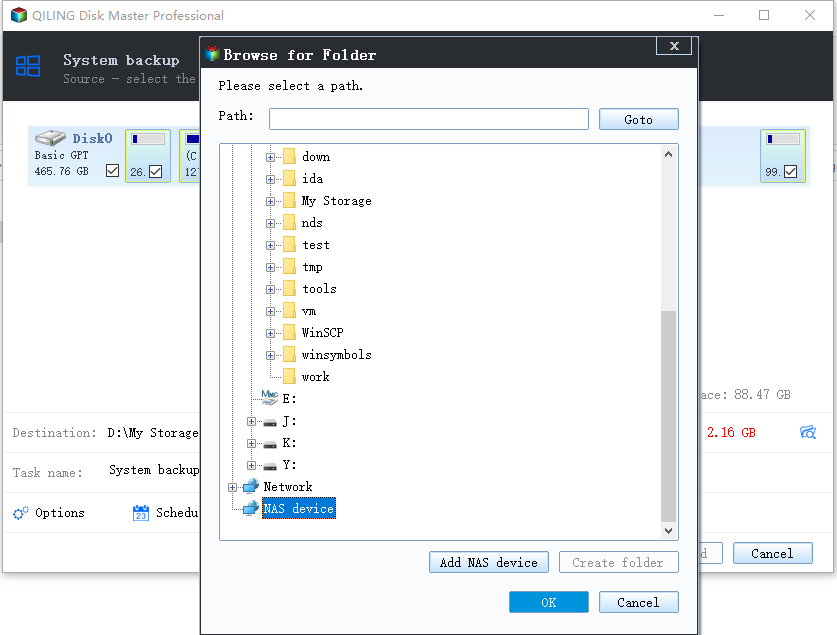
Step 4. To customize your backup settings, click the Options button, where you can schedule automatic backups daily, weekly, monthly, or on specific events, and also choose to make differential and incremental backups. Once you've made your selections, click Proceed to initiate the Windows system backup process, which will be displayed as a card on the left side once completed.
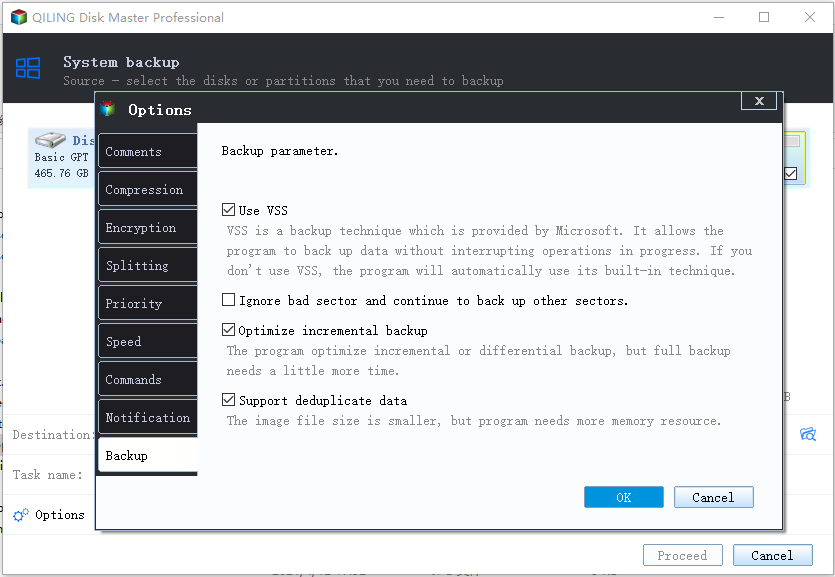
With a Security Zone in place, you can safeguard your backup data from ransomware attacks, providing peace of mind and protection for your valuable information.
Conclusion
Ransomware is a dangerous tool that cybercriminals use, but with the right steps, you can secure your personal information and data from such attacks. A dependable backup, like the kind that Qiling Backup helps you create, is all you need to protect yourself.
Related Articles
- How to Open Outlook Backup Files in PST Format: Step-by-Step Guide
- How to Disable Windows Defender on Windows 11
- Execute Bootable Clones on Windows 11 Without Losing Data
- The Settings You Should Change in Windows 11
- How to Make a Byte-for-Byte Copy of a Drive?
If you want to know how to make a byte-for-byte copy of a drive, you may check the information in this answer. - [Beginner's Guide] Migrate OS from SSD to M.2 SSD with M.2 SSD Clone Software
If you want to clone your SSD to an M.2 drive but aren't sure where to begin, this guide is here to help. It's a beginner-friendly resource that walks you through the entire process from start to finish.
Products
Articles & Tutorials
- Data Recovery
- Data Backup
- File Recovery
- File Backup
- System Backup and Restore
- Disk and Partition Clone
- Technical articles
- Mobile articles
- Disk Master Help
- Windows Data Recovery Tutorials
- Windows Secure Delete Tutorials
- Windows Partition Management Tutorials
- Windows File Backup and Restore Tutorials
- Windows System Backup and Restore Tutorials
- Windows Disk Backup and Restore Tutorials
- Windows Clone Tutorials