5 Methods | Get Rid of Windows Server C Drive Full Issue
What Will Happen If Windows Server C Drive Gets Full?
If your C drive gets full in Windows Server, it can cause issues such as system crashes, slow performance, and difficulties in installing new software or updates. To resolve this, you can consider deleting unnecessary files, uninstalling unused software, or even expanding your C drive by allocating more space from another drive. However, if the issue persists, it may be necessary to perform a disk cleanup, defragmentation, or even consider upgrading your storage to a larger drive.
Having a full C drive on Windows Server can lead to various issues depending on your usage. Symptoms may include slow system performance, error messages, and even crashes. To avoid these problems, it's crucial to maintain some free space on your C drive.
Here are the symptoms of a full C drive on Windows Server:
Symptoms of Windows Server with full C Drive
1. Windows Server slows down or stuck
Windows Server is typically installed to provide Windows with additional functions, specifically for managing and creating servers, beyond the standard operating system capabilities.
Your C drive is where your Windows Server operating system resides, storing cached data and temporary files for system applications. If the C drive is full, the entire Windows Server operating system slows down.
If you don't have enough free space on your C drive, your Windows Server may become slow, experience severe system lags, and even get stuck. It's essential to have some free space on your C drive for smooth performance.
2. Computer slow to boot up
When you turn on your computer, it first loads kernel files, which are the core operating system components, and then loads the full operating system, making it ready for use. This process is essential for the computer to run smoothly and efficiently.
Having a full C drive can slow down your Windows Server computer's boot time as it takes longer for the system to search for files, making it essential to have free space on the C drive.
3. Programs hangs or stuck
Any application that runs on your computer needs space to store its cached and temporary files, and sometimes stores its whole remaining operations on your drive to perform them later.
If your C drive is full, installed programs will take longer to read and store temporary files, slowing them down.
In Windows Server, application programs may slow down or become unresponsive due to lack of space on the C drive, which can be resolved by freeing up space on the drive.
5 Methods to Get Rid of Windows Server C Drive Full Issue
The issues caused by a full C drive can be mitigated by implementing solutions to free up space on the drive. One approach also provides a method to expand the storage capacity of the C drive by modifying existing partitions, offering a way to increase the available space on the drive.
To resolve the Windows Server C drive full issue, consider implementing the following methods: disabling unnecessary Windows features, deleting system logs, disabling Windows Search, deleting Windows Update logs, disabling Windows Error Reporting, deleting Windows Defender cache, and removing unnecessary system files and folders. Additionally, you can also try deleting temporary files, disabling Windows Defender, and removing unnecessary drivers.
1. Run Disk Cleanup
2. Migrate Installed Programs from C Drive to Another Drive
Run the System Cleanup and Large File Cleanup tools in the C drive to remove unnecessary system files and large files that are consuming space, freeing up disk space and improving system performance.
4. Add More Space to System C Drive
5. Turn on Storage Sense
Method 1. Run Disk Cleanup
The C drive on Windows Server stores various files related to applications and the server, but often contains unnecessary files that consume a lot of space. These temporary files, such as application logs and cached files, can be safely removed to free up disk space.
You can run Disk Cleanup on your Windows Server C Drive to remove unnecessary files. To do this, follow the steps: run Disk Cleanup, which can remove all the unnecessary files, freeing up space on your server.
Step 1: Open properties of your Windows Server C drive.
To open the C drive properties, go to file explorer, right-click on the C drive, and select properties.
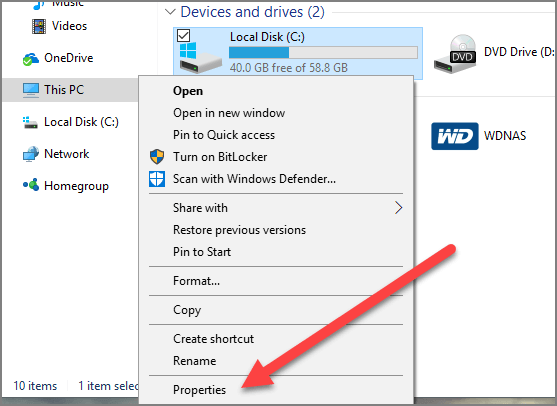
Step 2: Choice Disk Cleanup from the opened pop-up window.
Step 3: Disk cleanup will show you the possible space to free on your C drive.
Step 4: To remove unnecessary files, select the files you don't need, mark them by ticking, and then press the OK button.
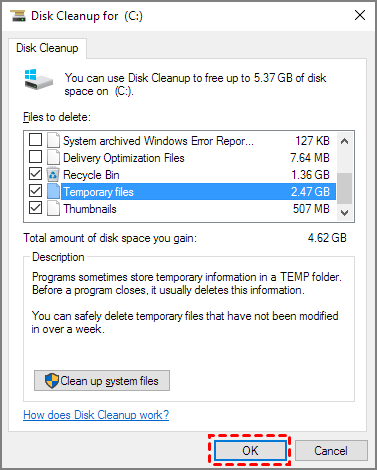
Method 2. Migrate Installed Programs from C Drive to Another Drive
A Windows Server's C drive can become full due to an excessive number of application programs installed on it. To resolve this issue, consider migrating installed programs from the C drive to another drive on the Windows Server, freeing up space and improving overall system performance.
The application migration involves more than just copying and pasting the application from one location to another, as it also requires moving numerous libraries and dependent modules to ensure a seamless transition.
The recommended way for installed application migration is to download Qiling Disk Master Technician software, which allows apps to be moved from the C drive to another drive.
Qiling Disk Master Technician is a professional file transfer software that allows for easy migration of applications from the Windows Server C drive, eliminating the need for external software installations or reinstallation of the application.
To migrate installed programs from the C drive to another drive on Windows Server, follow these steps. First, open the Control Panel and go to System and Security.
Step 1. Run Qiling Disk Master on your PC
To continue, go to the "Backup and recovery" page and click on "File sync".
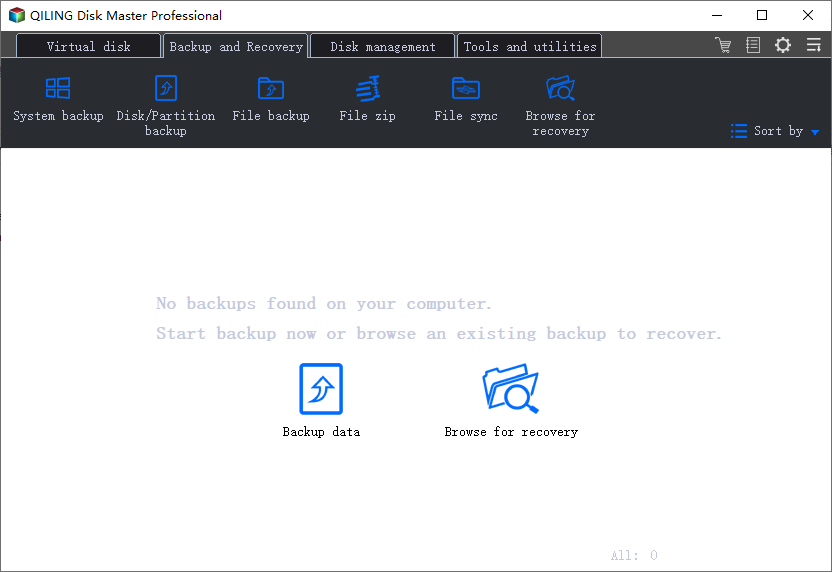
Step 2. Select programs to move from C drive to another drive
1. Select the C drive and choose the programs you want to transfer by marking them as "Yes".
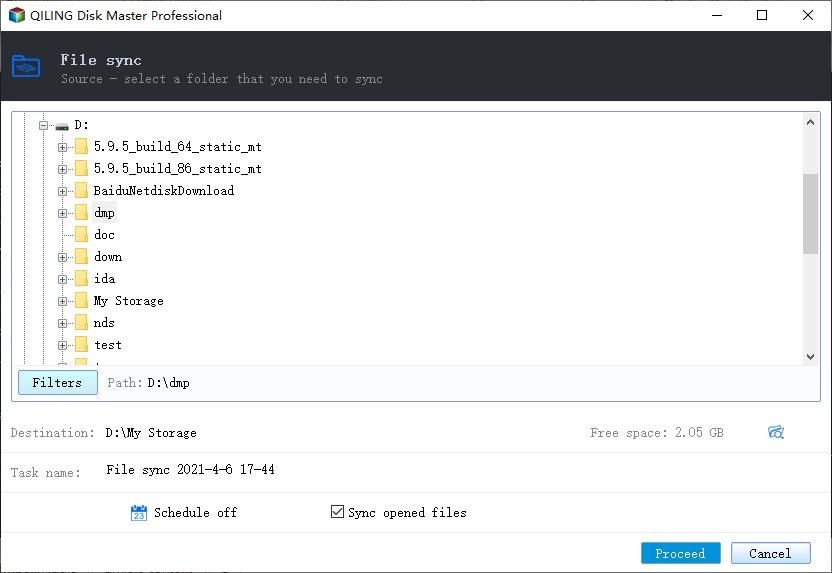
2. To select another drive on your computer as the destination, click the triangle icon and choose your desired drive, then click "Proceed" to initiate the transfer process.
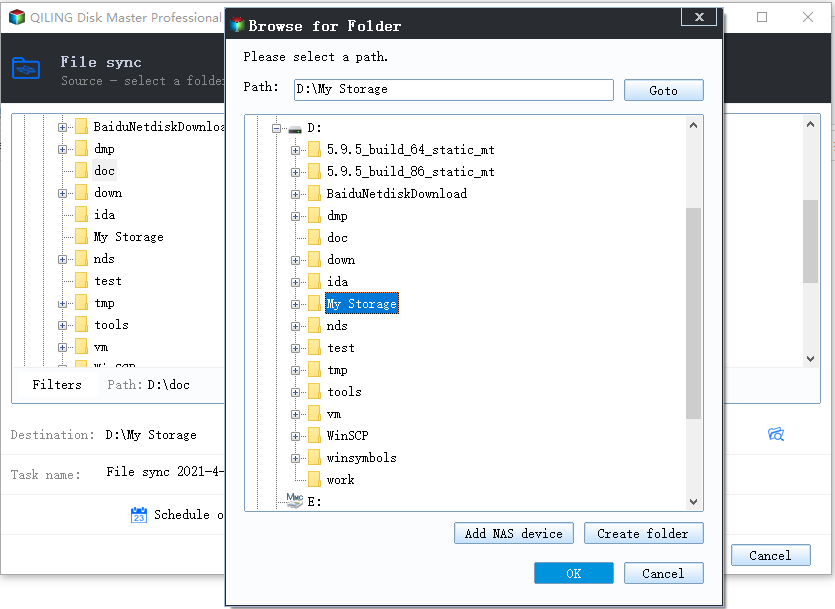
Step 3. Finish the transferring
Wait patiently until the transferring process finishes.
When the process is complete, you can restart your PC if needed. This will save all changes and allow you to run programs from another hard drive without reinstalling them.
Method 3. Run System Cleanup and Large File Cleanup
The Qiling Disk Master Technician introduced in method two can be used for application migration, as well as system cleanup and deleting large files on the Windows Server C drive.
Using Qiling Disk Master Technician's two great features, you can quickly free up a lot of space on your C drive. This process not only frees up space but also enhances and optimizes your Windows Server computer performance with simple steps.
To run system cleanup and extensive file cleanup using Qiling Disk Master Technician, start by downloading and installing the software, then follow these steps:
Step 1. Open Qiling Disk Master on your computer and click on "System Cleanup". Then, click the "Scan" button to proceed.
Step 2. When the scan is complete, a list of junk files will be shown. Select the unwanted files, being cautious not to delete files that are necessary for the normal functioning of your computer or software.
Step 3. Click the "Clean up" button and confirm the cleanup operation to free up disk space. This can be done regularly to maintain a clutter-free system.
Method 4. Add More Space to System C Drive
To avoid the Windows Server C drive problem, you can add more space to the system C Drive by modifying the existing partitions. This involves enlarging the allocated C drive space.
Modifying partitions on your system carries a significant risk of data loss and system disruption if something goes wrong.
To increase the space of your system's C drive, you need reliable partition management software, and a highly recommended option is Qiling Partition Master Server Enterprise Edition.
To easily add more space to your Windows server C driver, you can use the Qiling Partition Master Server software. With its simple steps, you can follow the guidelines to enlarge the storage space of your C drive. The software allows you to easily add more space to your Windows server C driver.
Option 1. Extend System C drive with unallocated space
- 1. Click on the System C: drive and select "Resize/Move".
- To increase the size of the C: drive, drag the system partition end into the unallocated space, effectively adding it to the C: drive.
- 3. Click "Proceed" to execute the operations and extend the C drive.
Option 2. Extend System C drive without unallocated space
- 1. Click a big partition with enough free space on the system disk, select "Resize/Move".
- 2. To free up space, drag the end of the big partition to the left to shrink it, making room for the unallocated space. Then, click "Proceed" to confirm the changes.
- 3. To resize or move the system drive, select it at the "Allocate Space From (*) To" section and choose "Resize/Move".
- 4. To free up space on System C drive, drag the end of the drive into the unallocated space on the disk map. This will relocate the System C drive to the unallocated space, effectively increasing its size and freeing up space on the original drive.
- 5. Click "Proceed" to save the changes and extend the C drive.
Method 5. Turn on Storage Sense
If you can't manage the space on your Windows Server C drive, you can use the Storage Sense feature to automatically clean up unnecessary files and data. This will help free up space on your C drive.
To turn on Storage Sense on Windows Server, follow these steps: Storage Sense can be enabled by going to Settings > System > Storage > Storage Sense, and then toggling the switch to turn it on. Alternatively, you can also enable it by going to Settings > System > Storage > Storage Sense, and then clicking on the "Turn on" button.
Step 1: Open Windows Settings App.
Step 2: Go to System > Storage section.
Step 3: Toggle the Storage Sense slider.
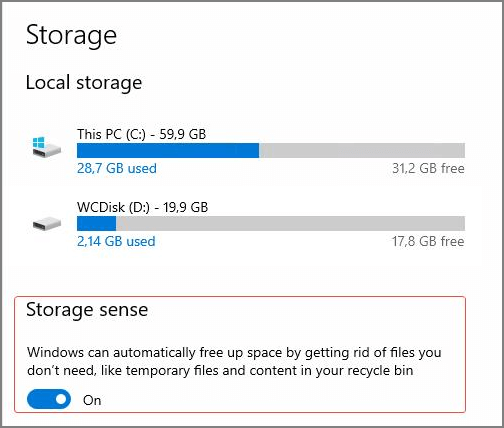
Step 4: Configure the storage sense settings.
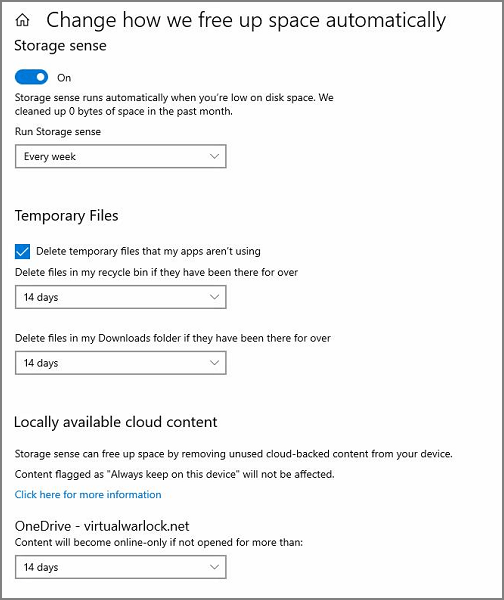
You can choose to go with the default storage sense settings or customize them to fit your preferences.
Conclusion
Windows Server operating system offers additional functionalities beyond standard Windows, enabling you to manage and create servers from your computer. However, if your C drive is full, it can cause issues for your Windows Server setup.
On a Windows Server, a full C drive can cause several issues, including slow-running programs, slow computer boots, and system lag. These problems can have significant consequences, especially if many servers rely on your computer, making it essential to address the issue promptly.
To free up space on your Windows Server C drive, you can perform a disk cleanup, migrate applications to other drives, run a system cleanup, or enable Storage Sense. Alternatively, if you want to expand the storage on the C drive, you can modify the existing partition to add more space.
The recommended way to add storage space is by using Qiling Partition Master Server Enterprise Edition, which is a highly recommended tool, and Qiling Disk Master Technician, which is the best software to use for migrating applications and performing system cleanup.
Related Articles
- How to Move Games to Another Drive Xbox [Beginner's Guide]
- Best Method to Transfer WhatsApp Messages (PC/iPhone/Android)
- Is Intel Data Migration Software Worthy of Trying? Here is the Answer!
- How to Transfer Files from Flash Drive to Computer Windows 10
- How to Share/Transfer Files from PC to PC on the Same Network
If you have two PCs on the same network that need to share files, there are several ways to do so wirelessly, including using a LAN file sharing software like Qiling Disk Master, Nearby Sharing, and accessing files through the cloud using Windows OneDrive service. - How to Transfer Files from PC to PC over WiFi [Easy & Fast]
This article demonstrates how to transfer files from PC to PC over WiFi. There are a couple of different ways you can go about transferring files between two PCs over WiFi.
Products
Articles & Tutorials
- Data Recovery
- Data Backup
- File Recovery
- File Backup
- System Backup and Restore
- Disk and Partition Clone
- Technical articles
- Mobile articles
- Disk Master Help
- Windows Data Recovery Tutorials
- Windows Secure Delete Tutorials
- Windows Partition Management Tutorials
- Windows File Backup and Restore Tutorials
- Windows System Backup and Restore Tutorials
- Windows Disk Backup and Restore Tutorials
- Windows Clone Tutorials