How to Check Data Usage on iPhone [Full Guide]
Summary
To check data usage and storage usage on your iPhone, simply follow the steps outlined in this post. If you've accidentally deleted important data, don't worry - you can use a tool like Qiling MobiSaver to recover deleted or permanently deleted files on your iPhone.
| Workable Solutions | Step-by-step Troubleshooting |
|---|---|
| Check Cellular Data Usage in iPhone |
1. Check Cellular Data Usage in iPhone...Full steps 2. Save Cellular Data with Low Data Mode...Full steps 3. Reduce Unnecessary Data Consumption...Full steps |
| Check iPhone Storage Usage |
1. Check iPhone Storage Usage...Full steps 2. Free Up iPhone Storage Usage...Full steps |
| Recover Lost Data on iPhone | Choose the recovery mode > Scan iPhone and find lost data > Preview and Restore iPhone Data...Full steps |
If you're unable to connect to the internet through Wi-Fi, your iPhone allows you to use cellular data instead, but with increasing cellular data charges, it's essential to monitor and save on costs.
This article provides guidance on how to check and reduce iPhone data usage, as well as recover deleted data using a third-party tool called Qiling MobiSaver. We'll cover methods to help you save on your iPhone data usage, and also show you how to use Qiling MobiSaver to recover all deleted data on your iOS device.
How to Check Cellular Data Usage in iPhone
You can view your iPhone's total cellular data usage by checking the amount of data used daily. Your device can track and display this information, allowing you to see how much data you've consumed. We'll show you how to check your cellular data usage and provide tips on how to avoid unnecessary data consumption.
1. Check Cellular Data Usage in iPhone
To check your cellular data usage on your iPhone, go to Settings, then tap on "Cellular" or "Mobile Data", and scroll down to the bottom of the screen to see your current data usage for the current period. Alternatively, you can also check your data usage on the "Settings" app by tapping on "Cellular" or "Mobile Data", then tapping on "Cellular Data" and scrolling down to the bottom of the screen to see your current data usage for the current period.
Step 1. Go to the Settingson your iPhone.
Step 2. Tap on "Mobile Data".
Step 3. To see how much cellular data you've used, navigate to the "Mobile Data" section and select "Current Period". This will show you the data consumed during the current period. You can also view data consumed during roaming under "Current Period Roaming".
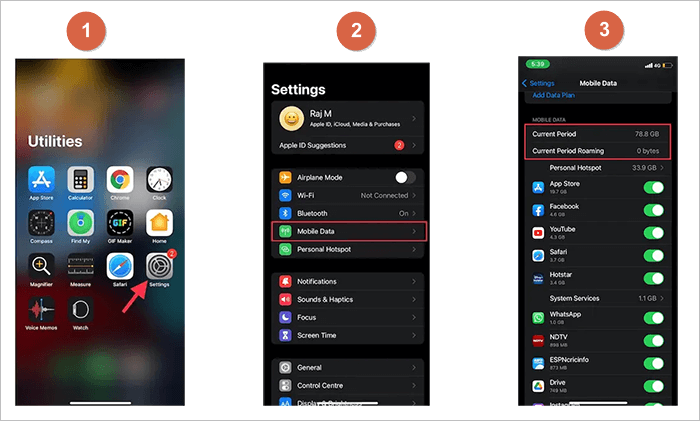
Note: To view mobile data usage for each System Service, go to Mobile Data > Cellular Data > System Services.
2. Save Cellular Data with Low Data Mode
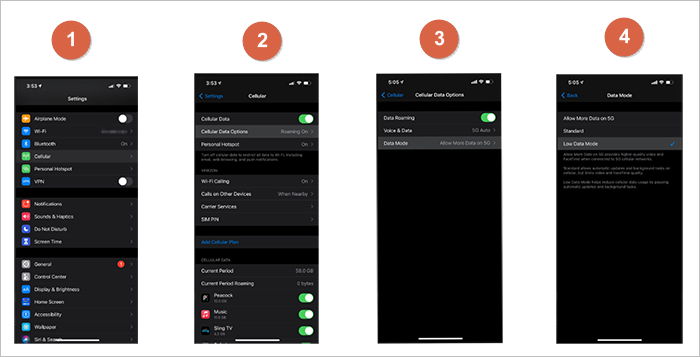
Low Data Mode helps you limit cellular data usage when not connected to Wi-Fi. To activate it, you can follow a series of steps.
Step 1. Open your Settingsand tap on "Cellular".
Step 2. Tap on "Cellular Data Options".
Step 3. Next, tap on "Data Mode".
Step 4. To save your iPhone's data usage, tap on "Low Data Mode".
3. Reduce Unnecessary Data Consumption on iPhone
Apart from switching to Low Data Mode, you also can reduce excessive data consumption on your iPhone using the following techniques.
1.Only Allow Selected Apps to Use Cellular Data
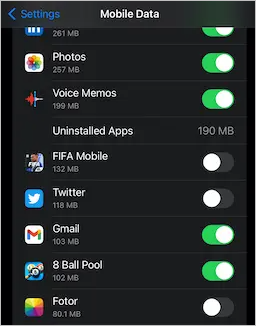
To conserve data on your iPhone, only allow essential apps to access cellular data. Go to Settings > Mobile Data, then scroll through the listed apps to enable or disable those that access cellular data.
2.Turn Off Wi-Fi Assist
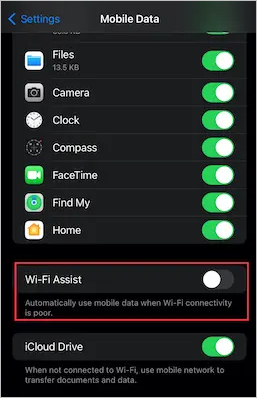
To limit the use of cellular data on your iOS device, go to your Mobile Data settings and toggle off Wi-Fi Assist, which allows your device to automatically switch to cellular data when your Wi-Fi connection is unreliable.
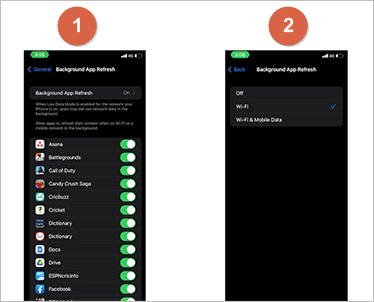
3.Only Refresh Background Apps Using Wi-Fi
To control cellular data usage by background apps, go to Settings > General > Background App Refresh, and toggle to only allow refresh when on Wi-Fi.
How to Check iPhone Storage Usage
Monitoring your iPhone's storage usage is essential to know how much space is left on your device and free up storage if necessary. This can be done by checking your device's storage, which helps you identify the amount of space used and available, and even delete some data to free up space if your storage is almost full.
1. Check iPhone Storage Usage
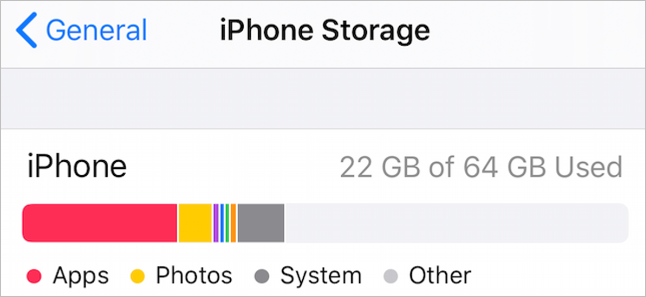
To check the available space on your iPhone, go to Settings, then tap on "General," followed by "iPhone Storage." This will show you a breakdown of the space used by different types of content, such as photos, videos, and apps, as well as the overall storage capacity and available space.
Step 1. Open the Settings app and tap on "General".
Step 2. Next, select "iPhone Storage".
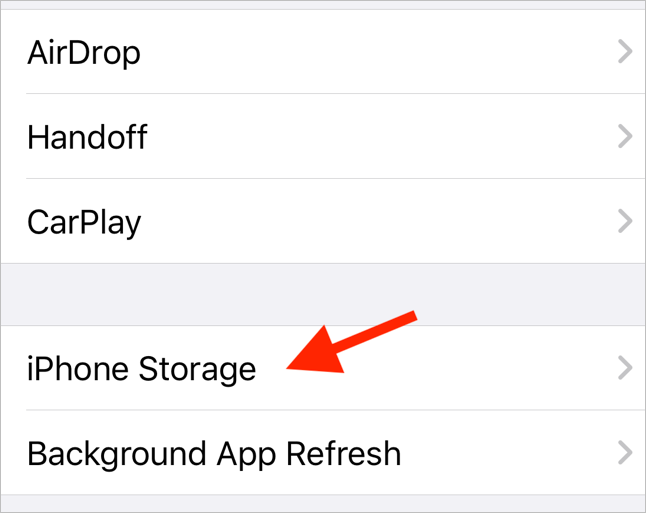
Step 3. The storage information for your device is displayed at the top of the screen, showing the amount of space used so far.
2. Free Up iPhone Storage Usage
Once you've checked the amount of storage left on your device, you'll need to find ways to delete unnecessary data to create more space for important information. This can be done by deleting files, photos, and videos that are no longer needed, uninstalling unused apps, and clearing out browser cache and history. By freeing up space on your device, you can ensure that it continues to run smoothly and efficiently.
Method 1. Enable iCloud Photos
You can enable iCloud Photos to automatically save videos and photos to the cloud, freeing up space on your device, and deleting them from your local storage. This feature allows you to re-download the uploaded data anytime you need to access it, making it a convenient way to manage your photo and video library. To enable iCloud Photos, follow the steps to set it up.
1. Open the Settings app and go to "Photos".
2. Toggle on the "iCloud Photos" option.
3. Check the "Optimize iPhone Storage" option.
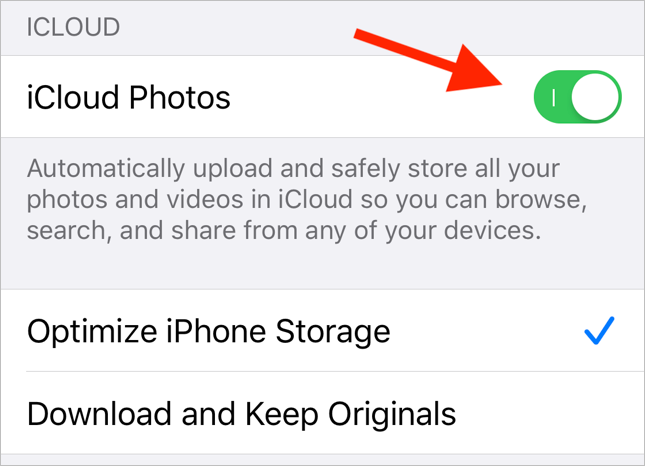
Note: With the above steps, iCloud Photos will constantly free up space on your device when the need arises, ensuring that your device remains clutter-free and running smoothly.
Method 2. Offload Unused Apps
Deleting unused apps helps free up space on your iPhone, and iOS 12 or higher allows you to automatically delete unused apps using the "Offload Unused Apps" feature.
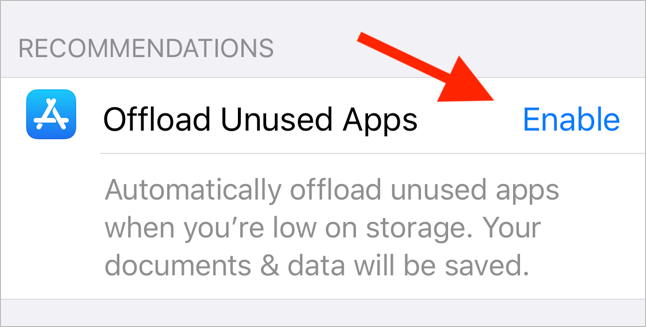
This feature will automatically detect and delete unused apps on your device, without removing app data.
Method 3. Delete App/App Data
To free up space from a given app, tap on it to see a breakdown of its consumed storage space, and a list of installed apps alongside the storage space they have consumed, with the app using the most space listed first.
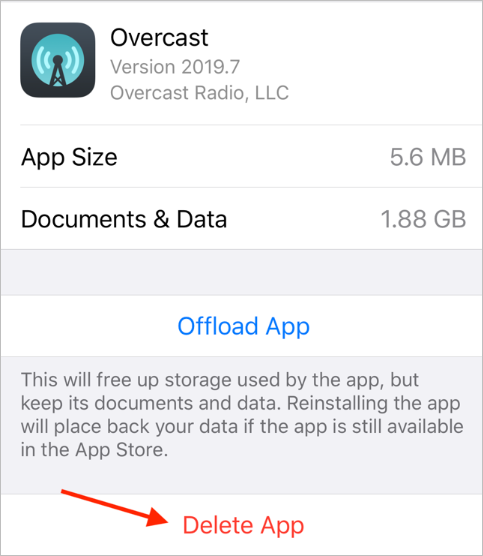
To delete the app, tap "Offload App", and to delete its data, tap "Delete Data".
Method 4. Optimize Your iCloud Music Library
To free up space on your iPhone, you can use the iCloud Music Library to limit the number of music downloads. This feature allows you to access your music library across all your Apple devices, but it also means that you won't need to store all your music locally on your iPhone. By using iCloud Music Library, you can stream your music from the cloud and only download specific songs or albums that you want to listen to offline.
Step 1. Open the Settings app and go to "Music".
Step 2. Enable "iCloud Music Library".
Step 3. Navigate to the "Optimize Storage" option and toggle it on.
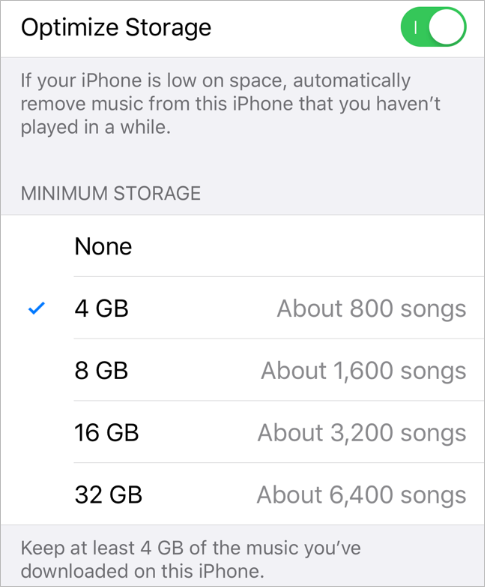
Step 4. Select the desired storage capacity, such as 4GB, which can hold approximately 800 songs.
Bonus Tip:Recover Erased Data on iPhone with Software
If you've accidentally deleted important data from your iPhone, you can recover it with Qiling MobiSaver, an iPhone data recovery software that allows you to recover data directly from iOS devices, iTunes, and iCloud backup.
This tool allows the recovery of unlimited iOS data, including iPhone, iPad, and iPod, and works on all OS types, including Windows and Mac. It helps recover lost data, making it a reliable solution for those who have lost a considerable amount of data.
The three modes of data recovery using Qiling MobiSaver include:
Recovery from iTunes Backup:You can recover lost iPhone or iPad data by using copies you had previously made in iTunes. This allows you to restore your lost data.
Recovery from an iOS Device:This allows you to connect your device to a Windows or Mac PC and scan for any deleted data to recover it.
Recovery from Backup:If you saved copies of your iPhone data on the cloud, Qiling MobiSaver lets you access them through the iCloud backup.
Other Features of Qiling MobiSaver:
- Selectively recover data based on importance
- Preview iTunes backup
- Extract and recover data from iCloud backup
- Easy and convenient to use
- Perform complete data recovery within minutes
To recover lost data on your iPhone with Qiling MobiSaver, follow these steps: first, download and install Qiling MobiSaver on your computer, then connect your iPhone to the computer using a USB cable; next, launch Qiling MobiSaver and select the type of data you want to recover, such as contacts, messages, or photos; after that, the software will scan your iPhone and display the recovered data, allowing you to preview and select the files you want to recover; finally, click "recover" to save the recovered data to your computer.
Step 1. Connect iPhone to Your PC
To recover data from an iOS device, download and launch Qiling MobiSaver, then click on "Recover from iOS device" and select "Start" to initiate the process.
Step 2. Scan for Lost iPhone/iPad/iPod Data
Qiling MobiSaver will automatically scan your devices, find all the lost data, and complete the scan for you.
Step 3. Recover Lost iPhone/iPad/iPod Data
You can select the lost data you want to recover, such as photos, videos, contacts, SMS, notes, voice mails, and other files, and save them to a new location.
Conclusion
Checking cellular data on your iPhone helps track how your device consumes data, allowing you to avoid unnecessary data consumption and stay within your data plan limits.
- Switching to Low Data Mode
- Only allowing selected apps to use cellular data
- Turning off Wi-Fi Assist
- Restricting background apps to only refresh using Wi-Fi
If you accidentally delete your iPhone data, the most recommended method to recover it is using Qiling MobiSaver, a software tool that has advanced mobile data recovery strategies and can work on all iOS devices, iTunes, and iCloud backup. You can download and install this software on your Mac or Windows computer today.
Related Articles
- 3 Fixes to 0 Bytes Available on iPhone XS/XR/X
- How to Find Hidden Files on iPhone X/8/7/6/5
- iPhone Photos Gray Box | How to Fix Grey Boxes Photos on iPhone/Android
- Free Download Qiling MobiSaver 6.5 Full with Serial Key
- Fix Exracted Files or Files Not Showing in Folder Windows 10
Here are four solutions to resolve the issue of files not showing up in folder or extracted files not showing up in Windows 10: Try to check the file type association, reset the File Explorer, check for corrupted system files, and run a full. - How to Fix Pen Drive Shows Empty Although It Has Data - 4 Solutions
Many reasons could result in Pen drive showing empty although it has data, and this page will analyze the reasons and show you corresponding solutions. The solutions are also applicable to similar issues like USB shows empty but it is full, USB files not showing but space used, etc.
Products
Articles & Tutorials
- Data Recovery
- Data Backup
- File Recovery
- File Backup
- System Backup and Restore
- Disk and Partition Clone
- Technical articles
- Mobile articles
- Disk Master Help
- Windows Data Recovery Tutorials
- Windows Secure Delete Tutorials
- Windows Partition Management Tutorials
- Windows File Backup and Restore Tutorials
- Windows System Backup and Restore Tutorials
- Windows Disk Backup and Restore Tutorials
- Windows Clone Tutorials