B550 vs. X570 [Full & Detailed Comparison]
The best AM4 motherboard for your current-gen AMD CPU is likely a B550 or X570, with the latter being a higher-end chipset. While both are popular mainstream options for AMD Ryzen 5000-series CPUs, the B550 is a more affordable choice that still offers great performance. To help you decide, we have gathered all the information you need to know about the key differences between B550 and X570 motherboards.
What Is B550
The B550 chipset was announced in June 2020, serving as a replacement for the B450 Chipset and offering a more affordable alternative to the X570 Chipset.
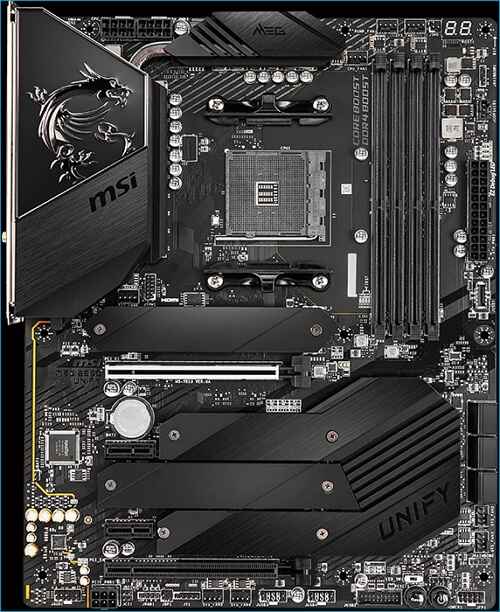
The B550 chipset supports Zen 3 Ryzen 5000 series CPUs and also works with Zen 2 Ryzen 3000 CPUs and Ryzen 4000 series APUs, making it suitable for content creators, high-end gamers, and professional photo and video applications.
What Is X570
The X570 chipset, released in July 2019, replaced the X470 and supported the upcoming Ryzen 5000-series CPUs. It was also the first chipset to enable NVMe storage and PCIe 4.0 graphics cards.
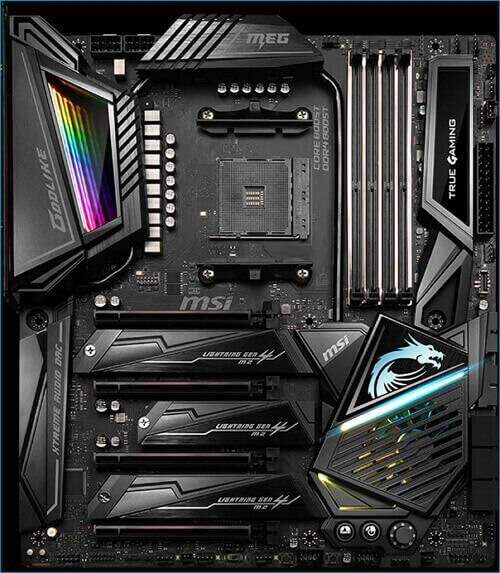
The AMD AM4 socket CPUs are compatible with the X570 chipset, allowing you to continue using Ryzen 2000-series CPUs from previous generations. However, this does not apply to Ryzen 1000-series CPUs from the first generation.
570 vs. B550
Although the B550 is a newer chipset model compared to the X570, it is positioned as a mid-range option rather than a direct upgrade. The X570 remains the higher-end chipset with more PCIe 4.0 lanes and greater overall flexibility. The differences between the two may not be noticeable in daily use for most users.
| Comparison | B550 | X570 |
|---|---|---|
| Price | Lower | Higher |
| CPU Graphics Support | x16 PCIe Gen 4 | x16 PCIe Gen 4 |
| CPU Storage Support | PCIe Gen 4 | PCIe Gen 4 |
| CPU USB Ports | USB 3.2 Gen2 | USB 3.2 Gen2 |
| Dual Graphics Support | √ | √ |
| General Purpose Lanes | PCIe Gen 3 | PCIe Gen 4 |
| No. of PCIe 4.0 Lanes from Chipset |
0 |
16 |
| No. of PCIe 3.0 Lanes from Chipset |
10 |
0 |
| CPU Chipset Uplink | PCIe Gen 3 | PCIe Gen 4 |
| Overclocking Support | √ | √ |
| Ryzen 2000 Series Support | × | √ |
| Ryzen 3000 Series Support | √ | √ |
| Ryzen 5000 Series Support | √ | √ |
| Overclocking | √ | √ |
For most PC gamers using an AMD CPU from the current or earlier generation, the B550 and X570 chipsets should be sufficient.
The main difference between the B550 and X570 chipsets is that the X570 has all PCIe 4.0 lanes, while the B550 only has PCIe 3.0 lanes.
The specifications are theoretical upper bounds that can be interpreted in various ways, such as giving up some PCIe lanes to utilize all available SATA ports. Both chipsets allow for flexibility in mixing and matching, with the X570 offering the most flexibility.
Conclusion
The B550 and X570 chipsets are both excellent choices, with no discernible difference in performance for ordinary users. The choice ultimately depends on how you intend to use your computer, with the X570 being a better option for those who need more advanced features and the B550 being a more affordable alternative.
Related Articles
- Reset This PC Not Working on Windows 11 (4 Fixes)
- Raid 6 vs Raid 10: Which is better in Speed and Security?
- Activity Monitor Mac: How to Open and Use It [3 Tips to Optimize Mac]
- How to Fix D3dcompiler_43.dll Not Found [Updated 2024]
Are you facing d3dcompiler_43.dll not found issue on your PC? Then follow this easy guide on how to Fix D3dcompiler_43.dll Not Found - 2 Ways to Force Update Windows 10 to the Latest Build
You can force update Windows 10 to the newest build using two methods. If you - How to Format SD Card for Switch
To format an SD card for use with the Nintendo Switch, you'll need to follow specific steps. First, it's essential to understand the different format options for SD cards, which include FAT32 and exFAT.
Products
Articles & Tutorials
- Data Recovery
- Data Backup
- File Recovery
- File Backup
- System Backup and Restore
- Disk and Partition Clone
- Technical articles
- Mobile articles
- Disk Master Help
- Windows Data Recovery Tutorials
- Windows Secure Delete Tutorials
- Windows Partition Management Tutorials
- Windows File Backup and Restore Tutorials
- Windows System Backup and Restore Tutorials
- Windows Disk Backup and Restore Tutorials
- Windows Clone Tutorials